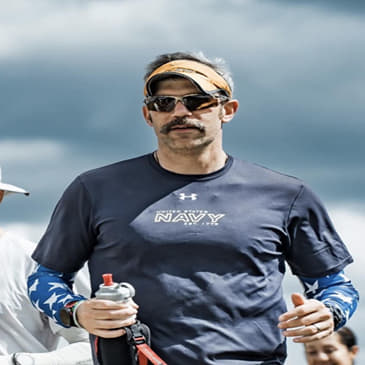
Matt Sandlin is an endurance athlete and winner of the 2026 Prairie On Fire Backyard Ultra, where he pushed through 43 yards—nearly 180 miles—to become the last runner standing. His remarkable performance is a powerful example of mental toughness, resilience, and faith.
1:06 The Hinge Moment That Altered the Course of His Life
5:07 The 100-Mile Race That Changed Everything
7:50 The Hinge Moment That Changed His Running Career
10:48 Training to “Own the Night”
15:22 Finding God in the Quiet Miles
20:44 The Prayer Before Prairie on Fire
24:04 Experiencing the Holy Spirit During the Race
30:14 Just Get to the Next Tree
36:49 Using Running to Reflect Christ
41:35 Focus Only on the Light in Front of You
Don't forget you can also follow Dr. Rob Bell on Twitter or Instagram!
Follow At:
- X @drrobbell
- Instagram @drrobbell
5 Mental Toughness Advantages for Financial Advisors:
If you enjoyed this episode on Mental Toughness, please subscribe and leave a review!
Dr. Rob Bell
Exclusive Podcast Partner:
Morton Brown Family Wealth
Morton Brown Family Wealth is the Presenting Partner of The Mental Toughness Podcast with Dr. Rob Bell. Sponsorship of this podcast does not imply endorsement of the views, opinions, products, or services expressed by individual guests.[00:00:09] Welcome to Mental Toughness with Dr. Rob Bell. Each week, Dr. Rob sits down with athletes, executives, and expert coaches to talk about mental toughness and their hinge moment. Here's your host, Dr. Rob.
[00:00:35] Dr. Rob Bell The hardest enemy to fight is one with an outpost in your head, right? So like if you want to gird against those negative thoughts, whether it's you getting bad news in life, relationship difficulties, the day-to-day life, not even endurance sports or anything like that, but I just want to encourage folks, right? To kind of build that fortress against that is that you need a firm foundation. If you don't know them, I would encourage you to get to know Jesus Christ. That's the cornerstone of the foundation of that bunker that I have in my life.
[00:01:05] Dr. Rob Bell The Mental Toughness Podcast is proudly presented by Morton Brown Family Wealth, helping individuals, families, executives, and business owners connect their financial resources to the life they want to live.
[00:01:17] Dr. Rob Bell Our guest today is an endurance athlete, Navy veteran, works as a health administration program manager. He completed his first ultra in 2008. He's run over 20 ultra marathons, four times sub 24 hour, 100 mile finisher. He's a three-time participant in the Prairie on Fire Backyard Ultra, and he won the 2026 Prairie on Fire current course record holder, 179 miles.
[00:01:44] Dr. Rob Bell Lives in Indianapolis, his wife, Rachel, three children, our guest today. Excited for this conversation, Matt Sandlin. Matt, man, thanks for taking the time, bud, and joining us. Dr. Bell Flattered from that chance run-in you and I had on that flight years ago, and just being able to kind of keep in touch. I mean, who'd have thunk? Who'd have thunk, right? All these years later, here we are. Dr. Rob Bell Look at us. I'm happy to be here.
[00:02:06] Dr. Rob Bell I want to start about the hinge moment that you had for Matt, and that was when you joined the Navy. You had a significant moment that happened. Just start us from there, man. Tell us that story. Dr. Bell Yeah. I mean, I've been running a little bit. This is kind of after high school, but just not making the best decisions in life and struggling academically and enlisted in the Navy.
[00:02:28] Dr. Bell And here in Indianapolis, Chicago is not that far of a trip, but I remember just being sort of terrified and excited at the same time. But going to the USO to kind of wait for that first fateful day of entering into Navy boot camp, they had the Gideons outside of the USO handing out some pocket New Testaments.
[00:02:47] Dr. Rob Bell And I just kind of took it absentmindedly. And I'll tell you, those first few weeks of boot camp where your world's upside down, you've got seemingly kind of a high-stress environment. And the whole purpose of boot camp, right, is to kind of break you down and rebuild you.
[00:03:02] Dr. Bell And praise God, I had that New Testament there where during that sort of breakdown and rebuilding that I was just able to lean into the Word and get that encouragement and get that perspective. And, you know, I'll tell you in my life, that was really the first time Scripture is just kind of leaping off the page. I didn't have to deal with all of the sort of challenges and distractions of life, right? We just kind of, your whole perspective was just really getting that next meal, you know, in boot camp.
[00:03:30] Dr. Rob Bell And so I do feel like that Navy boot camp 2006, that was sort of the crucible for me of kind of slopping off that old body, that old life and sort of transitioning into this new person, new adult of just accountability, responsibility, self-confidence, all of that came with it. So just a really impactful moment that just kind of altered the course in my life.
[00:03:52] Dr. Bell Yeah, no, I appreciate you sharing that. I mean, the spirituality piece is obviously something I want to talk about today in our conversation. You did your first ultra 2008, Calico Trail, I mean, 50K. Since then, I mean, you've done many hundreds. I mean, you've done Javelina, Jundra, Rocky Raccoon. Obviously, it's one of your favorites. But 2008, man, what was this? You signed up for that one?
[00:04:17] Dr. Justin Marchegiani Like I said, I'd done I don't know how many marathons at that point before the Navy, but this was living out in this Joshua Tree area on a Marine Corps base. I mean, you go out training and sometimes it's like running on the moon. You wouldn't see a soul for hours. But it kind of became the next logical thing. I mean, I knew I wasn't a fast guy.
[00:04:37] Dr. Justin Marchegiani But I started getting wind. This is the era of, you know, the Dean Karnazes book and Scott Jurek, Western States. And we were just starting to transition into that born to run kind of timeframe. You know, if you've read that book, I mean, there's that component where, you know, humans are literally born and built to run. And so saw that 50K wasn't really sure what to make of it. I knew how to run. And so I just took the plunge. And I just wanted to see what that experience is like. You know, what was that first step going to feel
[00:05:06] like after 26.2 miles? And so I had a good experience and just really sort of sort of enjoying that going longer but slower sort of experience. And there's a freedom to trail running that's different than road running, I think, because it's really tough to be a slave to the watch when you have roots and rocks and elevation you have to kind of pay attention to. But you also had a hinge moment when it came to running as well.
[00:05:34] Yeah. Kind of building to that, I'll tell you, over the years, I've learned that my life is defined by right angles, right? We're sitting here, you know, we got clean sight lines on the computer, your phone, your car. So when I'm out on the trails, there's not a right angle to be had. And it's so sort of just cathartic to be out there with all these organic shapes and getting your head right. But I think for me, to your point, you know, I'd done a couple 50Ks.
[00:05:59] And I wanted to do 100K, but there was a forest fire or something. They canceled the race. So then I just took the plunge into the 100 miler, the Javelina. And at the time, I think it was one of the fastest 100 milers. And if it's the fastest 100 miler, it's got to be one of the easier 100 milers. You know, if you could be so bold to say it's easy to run 100 miles. But where I was living in Cali at the time, I mean, it was identical train, altitude, everything.
[00:06:23] So it just made sense for me to hop over to Arizona and do that run. And if you're not familiar with that course, or at least at the time, it had these 15 mile loops that you would run. You go kind of clockwise, counterclockwise. And so I get 20 miles into this 100 mile race and things are going well. But all of a sudden, I just start melting down, overheating, overexerted. I guess I'm running too fast.
[00:06:48] And I get to one of these aid stations. So I'm five miles from kind of finishing my second loop. I don't know who in their infinite wisdom put one of these aluminum, you know, metal folding chairs out in the desert at an aid station for runners to sit on. But I remember I was like, I'm just going to sit on this chair. And when the little wagon comes by to take runners who drop in, I'm just going to ride it in. And I'd already made it up in my mind to say, you know what? Nobody I know has run, you know, 25, 30 miles like this is a good day.
[00:07:16] And so I'm sitting there kind of waiting and I can hear the rumble of the gator or whatever it was coming down the trail. But while I'm waiting, my thighs just start like sizzling like bacon. Like that chair was so hot that after I sat in it, right, it's kind of burning me through my running shorts.
[00:07:35] And if that wasn't the Lord moving, you know, I don't know what was, but it's like, hey, look, man, for once in your life, why don't you finish something? You know, you haven't finished school. You've got some relationships you've neglected. Just all of these shortcomings in my life that running had sort of gotten me through.
[00:07:53] It's like, hey, like, let's go one more step. Like, let's get back in this fight. That's what it was. That was my hinge moment from a running standpoint to just say, you know what? I feel rotten. You know, I'm bonking and everything. However, I learned through that experience of that five mile shuffle back to kind of base camp or the next aid station was just, it taught me that even if I'm at my lowest, if I just give more time, more self-care, more bargaining with myself, nutrition, whatever it is, that I'll get out of that.
[00:08:23] It was at that moment that I was just like, oh, there's more here. It's not as soon as it gets difficult, it's time to quit. But rather, if you're willing to kind of wrestle with that, that piece, it will pass. And it wasn't glamorous, but I went on to finish that race, you know, in 26 hours, 27 hours. So from then on, getting that first hundred mile belt buckle, it's just like, okay, there's something here. If I'm willing to nurture it, like there's something special here that I think I can do.
[00:08:53] That changed everything from a trail running perspective. So the Javelina 100, and you're in that chair, it's sizzling. You hear that going, the voice that you have, because sometimes I say we're listening to ourselves. And when we're listening to ourselves, that voice isn't always the one instructing us, right? We need to tell ourselves.
[00:09:11] Sometimes you hop up and you end up finishing. And that moment, right? I mean, that changed everything because that gave you the perspective you needed. Like, hey, man, if you just keep going, right, you get that second wind, that third, fourth wind in your life.
[00:09:26] Yeah. Because I mean, again, at that point, you're like, hey, man, I feel like trash and I still got 70 miles to go, 75 miles to go to finish this sucker. And that's a tall order, right? But you know, they say, hey, if you're gonna eat an elephant, it's one bite at a time. So it's kind of one of these things of, I need to get back to this aid station one way or the other. So I might as well kind of walk it out. And you kind of go through that. And again, it's Goggins would tell you to kind of draw off the cookie jar. But it's just like, hey, man, like so many times, you've hurt people, you've let people down.
[00:09:56] You've quit when it got hard. Let's just stick with it and see what happens, you know? And then you get a quick win, right? You get to that next cactus, you get to the next aid station, you get to that next hour, and it just starts rolling, right? And you're kind of getting past that. And hey, let's just keep building on it, right? Like stay in control, right? Stay smooth. From a bootcamp perspective, right? You know, they would teach us control what you own. I can't control the weather. I can't control the terrain, but I can control my reaction to it.
[00:10:25] I can control, you know, what I'm going to do to brace myself for it. Things like that, little isms like that just kind of brought it back to say, hey, let's just kind of stay here in the moment and just keep digging. It's awesome, Matt. You know, when you talk about conditions and toughness, you're known for wanting to have the toughest conditions possible, especially in training. I often say we race like we train. And one of the things you're known for is these 1 a.m., 3 a.m. runs.
[00:10:53] Owning the night is what your wife, Rachel, would say. Talk to us about that piece, even before we get to the race. But that training there, owning the night, I mean, 90% of your training was in the dark. Oh, yeah. Yeah, if not more, right? So there are things that I want to accomplish in this life, and I don't want running to compromise that, right? I want to be a present father, present husband.
[00:11:16] And so if I'm dipping out for six hours Saturday, well, first of all, I only get two days a week with my kids kind of full-time anyways, right? With the work week and all that. So as I started getting more serious about running and saying, like, hey, if I got to go clock off a 20, 30-mile long run, like, that's going to take some time. At this point, you know, I'm kind of in San Antonio and training for Rocky, kind of the first iteration of Rocky. And I got to slide over here just a sec.
[00:11:44] Like, you'll see over my shoulder here, you always see me wearing the red shorts, blue shirt kit at these races, orange visor. But the gentleman who gave me this photo here, my buddy Jay, he was a guy who I just total stranger linked up with in San Antonio training for that race. And I remember telling him, you know, we'd be running at maybe 5, 6 a.m., and that was okay. But I would tell him, I was like, hey, brother, you know, to get this run in next weekend, I got to start at 3 a.m. And I remember him just saying, bro, that's pretty rowdy. And I was just like, hey, it is.
[00:12:14] But then over time, when you start normalizing it, I'm lame because I'm going to bed at 9, 9.30 on a Friday night anyways. But I start normalizing the component of 3 a.m., got to get it done. You know, get three, four hours in. And then, okay, if it's 3 a.m., what's 1 a.m.? That's not that big a deal. And kind of your point about my wife, there was one time years ago, I think it was during COVID, I was going out for a 1 a.m. run or I got up at midnight or something just because.
[00:12:41] And she was going to bed, you know, had finished a movie or something, and she was just like, we live very different lives, right? But I know that those witching hours, you know, after 10 p.m., you know, on these long runs, that sort of 10 p.m. to 4 a.m. is going to be a killer. And they say, you know, the night is darkest just before the dawn. And if I can do enough to make that section a non-factor, then should my light ever fail? Should I ever be in a point where I'm struggling?
[00:13:11] I can just come back to that moment and say, like, I've been here. Like, I've been here. I've pulled through. And so running in the night, again, logistically, it makes a lot of sense for kind of the life I want to live. But also it seems to just sort of pay dividends when you get into these 100 milers or anything else that will inevitably go through the night.
[00:13:31] And so I just spend a lot of time intentionally sort of just taking care of and getting sharper in that difficult component of the race. Yeah. I love it, man. I never listen to music when I run, but I want to talk about the Prairie on Fire in just a second. But talk to us about, like, running at night. Actually, side note, I remember one time we're going to, me and my buddy, we're going to this 50K race and we had to leave early. So it was like, you know, we're leaving at 3.30.
[00:14:00] I remember we stopped to get some coffee and it was the intersection of other people's lives. I remember seeing these girls, like, they were coming back from partying. I mean, they were partied out. And we're going to race. And I just remember that sticking in our mind because of, like, same thing we said, man. Like, we're on totally different lives, man. You know, they're coming. But I've been there, too. Like, I've been at the 3, 4 a.m. coming in. Oh, yeah. I'd rather have going out at 3, 4 a.m. Yeah.
[00:14:28] But on that note, one of the things that I've always experienced on running at that time, whether it's 4 by 48 or just run at night, is the peace and the tranquility and the silence. Like, I feel that is the best time. That's the time. Like, there is no distractions. It's just you and God. And there's just, like, a real peace to it. Do you experience that then during those early morning hours? Yeah.
[00:14:54] I think I had a previous pastor who once said, I picked it up somewhere along the lines, but the phrase of, I don't like being alone, but I like alone time. And for me, getting up early, you know, kind of having that quiet time in the Word in the morning to just, if I'm looking for answers, I've had a difficult week or a difficult session at work, whatever it is, right? I can try and get grounded first thing, waking up with some coffee.
[00:15:21] And then when I get out there, like you said, there's not that pull of, hey, like, I'm getting into some uncomfortable components of whatever I'm wrestling with. So let me get my phone out and soothe there or let me throw on a video or something like that. But it really lets me kind of press into that issue. What's the other person's perspective? What would they say if I said this?
[00:15:44] And so really just kind of having that time to kind of play through the conversation so that when I come back from a run and I'm ready to have that conversation, I think I've taken the edge off of maybe I felt offense or whatever it is. But, you know, again, kind of taking it to the Lord, kind of running it through his algorithm, so to speak, and coming to some conclusions to just say, to be able to kind of pray through it, kind of get my thoughts, get my heart right before I tackle that issue.
[00:16:13] And then that way I can kind of come into work or come into the conversation and I'm just ready to get to the issue at hand and not say, hey, Rob, you know, when you said this and that made me feel this way. It's like, look, let's just have a discussion about the issue at hand and kind of process through it. And so, yeah, I think having that time out is that.
[00:16:33] But then not only is it kind of working through issues, but the amount of times where I've seen a unique sunrise or I've seen animals doing something that's like, oh, I didn't know armadillos did that. Right. So it seems like more often than not, these kind of pre-dawn or that transition from twilight into dawn, the amount of times I've had just a sunrise or some phenomenon take place where it's like, I've never seen that.
[00:17:00] And if I was sleeping right now, I would have totally missed that and I wouldn't have an appreciation for it. And so I'm not hunting for that every time that I'm out there doing it, but it just seems like I get these little kind of Easter eggs more often than not. And so, you know, that's one reason it kind of keeps me coming back. Love it, man. Success doesn't make financial decisions easier. Sometimes it gives us more decisions to make.
[00:17:27] Morton Brown Family Wealth works with executives, business owners and families to connect their financial resources to the life they want to live. It means comprehensive financial planning, looking beyond investments into taxes, retirement, estate planning, generosity and long-term future. Morton Brown helps their clients see beyond the numbers into an understanding and plan about what those numbers are there to support.
[00:17:51] If you want a thoughtful strategic approach to life's transitions, retirement, selling a business or even planning for future generations, connect in the link Morton Brown Family Wealth. Just setting it up for the listeners, aren't familiar with it. It's a 4.167 mile loop at the top of every hour that we need to be in the same starting grid. So no matter how fast you run it, you still need to be in that starting grid and you go to this one finisher left, which you were the last finisher.
[00:18:22] And the beauty about that too, I always say if you want to go fast, go alone. If you want to go far, you go together. I mean, I think this is the race that the mosaic of many being a part of the group because you need others around you in order to keep going. The assist becomes very important. That is the runners that are with you because if people drop at 120, you can only go one more. I remember I was running with Jeff.
[00:18:48] Well, sorry, Jeff ran into me when like a couple of days before the race. And I was just thinking in my head, I was like, man, you know, I want to do kind of like a top five. So I just started thinking in my head, well, I think these runners are going to be there at the end. And I felt like I need to put Bob Radebush in there, but who do I remove? So I kind of put a little ancillary thing in there at Bob and I was running with Jeff and I told him, hey, here are my five. Like, what do you think?
[00:19:15] He said, well, you know, I think Matt Salem is going to be there. And when he said that too, I was like, damn, yeah, I forgot Matt too. I think you're exactly right. So I just tried putting a little note in there saying, well, sorry, Bob, sorry, Matt. You know, I only have so many space here, but it's kind of why I don't do a prediction piece. But during that run, we ran into each other. And sorry for the long belabor, man. I don't talk a lot. I just like asking the questions. However, we ran into each other. I think it was that first night loop.
[00:19:43] And when I ran into you and you were talking to me, well, we were talking to each other. And it was just like being in the room when it happens. Like, I just want to be a part of, you know, something special. When we spoke, then I knew I said, well, Matt, like after we kind of separated, I said, Matt, Matt's winning this thing. I said, he's going to win it. Oh, wow. Because I had forgotten that we met on that plane until you mentioned that, man, which I'm embarrassed to say. But then once you said it, then I remembered it. And it was just like, yeah, man, Matt's in the right headspace.
[00:20:12] The part that I want to ask about, man, is you had a prayer that you said to yourself on that Friday. And I was hoping you could talk about that and the impact of that and how that played out. Yeah. So going into Friday, didn't know it was going to rain, didn't know what the conditions were going to be. I think maybe we all thought it was going to sprinkle, but really kind of backing up a little bit. You know, I've been out there the previous two years. I think two years prior, I had some other races on the calendar that fall and that fall and winter.
[00:20:43] Jackson, 100K. That was the first year they did 100K. And then coming back in the spring, a buddy, we're running Rocky Raccoon, right? And so that's kind of a homecoming for me. But anyways, so that year I was like, look, I'm not going to blow out my knee and wreck these next two kind of experiences that I want to have. So I said, I'll give you 25 and I'm out. But I did leave that race kind of wanting, to be honest with you. And so came back the following year, did 29.
[00:21:09] And folks will find this may be kind of hard to believe, but I just had some other kind of logistical stuff that had been rattling through my mind that needed to be taken care of that week. And I hadn't addressed it, right? And so it's kind of Sunday morning and that stuff, like you talk about mental toughness, like I wasn't bringing it that day. It was just the easy answer was like, hey, dude, just ask your wife to take care of it and it's good to go. Right. But somehow in my mind, you know, kind of went condition black. And I was like, I got to go home. Like I'm homesick. I got to get this stuff sorted out.
[00:21:37] And my wife even said, she's like, look, dude, everything's fine. If you drop, are you going to have any regrets? And I was like, I won't. And I didn't at the time. But again, like I knew I was walking away unscathed, you know? So this year it's like, hey, Lord, I've cleared the calendar for the days after I've put in the work or at least work that I was satisfied with. And I really just want to be to do something pleasing in his sight.
[00:22:05] And kind of to your point, I assumed I'd probably kind of still end up in the top five. You know, I was kind of, you know, nibble at that the previous years. But it's like these guys are going to take it to a new level. Right. But I'll be able to say, hey, I was sitting on the shoulders of giants, you know, for that experience. And so I wasn't concerned about top three or anything like that. I was like, I just want you to use me to do something special, whatever that looks like.
[00:22:31] And so the race kind of ended in a way that I'm not accustomed to. You know, I'm not kind of usually in that finishing at the top sort of thing. And God delivered that, you know, like he was, you know, he was faithful through that. And again, like I wouldn't have seen it play out that way, but he knew. So that was kind of a 20 years in the making, I think, experience that the Lord had in store. But yeah, it was really just use me to make this a remarkable experience.
[00:22:59] How did you experience the Holy Spirit out there on the run? What stands out to you? I think for me, I mean, a race like this, first of all, we always talk about a DNF. But, you know, when I started doing ultras, DNF always stood for did nothing fatal. Right. So many of us, we got nine to fives. We got nine to five commitments on Monday through Friday. Right. So for you to go out here and put yourself into a tough spot, you know, to prove yourself. I think there have to be some sort of pragmatic realities.
[00:23:27] But, you know, kind of in running in this race, knowing right from that did nothing fatal that I can step on a walnut on the third yard and I got to go home. Even if I put 2000 miles in this summer, I bust my ankle and my race is over and I have to be satisfied in that. Right. And so I did have that piece to say, if this race doesn't end where I think it will on the second day sometime that like God's still on his throne. I'm still loved. I'm still forgiven. Right.
[00:23:54] So there's still a consolation prize, you know, a bigger prize, if you will, for me to walk away with. So basically to kind of come into that race, zero pressure, totally loose, totally unencumbered and to just say like, hey, let's boogie. Let's have this experience. Let's dance. And so for me, there was a piece of you would know the stretch well, because it was usually where I caught up with you each lap. Kind of you go after this parking lot or after the two, two and a half miles.
[00:24:22] And then we have this kind of like three quarter mile, just exposed stretch along the road. And then we kind of go in the woods at the last little bit. But every time down that road, right, you're fully exposed. People are walking once you hit that turn. And it's just kind of this, I don't know, half mile of kind of no man's land. And every single yard we would come through there again, this kind of just laying people to waste with all that exposure, wind, rain, whatever it was. And it just felt so free.
[00:24:52] I can't sit here and tell you that I had God whisper my ear, you know, go. But like, I just felt this thing that just said, go. Like, you don't need to walk. Just go do what feels good. And to just get that sensation to where by the second day, like, I'm kind of looking forward to that. Get across the parking lot, kind of make that 90 degree left turn and, you know, run across that little wooden bridge where it was just like right here. Just stretch it out. I got you.
[00:25:21] And every time, right, like it just kind of had that affirmation. And again, like I couldn't drum that up if I wanted to, right, to will myself to run through arguably kind of the worst stretch of that course or the most taxing stretch of that course. And so that's where I felt the spirit, like at least for me, kind of moving like every yard, just kind of feeling it there.
[00:25:46] Or, you know, and to another extent on those night loops, you know, it's kind of unremarkable where you just run out there for two miles, but you turn around and you know you're going home. But at least for me, once you turn around and you're coming back to the camp, it's almost like the sky kind of has a different hue to it. And you can see the stars a little bit better. And so, again, just kind of like, hey, we are in it and we are having fun and nothing hurts, right?
[00:26:12] Like that DNF phrase I told you about, like blisters will come out of nowhere. You can rally. That'll come out of nowhere and you just got to kind of deal with it and do what you can. But, you know, I didn't have to deal with it. And one thing I tried to stress after the race when I was talking to folks is to get to the sunrise or see that cool thing. Like, I don't think folks appreciate how many things have to go right. I mean, like you were well trained for this race and whatever goals you kind of put in place.
[00:26:42] But in an instant, you step wrong, you eat the wrong thing. Anything like that can just sort of trip up and have negative consequences and just ruin your entire experience. And so you're just kind of on this knife edge of probability of like, is something going to tip or break or something? And again, it didn't. It just all felt natural and clean and smooth. And I don't know where it came from.
[00:27:07] Well, I mean, I know where it came from, but it was just kind of the ultimate experience as a runner. I had like a five alarm puke session at minus 71. It was at 114. I remember looking. It was a big one. And the voice in my head was, dude, it's okay. Like, just walk it in. Like, you know, it's wasn't your day. Like, and I remember thinking I was, I was there for like a couple minutes. And then I said to myself, this is exactly what I said.
[00:27:37] I said, that's bullshit. If you time out, you're timing out, but you're going to run it in. Like, you're going to give a full effort. Give a full effort, man. Give it everything you got. And I made it with like a minute and a half left, man. Because I mean, I had nothing in there. I had no energy. I was able to grab like three gels. And then, you know, I mean, I was doing all my aid stations right there at the finish line. Start finish line. And that was that voice. It was the same kind of experience that you had on the Javelina 100.
[00:28:07] Oh, yeah. You know, the one that says, I mean, it's okay. You know, go ahead, walk it in. Like, take that wagon in. It's no big deal. And then that other voice that comes in there says, no, man, just keep going, right? Just make it to that tree, man. Make it to that turn. I wanted to share that with you, man, because it was profoundly impactful. I've experienced puking many, many times. But it changed the race for me to the fact of that was sort of like the win.
[00:28:35] You know, it didn't necessarily reach the goals I wanted to reach. But I was okay with it, man, because I knew where that negative voice was coming from. And it was still trumped by the power. Yeah, I mean, I appreciate you sharing that. You know, I'll tell you, for me, I had my friends in California. You know, that was kind of like the first exposure to a healthy church, you know, kind of on that Marine Corps base. I had my buddies, my boys from Naples, Italy, that we were trained with when we were living overseas. All my San Antonio crew and tribe rooting us on.
[00:29:02] And then here in Indianapolis, kind of our church family and training buddies that weren't racing, kind of rooting and praying for us. And I think that component, that voice you're talking about, right, like I've heard it said before that the hardest enemy to fight is one with an outpost in your head. Right. And so, like, I just knew that, you know, that sort of power of prayer of folks, like when I was starting to wane a little bit, it wasn't like I need to put on a show for these people
[00:29:30] who are rooting for me, but rather, I know that they've got my back. Like, so when we're talking about taking on this outpost in my head, like I've got, you know, a spiritual army behind me, but then kind of this, this kind of earthly army behind me as well. And so it's like, I'm comfortable kind of pressing into that. But I tell you what, man, like when you're in that spot you're talking about, and I've been there many times, right? It is this kind of white knuckle experience, you know, and you're just kind of holding
[00:29:58] on for dear life until you sort of get your wits about you. Sometimes that may happen in two minutes. Sometimes you may have to kind of box with that thing for six, eight hours before you come back to it. So for you to kind of recognize that in the moment and kind of triage it, I think that's kind of that biggest component of just, hey, just get to that next light pole, you know, kind of, okay, that's a win. Get to that next thing. That's a win. And kind of just get your mojo back through that effort. So hats off to you, man.
[00:30:29] You know, Matt, like I don't listen to music when I run, so it's not my thing. And I really kind of despise it. However, at nighttime, I had like a faith playlist I was going to listen to. So it's an hour and a half. And I listened to that thing five times on repeat, man. So like at points, like tears are just coming down my face. I'm not a windshield wiper guy when I comes to church, but I mean, I was, I was praising God, man, just because of that experience.
[00:30:57] And then when I would run past people, man, I would, I'd put my hand on their shoulder and just say a quick prayer with them. Those are the moments, man, that stick out to me. Yeah. I think, you know, a race like this, and I've said it before, like, I know you've talked to TJ on here, but those guys, I think a race like this or a race in general, it's really easy for kind of that race director collective to kind of stick their nose under the tent and sort of influence your experience, confetti cannons and loud music and all of that.
[00:31:25] But really, I mean, from the outside looking in, they make it a fairly sort of nondescript event, right? They just give you kind of a safe place to do that with. And so I think, right, like things in the heart just kind of bubble up and there is a fellowship there. And you do get to kind of share in that suffering a little bit, you know, with others. And again, it's not like, I don't feel like it's this thing of like affluence and we have to manufacture struggle.
[00:31:52] But I think folks who enjoy or appreciate kind of what the human body's capable of is just a thing where I just want to go out and kind of see what I've got. And if today what I've got is 30 miles, if today what I've got is 130 miles, like that's still good, right? That's still a net win. And I got to be out here with a bunch of like-minded individuals, maybe make a new friend out of this, maybe just kind of expand my community a little bit.
[00:32:22] And so for you to just kind of be there when that person likely needed it and just that that voice of comfort, because who knows what was going on between their ears. And you kind of roll up there and it's like, hey, brother, we got this. Keep that chin up. Let's just kind of lay down this next mile. And what a blessing to them to kind of get them that much further toward their goal or whatever it was they were seeking. One of them was Abe, because I knew his knee was hurting from the very start.
[00:32:49] And he's a guy that would be way ahead. And just to see him back on like those, he didn't lose, man. I knew he was hurt. You know, I knew that knee was hurting for him. You know, and I never really, well, we didn't talk a whole bunch, but that would be somebody, you know, I just put my hand on him. And then, and I'm sorry for talking so much, Matt, because I just appreciate it. It's just kind of thinking about pieces from that race, man, that we had that connection with.
[00:33:15] And when the hundred miles came, Angel, and I still want to talk to Angel because I don't know how he was running that race, but Angel would pass me like at an eight minute pace at like a mile in, you know, every single loop. So like, I was always wondering, it's like, what are you doing back at the start? Like, do you just start and just kind of like chill there for a while? But he passes me and this was, you know, it was at the hundred miles and he's crying and
[00:33:43] he shares with me like the note that his wife had like written him and for him to be able to share that experience with me just at that point, like at the trail, man, that meant so much, man. And it was just, you know, it was faith based, man. It was just kind of talking about those moments, you know, and like when we talk about the aroma of Christ, you talk about running being your thing, right? Some people paint, some people manifest in other ways, but the aroma of Christ comes through you through running, man. I was hoping you could share that. Yeah.
[00:34:11] I mean, that's kind of part of my testimony is early on. I ran cross country in high school, kind of unremarkable runner, but I think I was just kind of always curious about, okay, going beyond a 5k or going beyond a half marathon. And so I, I kind of get into marathons and that sort of thing, rarely training, just usually using as a reason, like, Hey, I want to go see Nashville. Let me go do the rock and roll Nashville marathon and just kind of make a weekend of it.
[00:34:35] But it would seem like I would run those races and get in there, you know, I don't know, 320, 340, whatever it was, maybe off of running, you know, a hundred miles over the three months leading up to it kind of deal. And just kind of having this awakening one day, it's like, you're a knucklehead. Like there's something here, if you're willing to kind of nurture it a little bit, you know, maybe kind of clean up your lifestyle habits a little bit, you know, kind of get on a training plan.
[00:35:03] And once I did that, things just kind of started rolling. And then, you know, uh, enlisted in the Navy. I enlisted in the Navy to become a rescue swimmer. Like I just knew that I didn't mind putting in a solid, difficult effort in bootcamp. You had the pleasure of getting up, you know, two hours before everybody go over to the training tank and you're treading water and doing pull-ups and all that stuff before the rest of bootcamp's even awake. And, and, you know, they're trying to kind of weed you out before you get to your ultimate
[00:35:33] thing there. But, you know, I'd kind of look around and, you know, I kind of always be the last three or five guys and whatever the evolution was, but, you know, I ended up getting diagnosed with a heart condition that prevented me from flying. So I had to, you know, change my course a little bit. But my point was that that I'll call it physical prowess sort of thing was there. And so I, I think being in Italy and kind of having a department where, you know, we would settle bets with physical challenges, whether it's a shake weight or something else, but all
[00:36:00] that to say, you know, we would kind of migrate beyond this thing. And those guys kind of started getting into racing. But I think for me, right, like I just, I can't carry a tune in a bucket. You don't want me singing. You don't want me kind of leading worship or anything like that. But I feel like I can be a witness and an impact to others out on the trails. And I can, you know, we talked before, it's like, I can do it by my attitude. I can do it by that hand on the shoulder encouragement like you did.
[00:36:25] And so I feel like that is kind of my gift to kind of reach out to folks. And a lot of times we get in these races and we start struggling. And that's where that kind of chaff starts burning away a little bit and kind of whatever that heart issue you may be working on kind of gets exposed a little raw. And ideally, I'm that dude smiling, coming up the trail, kind of engaging you right when you need that word of encouragement. You know, maybe we start getting coffee or do a Bible study after that.
[00:36:51] And so that fragrant offering to me where it's like, we talk about running, like I don't view it as a burden or a chore or particularly difficult where a lot of folks, you know, I'll never drive that far kind of thing. Like I just don't look at it that way, you know, and maybe that's part of the half the blessing to just be able to kind of be a witness in that particular place with any race, right? It's just going to that prayer of let the spirit be out here. Let me help folks, you know, kind of turn toward you, you know, in their time of need
[00:37:21] and be that reflection of the grace and mercy that God's given me. So if you see me creeping up on you on the trails, kind of smiling and dapping it out, you know, that's, we're probably going to get into something spiritual, but so don't run away too fast. So yeah, I like to think that that's sort of what our creators kind of endowed me with to get to be able to share with others. Episode 194, Dennis Morton and Katie Browne. The relationship side of wealth management.
[00:37:50] That is the idea at the heart of Morton Browne family wealth. Money doesn't exist separately from the rest of your life. Your career, family, relationships, goals, and values all shape the decisions you make with it. Morton Browne helps clients bring those pieces together. Check out the link, Morton Browne family wealth. We sort of get the test in life first and the lesson comes afterwards. And, you know, when you were done, you kind of, you shared something that was like, look,
[00:38:19] running those night loops, you can only see the light that's in front of you. And I don't know if you, I mean, the first night, man, that fog was out there. I mean, you really couldn't see that far ahead of you. Talk about that. Only being able to see the light that's in front of you, how that translates to life. I think there's a component. First of all, like, I don't know how often you get to run in the fog, right? I don't get to run in the fog often. So again, as I talked about before, like what an awesome experience where, you know, you kind of have this pre-dawn mist or fog or whatever.
[00:38:48] And any other time, you know, I would miss that if I chose to sleep in sort of thing. So that, you know, that's kind of a sweet time in and of itself. But I think there's this component of, you know, a life lesson there of however you want to frame it, right? Like run the mile you're in, run the yard that you're in of my light's only going to project eight feet out. And if I'm sitting here thinking about, oh man, that turn is two miles away. How am I ever going to get there?
[00:39:15] It's so daunting to just say like, hey man, like inside this light beam, this is safe. So let's just kind of, you know, again, where we said before, like control what you own. Like, let's just kind of stay in this spot. Don't psych yourself out. Don't make this thing into something bigger than it is, right? Just kind of one foot in front of the other. And let's kind of stay in this space and focus on that. Okay, now let's do this head to toe assessment, right? Like homeostasis. How is all that going? Like, like focus. Okay, like all systems are go, right?
[00:39:44] So long as I don't get wrapped around the axle about, oh, that hill that's coming up, or there's so many people, two-way traffic, yada, yada, whatever that thing is, it's more of like, hey, let's just focus on the thing that's in this light beam, keep it between the hedges of the grass, and let's just keep rolling, right? Like we signed up for this to kind of get to this point, right? This difficult spot to wrestle with that a little bit. And so let's just keep it right there.
[00:40:10] But yeah, I would just tell folks that component of the light or those night loops, right? It's just kind of, hey, like just focus on the here and now, you know, run the mile that we're in, and then we can revisit this conversation, you know, a mile from now sort of thing. So just kind of keep those short-term wins going, like focus on the immediate here and now, and the rest will take care of itself. Is that part of that Semper Gumby, the always flexible mindset? Yeah, I mean, the Semper Gumby is, you can have a plan, right?
[00:40:39] Tyson would tell you everybody has a plan to get smacked in the mouth. So I think for me, the Semper Gumby, always flexible, right? The Semper Fortis, you know, always courageous, but it's this piece of, like for this race, right, that rain. It's like, oh, we're going to drizzle at 9 a.m. and it'll feel good and cool us off. Like nobody knew that we were just going to stay super saturated and just, you know, sweaty the rest of the day. I mean, I don't think I started to stop sweating till like 4 a.m.
[00:41:08] And, you know, that following night, I just had, you know, my tent looked like a war zone, just trying to kind of change out of kit just to get wet clothes off my body, right? But that Semper Gumby is like, well, I had, I think I brought six kits, you know, full kits of clothes to kind of change through. And I was like, well, I'll do this every maybe 12 hours or whatever. But then you realize, shoot, man, we're 20 hours into this thing. And I've got like one more dry set, you know, of clothes to kind of keep chafing and that
[00:41:37] sort of thing at bay. So that Semper Gumby always flexible is just like, hey, you're going to have a plan and the conditions may have a different, you know, kind of plan. So that, that bit of controlling what I own where, okay, you brought this, right? Like the rain is here, the humidity is here. Now I need to adjust. I can't just stick with my plan. If, if I know that it's going to cause me problems down the road. I think if you ever listened to Jocko's stuff, he has that bit where he talks about good.
[00:42:07] And if you haven't seen it, there's a little two, three minute video, right? Where it's like, hey, you didn't get promoted. The rain came good, right? It's a chance for you to kind of learn more about yourself, practice your contingency plan, right? Kind of get to that plan B and execute that. But the Semper Gumby piece is, I feel like in my mind, without sounding like too arrogant, is that like every conceivable sort of barrier or obstacle of the course, I feel like I've
[00:42:36] got three solutions to overcome it, right? Whether it's having hot weather kit, cold weather kit, you know, whatever the thing is. So I felt like whatever conditions were going to come, like I had a couple layers of order of mitigation strategy in place. So Semper Gumby is that ethos of, okay, what happens if it rains? What happens if it continually rains? At what point do I abandon this and cut over to, I don't know, the spare shoes and just
[00:43:05] kind of ride it out? So yeah, kind of being flexible, but also when that sort of curveball shows up, like you got to smile about it because you knew it was going to come or you, you know, you had an inkling it would happen. So it's like, okay, it's here now. Let's lean into it on the plan B, right? And now we kind of execute that and start going down, down that checklist. So, so yeah, always flexible, whatever the course gives you, whatever life gives you, just be flexible. I think we titled the podcast there, man. That's always good.
[00:43:34] But, you know, there's so many people that's involved with this and there's a blank canvas, obviously, when it comes to this. TJ has just done an amazing job from growing this, allowing that space for people to explore whatever they want to explore, right? Whatever they really want to touch and learn about themselves. And Phil was out there, I mean, really, really consistent new shoe day. I was hoping maybe you could just talk about like who else impacted you out there and that bigger purpose. Yeah.
[00:44:04] I mean, getting to talk to Phil, he was really strong all day. And then, like I talked about that walnut earlier, like his day just changed in an instant. So getting to know him was great. Bob is that kind of quiet, steady force that's out there. And if you don't know who he is, you're probably going to look right past him until you get to the final standings. And that's when you'll know who Bob Radibusch is.
[00:44:27] But like you said, Angel had the privilege of kind of once he kind of got a little bit tired, to your point about him, just kind of blazing through the trails. But once we kind of evened out a little bit, getting to spend a little bit more time with him. So many other runners, you know, of course, Cam. I know Jeff Walker was out there and he was just such a good mentor to me over the last year of, you know, kind of swapping race notes or getting together for runs and saying, hey, when this happens, like, how do you, you know, kind of embrace that Semper Gumby mindset? Like, how do I plan for that?
[00:44:56] And that guy, that's off to him. Like, he's just an open book. He gains nothing from giving trade secrets to guys like you and me. So for sure, kind of mentioning him, I think I talked a little bit after the race, you know, I had some training buddies who were always kind of there, you know, Daniel Stubbs, Dave Rankin, Tammy Marante. But then I wrote my notes for crewing myself kind of in the third person as if at some point, like, I'm going to be here by myself.
[00:45:22] Because it's hard for me to ask others to say, hey, can you just wreck your weekend to come sit with me for 30 hours or whatever? But the gentleman by the name of Rick Kane hadn't, you know, met him before, but he just kind of showed up and took charge. And it was just kind of, yes, sir. But then what was interesting for me is that I, in my life, right, like I tell you, running in the dark and all that, like, it's rare for that kind of Venn diagram of like my family to come into this space. You know, usually it's competing priorities.
[00:45:50] So I kind of go away and do it or my wife, bless her heart, will do what she can to bring the kids out to see you for two minutes of a six hour race. But my brother-in-law, John Retchum, you know, he's a dentist here in Indy, but he's a division one athlete, big 10 champion swimmer. And he had zero idea of this culture mindset. I mean, despite being kind of a top dog in his own space for him to come in here and just kind of be blown away.
[00:46:15] But he was there in a lot of those kind of nighttime hours where I expected to be solo. So to kind of come in one time and I'm just doing a double take, like, what are you doing here? Like, why are you here? And he's like, I want to help. What do I do? Right. And he figured it out real quick. And so kind of an athlete's athlete just kind of made life as simple as possible for me.
[00:46:35] And so for my family to come out and lean in in a way where I didn't ask them to, and they wanted to do it just to help me have the experience that I did, I think is just a testament to kind of their faithfulness and the impact they've had. And so I guess I'm looking at it behind my head, like something like this, right? That Prairie Champion plaque, right? They are 100% a big part of that because there's no way I would have gotten there on my own through that.
[00:47:05] And then, like I said, for my phone to be on airplane mode for those 48 hours, but then you come off and the amount of text messages of folks who are just like, go, keep going, right? And that of two days worth of that encouragement, I mean, that'll make you feel like you're in a room that's dusty all of a sudden, right? To just kind of read this stuff where I remember when that text message came through and when I was going through at 10 a.m. Sunday kind of thing, right?
[00:47:31] So to kind of see these timestamps, if you will, of what your life was for the last two days. So those church family here in Indianapolis, you know, kind of my literal kind of blood family and all the support and prayer they were giving. So, yeah, I mean, I hope no one is slighted, you know, when they listen to this podcast. But for so many people and co-workers, just kind of rooting me on to just go, run free, have fun, right? And so I did. I was able to do that. Just grateful for all those folks.
[00:48:01] It's awesome, man. You know, I got the PESA buddy for Western States 100. And I remember like you're watching that thing. So you're watching, you know, Courtney DeWalter through Forest Hills. And then I remember running on that same path like a couple hours later. I was like, this is the same. So the reason why I share that is because just to be able to share it with you was really special, man. I'm glad we at least got those couple moments together out there. And thank you for taking the time and coming on the podcast. Is there anything that I should be asking? I'm not asking, Matt. What am I missing?
[00:48:32] I mean, kind of backing up, I do just want to say seeing you out there right again. We had this kind of chance run in years ago. And somehow, you know, we keep bumping into each other and what you're doing on this podcast. And, you know, so the books you've written, you know, they've been a resource to me. So I appreciate you kind of hanging out and you do what you do. But I think probably parting words or encouragement for folks is that, you know, earlier I said, hey, the hardest enemy to fight is one with an outpost in your head, right?
[00:49:00] So like if you want to gird against those negative thoughts, whether it's you getting bad news in life, relationship difficulties, just the day-to-day life, not even endurance sports or anything like that. But I just want to encourage folks, right, to kind of build that fortress against that is that you need a firm foundation. If you don't know him, I would encourage you to get to know Jesus Christ, right? That's the cornerstone of the foundation of that bunker that I have in my life.
[00:49:25] And so just knowing the fact that you have this all-powerful, relentless amounts of mercy who is seeking you day in and day out to be an encouragement, to lift you up, to want to see you succeed, for folks to just have a chance to get to know him. I mean, like objectively, Jesus Christ walked this planet, right? Historians of the day would know that there's this guy, this carpenter guy walking around saying stuff, right?
[00:49:52] So like if you're willing to believe that fact, then I think if you're being objective and pragmatic enough, then you have to give some room for the scriptures to be an inerrant word of God. And if they are indeed true and you read through that, then I think it will do something in your heart and bring an awareness and awakening to you that maybe you've been ignoring or maybe you just couldn't believe is true.
[00:50:20] And so for folks to understand that truly you cannot plumb the depths of the love that he has for us. And so I just want folks to, you know, after maybe after listening to this, to just explore that. You won't figure it out in a day. You won't figure it out in a week. Some folks will take years. Some people are still grasping with it. But I just want to be an encouragement to them to just take pause and to just say, whatever you got going on in your life that is just bringing you down,
[00:50:48] just the day-to-day stuff or the harsh realities, this fallen world, to turn to him and just explore him and kind of give him a little bit of room and rope and invite him in and just see where that leads you. So yeah, that would just be my parting word to folks is just say, you know, don't give up on him. Try him out. And if you're curious about it, find me out on those 2 a.m. trails. I'll talk your ear off about it. I'm grateful for you, man. Thank you so much for joining us, Matt. It was awesome, man. Great work. Thanks for your time today, Doc.
[00:51:17] Thanks for listening to Mental Toughness with Dr. Rob Bell. To find out more about Dr. Rob, visit his website at drrobbell.com or follow him on Twitter at DrRobBell and subscribe to the show on your favorite podcast platform to get the next episode of Mental Toughness as soon as it's available. Thanks for listening, and we'll see you next time.