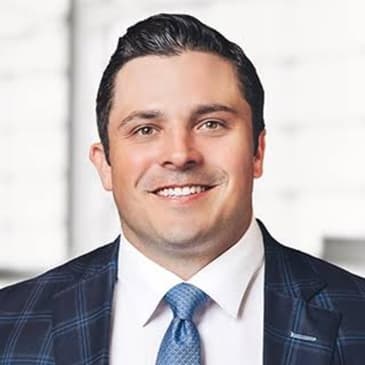
Casey Weade is the founder of Howard Bailey Financial, dedicated to helping people retire with confidence and purpose. A nationally recognized retirement planning expert, podcast host, and speaker, Casey specializes in retirement income, tax-efficient strategies, and financial independence, empowering clients to build lasting wealth and live with intention.
3:01 Golf, Mental Toughness, and Handling Adversity
6:29 Goal Setting, Vision, and Wealth Management Success
8:35 Family, Purpose, and Creating a Life Worth Living
12:55 Financial Independence in Your 20s and Redefining Success
18:17 Remembering What Is True Instead of Chasing More
20:03 Lessons from Nearly 600 Podcast Episodes
23:08 The Story Behind Howard Bailey Financial
26:29 Leadership, Culture, and Scaling a Growing Firm
33:55 Accountability, Expectations, and Conscious Leadership
46:55 Casey's Definition of Mental Toughness
52:10 The Emotional Side of Retirement and Identity
54:24 Why There Is No Finish Line with Howard Bailey Financial
57:58 Final Thoughts on Purpose, Growth, and Living Fully
Don't forget you can also follow Dr. Rob Bell on Twitter or Instagram!
Follow At:
- X @drrobbell
- Instagram @drrobbell
5 Mental Toughness Advantages for Financial Advisors:
If you enjoyed this episode on Mental Toughness, please subscribe and leave a review!
Dr. Rob Bell
[00:00:09] Welcome to Mental Toughness Podcast With Dr. Rob Bell. Each week, Dr. Rob sits down with athletes, executives, and expert coaches to talk about mental toughness and their hinge moment. Here's your host, Dr. Rob.
[00:00:34] I would argue sometimes when we're going through those difficult moments, just to simply go through those difficult moments without a meaningful goal in mind, it's fear that's actually driving us in those moments. It's fear that we haven't confronted.
[00:00:49] The real bravery is sometimes stepping away from the race and not finishing the race and resetting what is most important to us in life to make sure that the goal that we're pursuing at the end of the day is meaningful enough that we can justify the pain that we go through in the pursuit of that goal. On the Mental Toughness Podcast today, I'm excited because I consider him a friend, but he is founder and CEO of Howard Bailey Financial, which is the official wealth manager.
[00:01:19] He is a financial management sponsor of Notre Dame Athletics. Since launching the firm in 2011, this firm has helped thousands of families navigate the transition from accumulating wealth to creating a meaningful retirement. Our guest is the author of Job Optional, The Science of Retiring with Confidence, and host of the nationally recognized Retire With Purpose podcast. It's a fantastic podcast. It's a radio show television program where he shares insights on retirement, purpose, financial well-being.
[00:01:48] His work centers on helping people align their money with what matters most so they can retire with confidence, fulfillment, and purpose. Excited for today's conversation. Our guest is Casey Weed. My man, Casey. Thanks for coming on here, bud. What's up, Dr. Rob? It's good to see you again, brother. Absolutely, man. We met on the golf course. I just figured, hey, man, we got to start with a golf question. Let's start with that, man.
[00:02:14] The game of golf, like how has it impacted you throughout your whole life, man, wherever you want to take that loaded question? Well, it is a loaded question, but, you know, golf means a lot to me. You know that. And I have been with a golf club in my hands since I was in diapers, and it has brought so much to my life in so many different ways that I think it's the most important thing that we can instill in our children. I'll even take it that far.
[00:02:39] The lessons that golf teaches us, as you know, with your son, you've gotten to see that firsthand, watch the development that it's created for him, not just the ability to connect with others, but the life lessons that it teaches. And this is about mental toughness, this podcast. I don't know that there is another sport on this planet that requires more mental toughness than golf.
[00:03:03] And if you have never played golf, you don't understand that because you look at golf as a non-athletic pursuit. It's not that hard. You're not running 20 miles. You're not pushing people around. You're not tackling. You're not taking hits. But you are mentally. And that's a lot of the work that you get paid big bucks to do because mental toughness is such a requirement of the game. And that's something that I want to make sure gets instilled in my children as well.
[00:03:33] I use the lessons of golf every day in my work and in my pursuits of life. I continue to play the game and I continue to pursue the mental toughness side of the game, which is what really draws me to that game more than anything else. And it has so many different applications across life and business. Fantastic answer, man. You can tell your podcast host, but very succinct. Well done there. Casey, I just want to go off on that a little bit further because you obviously mean self-improvement is a huge part of your life.
[00:04:01] What's a big lesson, man, from golf specifically that applies to business? Yeah, you know, business is going to get you down. It's going to hit you hard from time to time. And you're going to feel like giving up. You're going to want to get angry. You're going to want to throw in the towel. And I've been there many times throughout my career. And the same thing happens to you on the golf course. And you have 18 holes to play. If you're playing in a tournament, you might have 72 holes to play.
[00:04:29] And you know how many tournaments on the PGA Tour have been won when somebody double bogeys that first hole. That takes a lot of mental toughness to overcome those difficult shots and hard times that you're going to experience in golf. When you get confronted with a bad shot, what do you do? Do you carry that on to the next shot? Or do you leave it right there? And one of the things that you had taught me when you and I were playing on the golf course, and I'll never forget this.
[00:04:58] You hit a bad shot and you're mad. I'm like, you're the mental toughness guy. I mean, this is what you do for a living. I was always told you can't get mad on the golf course. You're not allowed to get mad when you hit a bad shot. You said, it's okay to get mad. You just can't get down. It's okay to get mad. It's not okay to get down. And that is a phrase that I will never forget.
[00:05:21] That's a moment of our relationship that I'm never going to forget because I have carried that into so many different aspects of my life. I've taught my children that. I teach my team members that. Because we feel like we hit a bad shot. I was always taught you can't get mad. And then what do you do? You hold that in for the next 18 holes, 72 holes. You hold in that anger. And sometimes we need to make sure we're releasing what we have inside. We're talking to someone about it.
[00:05:51] We're having conversations with others. When we get frustrated with a client appointment, another team member, we make sure we have the conversations necessary to put everything out on the table and not hold everything inside. Or it's going to continue to hold us back throughout our business career, throughout the next 18 holes, throughout the next 18 years. It's okay to get angry. But it's not about the anger that happens in that moment. It's about making sure you're communicating what you're feeling.
[00:06:19] And if you can communicate what you're feeling, then you can overcome that feeling. If you can't communicate that, then you're going to get buried by it over time. It's a great point, man. It's a huge communication game, isn't it? Yeah, it really is. Especially when you have a caddy or you have a partner on your team and you're working together. That helps you learn how to support another individual, how to coach them through success, how to put them on the right track, how to help them overcome different obstacles.
[00:06:49] And being a leader, you know, we lead a team here at Howard Bailey of about 50 individuals. I wouldn't consider myself a naturally born leader. But the things that golf brought to my life in how you coach and lead others has helped me do that same thing in business, coach and lead others. That's awesome, man. And definitely one of the pieces I want to get into in our conversation, which is what always attracted me to you. I feel like you always were a natural born leader, man.
[00:07:18] Let's talk about you've always been a great goal setter. One of the things that I just knew about you early on, having that vision, be able to create that vision, executing that vision. How does that apply then to one of the pieces always attracted me to you as well with that goal setting piece was you always have like a dialed in morning routine. And I always felt that was I'm just hoping you could just share that piece, man, and how that's translated and helped you out. Yeah, I think for me, a big key to success.
[00:07:46] And it's the same thing for the families we serve. I think if you're going to be successful in any area of your life, you have to maintain a certain level of discipline. So when that comes to our daily life, what does it take to be mentally tough? I think in order to be mentally tough, you have to be in a routine that allows you to open that door and continue to stay in that flow. And that starts first thing when I wake up. You know, when I wake up, my first move is meditation. My second move is a cold plunge.
[00:08:16] My third move is a really hard workout. And then I'm helping with the kids or getting them out the door. And then, you know, I'm off to the races and I maintain a very disciplined schedule throughout the rest of the day. And if I don't do that, I find that I can easily get knocked off kilter when something goes wrong throughout the day. I think the same thing goes for families that we serve as financial advisors.
[00:08:43] You talk about this investing game and many say, well, the best thing that you can do is just to close your eyes, not open your portfolio, sit on your hands. I don't think that's the answer to succeeding in the investing game any more than it is in life and business. That's also about discipline. You have to maintain a very disciplined approach to investing and have guardrails and rules that you follow.
[00:09:08] So when the market does drop 10 percent in two weeks, you just revisit those rules. You just revisit that discipline and you continue to stay in that mode. Yeah, I love that, Casey. You mentioned family. It's always been crucial for you creating a life worth living. And you have vivid memories, again, of growing up as well and knowing, hey, what is that you didn't want to be, but who it is that you wanted to become. I was hoping you'd just share with us that, man, the importance of family and how you really focus on that.
[00:09:38] I don't know that I truly realized the importance of family until I had my own children. I think it's hard to recognize that until you have your own children. I don't even think I really totally embraced it and understood it until our second child was born. Our second child was born in 2017, so just about 10 years ago. He's a little over nine today. At that point, you talk about being a goal setter.
[00:10:05] From the time that I was in elementary school, I was writing down my goals on a sheet of paper, and I had those goals stuck to my mirror. I looked at those goals every single day. That was something that my parents and my grandfather just instilled in me, the importance of setting goals and continuing to keep them in front of you day after day. And that's what I did. I always kept those goals right in front of myself. And then when our second son was born, we found out a couple months prior to his birth,
[00:10:35] when he was supposed to be birthed, we found out that he was going to be born with a rare congenital defect known as CDH, congenital diaphragmatic hernia, which was a very rare congenital defect. So rare that there was only one team in the world that specialized it and specialized in treating that disorder. That team was based in Cincinnati. At that time in my career, I had accomplished most of what I thought I wanted to accomplish in my life.
[00:11:00] You know, I was 10 years roughly into my career, and I had already achieved really everything I thought I was going to achieve in a lifetime in this career. And thanks be to God for that. You know, that was a huge blessing that I was able to receive. And I think that blessing has paid many, many dividends since then, because the lessons that I learned during that period of my time in and around the hospital,
[00:11:24] away from the office, completely changed my outlook on life, my outlook on family, my outlook on business, and the way that we handle the families that we serve day in and day out. At that point, I decided, well, I've already accomplished everything that I set out to accomplish. I'm just going to focus on family. This is why we're here, right? This is what people tell us that we're supposed to do. We're supposed to accumulate enough wealth, get to a financial position where we can step away and retire and focus on the more important aspects of life.
[00:11:53] And usually those come down to a handful of things, your spirituality, your family, maybe your health, and maybe your hobbies. And these are the things that we're told we're going to do in retirement. So in our society, everything that we do is trained us that that is the goal and that is the pursuit. And that's what we're supposed to do in life. Well, at that point, I had reached that. And I said, well, I'm going to refocus on those things because we're going to live in Cincinnati for at least six months. We knew that.
[00:12:21] And so I said, well, this is me testing retirement. It ended up being about a year that we lived in Cincinnati and I completely stepped away from business. I let the team run the office, run the company, run the business. And I said, I'm just going to focus on these things.
[00:12:36] It didn't take, oh, probably two to three months of doing those things, waking up, making sure I was taking care of my health, reading scripture, taking care of my family, being in the hospital, making them dinner, making them breakfast, driving the kids around, taking them to the park. And I was depressed. I had never experienced that in my entire life, that this sense of depression and daily sadness. And I investigated that. So why do I feel this way?
[00:13:05] Why do I feel so sad when I've accomplished everything that I set out to accomplish? And in reflecting on everything that I had set out to accomplish and all the goals that I had set, I pulled out a new sheet of paper. I go, it's hard to write down any goals. What am I going to put on this? What do I want to accomplish? Well, all of my goals up to that point have been around status or things or money. You know, you're trying to get to this place of financial independence, right?
[00:13:34] And so every goal was about that. You wanted to have the car. You wanted to have the house. You wanted to have the family and the stability. I had all those things, but it didn't bring me happiness. It actually brought me the opposite. What had been bringing me happiness was my pursuit of my own gifts. I think we all share the same purpose in life. And I think that purpose that we've all been given is to help other people and leverage our God-given talents to help other people.
[00:14:03] And in that moment, I was throwing away those talents. That scares me for all the households that I had served up to that point, that I had helped them get to retirement, but we had never had a conversation around what their purpose was, what their talents were, and how they were going to leverage those things to make a bigger impact in people's lives in this next phase of financial independence. So I went back to work, but I changed the way I approached work. I changed the way we approached our clients.
[00:14:29] It was at that point all about impact and purpose and how we help people achieve their dreams. I was no longer serving clients at that point. So it was helping my team members achieve their dreams and using my God-given talents and gifts to accomplish those things rather than having, I think, especially this day and age in the financial advisory world, private equity has put deep claws into our industry.
[00:14:57] And now there's this allure of selling at all times. You could sell and walk away and never work again. And there's this struggle that you start to experience as you realize and you've grown a business that you could walk away from. You go, should I do that? I don't think that's the answer. I think it might be the answer for you. It depends on your talents, your purpose, and where you find meaning in life.
[00:15:22] For me, where I find meaning and purpose in this life is leveraging my God-given talents and gifts to use this platform that I have to make this world a better place. There's no goal. There's no end of the rainbow. And so we completely shifted the mission of the company. And we said, our mission, they tell us we should have this big, hairy, audacious goal. So I don't want a line in the sand. I don't want a finish line.
[00:15:48] I think the answer is, I want to be a hundred-year company because there's a handful of companies that have ever lasted a hundred years. Well, that means there's really no end of the road. We're here to continue to make a positive impact in the lives of our clients, our team members, and communities for the next century. And that's how I look at business today. And I think that's how goal setting has evolved for me.
[00:16:13] And the way that I look at family, the way that I look at business, the way that I look at life, it's all one thing. And it's all about leveraging those talents that you've been given to possibly impact all of those people you care about. I love that, Casey. How did, like going through then that experience and that identity piece of what now and picking a new mountain to climb and having that mission and that purpose. Talk to us just a little bit deeper in terms of, hey, how faith impacted that.
[00:16:41] That was a big moment for me in my life. However, having the opportunity to be with a wife that is someone that grew up in the church with a very strong faith and myself not coming from that background. You know, we didn't experience that growing up. I wasn't exposed to that to the degree that she was growing up.
[00:17:04] And I remember one day early in our relationship where I looked at her and realized this is something I don't deserve. And I felt the presence of God come over me. Since then, we have been very committed as an entire family to our faith and intending to recognize the positive impact that life that God's making in our lives.
[00:17:27] But to recognize that all of us have talents and gifts and it doesn't matter what our personality is, what our background is. But we can always lean back into that faith. We can always lean into him in order to overcome whatever obstacle that we might be faced with in life or in business. Appreciate that, man. One of your quotes, I'll throw it back to you. One of the quotes that always stuck with me that you've said is, it's not always about learning something new.
[00:17:57] It's about remembering what is true. I was hoping you could run with that one. Yeah. Yeah. No, that's one of my favorite quotes. I say it all the time to the team. It's not about learning something new. It's about remembering something true. A large part of that quote has to do with humility to me. Humility has always been one of my core values and something that we really value as a company and as a culture.
[00:18:21] And sometimes it's easy to continue to pursue new things and get attracted to the next shiny object, whether that's in business or that's in your own personal growth. And quite often what we need to do is go back and really remember the things that we've already learned we just didn't put into practice. And that has been something that I continue to do day in and day out. I'm always working with a different coach. I always have at least one coach that I'm working with.
[00:18:50] I'm always reading some book on personal development, listening to a new podcast on personal development. And so many of those things are not new. They're just things that I've forgotten that I need to remember, that I need to put into practice. And we will fall off the track from time to time. And that's why we can never let go of this pursuit of personal growth, because you're never going to climb to the very top of the mountain. You're always going to be in pursuit of something greater.
[00:19:16] And if you've ever think that you've made it and you step off, well, that's what happened with me when I stepped off with our son. I stopped pursuing that personal growth. And I think that's what you see happen to so many retirees today, where you see the highest rate of suicide, depression, divorce in those individuals that are of retirement age.
[00:19:39] Yeah, I love that. And also a piece I want to get into, that identity that gets faced with who am I now, you know, because there's only so much golf you can play if it's not going to be at a competitive level. Hey, good looking. If you like this podcast and are already a badass, but it's all way too complicated, then visit our website, drrobbell.com and schedule a call with us to help capture your very own hinge moment.
[00:20:06] All electrolyte and hydration mixes and drinks are not created equal. I mean, check the ingredients. They have sugar or sugar alternatives, and there's tons of added stuff.
[00:20:29] Allow me to introduce you to the best electrolyte mix, Light Balance, L-Y-T-E-Balance.com. It's a naked electrolyte mix, which means no preservatives, no sweeteners, no flavoring, no caffeine or gluten, and no calories. I'm always on the search for the best hydration, and I've found it. My entire family uses it, and I use it on all my runs. It solved all my hydration issues.
[00:20:59] Your body needs magnesium, potassium, and sodium, which Light Balance conveniently provides in liquid or powder form. Pure, powerful hydration. Light Balance. Go to L-Y-T-E-Balance.com. Your podcast, Retire With Purpose. I mean, you're closing in on almost 600 episodes now, man. It's a weekly podcast, and you have so many different guests.
[00:21:28] Even how that has evolved throughout the years, what is it about that stands out to you having gone through that process? This is the best part of my week. Every week, I have the opportunity to sit down and have amazing conversations with interesting people. For me, they've called it here jokingly at the company. It's Casey's passion project, but it really is. It is something that I love doing.
[00:21:54] I love having these conversations because I always learn something new, and I often remember something true. And those are the things that I want to do, and I want to be in an environment where I can have a conversation, and we're going to have thousands of people listen to that conversation. And those individuals are going to take something away and implement it in their life in some way, shape, or form. It's not about selling a product.
[00:22:18] It's not about selling a tool, and this business can become so much about sales and so much about closing the deal, the next thing, the product, the investment, the tool. I think our industry as a whole, it's evolving in this way, but I think our industry as a whole was really built on that. It was built on selling a product. It was built on selling a tool.
[00:22:40] It was built on converting a prospect into a client, and this gives me an outlet into something that I wish our industry was, that our industry was just pure of heart and here to have honest, transparent conversations that help people. At the end of the day, regardless of whether that generates a new client or not, you have put something out there that's going to make the world a better place, and what else is there in this life? It's awesome, man.
[00:23:07] So, Howard Bailey Financial, Howard and Bailey, the Howard part was keeping your money. The Ralph part was being able to make an impact, and you've mentioned that before, but the planning with purpose. Talk to me about the origin of it, and then we'll get into where you are now. When we started the company and we founded this name, this Howard Bailey name,
[00:23:29] I wanted a name that really resonated with our team and myself, something that really meant something and told a story. Besides that, I wanted to find a name that would be kind of resonant of what you see with the most successful financial advisory firms in the world, Raymond James, Charles Schwab, Marilyn, Shedward Jones. You know, it's always good at two classical names, and I wanted it connected to our family. And I looked at our family. I said, well, it can't be Weed Financial.
[00:23:58] Weed Bailey doesn't sound good. Bailey Weed doesn't sound good. What do we do? My wife said, well, what about Howard Bailey? And I said, ah, that sounds so good. And it tells a story of our family. Howard Weed was my dad's dad. Ralph Bailey was my mom's dad. And Howard was part of that Great Depression generation, wouldn't take any risk, very conservative in his approach with his finances, and saved, protected it, was responsible.
[00:24:26] And, you know, being someone that was a blue-collar worker, and, you know, between him and his wife, Christine, you know, those grandparents of mine, I doubt they ever made over $80,000 in a given year. Maybe they broached $100,000 at the very end of their career as a household, but I doubt they ever hit that point. And yet they still passed away millionaires, and nobody ever would have expected that. And they didn't inherit that from anyone. They just built it on their own.
[00:24:52] And I wanted to carry those values that I had learned from Howard, where he was always teaching me about responsible, hard work, you know, and just an approach to our lives that can make sure that we have stability. And then Ralph Bailey was the other side of that. Ralph Bailey being my mom's dad. He was very influential in the school systems across the state of Indiana. He won the Sagamore Wabash Award, which if you're from Indiana, you know what that is.
[00:25:19] That's the highest award that can be honored to a civilian by the governor of the state of Indiana. And that was for his work and education, the impact he made in kids' lives. And part of that was his I Can campaign. So he taught a lot of Zig Ziglar principles across the state. And he just instilled that in me. I can if I think I can.
[00:25:39] And the way that he helped others, he was working into his 90s and he was passionate about what he did because his number one goal on life was to make a positive impact in the lives of others. And I think if we can blend those two different approaches to life, where we can be responsible with our finances and focus on making a positive impact in the lives of others, those two things marry very well together.
[00:26:03] If we're not financially comfortable, we're not going to be able to focus on those purpose, that purpose that we have in life to make other individuals' lives even better. Howard Bailey Financial has grown from, you know, even a family businessman to multi-locations. Talk to us about the difference here in terms of the growth yet maintaining and how you establish that culture. I would say I've always been what you might call a rugged individualist.
[00:26:33] You know, I was the kid that played golf, right? An individual sport. You know, the only thing that matters is I'm playing against myself. And the same thing in group projects. If I was in college, I got in a group project, I'd say, hey, I'll take it. You guys go out and drink. You know, I'll make sure we get the A. I always considered myself that person that was just going to take charge and make sure that we achieve the goal at the end of the day. And early on, it was myself and my wife and an assistant.
[00:27:04] And all I needed to do was depend on myself. And then the team grew. We added one team member, another team member, another team member. And before I knew it, we had 20, 30, 40, now 50 individuals on the team. And I had to have a completely different approach. I had to start to learn the importance of culture. I had to start to focus my time in leadership.
[00:27:27] For most of my career, I kind of dismissed that word culture up until about probably even just five or six years ago. I just loathed that word culture because to me, culture was fluffy. It was about the ping pong tables. It was about the nap room. It was about creating this experience where people didn't have to work at work. They just got to have fun all day. And I came to realize that that's not what it is.
[00:27:56] And as a result of looking at culture that way, I dismissed culture. And in dismissing culture, I found that we still had a culture. It was naturally created over time. Whether you focus intentionally on culture or not, you're going to end up creating a culture at the end of the day. And the culture that we had five, six years ago was not the culture that I wanted. I found myself waking up and leading a team at that point, as I said, no longer seeing clients.
[00:28:26] Now I'm running a business and I don't even want to go to work. I'm waking up in the morning dreading the next day at the office. Why? Because I had created a culture that wasn't fun. It was full of drama. It was full of conflict. It was full of individuals that hadn't been held accountable, that weren't adhering to what I would like to see them do and will ultimately lead to our success. And I shifted my view towards culture.
[00:28:53] My focus for the last five years, my biggest areas of focus have been culture and leadership. How do I create a culture that leads us to success? Culture is not fluffy. With the right culture, you create greater retention, greater attraction. You create greater results and ultimately greater profit at the end of the day. It is something that is very concrete and can be measured at the end of the day. If you don't have a good culture, you're not going to have all of those other things.
[00:29:22] That is why I've spent so much time focusing on that over the last several years. I write an email to the team every single Monday, very transparent email just designed to shape culture. And I think now we have done that for about five and a half years. I've written that email every single Monday. Haven't missed a Monday in over half a decade because I recognize just how important it is that I am constantly shaping that culture.
[00:29:50] This year, we're actually releasing a book where we've taken all of those emails. I've turned them into a book, consolidated, organized them, and turned them into a pretty substantial book that I now teach a class called Howard Bailey University. I teach that class once a month, get the whole team together, and we go through the book chapter by chapter, and we talk about what it looks like to succeed at Howard Bailey.
[00:30:15] And I believe in my heart of hearts that over the next decade, that will be the thing that creates the greatest level of success for our organization. Yeah, I always think that culture is how you treat one another there. And, man, just give us one of those big takeaways, man, that you really like. Man, this is really important when it comes to leadership and culture. What is one of those things, man, that you feel over this past several years you've really implemented and it's just shown fruit? There's so many.
[00:30:44] I don't even know where to start, but I'll talk about one that's maybe a little bit more recent for myself. I've been working with a coach that has had a really big impact in my life and business, and we did a day-long session together. So we spent about eight hours diving deep into everything Casey.
[00:31:08] And what I uncovered during that period of time, I didn't know what I was going in to really accomplish. I told him beforehand, I said, you know, I know we're going to spend the day together, but I really don't feel like I have a big problem that I need to solve. And I don't have this major trauma that needs resolved. And he said, it's okay. We'll get there. It'll come out. And we started talking about different aspects of my life.
[00:31:34] My relationship with family members, my relationship with friends, my relationship with team members, and some of the challenges that we've had in business. It really all came down to one thing. You might call an unhealthy obsession with the success and failure of those around me. I have an unhealthy obsession with the concern of how others might view me. How does that show up?
[00:32:02] Well, that shows up in business, and it has for many years as a lack of accountability. It shows up in the way of not drawing lines and not holding people to those lines of accountability. I let people be on this team much longer than I should have because I cared for them. I wanted to invest in them. And it's the whole story of the fig tree, right? You have this fig tree.
[00:32:25] The fig tree is not producing any fruit, but you continue to water the fig tree and prune the fig tree and try to take care of this because you go, I know it's not producing fruit, but I believe in this tree. I love this tree. This tree, someday, this tree is going to be incredible. Well, sometime you got to draw a line in the sand. You got to cut down that tree. And I was never good at that because I was afraid of how I might be viewed. I brought this person on. They didn't succeed. That's my fault.
[00:32:55] I brought this person on and they didn't achieve X, Y, and Z. Well, I had make excuses. I didn't want it to be their fault. I wanted to take that ownership for myself. The work that we've been doing for the last 12 months has been really intense and leveling up the accountability that we are doing with our team.
[00:33:17] And that has been something that I think we've been missing for a long time because I overwatered the fig trees that weren't producing fruit in order to ultimately protect myself. Not protect them, not to protect the tree, but to safeguard my own sense of well-being, my own sense of happiness when I was actually doing more damage to even my family and my friends and our business.
[00:33:44] So accountability has been the biggest paradigm shift for myself and understanding what that really looks like inside of an organization and starting to implement it in a healthy way that elevates everyone and the experience that our clients get to have. When you mentioned that and that accountability piece, I appreciate you sharing. Like you get what you tolerate. Then talk to us then about how does that morph?
[00:34:10] How does that change then like your leadership style and then how you then stop watering the fig tree? Like what do you do instead? In order to ensure that you are doing the best thing for someone else and holding them accountable, you have to be having conversations with them on a personal level and really understanding who they are, where they're coming from, and why they might be doing the things they're doing that are not in line with your expectations.
[00:34:38] And too often we have these expectations and I would not have that conversation. I might look at something that someone is doing and go, well, they're just lazy. They didn't show up to this meeting because they didn't care. Yet one of the things that we talk about a lot in our classes and in leadership is this concept of above the line and below the line, which comes from the 15 commitments to conscious leadership.
[00:35:04] We have to first be leading with trust and that is above the line. We're approaching those conversations with trust and rather than just starting to manufacture our own story in our head regarding why someone might be succeeding and why they might not be succeeding. We have those direct one-on-one conversations, but instead of going in to prove that we're right, that this person is lazy or that they don't care, we're staying above the line to listen, to learn during those conversations, to truly understand the individual.
[00:35:34] No one on your team is ever going to do anything for you if they don't think that you care for them. The same thing goes for our clients. What do they always say? They don't care how much you know. They care how much you care. And that carries over to every aspect of life and to business. And if you're not having those conversations from above the line perspective, facilitating that trust, then individuals will not accomplish what you want them to accomplish.
[00:36:00] And now having those conversations in a very transparent way, you can now hold them accountable because you've had the conversation. You've been very direct rather than trying to protect maybe myself. I'll speak for myself, trying to protect myself by not having those conversations. You end up hurting everybody around you. You have to get outside of that box, stay above the line, facilitate trust and create relationships. And then you can hold people accountable. It's awesome, man.
[00:36:27] When you then take that into client-focused, which you guys do an exceptional job at being client-focused, what is it like to be a client of Howard Bailey Financial? I think when we talk about the industry for a minute and kind of where I think that the industry has been headed and is continuing to head here into the future, we've become an ever more technologically driven society. And that carries over to every service business, including the financial advisory world.
[00:36:57] And back in the 80s, you needed a broker in order to buy a stock and then you could buy a mutual fund, but you're still buying those through a broker. And now you can go out to and create your own portfolio. You can go out and hire a robo-advisor to do it for a fraction of the price. And I think we're going to see that this industry goes in one of two directions, at least the vast majority of firms.
[00:37:21] I think they're either going to become much more technologically driven and less and less personal. We see this over the dining room table. We see this every time you go out to eat with friends and you look at families sitting there, a couple sitting there, and they're sitting there on their phones, not having conversations. We continue to become a less personal relationship driven society. And there's going to be a lot of firms that succeed as being a technology company.
[00:37:48] And then you're going to have the vast majority of firms just keep doing the things that they're doing today. And those firms are going to go away. Now, there's another path. I think that other path is doubling down on relationship and creating experiences for those that you serve. We're always going to crave relationships ever more as we continue to get more technologically driven as a society in 10 or 20 years.
[00:38:14] Can you imagine what it's going to be like when it comes to creating relationships? Why do we see such higher rates of depression and anxiety in the world today? Because we don't connect like you and I are right here, right now. We don't do this all day long. We're too isolated. And so if we can become that firm that is more relationship driven than any other firm in the country, one that cares intensely about their clients to the point that we know them deeply, far outside the numbers.
[00:38:43] We're having conversations with the families that we serve that they're not used to having. They're used to having conversations about beta and standard deviation and alpha and buy this stock, sell this stock, buy this bond, sell this annuity, buy this life insurance policy, this long-term care policy. It's all about the numbers. Pretty soon, that's going to become totally irrelevant.
[00:39:06] If that is not fully supported and created on a foundation of trust and relationship, then I think you're going to get lost in this business or you need to become a tech company. I've never heard it put exactly that way. And you did a great job eloquently describing that. Taking that a step further, there's AI, and it seems like every industry now is sort of in this AI arms race in terms of making sure they have the newest thing or the best thing.
[00:39:36] And then you have the mergers and acquisitions. I mean, the private equity that has now entered the huge space in terms of RIAs. How do you see, just delving that a little bit further, how else do you see that industry just changing? There's no doubt. We're already seeing it. There's going to be a massive consolidation. And as advisors continue to age and retire, there's going to continue to see an acceleration of that consolidation in our industry. So I expect to see a pretty significant consolidation.
[00:40:05] I expect to see, as a result of that consolidation, these companies are now not being ran by sole proprietors. They're not being ran by the founders. They're being ran by private equity companies that are only driven by profit. And if their only goal is profit, you can bet that those companies are going to become less relational. They're going to become more technologically driven. They're going to focus on increasing margins. And that creates a huge opportunity for those firms that aren't selling out.
[00:40:34] They're not going to private equity and they're staying a sole proprietor. They're staying with a founder-led company that knows the importance of the relationships, that understands the value that clients are really seeking above and beyond the returns. Hey, golfers, you might not even know that you're looking for it, but this is the best golf sock that you can have. The golf sock. Their grip technology is absolutely stunning. I even use it when I'm running. That's how good these socks are.
[00:41:04] You're absolutely going to love it. It's like a golf glove for your feet. The golf sock. Click on the link. Casey, when you talk about Howard Bailey Financial being a, you know, 100-year company, share with us again your vision and immediate goals then and vision that's coming up next 10 years of Howard Bailey Financial. I will say I have shifted my perspective on goal setting when it comes to the business.
[00:41:32] It's getting more and more challenging to set 10-year goals. Where are you going to be in 10 years? What's that going to look like? I think we often spend far too much time in the future thinking about a future that is never going to become a reality because it simply can't. And not in this day and age.
[00:41:52] When things move slower, if we were in the 50s or the 60s, the 70s, 80s, even the 90s, it was a lot easier to think 10 years into the future because things didn't change as quickly as they are today. I mean, we can see AI has really completely changed the world in about two years. What's that going to look like 10 years from now? Nobody knows what that's going to look like.
[00:42:16] So for me, focusing on what we can do today, focusing on what we can do this quarter, what we can do this year, that is something that we can control. We know the variables that are at play. We know that what we're trying to accomplish at the end of the day. We know where we want to go. So let's focus on what we can control and the things that we can do today rather than setting these goals that are 10 years into the future that are going to dramatically change. And we can get ourselves.
[00:42:46] I know I've gotten myself in a lot of trouble in the past where I start doing things or making changes today, focus on a goal that's 10 years into the future and then things change. Practically speaking, what happens in our business over the next 10 years, we are going to continue to evolve technologically. It's not that we're not embracing technology. That is having a dramatic impact on the things that we can do for our clients, the level of service that we can provide, the tools that we can provide, the impact that we can provide.
[00:43:15] We'll continue to embrace that technology. And that's going to evolve the impact we're making on our clients as we integrate tax and estate planning in-house for the families that we serve because we're going to have to continue to evolve from a value perspective in order to compete over the next 10 years while we continue to grow organically. That organic growth being in the markets that we already find ourselves in while continuing to expand our digital presence.
[00:43:45] Right now, probably around 20 to 30 percent of the households that we serve are outside of any of our geographical locations. You know, serving households from California to Florida, all the way to Alaska, New York, that is going to continue to expand into the future. I expect by 10 years from now, 80 percent of the households that we serve are going to be outside of our geographical locations because people won't have to work with the best advisor in their small town.
[00:44:13] They can work with the best advisor that's the best fit for them in the entire country. And so we continue to evolve that way. And undoubtedly, there will be acquisitions that take place for our firm over the next 10 years. And I expect that those will accelerate. I'm presented with new acquisition opportunities every week and we continue to evaluate those to see the best fit. But it has to be the best fit for organization. But that's how we continue to grow.
[00:44:39] And I think that's how we continue to evolve, focus on what we can do today, focus on what we can do to make the biggest impact this year, and then continue to look forward for those opportunities that are going to make us better and make us more capable of taking advantage of those opportunities over the next decade. Casey, what question should I be asking that I'm not asking? I'll say this.
[00:45:01] You know, I was on my run this morning and I was thinking about our conversation and I was thinking about the title of your podcast. And I was thinking about what mental toughness really means to me. And as I thought about that, the way that we usually define mental toughness, I think, kind of as a society is doing really difficult things and continuing to move forward when things get difficult.
[00:45:29] It's when you're on that 10-mile run and your knees are cramping up or your legs are cramping up. I had my kids ran with me here this past weekend. And so they're 9 and 11. So I took my two boys and they did a workout with me. We ran three miles. And then our five-year-old, she joined us for the last mile.
[00:45:53] And when I looked at the kids when we first started, one of them about a half a mile in, he's crying because his knees hurt. Another one's crying because his head hurts. And by the time we get to that last mile, neither of them are complaining about their knees or their head. And they're going faster than they've been going the entire time.
[00:46:13] But if they would have given up in that moment when things got tough, when they were in pain, they never would have seen that they could overcome that pain and still achieve the goal of finishing the quote-unquote race at the end of the day. And I think that's how we define mental toughness. But I also think that there's risk in defining it that way. And I see it with households that we serve all the time.
[00:46:36] Just doing something because it's difficult and it's painful in and of itself isn't always the right answer in life. And you see this with households that we serve. You're five years out from retirement. You hate your job. You're miserable every single day. You've accumulated enough wealth that you know you could retire. But you continue to say, no, I'm going to continue to work for the next five years because it's hard. It's hard. And this is good for me.
[00:47:06] And yet when you make that extra $200,000, $2 million year after year over the next few years, there's no meaning behind it. And I think mental toughness is really in the pursuit of a meaningful goal. We overcome obstacles. But the goal has to be meaningful at the end of the day. If it's not a meaningful goal, then I think you've deceived yourself into labeling this as potentially in some ways bravery.
[00:47:33] This is bravery that I'm going through this. This is bravery that I'm going to work this next five years and go through this really difficult time because I'm doing hard stuff that other people aren't willing to do.
[00:48:15] That we can justify the pain that we go through in the pursuit of that goal. Well done. Gets me thinking on it a lot, man. Well, and that's why I think like when it comes to that, like the goal piece and what aligns, especially with you all do with the purpose. Yeah, there has to be a why behind it. You've got to understand what that why is before you're getting into it or your heart's no longer going to be into it and it's not going to be deep enough. It's not going to drive you.
[00:48:41] Yeah, I have frankly, I have no interest of working with a household that does not want to at least have the conversation around why we're doing what we're doing. And believe it or not, that's a pretty typical norm in our business that households will want to continue to pursue some goal of achieving a million dollars, 10 million, 50 million dollars in their bank. And yet there's no real why behind it.
[00:49:08] They're just continuing to pursue something without meaning. And if there's no meaning behind it, then there's no reason to continue to pursue it in the first place. I think it's easy to see from a risk standpoint, someone is continuing to take significant risk in their investment portfolio so that they can get to 10 million dollars and they're spending $75,000 a year.
[00:49:30] Why are we contending to pursue this goal while you're creating this pain of stock market drops and this anxiety that you really don't need to experience in your life? So we have to question our motives. We have to question our purpose. We have to question the meaning behind whatever we are working towards in our life. Otherwise, we are leaving ourselves in a position that we will look back. You will look back 5, 10, 20 years at the end of your life and you'll be disappointed in where you find yourself.
[00:50:01] You know, it seems like that's evolved as well in your podcast is the emotional side of finances. The identity that you have and your why and your purpose. It seems like that's even evolved more in your podcast episodes. You agree with that? Yeah, I think it started. It definitely started around a couple of years after our second son was born, about a year after he was born because it was so important to me at the time.
[00:50:26] But I would say as I have grown to experience more of this myself and continue to grow and mature in my own life experience, I've come to recognize just how important it is to make sure that we are focusing on the non-financial aspects of our life just as much, if not more than the financial aspects of our life. Because that's what matters the most.
[00:50:51] One of the pieces in terms of life and success that I'm always fascinated on is the mountaintop moments. I'll just use Rory McIlroy as an example, right? The media and everybody, Rory, he's not going to win another major. And he wins it, right? And it's like, oh, well, look how great he was all along. We knew it. But besides that point, right? And that's the thing I don't like about media is they never have to be held accountable to their takes or anything. So it's like, okay. But he wins it.
[00:51:20] And then it wasn't a month later that they were talking about, oh, well, Rory, look, he's struggling again. And he built this thing up that was so massive, right? Winning the Masters, completing the Grand Slam, become only one of six players to ever be able to do this. And then he tops it again by backing up, right? Becoming one of only four people to win back-to-back Masters. And the reason why I could just preface it like that, Casey, is because after they reach the mountaintop, and you've alluded to this before, right?
[00:51:49] It's the pursuit of the goal. Once we reach that mountaintop, at some point we have to come back down. And that's when most deaths happen on Mount Everest, right? Is on the way back down. And in the pursuit of what we're trying to do, the process of what you're trying to become, talk to us about how you've seen that relay into, hey, maybe somebody's retired, right? And they look at that, as you said, there's no finish line. But they looked at that as the finish line.
[00:52:18] And now it's a now what moment or what's next. Talk to us about, hey, how you've seen that play out in some people. Some people succeed in this. This isn't a blanket statement. There is a fraction of retirees that will retire with a traditional retirement. They'll play golf every day. They'll vacation. They'll travel. They'll spend time with the grandkids and sit on their porch, read books, and just have a great time.
[00:52:44] And then there's another, I think, a larger subset of retirees that end up a little lost. And I just had a conversation with one of our clients recently that said they've been experiencing that. He's two years in retirement and he's lost. He doesn't know what he's supposed to do next. He was a teacher. He was a coach.
[00:53:06] And now he's lost that sense of identity, which really is his unique way of helping other people. He lost his unique way of making a positive impact in the lives of kids. And now it's time to recreate that. But if we don't recreate that, then we are going to find ourselves living shorter lives, find ourselves living unhealthier lives.
[00:53:31] Many alcohol abuse is one of those things that you see rising dramatically when someone steps into retirement. We have to spend so much intentional time focused on the areas of our life that we can bring forward. We look back at our careers and think about those things that made us happy. I know one of the exercises I really enjoy that our households can go through is looking back at their lifeline from the age,
[00:54:00] the time they were born until today, and just charting out with you take the y-axis and this is joy. So on a scale of zero to 10, how much joy are you feeling? And then you look at your lifetime and you plot out those points that stand out to you year after year, decade after decade, those points where you experience the most joy or the most sorrow at the end of the day.
[00:54:23] And then you look at the commonalities and all of those areas of joy and then recreate that for yourself in this next phase. That's the freedom and the real benefit the retirement allows you to do is that you're no longer forced to do things that you don't want to do, the things that don't bring you joy. And when I first did that exercise, I found so many areas of my life that were so joyful that these are still the things that I am doing today,
[00:54:52] that I'm bringing forward into my life today. Whether that was golf, playing competitive golf always brought me joy. Having children, getting married, spending time with my family brought me joy. Accomplishing things in business, helping others overcome their obstacles and their goals. Can I just recreate that in the world that I have today and get rid of all of those things that I didn't like, those things that brought me sorrow or angst or stress?
[00:55:21] I can eliminate those things from my plate and now architect a daily life that can bring me a higher sense of joy, purpose, and meaning. Awesome, Casey. Man, I knew this was going to be a great episode, man, but that was awesome. Thanks, Rob. Yeah, really appreciate you coming on and obviously we put those links on there, but thanks so much, man. Yeah, it was a pleasure. Thanks for listening to Mental Toughness with Dr. Rob Bell.
[00:55:50] To find out more about Dr. Rob, visit his website at drrobbell.com or follow him on Twitter at drrobbell. And subscribe to the show on your favorite podcast platform to get the next episode of Mental Toughness as soon as it's available. Thanks for listening and we'll see you next time.