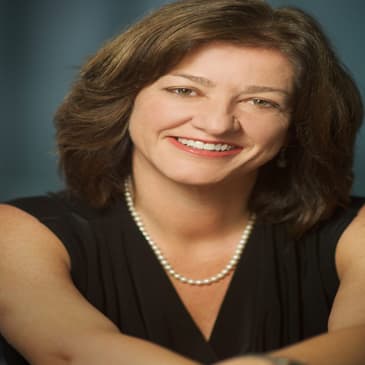
Sarah Dale is President of Know No Bounds and Partner at Performance Insights, where she works with financial advisors and financial services firms to enhance leadership, team performance, and business growth. Specializing in executive coaching and organizational development, she helps professionals build resilience, strengthen relationships, and maximize their potential.
1:11 Adapting Without Compromising Core Values
5:25 Why Leadership Vision Must Be Lived, Not Framed
10:42 The Career Opportunity That Changed Everything
12:31 Great Advisors Don't Automatically Become Great Leaders
17:20 The 7-Person Team Threshold in Wealth Management
20:32 Financial Advisor Coaching: Building High-Performing Support Teams
28:03 Using DISC to Improve Team Dynamics and Client Relationships
34:06 The Partnership Mistake That Became a Hinge Moment
36:51 Why Mindset Drives Every Leadership Decision
38:42 Mental Toughness in Wealth Management: Adapt or Get Left Behind
41:51 Abundance Thinking, Hiring, and RIA Growth
45:53 Advisor Succession Planning Is Really About Trust
48:21 The Identity Challenge of Retirement for Financial Advisors
54:27 Stop Pointing Fingers and Take Ownership of Growth
Don't forget you can also follow Dr. Rob Bell on Twitter or Instagram!
Follow At:
- X @drrobbell
- Instagram @drrobbell
Download Your Daily Focus Map!
5 Mental Toughness Advantages for Financial Advisors: https://pages.drrobbell.com
If you enjoyed this episode on Mental Toughness, please subscribe and leave a review!
Dr. Rob Bell
[00:00:09] Welcome to Mental Toughness with Dr. Rob Bell. Each week, Dr. Rob sits down with athletes, executives, and expert coaches to talk about mental toughness and their hinge moment. Here's your host, Dr. Rob.
[00:00:36] Dr. Rob Bell, Ph. I think another mistake that leaders make in this scenario is we focus so much on the numbers, the numbers, the numbers, and we forget that it's people who drive the numbers. And if we focused a little more on the people, on our team members, the numbers will follow. People use the word accountability a lot. I like to use the term ROC, return on choices.
[00:01:02] And so all of us are really good at finding ways to point the finger as it relates to becoming a superstar or optimizing that performance. And so every morning when we wake up and open our eyes, we get to make choices every day with what we're going to do with our time. Sometimes we make good ones, sometimes bad ones, but we need to own those choices a little more rather than becoming the blame shifter.
[00:01:29] Our guest today on the Mental Toughness Podcast, she spent one of the three decades helping teams perform at a higher level in the financial professional industry. She began her career in financial services in 1990, rose through advisory, marketing, leadership roles, built coaching and development programs for financial professionals across the country.
[00:01:52] Today she works with advisors, executives, organizations to identify performance barriers, strengthen leadership, improve client relationships and drive sustainable growth. She's spoken at prestigious industry events, Barron's top advisory team summit and the Barron's top women advisory summit. She's co-author of two books, focus on investing and client service, her motto and philosophy in life. Have faith, have fun, love what you do.
[00:02:21] Our guest today is none other than Sarah Dale. Sarah, thank you for joining us, taking the time today. Rob, thank you so much. It is great to be with you. Well, I just want to jump in then. So being a Brit and I love Brits, having them on the podcast, right? They're the best witty. But you were 14 years old. You grew up in an all-girls school in the UK and then you moved to New Jersey. I mean, talk about an impact. Talk to us about that. Yes.
[00:02:51] So my father worked for JP Morgan and he was transferred from London to New York on a five-year assignment. And so my parents asked me, well, do you want to stay in boarding school in England or would you like to come to America with us? And I thought, ooh, America, that's the place to be. I want to go. But, however, it truly was kind of the shock of a lifetime and definitely a pivotal moment in my life.
[00:03:14] All girls English boarding school included, you know, stringent uniforms, marching three miles to church every Sunday. Very structured, very protected. And there I landed in this New Jersey public school in the middle of the school year with a funny accent. And I felt like I'd landed on another planet. Everything was different. What you wore was different. How you spoke was different.
[00:03:41] The education at that point at 14, the English system is a good two years ahead of the American system. So academically, I was ahead. But socially, I was in kindergarten. And so I was in kindergarten. So when you, like when you reflect on that process then, and especially then the next couple of years going through high school. So what, what stands out to you in terms of how you, you know, assimilated, adapted yet. Yet, like, what did you learn through all that?
[00:04:10] So I definitely learned that adaptability was critical from an early stage in life, but it was important to me to adapt based on the environment I found myself in, but not to compromise on my values, my principles, my faith, my beliefs, etc.
[00:04:29] And one of the things that I found was in the New Jersey public school, the, the peer pressure was very strong, you know, so all of these drugs and things that was so unfamiliar to me. There was a lot of peer pressure. And after two years, I said to my parents, please let me go back to England boarding school. And they said, well, let's try another school system in this country. And so we went and looked at a boarding school in Connecticut.
[00:04:55] And literally a week later, in the middle of the school year again, I walked out of the New Jersey public school and into the boarding school in Connecticut. And the environment was the same as it relates to drugs and all of those things, but the peer pressure wasn't there. And that made a big difference at that sort of teenage point in my life. So you could be best friends with the biggest drug dealer and never do drugs, if you see what I mean.
[00:05:24] Not that that was necessarily my case, but it was just a very different environment that I had found myself in, in the New Jersey public school. And again, I am not being critical of New Jersey public schools, but when you come from an all girls English boarding school to that scenario, it was a huge shock. So adaptability, resilience, grit, determination, all of those things I was building in as a teenager going through very difficult transitions.
[00:05:54] Mm hmm. When you have the philosophy about life, have faith, have fun, love what you do. Life is too short for anything less. Before we actually get into your philosophy, like how important do you think it is for each individual or even leader, but on a personal level to have sort of that motto, that that standard, that philosophy for life? So, you know, everybody is different. But for me, I believe having a philosophy on life is fundamental.
[00:06:21] It helps guide us, our pathway. All of us are going to hit big challenges in life and big hurdles. And it is having that, that motto, that philosophy that helps propel you over those hurdles and challenges when you face them, whether it's a thing or a person or whatever else. So to me, a life philosophy is pretty fundamental.
[00:06:44] Is it one of the pieces that you coach on when you work in, say, with leaders of firms in terms of actually, you know, developing that, but just living it out? Absolutely. And, you know, in leadership coaching, obviously vision comes up a lot. And I think one of the mistakes that corporates make is that it's like a check the box thing. Like we have to have a vision. Like we have to have a vision.
[00:07:07] And so they hire some big expensive consultant to come up and put these words together and then they put them on a conference room door or whatever. But visions and philosophies are to be lived. They're actionable, right? They're not just words. And so having a vision is really important, but living it is super important as well.
[00:07:26] And so if you're in corporate leadership and you hire a consultant of some sort and you come up with this, you can't just announce it on some corporate-wide conference call and put the words or letters on a door somewhere. Like you have to demonstrate it as a leader, right? Otherwise, it's just a check the box. Oh, here's our vision. It's something people experience. It's actions, not words. So tell us about yours.
[00:07:54] How do you experience that to have faith, have fun, love what you do? Yeah. So have faith, have fun, love what you do because life's too short for anything else. So in my life journey and my career journey, I have gone through a lot of trauma and tragedy and difficult moments. And one of the things that has been fundamental in working through all of those is my faith. And so I grew up in a home, my parents are two of my leadership heroes.
[00:08:24] I grew up in a home that taught me about God and being kind and doing the right thing and living and being the hands and feet of Jesus just to be really direct about it. Right. And so and that no matter what you experience in life, my God is with you and my faith has got me through those tough times.
[00:08:52] So I always lead with faith. Um, even in the hardest times when you have faith, it helps you find the joy. Right. You may not like what you're going through. Um, it may be incredibly difficult, but there's hope on the other side. There's light on the other side. There's joy on the other side. So I always lead with faith. Have fun. So life and the financial services services business is hard, right? It's tough.
[00:09:21] Um, and it's serious. It's about people's money and their retirement and their legacies. And so there's a lot of stress in this industry. And I am just a firm believer that we have to find fun along the way. And we can all look back at the old days and think, you know, maybe we had a lot more fun back then. There was probably also a lot more inappropriateness back then as well. But there was a lot of fun.
[00:09:46] And I think sometimes compliance and rules and regulators have, you know, come so far in the other direction that the fun sometimes gets sucked out of our industry and out of financial advisor teams. And so I am a big believer that although the work we do is really serious, we should enjoy it. Um, and certainly in my coaching, I will tell, um, tell people that, you know, this is work. This is not just talking.
[00:10:12] This is work and it's all about getting to the outcomes that you want to get to. But I am a big believer in making sure that we have fun along the way, that there's laughter, um, and, and joy. And then the last piece of it is, you know, obviously because life is too short for anything less. And, um, I've experienced a fair amount of loss in my life and none of us know when our number is up. Right? So again, no matter what we're going through, good times, bad times, um, that faith is fundamental.
[00:10:42] Having fun and finding the joy is fundamental. Um, because we never know when it's over and life can be short sometimes. When, and with your faith, I often say like faith isn't really faith until it's all you've got. And one of the hinge moments that you had in your life, um, was losing the love of your life at 29 years old. And at the same time, then that also became, um, you know, personally profound.
[00:11:09] And then there was a business, uh, career change at that time as well. Take us back to that time and, and what you experienced. Yep. So I was 29 years old and I had fallen in love with my best friend of 10 years. Um, and we were getting ready to go to the Caribbean to sort of officially get engaged and start our new journey together. And we were at one of my very good friends' weddings.
[00:11:34] And one minute I was dancing in his arms and he was saying, I can't wait to start our lives together. And three hours later, he put a gun in his mouth. And I was and am forever changed from that moment. Um, and it took a lot of grit, determination, um, self-awareness to get through that journey personally.
[00:12:00] Um, however, a week after that happened, the president of the regional brokerage firm that I was working with offered me a new job. And at the time I was working with clients on an advisory team and he offered me an opportunity marketing products and he would use cash management programs. Um, and that gave me, um, an amazing new start to what became my trajectory.
[00:12:28] Um, three years later, I became director of marketing and training for the firm. And I sat on the leadership team. Um, and so it was being, being able to sit in all those different seats, you know, a CSA and FA product marketing director of marketing and training leadership. That really helped me become the coach that I am today because I can connect with lots of different people because I have been in those shoes.
[00:12:55] Um, and John Sherman was the, was the name of the guy and the president at the time who gave me this opportunity. And he is definitely one of my leadership heroes. And I think one of the greatest lessons I learned from him is the difference between management and leadership. You manage things, you manage money, you manage time, you manage your task list, but you lead people.
[00:13:21] And he would go down into the mail room once a week and he knew every single employee's name. He knew their spouse's name. And in some cases that dog's name, like he was amazing at leadership. And he understood that, yes, as a leader, you have strategic vision. And that message is the same, no matter what the audience is. But to optimize each individual, you have to lead at the individual level and understand each human. And that was one of the amazing lessons that I learned from him.
[00:13:50] But truly, he sort of gave me that initial opportunity that took my career in a whole new trajectory. When, let's just delve into that just a little bit further. Because it makes sense, and I think anybody that's listening, like, yeah, that's right. I got to connect with people in order to be a good leader. But where do you see that fail? Like, where do you see the leaders of RIAs, like, just not really fulfill that and just focus on the outcome?
[00:14:18] Well, I think probably in several ways. So one thing is when people are great advisors, it doesn't necessarily mean they're going to be great leaders. Right. Right. And we're in an industry that's changed so much, that's gone from this sole practitioner model to this team model, from this I to we. And they are so used to being fantastic advisors and financial planners.
[00:14:46] But then suddenly they find themselves on a team so they can truly deliver full wealth management and service to their clients. But they have no leadership experience. They have no leadership training. And they love, they'll say to me, Sarah, I love going out there to find new business. And I love minding our client relationships. I do not enjoy leading this team of people. And, you know, as humans, we're all dysfunctional, right? So we all come to the table with our bits and pieces.
[00:15:13] And it is not an easy role to switch into like that when what you've known your whole career is the advisor role. And I think another mistake that leaders make in this scenario is we focus so much on the numbers, the numbers, the numbers. And we forget that it's people who drive the numbers. And if we focused a little more on the people, on our team members, the numbers will follow.
[00:15:44] And, you know, I mean, I wrote a book about the client experience with my good friend and partner, Krista Sheets, a long time ago, before it was in vogue to talk about the client experience. But we both truly believe that it is first about the team experience. If you as a leader, whether you're a corporate leader, a branch manager, a complex manager, or the leader of your individual team, if you're not delivering the ideal experience to your employees, to your team members,
[00:16:10] why in the world are they going to turn around and deliver the ideal client experience to your clients, right? So I think a lot of people don't walk the talk at the top. They focus too much on the numbers and not on the people. And in some cases, you know, they are such good advisors and they just don't even enjoy leadership. It doesn't fill their cup. So it's much better to hire someone else on the team to do that part so that you can spend, you know,
[00:16:37] at least 80% of your time doing the things that you enjoy, that you're naturally good at, that fulfill you. Hmm. One of my favorite questions, especially from you, is that what's it like to be your client? So I hope that I give a really good experience. You might be better off asking some of my clients that question. But one of the things that I believe in is starting with a discovery phase, right?
[00:17:05] Getting to know them personally, their team members professionally, getting to know and doing deep discovery on every area of their practice. I do not believe in cookie cutter coaching, right? I believe in customized coaching. And unless coaches and consultants really go deep with their clients and get them to be really vulnerable to uncover what those pain points are
[00:17:30] and maybe what the root causes of those pain points are, it's not going to be a successful relationship, right? So we've got to get to the root causes. So it starts with a discovery phase. And then from discovery, I present like a recommendations and a roadmap to action, which we then would break down into whatever the topics are, the priorities are to address in that particular practice. But again, I make sure that we have fun along the way.
[00:17:59] There's laughter, that we can laugh at ourselves and at each other or with each other. And I very much believe in engaging the whole team in the process because even though sometimes the main pain points may be with one person, it impacts everybody else and it impacts the practice. So I am a firm believer that no matter what your role is on the team, how long you've been on the team, that you should have a voice.
[00:18:28] At what stage, and even if we're just looking at numbers of people, like how many people do you think in one office then can you see, hey, now there can be dysfunction right now because of just the size of that? When do you see that taking place? So, I mean, Rob, are all dysfunctional. So the size of one can be a problem, right? Sure.
[00:18:49] But generally, I would say, you know, when teams get to the size of seven and eight and above is where you start to get more challenges come into place. So a lot of times it's easier and it's okay for the lead advisor to lead the team, not manage the team, lead the team up until, you know, six or seven people. But that's when it can become a lot more time consuming.
[00:19:16] And so we often see the seventh or eighth hire on a team be sort of a practice manager or a COO, depending on what area of the industry you're in, wire house or bank or RIA. So, and, you know, the trend obviously today is mega teams, right? So we're seeing teams of 30 and 40 across multiple different states.
[00:19:39] And, again, the bigger you get, the more you need to make sure that you have strong leadership at the top coming all the way down and people walking the talk. And if the advisors truly love the finding and minding side of the business but don't want to, old school terms, manage the staff, I would say lead the team,
[00:20:04] they are better off stepping out, letting go of that little bit of ego sometimes, right? A little bit of control. And that's a hard transition, particularly if they've built the majority of the business to let go and leave it in the hands of somebody else. But that is a much better choice if it's not their gift. It's not their thing. Mm-hmm. You once wrote, like, to achieve an ROI, you must focus on the ROP, like return on people.
[00:20:32] And that's what we're talking about today, but I was hoping you could elaborate on that. Yeah. So we talk a lot about return on people, return on process, and return on performance. But it always starts with people, right? And so, again, one of the biggest mistakes I see leaders make is they treat everybody the same way. They communicate to everyone the same. And that is not how you're going to optimize your people.
[00:20:57] You know, I'll often ask the question, you know, do you have children, more than one child? And they'll say, yes, I have two or three or four, whatever it is. And I'm like, well, do you communicate with them exactly the same? Do they learn exactly the same way? And the answer, of course, is always no. And so I'm like, well, it's the same thing in business. You can't communicate the same way. You can't optimize each person without truly understanding them at the individual level. What are their strengths?
[00:21:27] What is their natural style? What is their communication preference? And what are their motivators? What drives them? And without understanding each individual, you're never going to get your ROP, your return on people, right? But we just want to do it quickly and throw everyone in a box and go, okay, here's the vision. And here's what we're doing this week. And here's the team meeting.
[00:21:50] And but you have to, the best leaders lead at the individual level in order to get that ROP, that return on people. On some of these mega teams that are getting merged together and, you know, the acquisition piece. Talk about CSAs for a second. Like they are the lifeblood, obviously, of these practices. Talk to us about their experience and what you have noticed then throughout the years in terms of the importance and then what they bring.
[00:22:18] And, you know, how even I would say businesses can suffer if they're not up to par. Yeah. So they are fundamental to success, right? And I think in the old days, everything was about the advisor, the advisor, the advisor, revenue, revenue, revenue. They're the only ones that matter.
[00:22:45] But the CSA has always been critical. And maybe I'm a little biased because I started as one, right? But I think that the journey of the CSA is changing very much and will continue to change dramatically with the evolution of AI and technology solutions. So, you know, I talk about finding, grinding and minding a lot. And I think the traditional role of the CSA was grinding.
[00:23:14] It was operational. It was processing paperwork and changing broker-dealer record and getting checks out and wiring money and doing ACATs and all sort of more behind-the-scenes operational administrative things. And I would say sort of 90% of the role was grinding and 10% of the role was maybe minding some client relationships. And with the evolution of AI and technology, I think we're going to see a complete switch.
[00:23:42] The role is going to become 90% minding and 10% grinding because AI and technology are going to start sending out the checks and doing all of these things that CSAs do today. So, I feel like there's big change ahead in the CSA front. And I hope that firms will start to give them more training on the relational side, on the minding side.
[00:24:09] I think they can add so much more value there as technology starts to do a lot of the behind-the-scenes work. But we can't pull a switch one day, flip a switch, and go, okay, now you need to be all relational, right, when they're generally very introverted and used to that behind-the-scenes work.
[00:24:27] And so, I think we're at this moment where, over time, and depending on what firm you're at and how advanced your technology is, your support people will be adding more and more value on the relationship side, on the client-facing side, on the prospect-facing side, on the client experience side. And less on the, you know, dot the I's, cross the T's processing of paperwork.
[00:24:51] I mean, I'm sure there'll always be some, right, but I think it's really going to make a switch in the coming five years. What type of training do you think would be most beneficial then for CSAs? Well, you know, I don't want to lump them all in one pot. Sure. It would be too stereotypical because there are some CSAs out there that absolutely would be terrified by being more front-facing. And they are fantastic behind-the-scenes people.
[00:25:21] But there are also some out there that are excellent at the client-facing side. But definitely communication. I think, you know, one of the things that CSAs say to me today is when we talk about making just proactive courtesy calls or care calls to a client. They're like, can't do that, sir. I've never done that before. What do you mean you want me to call a client? And I'll say, well, hold on. I said, you call them all the time when they forgot to do that signature or they missed that piece of paperwork.
[00:25:52] You call them about operational stuff right now. So it's the same thing. You're just calling them about something different, just checking in on you. How's the family? I know you went on an African safari this summer. Tell me about that. Like just relational things. They never have to give investment advice or get deep into, you know, PE ratios or anything technical. It's just all relational.
[00:26:17] And so part of it is identifying each CSA's fears and figuring out how do we overcome those. And for some people, it's just going to be about, oh, it's change. I don't like change. You know, they're high steadiness people. And it's helping them embrace change. For other people, it will be about helping them come out of their shell a little bit. You know, they're great one-on-one.
[00:26:42] If we ever ask them to stand on stage and give a presentation and they're a low eye on disc, that's probably not a good thing. But they're usually very good at building one-on-one relationships that go deep below the surface. So it's just changing that mindset of you're just doing what you're doing now. You're just talking to the clients about something different, you know. But communication is a big one. Active listening is a big one.
[00:27:08] I think teaching them what questions to ask clients that they're not used to asking clients. There's lots of training topics that I think will be needed as we move into this new phase. But truly, they are, you know, they're the glue. And let's face it, as fast as advisors are finding new business, if they're not being minded well on the back end, they're just going out the back door, right? And it's a lot of time and money and effort.
[00:27:35] So it's that minding piece that becomes more and more important. All electrolyte and hydration mixes and drinks are not created equal. I mean, check the ingredients. They have sugar or sugar alternatives. And there's tons of added stuff. Allow me to introduce you to the best electrolyte mix. Light Balance. L-Y-T-E balance dot com.
[00:28:03] It's a naked electrolyte mix, which means no preservatives, no sweeteners, no flavoring, no caffeine or gluten, and no calories. I'm always on the search for the best hydration, and I've found it. My entire family uses it, and I use it on all my runs. It solved all my hydration issues.
[00:28:25] Your body needs magnesium, potassium, and sodium, which Light Balance conveniently provides in liquid or powder form. Pure, powerful hydration. Light Balance. Go to L-Y-T-E balance dot com. When, you know, because CSAs, they'll get it from both ends. They'll get it from the client if the client is panicking or emotional, and then they'll also get it from the financial advisor.
[00:28:53] What do you see then the next five, ten years? Let's say just the training doesn't take place for CSAs, right? There's just no development on that. What is the natural progression then? What would happen if nothing really gets done? Well, one thing that I hope isn't what happens is that large corporates will just have mass layoffs of CSAs because technology and AI is doing the grinding work.
[00:29:18] And so if they aren't embracing the minding side of the business and the relational side and the firm's not giving them any training on it, you know, there could well be mass layoffs, which I absolutely hope is not the case. Because I think there are some fantastic CSAs that, given some empowerment, right, and given some training, will add so much more value to the client relationship as we move forward.
[00:29:48] You've mentioned DISC, and you're certified in DISC, and you have a great history with that. When it comes to financial advisors, and then let's even just put that into the leaders, what are some pieces that really do you feel are, I mean, just need to be emphasized when it comes to knowing what your personality is, knowing how you communicate and the energy? Yeah.
[00:30:18] So, you know, we can all sit and talk to people and interview people and then ascertain how we feel about that person, or we can watch them and think about what their strengths are. But using assessment tools like DISC is just an unbiased resource that truly helps understand the person at a different level without doing the finger pointing thing. Well, you this on the team and you that, right? Like, let's look at their behavioral style. And, you know, I'm a firm believer that anyone can do anything.
[00:30:48] However, the closer we get people to their sweet spot lane based on their natural skill set identified in DISC, the better off we're all going to be. They're going to be happier, more fulfilled, engaged human beings on the team, right? Which, again, has subsequent positive impact to the team, to clients and everything else. And I think what some people do is they immediately, you know, utilize the term personality test.
[00:31:15] And neither of those words are actually accurate because although it may go to some of our personality, right? We as human beings are pretty complex creatures and DISC looks at four behavioral traits. So it doesn't tell the whole story. And so when people think, ooh, it's, you know, going to tell the whole story and sometimes insecurities might come out or they're not willing to be that vulnerable, you know, that can be challenging. But when they understand, you know, this is just one element of a human story. This is not the whole story.
[00:31:44] They tend to get a little more comfortable with it. And I think when you sit on a team coaching call or in person and review the DISC with them, often they have these aha moments of, oh, that's why Jack is like that. That's why he's always loud and seems like he's in a hurry and he sometimes comes across like he's barking orders at us. He's a high dominant. Well, Jack doesn't mean to be barking orders, right?
[00:32:12] Right. That's what a low D person, that's how they can perceive the high D person. So when people understand the different strengths that each individual brings to the table, but also how they can be perceived, right, the better we can optimize our team relationships and personal interactions. And I take it a step further. You know, I help them utilize it with their clients and the client experience.
[00:32:38] Not that we ask our clients to take the DISC assessment, but rather if you teach people how to observe others' behaviors and listen to the words they use and their nonverbals and all of that, you basically can guess your client's style. Not necessarily all four behaviors, but certainly one or two. Now, if you adjust your interactions as an advisor to that person, they're going to have a better client experience.
[00:33:06] So, for instance, you know, if you have a client who's an engineer, they're very detail oriented, very analytical, and you're doing an annual review for them, they probably want the 60 page version of the financial plan, not the five page version. They want the details, right? But if you are presenting to someone like Sarah Dale, who is a high I and a very low C, right, I just want the big picture. Tell me I'm going to be okay.
[00:33:34] Can I retire on time? And you as the advisor then adjust, okay, Sarah just wants the three page version of the financial plan. It's going to be a better client experience, right? So, obviously, this can be utilized to enhance any relationship in life, but we lead with it from a teaming perspective and then translate it into how can we make this positively impact the client experience.
[00:33:59] And somebody starts identifying someone's style and putting it in the CRM, and then every time the CSA or the FA calls, ooh, they're a high D or they're a high C or whatever it is, now we can adapt our behavior and make it a better client experience for them. You know, being a high I, like I have to adapt my behavior most for Cs. Everyone else, it's pretty simple. It's pretty easy. But with Cs, man, I've got to adapt big time. Yeah, me too. So, my C is 8%. I'm in single digits, right?
[00:34:29] I am not the detail girl. It is not my gift. Much more strategic than I am tactical. And so, I really have to adjust for Cs as well. And I think the other thing I really learned in DISC, being a high I, is, you know, Rob, we talk a lot, right? We're energized by being around people, and we have the gift of gab sometimes. And I realized when I became a coach, oh, my gosh, this is not what coaches do.
[00:34:54] Coaches ask powerful questions and listen and then give some advice and guidance or whatever. So, I really had to figure out how to tone my eye down, which clearly I haven't learned on this particular call. But how to tone my eye down. It's a podcast, not a call. We're good. And get much better at ask the powerful question and shut the heck up. Listen. You know? And so, that was a big adaptation.
[00:35:22] So, DISC has helped me a lot personally with self-awareness and to grow professionally as well. But once you get advisory teams over the hump of thinking that it's some judgment personality test, which it is not, I have seen it help teams tremendously. Whether it's teams that are in supreme conflict or dysfunction or whether it's just gaining a better understanding of each other and why people behave the way they do.
[00:35:51] And, you know, it's not about changing people. It's about embracing who each of us are and what skills and strengths we bring to the table. But knowing when we're interacting with someone that's the opposite of us to flex that style and to adapt. Sarah, you've been in this industry for decades. And, obviously, our experiences shape how we do as well. I mean, in terms of, like, leadership.
[00:36:19] But, you know, when your first business partners, you know, building the right team, the values, the exit, I mean, it didn't end well. It went difficult for you. Talk to us about that and then how that shaped your grit, your resiliency, and how you came out stronger. Yeah, that was, you know, a hinge moment in my life as well.
[00:36:40] When I left corporate America, the entrepreneurial bug was always inside me and I was super excited to start my own business. But it turned out that I got into business with the wrong person. And so, again, as it relates to team architecture and partnership viability, knowing what is really important to each person on the team is super important.
[00:37:11] And a lot of advisors will just, you know, partner. Hey, you've been down the hall from me or we've had officers next door to each other. Let's partner up. And that's a disaster. Right. And I thought I was partnering with the right person, but I was not. And so that, you know, was one could consider a failure in my career. I lost a good friend. I lost a lot of money.
[00:37:36] But again, it taught me that my grit, my resilience, my determination to make a difference in the financial services industry as an entrepreneur were far greater than the loss that I felt. And so I felt like a lot from that particular fallout.
[00:37:54] And again, you know, when I help partners come together, you know, obviously we look at everything from the basic likability and doing disc and motivators on them to their philosophy, their life philosophy, their business philosophy, their philosophy on the market, their philosophy on what platforms they utilized, how they price.
[00:38:18] Differences in how the client experiences, what processes they use, like a whole granular due diligence process viability wise to we can't always guarantee, obviously, but to help ensure that this is the right partnership for the long term. And I neglected to do that in my first starting work company. And so I obviously learned a lot from that.
[00:38:41] There was loss, there was sadness, there were feelings of failure, but the why and the grit and the I'm going to get up and pick up the pieces and do it again and make a difference in this industry and started Know No Bounds. And it has been a wonderful journey. Sarah, and I appreciate that.
[00:39:01] When you reflect on your own grit, resiliency, the mental toughness, when you've seen like, you know, high performance professionals, tell us like, what are some of the things that you have seen that stood out when it comes to that mental, you know, agility, the toughness about, you know, being successful in the field? You know, I think, Rob, that it always starts with mindset, right? Like, if you don't have the right mindset, you're not getting over this hurdle.
[00:39:31] And I think it was, correct me if I'm wrong, but I think it was Gandhi who said, our thoughts become our beliefs, our beliefs become our actions, our actions become our habits, our habits become our destiny. And so what we think between our two ears, our thoughts are directly tied to the outcomes and the success that we achieve. And so I think with all of this, that's where it starts first and foremost, mindset.
[00:40:00] And so if you don't have self-belief and self-worth and self-value and that grit and that belief that even though it's great change or even though this is a really difficult circumstance, I can get over this hurdle. I can positively learn from this challenge. That's the most fundamental piece is the mindset.
[00:40:24] And then I think, you know, I think grit grows and resilience grows with how many challenges we have in our life. And I don't want to say that people with more challenges are more gritty or more resilient, but sometimes that can be true, right? So the more times you have to dig deep, sorry, the more times you have to dig deep, right?
[00:40:48] And remember your why and your purpose and the more challenges you face, the grittier I think we can become, right? Ooh, I got through this three years ago. This is just another challenge. It's not really joyful, but I can get through this. And it all starts right here.
[00:41:08] What do you think separates those from those that have been successful leading teams, RIAs from those that burn out or just plateau after several years? So I think adaptability is a big thing, right?
[00:41:27] Like if you look at advisors and how much change there's been in the industry, many of them, you know, that started when I did many decades ago, right? Or before, like they became successful. And they were in the top 20 on stage at the annual sales meeting. But if they haven't embraced all the change, particularly in the last 10 years or so, they suddenly find themselves, you know, number 90 in the firm.
[00:41:56] And then, you know, we go down this rabbit hole. And so the adaptability piece to me is super important. So if you think about the old days, we sold products. Now we solve problems, right? We were all transactional. Like we called a client when we wanted to write a blue ticket or a pink ticket to buy something or sell something. Now we call clients to say congratulations on your new grandbaby, right?
[00:42:23] So I think old school advisors, sort of part of their identity and success came from the technical side, the market knowledge, the acumen, all of that stuff that now is available to everybody through the Internet, right? All information available. If we used to serve 3,000 clients, right? And now on average, it's sort of 125 per advisor on the team.
[00:42:49] So we've gone from serving the masses to serving a niche or a smaller group of people. We've gone from sort of all of this being a retirement means, like you can make a lot of money as a financial advisor, to suddenly it's a succession legacy, right? People used to walk out the door and just go to the golf course. I'm retiring next month. And now it's like a seven-year process to exit the business. And legacy is important. Like everything has changed.
[00:43:17] The way we find new business, you know, we're not given the yellow pages and making, you know, 200 cold calls a day anymore. That's not how we do it. Everything's changed. And so I think for advisors that cannot embrace adaptability, those are the ones that get left behind. You think about when the industry went from, you know, transactional business to advisory business and fee-based business. And a lot of people embraced that and skyrocketed, right?
[00:43:47] They may have gone back a little bit first, but then they skyrocketed. But those who didn't embrace it are still on the hamster wheel every day, right? And again, foundationally, we've always got to do what's in the client's best interest. And for some people, that is the right type of account. But for many, it is not. So I think adaptability, embracing change is definitely going to separate sort of those that once were at the top of their game that are now sort of in the middle or falling down versus those that are now excelling.
[00:44:16] Embracing change, embracing technology, coming from a place of abundance, not scarcity, right? Like when you're building a team and you're investing in your practice, sometimes that's scary. Oh, my gosh, you know, now I've got another person who I've got to pay $120,000 to. And just mindset, believing that it's going to work, believing in the human beings, having a solid hiring process, and coming from that place of abundance, not fear. I love that, Sarah.
[00:44:47] What are the most common performance barriers you see in successful advisors? And why do you think it's difficult for them to recognize it in themselves? So I think, you know, generally, it's us, the human, that are the biggest barriers. It's not, oh, we don't have good technology, or oh, my manager this, or whatever else, right? Like there's something in us that is hindering performance.
[00:45:17] And that can be true regardless of the role, whether you're a CSA, a leader, an FA, or whatever else. And it's figuring out what is that for each human being. And often it can be something that goes back a long time in their life or their career. It could be as simple as not being a technological person that is hindering them from growth. So it's asking the right questions and really understanding for this particular human being on the team,
[00:45:46] where are the deep root causes, where are the pain points, and how do we figure out how to overcome them for that particular person? I think another example of that would be process. So process, as you might say. So in the old days, when I would bring up the P word, the process word, advisors would say to me, Sarah, please don't talk to me about that. That's like that home office nonsense. It's a four-letter word. No, don't want to talk about process.
[00:46:14] Because in the old days, you could come to work with no plan and be successful, right? But we can't wing it anymore. And so that also has been a hard change, I think, for advisors in realizing that to create capacity, to have scale, to grow the practice, we have to have systems and processes in place. And, you know, for a lot of advisors, that's not joyful to create. Okay, so let's engage the right people on the team to create.
[00:46:41] And then you give your two cents and your blessing and everything else. And then let's move to implementation. But in the absence of process in today's wealth management world, you know, again, we're running on the hamster wheel, right? And people are stressed out, which negatively impacts health at some point. It certainly negatively impacts interactions on the team and how people treat each other.
[00:47:05] And so I think that process piece is super important for the business side of it. And then digging deep for each human on finding what is their particular performance barrier. And I'm working on overcoming that. You know, at a recent conference, the two sessions, it was all on AI. And the second part was all on P&E. And the private equity that's entering this space, which because it seems like a great business model, which it is.
[00:47:35] I want to transition into that, like, you know, exiting a successful financial services practice. What have you experienced in terms of those that exited the right way or successful way or the way that they want to? Oh, big question. Big question. So I think a lot of people think exit planning and succession is easy. And it isn't. Right. And so one of the biggest mistakes advisors make is they wait till the last minute.
[00:48:01] And the thing is, we're not talking about just selling a business. We're talking about human beings and client relationships. Right. And so in my experience, and I've been doing a lot of succession planning since 2007, it takes a minimum of three years to build a trusted relationship. So if financial advisor Joey is retiring and he's worked with these clients for 40 years or 50 years or whatever the number is,
[00:48:31] in his head, he often will say, oh, well, they'll just stay because they love me and I'm introducing my partner, Jimmy. Right. Well, there's a big difference between endorsement and trust. Right. So, yes, senior advisor is endorsing the new partner. But it takes minimum three years and multiple touch points for that client to then trust the new person. Right. We have to build connection.
[00:48:58] They have to demonstrate credibility, that they know what they're doing, that they understand that particular client and their finances and their family. Right. They have to demonstrate commitment and ongoing communication. And so if that particular advisor's standards of care is that he does one annual review a year and two phone calls. Right. That's three touches in a year. So technically, that's only nine touches over three years for this new person to build trust.
[00:49:28] Right. And it can work in three years with all the things going according to plan. But waiting for the three year mark is a mistake. I mean, ideally, if you're building a team, you have a first chair and second chair advisor or lead advisor, whatever you want to call them. So that all along the client is building a trusted relationship with two advisors on the team.
[00:49:55] So when it comes to succession, retirement or God forbid, an unexpected occurrence, the client is going to have continuity of service because they have that relationship already in place. So I think time is really important. Procrastinating, not a good thing. It's never you're never too young to start the whole building a team succession planning conversations.
[00:50:17] And I think one of the things that I was sort of surprised by at the beginning of doing succession planning was the emotional behavioral side of it. So I would be talking to Joe Schmo advisor who'd been in the business for 40 years. And he would say, Sarah, I can't wait to get to the golf course. And and so I would start to introduce where, you know, some for some people, this can be an emotional journey. Um, and at some point you might get bored on the golf course.
[00:50:46] So we might need to work on some other things that you're going to do with your time. And then they get three months away from retirement and they can be bawling on the phone to me just completely emotional. Oh, my gosh, Sarah, my clients are my friends. My career is a huge part of my identity. By the way, my wife doesn't want me at home 24 seven. Right. Like all of the things.
[00:51:08] And it goes from being like people talking about it as a business transaction to sell your business to all the emotional side and behavioral side that can happen. And so I believe very much that we have to think about not just the practice readiness is the practice ready to be transitioned. Are the clients ready to be transitioned? Is the team ready to be transitioned?
[00:51:35] Because a lot of times you've got a CSA who's been a long term associate of that person. And they're like, oh, when he's out, I'm out too. Which you don't want. Right. Because we want continuity of service with that relationship. So but is the advisor and is the advisor's family ready? Right. So it's it's advisor readiness, team readiness, client readiness and practice readiness. And that takes time to walk through.
[00:51:59] And I love the way that you put that when when you talk about the readiness, like walk us through them, that experience about the identity. Because, you know, I mean, million dollar producer. They're just I mean, excellent advisor. And now they're on the golf course. And really, like nobody, nobody cares. Nobody cares that you were that you were a great doctor. I mean, you're just now you lose that part of your identity. What have you seen about how people experience that?
[00:52:29] That they suddenly feel there's no value to them. And they'll start talking to you about, oh, I had a friend who retired six months and six months ago and he just died. Right. And they start to see like I'm one step closer to death. I don't I have no value anymore. When people retire, they die really fast afterwards. Like all of this negative stuff comes shrouding into the into the conversation.
[00:52:56] And one of the things that I try to talk to them about is, you know, we as human beings, no matter what phase of life we're in, we need a purpose. Right. And so your purpose in financial services was helping clients retire and do their legacy and philanthropic thing or whatever the things are. But what is your purpose going to be in your retirement?
[00:53:22] And then it's about walking through like everything from hobbies and passions and interests to what do you like doing individually? What are you like doing with your spouse? What about your family and grandchildren? Is travel on your list? Like what are the things that you enjoy is what charities, what philanthropic stuff do you want to get on boards? Like all of the things to try and create something that they're going to retire to. What are you retiring to? Right. Right. So they know what they're retiring from. Great career and financial services.
[00:53:51] What are you retiring to? And so it's figuring out purpose and figuring out what they're going to do with this newfound time that they have. Like how many people in the world always like I don't have time. I don't have time. I don't have time. And then you retire and suddenly you've got time. And if you don't have a plan for it, you know, that's when, again, we see, but I'm a financial advisor. That's my identity. And now I'm not anymore.
[00:54:20] And I have no value. And what am I going to do? And it can be very emotional and tricky and doesn't happen to everybody. But on some level, there's nearly always some conversation that goes there a little bit. And for some people, it's really deep, you know. And do you see that's why then some people just hang on, they'll just stay around because they don't see what they could retire to? Yeah.
[00:54:47] I mean, I think there are some die at the desk people that just love their career so much and what they do that that's why they're die at the desk people. Right. But I do think there's a lot of people out there that either have seen a friend or someone who has had a short retirement or just has no idea what they're going to do with their time or relationally.
[00:55:11] You know, sometimes we make choices in our career that we are so tied to our career that our life balance has been off. And so our spouse has created, maybe they're retired already, their own routine. Right. And their own stuff. And I literally have had spouses call me and say, can you please talk him into staying another year? And I'm like, no can do, signed a contract. Right.
[00:55:34] Like, and that's where, again, the behavioral relational side, like, don't wait till a month before retirement. Like, be talking about this with the VIPs in your life and your spouse and creating that plan. It is as disruptive for the person that's already at home and their life. And they play pickleball on Tuesdays and marjoram on Thursdays and go to the spa on Fridays and whatever the things are for them.
[00:56:01] And suddenly the advisor's home and is yakking to them at seven o'clock in the morning when they're used to being at work. And their spouse is like, I don't do speak until 9 a.m. after my third cup of coffee. Right. Like, what do you know and not know about this person that you love and that you've been with that you need to talk through before suddenly being at home 24 seven? Yeah. Well said, Sarah. That was awesome. One more question.
[00:56:27] And what questions should I be asking that I'm not asking that I just haven't asked in this interview? Oh, Lord, Rob. You know, I could talk about anything for a very long period of time. I think one thing that I think is really important for all of us is, you know, people will use the word accountability a lot. I like to use the term ROC, return on choices.
[00:56:57] And so all of us are really good at finding ways to point the finger as it relates to becoming a superstar or optimizing that performance. Oh, the market went down today. Oh, the firm's technology was down today. Oh, my two most important team members were out on vacation today. And so we do this blame shifting thing. And are all of those things true? The market did go down a thousand points and technology was out for a couple. They can all be true.
[00:57:27] But rather than doing this blame shifting thing all the time, I think we have a lot more control over our time than we let on. Right. And so every morning when we wake up and open our eyes, we get to make choices every day with what we're going to do with our time. Sometimes we make good ones, sometimes bad ones. But we need to own those choices a little more rather than becoming the blame shifters. And that's what I hear so much, you know.
[00:57:56] And again, I think that separates a true leader and a successful person is, nope, that's on me. I chose to procrastinate or I chose not to do that prospecting activity or I chose whatever. Right. Like return on choices that we are intentional about the way we think every day on how we're spending our time to really be that optimal human being that we want to be the best advisor, the best support person, the best husband, the best wife, whatever all the different roles are.
[00:58:24] But it's about choices and own your choices. Right. We're all going to make mistakes, but own your choices and own how you utilize your time versus finding yourself in that very human capacity to blame shift wherever it seems good. But for that particular scenario. It seems, Sarah, that we just titled the podcast, the ROC, Return on Choices. Well done. We had to wait till the end for that.
[00:58:55] Well, good. Sarah, thank you so much for taking the time. And where would you like people, again, to always just kind of tap in and learn more about you and follow you and hire you if needed? So you can visit the website, which is www.nonobounds.net. And there you can find all my contact information. And please feel free to reach out.
[00:59:19] I'd love the opportunity to work with more financial advisors and teams where I can make an impact. Thank you so much, Sarah. All right. Thanks, Rob, so much. Have a great day.
[01:00:30] Hey, golfers. You might not even know that you're looking for it, but this is the best golf sock that you can have. The golf sock. Their grip technology is absolutely stunning. I even use it when I'm running. That's how good these socks are. You're absolutely going to love it. It's like a golf glove for your feet. The golf sock. Click on the link.