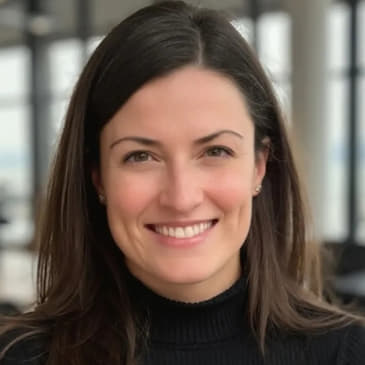
Ann Hynek is the CEO of Hestia Wealth & Wellness, where she helps individuals and families align their financial decisions with their values to build purposeful, resilient lives. With a passion for integrating financial planning and personal well-being, Ann brings a holistic approach to wealth—one that goes beyond numbers. She has a special focus on supporting families of neurodivergent and special needs children, guiding them through the unique financial and emotional complexities they face.
01:10 Why Financial Planning Fails Families With Special Needs
02:33 The Hinge Moment That Changed Her Career Path
05:19 What Most Advisors Miss About Special Needs Planning
09:12 The Emotional Reality Families Quietly Carry
13:25 Why Traditional Financial Plans Fall Short
17:51 The Cost of Getting It Wrong for Families
22:14 Building Trust in High-Stakes Conversations
26:40 Planning Beyond Money: Life, Care, and Advocacy
31:18 The Hidden Gaps of Great Wealth Transfer
36:09 Creating Stability in Uncertain Futures
Don't forget you can also follow Dr. Rob Bell on Twitter or Instagram!
Follow At:
- X @drrobbell
- Instagram @drrobbell
Download Your Daily Focus Map!
If you enjoyed this episode on Mental Toughness, please subscribe and leave a review!
Dr. Rob Bell
[00:00:09] Welcome to Mental Toughness Podcast with Dr. Rob Bell. Each week, Dr. Rob sits down with athletes, executives, and expert coaches to talk about mental toughness and their hinge moment. Here's your host, Dr. Rob.
[00:00:41] Our guest today on the Mental Toughness Podcast is founder of Hestia Wealth & Wellness, specializing in financial and life planning for families navigating neurodivergent and special needs family members. She's a member of the Academy of Special Needs Planners and a chartered special needs consultant. Before launching her firm, she spent 15 years leading marketing strategy at top financial institutions like BlackRock and Morgan Stanley, but her work today is personal.
[00:01:09] When her son was diagnosed with autism at age 3, she saw how complex and overwhelming the system can be. And more importantly, she saw the gap families just don't need financial advice. They need guidance across benefits, care, long-term planning. And that's the work that she does every day. Our guest today, excited for this conversation, Ann Hynek. Ann, thank you so much for taking the time. Great to be here. Thanks so much for having me, Rob.
[00:01:33] So I want to talk about your passion and what you're doing right now, but I was always interested in people's backgrounds. You grew up in Denver, but you went a bachelor's of journalism at the University of Missouri. Did you just love reading and writing? I did. Yeah. I actually always thought that I was going to be a journalist working for some big network, maybe the Today Show. I don't know. Something like that. Didn't quite work out that way, and I'm actually really glad it didn't. But that's what brought me to Mizzou.
[00:02:03] When did the financial services industries, when did that sort of take hold in your heart and become an interest? Good question. So really, I started my career in New York as a financial journalist. And in 2008, I was standing outside of Lehman Brothers with a cameraman and a microphone. And I was watching people carry the contents of their cubicles out in mail crates.
[00:02:28] And I wondered, I wonder why it is that I can go back to the newsroom and write a 30 second voiceover about mortgage backed securities. And it takes big banks, maybe a 30 page white paper to explain the same. And so I decided at that point that I wanted to get my MBA in finance and I wanted to do marketing and investor relations for financial services firms, really just focusing on and investor education.
[00:02:57] So really distilling complex topics into terms that people can actually understand the masses can actually understand. And so my first job in that field was actually working with BlackRock. And I was responsible for client facing materials on what was once known as the BlackRock blog.
[00:03:19] So I did ghostwriting for a whole bunch of portfolio managers and really just built content around, you know, timely topics as well as just basic. So, for example, what is duration and why does it matter? I think that was one of the most popular articles on the blog at the time. And I really loved it. I got to meet with some incredible people. I worked with some brilliant people.
[00:03:43] I learned so much. I got several credentials and licenses and just really enjoyed it. And then eventually I wound up in my hometown of Denver after covid. I left New York and I was working for a private credit firm. And after about two years with them, a close friend and a colleague passed away unexpectedly. And he was just a few years older than I was.
[00:04:13] And it just it was about a year ago now. And it just it really rocked me. And I remember thinking after he passed away, like, am I doing something where if everything ended tomorrow? I would I be happy with the legacy that I'm leaving behind? And the answer really was no. Like I built an incredible career. I had a very comfortable lifestyle, but ultimately it wasn't fulfilling to me on that on that higher level.
[00:04:42] And so it was interesting is before his death, he introduced me to a financial advisor who is a certified divorce financial analyst. And she built her career on helping recently divorced women, save and invest and set long term financial goals. And I just think I just think there's something so special about the fact that he introduced me to her because about a month or two after his death, she and I got to spend some time together. And she talked about building her practice around her passion.
[00:05:13] And it was just an inspiration for me. She's like, do the thing that you love to do, help the people that you love to help that you can relate to and then build build a career around that. And so at that time, I decided, you know what, I'm going to I'm going to quit my job. I'm just going to throw caution to the wind, blow up my career. And I decided to get my series 65 license, which enables me to become a financial advisor.
[00:05:41] And I wanted to specifically focus, as you mentioned, on working with the families whose loved ones have special needs and disabilities, as well as individuals who have special needs and disabilities.
[00:05:54] So that includes IDD, neurodivergence, autism, Down syndrome, rare genetic diseases, et cetera, really just diagnoses that sometimes put an undue financial burden on families and leave them with the question of what happens when I'm no longer here keeping them up at night because, you know, then they're done that.
[00:06:16] So I interviewed at a whole bunch of different firms when I when I made this decision and every firm broker dealer insurance company I interviewed with told me, one, you don't have the experience. And two, you're never going to make any money focusing specifically on that on that demographic. And so all these firms were skeptical that you could build a business focused on your niche. Correct. Wow. Great. And how did that fire you up? How did that impact you?
[00:06:46] Oh, it really fired me up. I don't really know if I can do this on your show, but like my reaction was, watch me, you know? Yep. So as a single mother of a special needs six-year-old, I certainly have the experience that most financial advisors do not. And I went back to my reasoning for getting into the financial services industry in the first place.
[00:07:12] Like, I really just want to educate people around their options using non-jargon so that people can understand. And I mean, ultimately, it's like for me at this point, it's like hire me or don't hire me. I just want you to be informed. And I think the industry needs to change. Great, great setup. So you became the advisor that you wish you had. That's exactly right.
[00:07:40] And getting into your career, talk about the experience with your son when he was diagnosed at that time and what that journey has just been like just as a single mother and business owner. Yeah. Yeah. So I remember that you obviously have a lot of emotions when a loved one is diagnosed with really anything. I think the biggest emotion that I felt, though, was isolation because it was like, okay, now what? Like, what do I do? Who do I call?
[00:08:10] At that point, I would have given anyone any amount of money and any resources to just figure it out for me. Like, give me a roadmap, help me to better understand what my options are. And so I feel like, you know, especially in the financial services industry, people are aware of it, but they don't specifically reach out to these sorts of families in this type of demographic.
[00:08:37] And I don't know if it's because there's just such a misunderstanding in terms of what is required. I mean, I have my chartered special needs consultant credential from the American College of Financial Planning. I think that's who they're called. That's either financial planning or financial services. I'll have to. Okay. Hold on. From the American College of Financial Services. And then I'll let you know which one it is. And then you can edit. I'll put the link in. You got it. Actually is.
[00:09:04] So I think there are just there are so many limited resources and so much such a lack of information, a gap of information. And I remember when my son was diagnosed, you know, being in the financial services industry for nearly two decades. It was one of those things where I was just like, do I even start a 529 plan for him? Like, I don't know if he's going to go to college. Is that something that's worth starting now? I don't know what the future is going to look like.
[00:09:30] And I remember I reached out to a really good friend of mine who is my financial advisor. And she works for a rather large bank with a lot of resources. And she was like, you know, I'm not I'm not sure what to tell you. I mean, you could start a 529 plan. And it was just like, I wonder what that looks like. And God bless her. She's one of my favorite people. But she's like, you know, I honestly don't know. And like, I appreciated her honesty.
[00:09:57] But I was really just sort of left to my own devices. Oops. I was sort of left to my own devices in terms of figuring everything out. And so one of the things that I wanted to do when I started this business is build a network of providers and clinicians and advocates and special needs attorneys and estates and trust attorneys.
[00:10:24] So that when I'm working with my clients and they say, you know, we just got this diagnosis and my child is struggling with being really selective when it comes to eating. I know a great food therapist that I can recommend. And if they have questions about a special needs trust and they want to pull the trigger on creating one. I know several incredible special needs attorneys.
[00:10:48] And I think I think what was really hard for me when my son was diagnosed is that I went down the Google rabbit hole. And there are obviously a ton of resources out there, but you have no idea which one is right for you. And I just feel like there's so much value in a warm introduction. And so that's what I offer in my practice, because there are a lot of options, but you don't know what's right.
[00:11:13] And so you've you've built your industry here in this service kind of ecosystem that's far beyond just the investment management side. Absolutely. Yes. A big focus of the business is just consulting and building that life plan and then aligning the investment strategy with those long term goals. When you say the warm introduction, I think of like Marriott. Well, that's their goal, right? Hey, you want a warm hello and a cheerful goodbye. Exactly. Yeah.
[00:11:41] Um, so I guess my question is, is, um, the joy that you get from helping others navigate, I guess, this entire journey with them, because I mean, you are very, very intelligent. You know what the resources are. You even know the people to go to and they couldn't even help you with that. Like, talk to us about I mean, look, you're not only the investment management, you're supporting independence, the employment part, their self determination.
[00:12:08] Like, talk to us about that, that joy and fulfillment and that you get from what you're doing now. Yeah. Um, so I, um, I find, you know, even on prospect calls today, um, just having the privilege of hearing the stories of these families and these people. Um, I hang up the phone and it's just like my heart is full.
[00:12:35] Um, and that's really, that's really where the inspiration comes from is just being able to share stories, hear stories, listen. And honestly, it's one of those things where it's just like, God, there are so many strong, incredible people out there who are dealing with a lot and they have the passion and they have the drive. I'm getting teary. Um, but that's really, that's really it. It's just like, wow, there are some amazing, amazing people out there.
[00:13:06] Yeah. Hey, good looking.
[00:13:24] If you like this podcast and are already a badass, but it's all way too complicated, then visit our website, drrobbell.com and schedule a call with us to help capture your very own hinge moment. Electrolyte and hydration mixes and drinks are not created equal.
[00:13:54] I mean, check the ingredients. They have sugar or sugar alternatives and there's tons of added stuff. Allow me to introduce you to the best electrolyte mix. Light balance. Light Balance. It's a naked electrolyte mix, which means no preservatives, no sweeteners, no flavoring, no caffeine or gluten and no calories.
[00:14:20] I'm always on the search for the best hydration and I've found it. My entire family uses it and I use it on all my runs. It solved all my hydration issues. Your body needs magnesium, potassium and sodium, which light balance conveniently provides in liquid or powder form. Pure, powerful hydration. Light balance. Go to L Y T E balance.com.
[00:14:56] Well, I can tell the passion when I had a, an athletic chair at the university of Tennessee and she would always like push the tissues back. Like, Hey, I'm struggling with something that had the tissues. I have to push them back to her because she would start getting emotional. And that's just the, that's just the caring of it. Right? Like it care about people. Yeah, exactly. How is it now in your career, as opposed to you, you build a good living, you enjoyed what you're doing, but you weren't fulfilled.
[00:15:25] How, how is that different now from, from what you're doing before? Um, well, I have to say, you know, as a, as a single mom, not having a paycheck, like a regular, like first and 15th of the month paycheck and, um, you know, corporate sponsored health insurance and all of that good stuff. Like, it's definitely scary. Like I, I took a huge risk.
[00:15:49] Um, but I, I also have to say that the flexibility, um, of this career now, um, is really something that I wouldn't trade for the world. Um, I also think that being able to run things the way that I want to, um, being able to collaborate with my business partner and really just shape this based on our dreams and our, our hopes.
[00:16:14] It's just, it's obviously such a different experience than working, um, working in corporate America. So terrifying, but also super exciting. And, um, I'm just, I'm inspired every day. Sort of like parenting, right? It's the most rewarding yet the hardest thing to do at the same time. Yeah. That's an understatement. Yeah. Yeah.
[00:16:38] Um, with the client niche that you have developed, I mean, you, you even write and speak on like advisors by focusing on a well-defined client niche, um, that allows for these deep relationships and it's, and it's even scalable. I was hoping you could talk about that. Yes. Um, so I would say, you know, there, there are a lot of generalists out there who are very, very good, um, at what they do.
[00:17:05] And I know that that could have easily been a career path for me from a financial advisory perspective. Um, but I just feel like I'm at the time in my career where having that niche just is that much more motivating to really go above and beyond, um, for my, for my clients.
[00:17:25] I also think, um, that the education piece enables me to, to scale it in terms of just being able to reach such a broad audience. Like, yes, it's a niche, but there are so many people who have questions about special needs planning and how it all works and whether or not they become clients. They know other special needs parents.
[00:17:53] They know other individuals with disabilities. And so I think when you find a resource in your community or somebody tells you about someone, you know, from word of mouth, I mean, obviously that's how a lot of financial advisors operate. But I think it's just especially more powerful in this community because it is so isolating because it is so overlooked.
[00:18:18] And, and it's, it's important to me to hear, I mean, you've, you've gone through this experience yourself. So, you know, exactly like maybe, I mean, situation is going to be different on exactly how they're feeling, but you, the empathy is there in terms of walking them through that journey. Exactly. And, you know, as I said, I was told by, you know, different financial advisory shops and companies, like you don't have the experience. And it's like, I have the lived experience. Like I am, I am not a stock picker. I know where my lane is.
[00:18:48] And so I was able to partner with a chief investment officer who is a CFP, who is a CFA. He's been doing this for 35 years. So all of the things that I don't know, he can, he can step in. I think it's just, it's the, I've been there and done that in terms of, of planning. You know, I'm still building a plan since my son is so young still.
[00:19:17] But I just think that, that kind of lived experience and that kind of, that kind of ability to, to, to relate is just, is just priceless. So Hestia, the, the Greek goddess of hearth and home. Hearth and home. Yeah. Protect, protecting the family. Exactly. You did some good research. Well, I appreciate that. And I try to, but talk to, talk to us about that. I love it.
[00:19:47] But so it came from, it came from several, the idea came from several different, several different channels. So obviously there, the majority of people who are in the financial services industry are men. And so when I was thinking about what I wanted to, to call my, to call my company, I really wanted to do something that was kind of a, a hat tip to women. And so I thought, why not, why not name it after a goddess?
[00:20:16] And so I just started doing some research. And when I discovered the Greek goddess Hestia, it just really resonated with me because I think what we aim to do with our practice is create that safe space, like a, a soft place to land, essentially. So she tends the hearth, keeps the fire burning and people are going off to battle. It's chaos day to day.
[00:20:41] And they always have a place to return to where they know, okay, I'm going to get some answers. I'm going to get some relief. I'm going to get some clarity. And that's, that's the goal of what we do. That's fantastic. Thank you. When, when you share about your passion and this niche that you have created, then helping families, you've created this ecosystem, you use your relationships.
[00:21:08] What is the, I guess if there was somebody that's listened to this, that, you know, that's the, I need to reach out to her. What do you think is the biggest challenge that, that they're going to encounter on this journey when it comes to the finances, when it comes to the support? Oh, wow. Well, I think just, I think out the gate, it's, there's just an overwhelm in terms of all of the different things that are out there.
[00:21:34] Like I said, if, if I, if I had to, to, to redo it, I would not have gone down the Google rabbit hole. And I think because it just made it so much more overwhelming. So I would tell people, you know, you, there, there is time, you don't have to be the expert in everything because there are experts out there who do this for a living who can help you. I think the other challenge is, and I don't want to get political, but I would say the
[00:22:03] other challenge is the fact that public benefits are not as generous as one would necessarily hope. And I think with budget cuts, that also makes it even more difficult. And so I think navigating the public benefits environment is extremely difficult.
[00:22:27] And I think a lot of parents just skip it altogether because it's, it's such a pain to navigate. And there are so many nuances and different things to know. But again, you know, there are people out there that that's what they've dedicated their life to there's a woman in Colorado who specializes in Medicaid waivers for families and navigating that market.
[00:22:51] And just like me, you know, she had a son who was diagnosed with special needs. And again, she, she blew up her career and is essentially the guru who does all of these things. So it's tough to navigate, but if, if you, if you look there, there are people out there and if you work with someone like me, I can introduce you to those, to those people.
[00:23:20] In terms of starting and starting in starting the business, I would say challenge is there. It's, it's, it's beyond difficult to start from zero. But the immense support that I've received from total strangers. I mean, I jumped without a net and within four months, I had an incredible business partner that was introduced to me through a mutual friend.
[00:23:45] Through that connection, I was able to build an incredible advisory council. Um, and I feel like everyone that I've talked to, whether it's, um, advocates, uh, or clinicians or, um, other therapists and providers, all of them are like, where have you been? Like, where was this yesterday? Um, and so I get, you know, referrals that way.
[00:24:13] And everyone is just, it's just so passionate about this as well. Or maybe they see mine and they're like, Ooh, that does sound like a good idea. Um, so it's, it's definitely difficult, but I don't know. I think it's just that outside encouragement and knowing that I am providing a service that I wish I had had. It's just, you know, what, what keeps me going. Um, I think another, another challenge is I had to get my series 65 and my chartered special
[00:24:43] needs consultant credential within a matter of six months. And now I'm studying for my life insurance license because I'm quickly discovering that that's also, um, a potentially good option when it comes to funding special needs, trust and long-term care for your, for your loved ones. So it's like a ton of studying on top of launching a business and running the operational side. But again, like these are all things that just make me that much more valuable to the community. So yeah, it's worth it.
[00:25:14] Talk about your own mental game when it comes to the business you've created. Again, you've, you're always going to have these challenges, but talk to us about like your own mental game. How is it that you stay dialed in and mentally tough throughout this journey? Yeah. Great question. Um, I think what really keeps me going is that what I've devoted my career to now is so much bigger than me.
[00:25:38] Um, you know, if I can, if I can shed attention on a population that waits years and sometimes even over a decade, um, for public benefits or for those who have to fall below an absurd asset threshold to even qualify for benefits or whose family members or are well-intentioned, but may leave them an inheritance that leaves them unqualified for benefits, then it's all worth it to me.
[00:26:07] Like I'm, I'm building this to help people, but I'm also building this to help the industry understand that this is an area that needs more attention. Um, but then also just bringing education and awareness to the families and individuals who need it. Um, it's funny. I feel like I've spent my whole life as a people pleaser.
[00:26:32] And I think now I'm well on my way to becoming an activist if I'm not one already. So I think that's, I think that's what keeps me going. Excellent. Yeah. One of the pieces that you speak on, uh, like the wealth transfer for advisors that they're not prepared for us. Hoping you could delve into that and unpack that for us. Yeah, sure. Um, so the way that I see it, um, and I, you know, I've, I've done a lot of research and
[00:27:00] my business partner has done a lot of research. So it's an estimated $124 trillion. Um, we'll change hands in the great wealth transfer over the next 25 years. Is that, is that larger than what the GDP is right now? That's a really good question. Let me see. Let's look it up. Oh, I should pause it then. Sorry. Hold please.
[00:27:27] Yeah, it is larger as of, uh, Q4 of 2025, the nominal GDP for the United States was approximately 31 trillion, a little over 31 trillion. And how much is going to transfer? Uh, it's going to be 124 trillion. Wow. Okay. Sorry for the tangent, but. No, I love that. Thank you for asking that. I'm going to, I'm going to add that to my marketing material. Oh, good. Well, you're welcome. Yes. Thank you. Let me know what I owe you.
[00:27:55] Um, so then if you send you the invoice. Yes, exactly. Please do. I'll send you my address after this. Um, so if you think, if you consider that approximately 7 million Americans, sorry, 70 million Americans, um, live with a disability, that affects about 17% of U.S. household.
[00:28:15] Um, and so obviously that creates a multi-trillion dollar planning opportunity that, um, very few wealth management firms have intentionally built, um, programs to capture. Um, as I started this process and, um, started talking to people, I mean, I can name maybe six other financial advisors who devoted their practice to this. Six. In the entire country.
[00:28:44] Um, and so I think, I think we're onto something and hopefully, hopefully it catches on. Um, I'll just give you a few more statistics. Uh, so right now, um, one in 31 children in the U S are identifying with, um, autism spectrum disorder. Um, I think it was one in one 50 in the year 2000.
[00:29:09] Um, and as I said, 70 million Americans live with a disability and 23 million of those require lifetime support. Um, which is something else to consider in terms of, in terms of financial planning. Um, so ultimately the way, the way that I, the way that we've calculated it is if 17% of U S households.
[00:29:34] Are affected by disability and the great wealth transfer involves $124 trillion. Um, the disability adjacent planning market represents around 20 trillion of assets that will require specialized expertise. Um, including navigating benefits, setting up trusts, lifetime care plans, really planning for your own retirement, as well as the life of your child after you're gone.
[00:30:01] Um, um, and multi-generational coordination. Um, and like I said, I only know of six other advisors right now who are equipped to capture this. When, when you mentioned that part and like, you noticed there are six that, you know, and. Yeah. And they're all awesome. They're so great. All of them reached out to me and they were like, yay, join us. Talk, talk to us about like from an over overarching like financial, uh, wealth management, financial advising.
[00:30:30] Like if you know six, like, so what does that mean? If I, if I am one of six. Well, no, if you just know six individuals who are dedicating their practice towards this great wealth transfer, like what does that mean for the overall, um, just business model in terms of financial advising? Um, well, actually one of those six advisors, when he and I were talking about it, he put it beautifully. He said, there's, there's a big blue ocean out there. This is a huge opportunity.
[00:30:58] Um, and my, my business partner, um, is especially, um, interested in, um, really just a change in the industry altogether. Like we're, we're going to show you how, how this can be done and how this needs to be done. I mean, you have so many financial advisors that are aging out.
[00:31:25] Um, and I mean, it seems like even just the, the education and mentorship of, you know, G2 coming through the business. I mean, that, that just seems to be a great opportunity, but do you see that mentor? I mean, is that even happening at the level, like at the level, I guess it needs to happen. You know, it's interesting when I, when I, um, when I first launched or essentially made the announcement that I was going to do this.
[00:31:50] There were so many G2 people on LinkedIn who are analysts right now, or, or working at financial advisory shops right now who are fresh out of college and, and, you know, they want to learn more. And I think, I think the next generation is, is going to be focused on the broader impact of the greater population.
[00:32:13] And what better way than to find a niche that you're passionate about, find an area that you're, that you really, really care about or find something that you want to change. And then you make that your job. Yeah. No, I appreciate you sharing that. Did that answer your question? It does. It does. And I'm just always curious about that because it seems like, I mean, this is, it's something that's unprecedented. I mean, that type of wealth transfer over the next 15, 20 years. Yeah. Yeah, for sure.
[00:32:42] And, but there's so many financial advisors that are aging out at the same time. Yeah. And it just seems like this is a opportunity. Yeah, absolutely. Um, you, you met Dr. Temple, uh, Grandin. I mean, your picture with her, I mean, very, very special lady. She, she, she is incredible. She, um, she is an inspiration and what was so beautiful about that meeting.
[00:33:07] So she and I met, uh, at an event, um, for a charity that I am on the board, um, for, and, uh, she was, um, an honorary guest because she had won an award the year before. Um, and I, I sat with her for a little while and, um, we were talking about, um, just the education system and neurodivergence.
[00:33:37] And I told her that my son was on the spectrum and she just immediately dug in, you know, she was asking me all the questions about him, like what he's good at. And she was so, so genuinely interested. And then she was like, be sure that you encourage this and be sure that you encourage this and be sure that, you know, he knows that he can do what he needs to do and make those accommodations and all of those things.
[00:34:01] And I just, I loved how much she cared about my kid within five minutes of meeting her. Um, yeah, she's really something. Yeah. Um, with, with your team, can you share, share with us about your team? Yeah. Um, so right now there are three of us.
[00:34:23] So my, um, my business partner, um, Agatha Arante, um, she has been in the corporate finance world for the entirety of her career. She's incredible. So she is my chief financial officer and chief operating officer. Um, at this time, she's currently studying for her charter special needs consultant credential, as well as her series 65.
[00:34:46] Um, her family is also, uh, impacted by disability and she also has a passion for this. Um, so I just, you know, the fact that she came on the radar, it was just like, this is the, this is the perfect person. And then, um, as we were looking for, as I said, um, we have our own, our own swim lanes and knowing what we're good at and what we're, we could be better at.
[00:35:11] Um, we found this really incredible, um, uh, chief investment officer. So we were essentially outsourcing to him. Um, he, as I said, has been in the industry for 35 years. He heard about what we were doing. He's also passionate about it. He wants to help us out. Um, he's, he's so brilliant.
[00:35:31] And I think one of my favorite things about him is, again, he's able to translate extremely complex topics and concepts into a way that the masses can understand. And I just, I think, I think it's really a sign of, of great intelligence when somebody, when somebody can do that. I think sometimes people think, oh, we're going to write this academic paper and it's going to be so sophisticated.
[00:35:56] And it's like, I think when you can actually take that academic paper and distill it, like that really takes another level, um, of intelligence. So he's with us and I'm so thankful that for that. And as I said earlier, he's a, he's a CFP and a CFA. So he obviously, obviously knows what he's doing. Um, and so it's, it's just the three of us for now, but again, like other advisors have reached out to me and have said, like, when you start hiring, please consider me.
[00:36:26] Mm-hmm. The, um, yeah, the power of brevity. Yeah. I've seen some of those materials and I'm like, I don't, I have no idea what I'm looking at. And I can't imagine somebody else knows what we're looking at, but you can distill it into a one pager, right? Or a couple sentences. Like, I think it takes a genius to keep it simple. Uh, I think so too. You and I agree on that for sure.
[00:36:48] If you're struggling with soreness, pain, or inflammation, need to check out Stamina Pro Recovery Patches. Developed for over 15 years, the clinically proven technology of Stamina Pro is free from all chemicals, all pharmaceuticals, all drugs. And it's 100% safe for athletes.
[00:37:18] I only promote products that I use myself and Stamina Pro takes care of all my training needs, pain, and soreness. If you use the code DRB15, you get 50% off or use the link below. Stamina Pro.
[00:37:51] Um, you mentioned something again before, and that was hoping we could delve back into it. But part of why I wrote the book Puken Rally is I just believe that I've never read, I've never met anybody successful that wasn't told at some point in their life, either through the circumstance or by somebody else that you can't do it. That's a bad idea. Don't try it. Yeah. And, and you encountered that firsthand. Oh yeah. But at the same time, I also think it just takes like one person to come alongside you and tell you, Hey, no, you can do this. What was that?
[00:38:21] If you're hearing this negativity and, you know, from people that, that, you know, and respect, and they're telling you this, like still, what was it that, no, I am going to do this. This is what I'm going to do. So I think, I think it's, I think it's two things. So when, um, the friend that I was introduced to, um, told me about her practice, uh, as a certified divorce financial analyst and how she was able to build it.
[00:38:50] Um, she was, she just said, you know, like if, if it's something that you're passionate about, you will make it successful. Like I, I did. And she's, she's built an incredible practice, um, and has a great following and is well known in the community. And so I think just, I think just hearing from her, you know, is all you, all you need is passion and a belief in what, a belief in what you're doing. And so that was really the catalyst.
[00:39:18] And then I think the fact that, um, people just came out of the woodwork after I put a stake in the ground and said, this is where I am, um, was also extremely heartening and inspiring. Um, and it was so funny because I think it was like a week ago when I was thinking about growth trajectories and all of that good stuff. And I was like, well, I really hope this works because I think, I think we all have those feelings of, of doubt.
[00:39:46] Um, I had two very, very close friends of mine reach out to me just completely out of the blue. They don't know each other. One lives on one coast, the others on the other. And they both reached out to me within a matter of days and they were like, tell me how you did it. Tell me how you quit your job, gave up the career that you have cultivated for so long to start something else.
[00:40:12] Because I'm at the point in my career where it's like, yeah, it's time for me to do something completely different. And I just took that like one, I loved, I loved coaching them through it. Um, but then I also just took that as like a sign of like, you're doing this and other people are inspired. Like, obviously there's something in here that is, is meant to be, it's meaningful to other people.
[00:40:39] And so I think in those moments too, it's like, that's, that's another source of encouragement that kind of comes out of nowhere where you're, where you're like, oh yeah, this is good. This is really good. And I got to keep doing it. Yeah. No, I think that's fantastic. Yeah. Um, Andre Agassi strength coach gave me a quote one time and he said, some battles are, aren't worth fighting even if you win, but the real power. And he said, some battles are worth fighting even if you lose.
[00:41:09] And the part that I always got from that is, you know, being my own business owner in 2011, I left academia, had no idea what I was doing, but, but I just knew what I wanted to do. I knew that vision and it always got back to, you know, I just, I wanted the shot. Like I wasn't afraid of missing the shot, but I at least wanted to take the shot. Absolutely. And I think that was sort of like that, that big part there. I was like, look, if I'm going to fail, like I'd rather fail taking an open shot. Yeah, absolutely. Yeah. Yeah.
[00:41:38] And it's one of those things. Um, I don't know who said it, but I remember this is one of my favorite quotes when I was in high school or college. Um, a very naive me, but I think it still rings true. And that is, um, I never want to wake up one day wishing that I had tried. Right. Yep. Yeah. Yeah. Well said. Yeah. Thank you. What, um, being a female in the industry, talk about that.
[00:42:08] Oh, um, well. I guess I should have, I should have set you up better than that and just open it. But anyway, anyway, you wanted to take it. That's totally fine. Um, so as I said, the, the inspiration for, um, naming the business after a goddess is kind of just a nod to, to the females in the financial services industry and becoming one of them.
[00:42:34] Um, um, about two months after my friend passed away and I had decided that I needed to do something completely different with my life. Um, my, uh, my company was hosting, um, essentially a retreat for female financial advisors.
[00:42:54] And, um, they all, you know, met in California wine country and we had three days together and just hearing their stories and listening to how they built their practices. There was just something about it that it was just like, this is the team I want to be on. You know what I mean?
[00:43:13] And I think, um, I think there's just a need for more women in the industry because the way that we think about planning for the future, the way that we think about making sure that our families are supported. Um, I just, I think that there's, there's a lot there, if that makes sense.
[00:43:35] Um, I think more women are controlling the money, um, in their relationships. There are more, um, women who choose to just follow their career and they become wildly, wildly successful. And I think, I think that the industry needs to match that trend. Um, and like I said, meeting these other female financial advisors.
[00:44:03] They were just inspiring because obviously they've been in a room with all men and they're doing it their way. And wow, are they successful? Yeah. When, when you go on that retreat, like what was, what was something that really stood out to you in terms of like, Hey, if there was a common theme amongst the, the, the women there. Oh yeah. Um, I think the, the common thread was, um, I started my career.
[00:44:33] I was doing it the traditional way, you know, starting as an analyst, starting on a team, working my way up. And I just knew I could do it differently in a way that would be more fulfilling. Like all of them just started their own thing because what exists wasn't working for them. Mm-hmm. And was there, would that be like more focused on the client?
[00:45:01] Um, well, that's a really good question. I think specifically for my friend who was the certified divorce financial analyst, like coming from her personal experience, her goal was to focus on other women like her. I think the other thing, um, I think the other thing was really, yes, the emphasis on the client and building that financial plan.
[00:45:28] But then also figuring out really their, their life plan, their client's life plan. Um, because there are so many different moving pieces and you can create a financial plan, but then there's other things that need to be considered and other things that need to go, go into it. And so I think, I think that they all recognize that. And we're like, okay, we're going to do this differently. Yeah. Yeah.
[00:45:56] And I've really appreciated this. My, the question, right. What, what questions should I be asking that I've forgotten to ask or that I haven't asked? Uh, well, we went through the statistics. Um, I don't know if, I don't know if there's anything else to be honest with you. Um, well, there has to be. Well, we talked, we talked about the, what keeps me going, um, and the activism.
[00:46:26] I had one more kind of geeky question to ask. Do it. If you want to think about it. I'll take it. So I'm familiar with trust, but one thing I'm not familiar with at all is, is pooled trust as a, as a tool. Oh, okay. Do you think you could share like what that is? Yeah, absolutely. So, um, uh, a pooled trust is, uh, is a nonprofit organization. Um, we have one here in Colorado that's been around since the mid nineties.
[00:46:52] Um, and the goal is to make, um, trust administration for smaller trusts, um, more affordable for families. And so what is done essentially is the trusts are pooled. They're, they're still in separate accounts, but they're pooled in a way that they can be invested and administered.
[00:47:19] So a pooled trust enables, um, families whose loved ones have special needs and disabilities to essentially invest money and also have the ability to have a trustee resource. But the expense is not as high as having their own special needs trust or trust set aside that then has to be administered by one trustee.
[00:47:45] Um, so what a pooled trust basically does is it pulls the money though. Those accounts are kept separate. It pulls the money. They're able to invest. They're able to administer the trust in a way that that is less expensive because they're, they're pooled together.
[00:47:59] And then the other beautiful part about a pooled trust is that the family can make the decision that upon the, the death of the individual who has disabilities upon the death of that beneficiary, um, they can choose to leave those funds in the pooled trust to then support other families and other individuals that are within the trust. Oh, wow. Yeah. Isn't that beautiful? Yeah, it is. Yeah. Now back to you.
[00:48:28] What question, what questions have I, have I not asked? Um, this is like the mic drop moment for you. I know. I know. What questions haven't you asked? You could ask me what, what are some of the challenges of, um, of finding individuals who want these services, who need these services? Because what, what I, what I tend to find is that like, as I said, it is so isolating as a parent.
[00:48:57] And then I also think it's very hard for people to ask for help. And so if you consider the fact that people don't like to talk about money anyway, and then you add disability and feeling isolated and not wanting to ask for help, it can, it can be even more challenging. Um, so maybe you want to ask me about that. Well, I think I just did. Okay. Did you, did you want to set me up? Well, you just kind of said it. Yeah.
[00:49:26] Um, okay. So. That was, that was actually something that I was really surprised by. Cause as I, as I said, when my son was diagnosed, it was like somebody, there has to be somebody like, I will reach out to anybody, whatever it takes, whatever it costs. But I think that many people it's the opposite. It's just, you know, I don't want anyone to know this is really hard. And. Let me ask you a question on that. Yeah. So.
[00:49:56] I believe like we're, we're so apt, like I would, I'd love helping people. Like that is what fills my soul is just to be able to help people and any kind of buddy that comes. So I always said like anybody that comes to me for like coaching, like you're going to get fed. Right. It just depends on, Hey, what meal do you want? Right. Do you just want the McDonald's half meal or do you want the roost Chris whole experience here in terms of coaching? So with that said, like, I'm always apt to help people, but why, why do we love to help? But it is so hard to ask for help. Oh God.
[00:50:25] When you figure that one out, you call me. Well, you know, to be completely honest, I think we, we hear these stories of people who start businesses and, you know, they, we, there's, there's this perception that they did it on their own, that they, that they became successful on their own. And I think there's some, I think there's some level of, of misguided worship in that way.
[00:50:54] It's like they did it on their own. They figured it out. Look at how strong they are when the reality is like, you don't have to, and who wants to? So, and ultimately, even the people who did it on their own had people on the sidelines cheering them on in some capacity. Right. So I don't know. I think it's just the perception of I'm strong enough to do this and I want to show people that I'm strong enough to do this. And the reality is like, we can't do it alone. Nobody can do it alone.
[00:51:24] No one gets there alone. Yeah. Yeah. And thank you so much for your time, for your insight. Just again, really appreciate it and got so much out of this. Thank you. Oh my goodness. I'm so delighted you reached out, Rob. Thank you so much.
[00:51:38] You're listening to Mental Toughness with Dr. Rob Bell. To find out more about Dr. Rob, visit his website at drrobbell.com or follow him on Twitter at Dr. Rob Bell.
[00:52:05] And subscribe to the show on your favorite podcast platform to get the next episode of Mental Toughness as soon as it's available. Thanks for listening and we'll see you next time. Hey, golfers. You might not even know that you're looking for it, but this is the best golf sock that you can have. The golf sock.
[00:52:34] Their grip technology is absolutely stunning. I even use it when I'm running. That's how good these socks are. You're absolutely going to love it. It's like a golf glove for your feet. The golf sock. Click on the link.