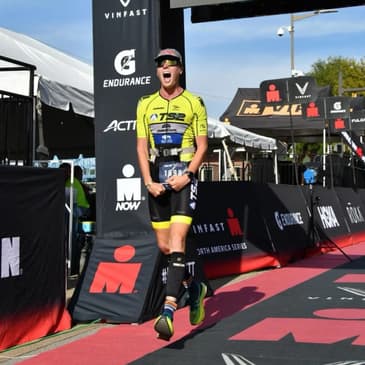
Kyle Gabbard is a triathlete and current student at Indiana University. Kyle is an Ironman. He completed his first Ironman in 2020. Since then he has done 3 full Ironmans and 6 half Ironmans. Kyle qualified for the World Ironman Championship - Kona this past year. He qualified by winning his age group (18-24) in the Chattanooga Ironman. All this in addition to being an Evans Scholar.
- 3:56 Starting As A Caddy
- 5:47 Life Lessons As A Caddy
- 7:12 Number One Memory From Caddying
- 9:34 The Importance Of The Evans Scholarship
- 11:32 From Injury To New Passion
- 14:07 Realizing This Is What I’m Good At
- 16:11 The Mental Toughness Of Fighting Through The Pain To Win
- 20:34 The Feeling Of Your Work Paying Off
- 22:30 It Takes A Whole Team To Win An Ironman
- 25:47 Heat's Effect On The Race
- 31:10 The Hinge Moment Of Backpacking Through Alaska
- 33:50 Friends Made Along The Race
- 34:47 Sharing The Pain With Others
- 37:00 Future Goals In Ironman Racing
- 40:57 The Motivation From Family And Friends
- 45:18 The Importance Of Recovery
- 48:08 Enjoying The Tests And Workouts
Don’t forget you can also follow Dr. Rob Bell on Twitter or Instagram.
Follow At:
- Twitter @drrobbell
- Instagram @drrobbell
Download Your Daily Focus Road Map!
If you enjoyed this episode on Mental Toughness, please subscribe and leave a review!
Dr. Rob Bell
[00:00:10] Welcome to Mental Toughness with Dr. Rob Bell. Each week, Dr. Rob sits down with athletes, executives, and expert coaches to talk about mental toughness and their hinge moment. Here's your host, Dr. Rob.
[00:00:23] All electrolyte and hydration mixes and drinks are not created equal. I mean, check the ingredients. They have sugar or sugar alternatives, and there's tons of added stuff. Allow me to introduce you to the best electrolyte mix.
[00:00:54] Light Balance. L-Y-T-E Balance.com. It's a naked electrolyte mix, which means no preservatives, no sweeteners, no flavoring, no caffeine or gluten, and no calories. I'm always on the search for the best hydration, and I've found it. My entire family uses it, and I use it on all my runs. It solved all my hydration issues.
[00:01:21] Your body needs magnesium, potassium, and sodium, which Light Balance conveniently provides in liquid or powder form. Pure, powerful hydration. Light Balance. Go to L-Y-T-E Balance.com. I would say, especially in Ironman racing, I think it's just the camaraderie between all the people racing.
[00:01:49] I have a couple stories from the Ironmans that I've done where you just make friends in the suffering. You're all just suffering together, and it's such a formative experience for everyone doing it. You can only share that suffering with people that are also suffering with you.
[00:02:21] Our guest today is actually a student at Indiana University who will be graduating this year. He started Ironmans, his first one in 2020. He's done three full, six half, but man, he's fast. He is an Evans Scholar and obviously an Ironman triathlete, but he qualified for Kona this past year, and you qualify by winning either the big ones or winning your age group, which he did, man.
[00:02:47] So I'm looking forward to talking with him about that. I'm excited today to speak to Kyle Gabbard. Kyle, my man, thanks for coming on, bud. Thanks for having me. I'm looking forward to the conversation. So first question for you. So we, Mr. Todd Firestone at Meridian Hills said he was shocked that you could excel at Ironman considering your first couple loops as a caddy. He said he didn't see any kind of future for you at all, man.
[00:03:15] He didn't see it? I'm shocked. I miss Mr. Firestone. He's the man. He said that in jest, man. He was such a big fan of yours and he was impressed. He said, man, hit him with that question. I said, yeah, absolutely. That'd be fun. So much love for Mr. Firestone. Yeah. Yeah. He's great, man. Tell us about your experience. Like, you know, cause he caddy for many years and again, Todd Firestone's a head pro at Meridian Hills for those that are outside of the area here, which is one of the best clubs here in Indianapolis area.
[00:03:44] But he said in all his years, I mean, you were, you were one of the top caddies that was there, man. And that, I just think that's an incredible testament to, to you and as a character. Talk about your experience, man. How you got into, to that role? Uh, get into caddying. I feel like my very first loop was at, uh, Oh, what's the course next to Stony Creek? That private course? Uh, Sagamore Sagamore. Yeah. I caddied at Sagamore for a youth links event.
[00:04:15] Randomly. I just reached out to someone to see if I could caddy, caddied there, absolutely loved it. And then I kind of was just reaching out to every golf course in the area, just seeing who had a caddy program. And Meridian Hills has probably the premier caddy program in Indiana. Maybe Crooked Stick would be up there, but personally I would put Meridian Hills at the top and yeah, started there.
[00:04:40] I think in 2014 as like a 14 year old and had no idea what I was doing, but yeah, Steve McGovern and Todd Firestone really just, it's just great life lessons. Like just getting out there all summer, getting up crack of dawn, busting over to Meridian Hills, trying to get the first loop out of there. So then maybe you could get a second loop as well.
[00:05:08] They just instill so many good life lessons that I've really carried throughout my life since I was just caddying. And same with all the members that you caddy for, you just pick up on, on so much stuff from everyone. A lot about work ethic and just discipline. And you kind of can see the, like what factors go into success. Yeah. Talk to us, like go a little bit further into that because people will say life lessons, but like, what do you mean?
[00:05:38] Like what actually instilled that you took with you from all your loops, all the bags that, that you carried in the relationships that you built? What were some of those lessons? The main ones I would say were just like work ethic and the work that you do gets rewarded. Like if you put in a certain amount of effort into something, you see that effort returned to you.
[00:06:03] So like me and my buddy, Rich, who we both got the Evans scholarship from Meridian Hills. We spent, it was like three summers in a row. We would be the first ones there like Thursday through Sunday. And then we would come on Tuesday morning, ladies league. And we would be there on Wednesdays for kids club. Like we just poured all of our energy into Meridian Hills, knowing that the harder we worked, the more rewards that we would reap.
[00:06:33] And like, yeah, you just, and they could see it too. Like if you put in energy into something, the energy gets returned to you. I feel like. How many, how many total loops do you think you've, you've done? That's a good question. I would say I'm probably close to probably over 400, close to 500 now. Yeah. Nice. Is there a story that, that sticks out to you, man, about, uh, about caddy?
[00:07:02] Cause I've, again, I haven't caddied nearly as much as you have. I've, I've done it at like the highest level though. So I've got some stories, but do you have a story, man, that, uh, that sticks out about to share? Let me think. There's some, there's some cool ones, but the most memorable experiences I know I caddied, I got to caddy at the, the BMW program when they had it at crooked stick on the Monday. And that was cool. Just seeing all the grandstand set up and everything.
[00:07:32] But honestly, my favorite story from one of the summers caddying is like when you're in the caddy yard, you just build such good relationships with all the other, all your other coworkers. And I remember one of the mornings we were, I'd like just gotten my driver's license and we had like, there was like 20, 25 of us in the caddy yard, just waiting on our loops.
[00:07:57] And me, me and rich decided to go get McDonald's for everyone. And we got, we pulled back up to Marine Hills with like a huge bag of just like McMuffins or something. And it was, it was, it was, it was just so fun. Like that was probably one of my favorite memories, just coming back and everyone was just chowing down on McDonald's while we waited for our loops. And I don't know. It was, they were just great summers.
[00:08:23] It was probably the best summer job I could have asked for just community wise. And I don't know. It was some special summers for sure.
[00:08:54] Hey, good looking. If you like this podcast and are already a badass, but it's all way too complicated, then visit our website, drrobbell.com and schedule a call with us to help capture your very own hinge moment.
[00:09:23] Well, talk to us about the Evans scholarship, man. Cause I mean, you know, if you could lay it out, cause I don't think people really understand the significance of that one. But lay that one out for us. Cause I mean, that's, that's a really incredible achievement. Yeah. So what the Evans scholarship is, it's basically a tuition and a housing scholarship, full tuition, full housing. All the big 10 schools have it. And there's a couple of others that have started to add it as well. And it's four caddies.
[00:09:51] And so the requirements are, I think you have to get to a hundred career loops before your senior year of high school. And then there's a lengthy application process where you have to write an essay, get a bunch of referrals from your like head pros, caddy masters, teachers, et cetera. And then, yeah, you submit the application and then they review all the applications.
[00:10:15] And then you have to go through a pretty serious interview process where mine was at Hillcrest Country Club, just off of Benford in Indianapolis. And they just, there's like, it's pretty intimidating. Honestly, there's like a full room of all the WGA members and like board members and you're front and center. And they're just like rapid, everyone will stand up and ask you a bunch of questions.
[00:10:40] And some are like really serious questions and then there'll be other like lighthearted ones. So it just keeps you on your toes. And yeah, I'm very honored to been given that privilege to attend Indiana University pretty much debt free. No, it's awesome, man. Life changing, man. Absolutely. Absolutely. No, it's fantastic, man.
[00:11:01] Well, every Evans scholar that I meet, I like, you know, when I get to know that they are an Evans scholar, man, one of the questions I'll ask them is like, you know, what's your next goal? Because they've got big goals, man. I mean, it is not an easy thing to get. And so, yeah, definitely impressive, man. Appreciate it. With that said, talk to us about like, what was the first experience that you got into triathlon? Because I'm assuming you just didn't hop right into like Ironman. Like what was the first experience for your triathlon, man? Was it a sprint?
[00:11:33] Yeah, very first experience. It was like right at the start of COVID. I had a pretty bad ankle sprain from basketball and was like completely out of commission. And I just needed something to work towards. Like I just needed a motivating factor to get me back into shape. And I don't really know what really was the, I don't know why I didn't just pick like a half marathon or something. But I went for a half Ironman.
[00:12:01] So I just signed right up for Muncie 70.3. And me and my dad both signed up for it. And it was supposed to be in October of 2020. And we did the Huntington sprint tri was our very first one that we experienced. And that was both of our like first open water swimming experience as well. And it was a struggle fest. That's for sure.
[00:12:30] Like having coming from no swimming background to swimming, I think it was just like 500 meters open water. It felt like an eternity out there. And I had no idea what I was doing. But yeah, right after that one just hooked like that finish line feeling. It's just special. In 2020, did they have, did they have the Muncie half Ironman? We did not. Yeah, it got canceled. Like maybe three or four weeks.
[00:12:57] Yeah, maybe three or four weeks before it, it got canceled. And then in January of 2021, it got Ironman Indiana became a thing. So it was like a one time thing for a full Ironman in Indiana. And I felt like that was a sign that I kind of just had to sign up for the full since I was already halfway signed up. So me and my dad both signed up for the full in January of 2021.
[00:13:26] And so you went from sprint to full Ironman? We did Ben Harbor 70.3 that summer before the full. But there was no swim in that either. That one, the swim got canceled. Oh, really? Okay. Honestly, it was a lifesaver. I was not prepared to swim in Lake Michigan. So you got hooked right away, man. Because I mean, you're still relatively new to the whole sport, man.
[00:13:48] I mean, to be as fast as you are, I mean, take us back like during that time, even after like the first Ironman that you've had and you've got a 70.3 that's underneath you. Like when did you kind of look at that time and like, man, you know, I'm actually like pretty fast. Like I'm pretty good at this.
[00:14:08] Yeah, honestly, after the first full Ironman in Muncie, I think I went like 13 hours and 55 minutes, which at the point I was just trying to finish. But I don't know why I thought I would be good after finishing in just under 14 hours. But like, yeah, like the very next day after finishing, I was like, I was like, I think I could be pretty good at this.
[00:14:35] And so then, yeah, after my first full, I kind of just like dove in headfirst, got a coach, upgraded a bunch of stuff and just doubled down on everything I had been doing. And then, no, no, no, I appreciate that, man. I didn't mean to cut you off, but go ahead. No, you're good. I don't know what I was doing. So then the next one that you had, so just under 14 hours. So was that Louisville that was next? Was that Chattanooga?
[00:15:05] I went, yeah, Ironman Indiana. And then the following year, I just did three halves. I was trying to qualify for the half Ironman World Championship. And I kept PRing, but I was barely missing like the last slot to qualify for the, for St. because I think it was being held in St. George that year, which I really wanted to race in St. George because it's such a cool location, but yeah, narrowly missed qualifying for 70.3 worlds.
[00:15:34] I think that was 2022. And then switched the focus again to qualifying for Kona. And that was in Chattanooga. Yeah. Okay. They had to swim that year? They did. Yeah. Okay. I mean, it's more of a float down the river, but. Yeah, no, I get it, man. It's a fast swim, which I need. So, um, talk to us about that experience, man, if you can, like you're going into that race.
[00:16:02] Did you have the expectations of, I mean, I know the goal that you wanted, but did you have the expectations? Like, Hey, this is something I know I can do. In the Chattanooga race? Yeah. Yeah. Uh, yeah, going in the, yeah, the big goal was to win the age group because I knew there was only going to be one slot for my age group, 18 to 24.
[00:16:24] And so I kind of, I had done a bit of stalking beforehand and found the guy that got second the previous year. Uh, I was looking through his Strava and gave him a follow because I saw that he was also going for Chattanooga as well. So I knew it would, it would mostly come down to him or I.
[00:16:47] And so it was, it was fun to go into the race, kind of building up a little rivalry of sorts, just to like give myself like something to set on, you know? Talk to us about like how, um, how'd that race go for you? Yeah, I went honestly about as perfect as it could have gone. Like leading into it, I had, I was dealing with some IT band issues like all throughout the spring.
[00:17:16] And so I hadn't really gotten the run build that I wanted to going into it. So I was kind of just, I didn't really know what like the last 10 miles were going to feel like just because I hadn't, my longest run, I think had been 16 miles leading into it. And so, yeah, swim was really fast. The current was flowing. I think I, it was like 2.4 miles in 45 minutes, which at that time I was, yeah, I was not, I'm not that type of swimmer.
[00:17:43] And then it was a hunt at that time, the, the bike course is 116 miles. And I think I biked in 505, but I could, my bike fit wasn't as styled back then. And so I was definitely having some pain like the last hour of the bike and was really losing some power, but felt great. Once I got out onto the run and what was your, what was your average like miles per hour for that one?
[00:18:11] If you remember, I think just over 22, 22 and some change. That's moving, man. Yeah. Not too bad. And then I think I was like down five minutes around, yeah, down around five minutes starting the run from first place. And so you knew where he was. Yeah. I got, I had some, some of my, my coach at the time. And then my family was giving me some call outs with where he was. And so spotters nice. Yeah. It was, it's, it felt like a real race. It was pretty cool.
[00:18:41] And yeah, I made it to the halfway point and I was feeling the Chattanooga course. It's like eight miles of relatively flat. And then, uh, there's like a five mile stretch where it's just a ridiculous amount of hills. And so the first eight miles, I felt great. And then right as I got through the hills, I felt like crap. But then I got another call out that I had like taken down two minutes off the time. So I was only three minutes down at the halfway point.
[00:19:09] And so that just like extremely, extremely motivating. And then I got to, I think mile 17 ish. And I saw my brother and he informed me that the guy was walking like a couple minutes ago. And then I like just flipped the switch and I honestly got too aggressive and picked up the pace really hard for the next three miles. And then I caught him. Get that surge of adrenaline, man. I get it.
[00:19:35] Got the, got the pump in and then caught him at like mile 21 ish. Did you say anything to him when you passed him? I, I think I gave, I gave him a pat on the back and was like, Hey, like, like he, he said I was looking strong and I was, let me see if I can keep these lights on. Sorry. But yeah, he said, you're good, man. All right. He said I was looking strong and I was, I just congratulated him and I said, I'll catch him at the finish line. But yeah, he's been, we've been following each other ever since.
[00:20:04] And it's, it's a, it's a cool little relationship form between us just from that race. Love it. So not that I pass a lot of people in my races, man, but when I do, like, I love that feeling of passing somebody telling them, man, you're looking good. You're doing a good job rather than the opposite. Cause the opposite feels so bad, right? When you get past somebody's walking past you, Hey man, looking good. And you're like, Oh no, I'm not. But what, what did that feel like then when you, when you won, man, when you went age group?
[00:20:33] Like it, like, I don't know the wave of emotions. Like you just really feel like all the work that you did, like, it just really feels like it was worth it. Like, it's cool to like in Ironman racing, you do a ton of training and you basically get one shot at it. And so it, it's just cool to see it pay off like that. And yeah, I was coming into the last mile.
[00:21:02] You go over a wooden bridge and I was like walking through the last aid station. And one of my teammates that I had passed earlier popped back up to me. And so we ran the last mile together and there's like a hot corner that you come down before you like do the final turnaround to the finish line. And all of my, my coach and all of my teammates were all like around there just going crazy. And it was like, that was the moment when I like really knew I was going to go to Kona, Hawaii for the world champs.
[00:21:30] And so like, I think I was smiling the entire last mile, mile and a half could not feel my legs and just like was floating down the finish line, giving as many high fives as I could. And then, yeah, seeing all my family at the finish line was pretty overwhelming. Like it was just because they pour so much into this passion of mine and it's, it feels like it's all of our goal, not only mine. Right.
[00:21:58] No, it's so awesome, man, because like, I don't think people quite get, I mean, unless they're doing these races, but the amount of time, the amount of intricacies, the amount of details that go into every little bit of, of racing for that and, and to have it pay off.
[00:22:16] Um, now that you've had a little bit of space from it, when you just reflect just on that race, um, what, what is it, man, that, that stands out to you, whether it be training or even that race is like, is there something that stands out? Hmm.
[00:22:34] I would say just honestly, just my family, like it, like just having that, them, but like, like I had been racing a lot before that, but that was like the first time where I really like had set the goal and like everyone knew that whole block that I had one goal.
[00:22:56] And so it felt like, I don't know, like it was a, all the people I were training with my coach, my, all my family, all my friends. Like it just, it felt like we were all in it together and it, it was like the first time in my racing career that like, yeah, it felt like we all shared the same goal. Everyone knew what that goal was and it wasn't just me that was working towards it. It like, it took all of us and it was, yeah.
[00:23:24] The one thing that stands out is just like the family side of it. And just like, it was just such a cool experience. Yeah. Looking back on it is always fun to do. It's a, it's such a great memory. What was, um, if you want me to ask, what was your run split? And then what was your final, final time for that one? I ran a 325 final time was I think 925. So that's, uh, 325. That's right at what?
[00:23:53] Seven minute miles. It was, it was a little, it was like, I think like 740 maybe. 740. Yeah. Yeah. Yeah. That's good, man. It's moving, man. Not too bad. Yeah. In your halves, like what's the best run split that you've had there? I ran a 127 at Louisville this year, which I mean, I, I ran a, once I have a good race,
[00:24:18] my, my run will be like, I'm just waiting on me to get my nutrition dialed, but I got, I got a good run in the bag somewhere and I'll find it eventually. If you're struggling with soreness, pain or inflammation need to check out stamina pro recovery patches developed for over 15 years. The clinically proven technology of stamina pro is free from all chemicals, all pharmaceuticals, all drugs.
[00:24:47] It's a hundred percent safe for athletes. I only promote products that I use myself and stamina pro takes care of all my training needs, pain and soreness. If you use the code DRB15, you get 50% off or use the link below stamina pro. Yeah, no, it's coming. Again, man, a lot of things got to happen, but I've, um, you know, I've written a book, puke and rally and, uh, you know, I've puked in so many of
[00:25:14] my races, man, just because the humidity and the heat would bother me so much, you know, I just couldn't get that down. Um, speaking of heat and humidity, you go to Kona, which if people aren't familiar with that, I mean, it's on the Island. Um, you know, I, I always watched it as a kid, so I was always enamored with it. Right. I always, I was always fascinated by people that did that. Um, and the heat and humidity is, is real out there, man.
[00:25:43] What, um, talk to us about your experience in that race. Yeah, that it, it like, it comes out of nowhere. Like you feel you can, cause you come out of the water and it's like 9am. Yeah. I think the race started at eight. Yeah. So it's like 9am. You come out of the water. It's still relatively cool. There was some like cloud cover when we started the bike and then you rip the first half of the bike and you're feeling good.
[00:26:11] And then it's, and there's some wind and then you turn around. And I feel like the first time I realized how hot it was, was on probably like mile 70 of the bike. You hit a climb and you're climbing out of like a little town called hobby to get back on the queen K highway. And there was, the air was just completely still. And the sun had finally came out from behind the clouds and I, it felt like maybe it was like 120 degrees.
[00:26:38] I was probably like eight 80 maybe, but that was the first moment where I really felt that I was baking. And then after that, I was in kind of panic mode trying to get as much fluids down, which in hindsight didn't help either. Probably made. No, man. I get it worse on my stomach. But mile 70 of the bike, you're on the queen K and it hits you. And it's like, okay, now, now this is real, man. Yeah.
[00:27:03] Now, now we got another four plus hours out in the sun. How were you on the run? And then especially coming across like the energy lab. Yeah. The, it was honestly on the run. It was the most hot right at the start, like in Palani, like when you're right on the coast. Uh, just cause like, I, I don't know why it felt the most hot there, but the air just
[00:27:33] felt so heavy. Like I could, I think it was palpable, like how, like the humidity and it was, it felt impossible to breathe. And my heart rate would not come down to where I want it to be. Yeah. Yeah. By the time I got to the energy lab, like right at the start of the turn into the energy lab is I threw up, uh, like four different times and just completely, yep. My man. Completely emptied.
[00:28:03] Yeah. Everything that I just, how good do you feel like right after you puke? That's I, and I was just, uh, my buddies editing, uh, my race recap for Kona for the YouTube. And yeah, I think I say that was like the best I felt on the run was the last two miles and like the 10 minutes after I puked, I, I was like, Oh, this is how I thought I was going to feel the whole run. Right.
[00:28:30] And then it, and then the, all the nutrition I just threw up catches up and then I feel like crap again. Now, did you, um, I mean, were you dehydrated though at that point? I don't think I was dehydrated. I think, I think I was taking in too many carbs and I just wasn't absorbing them and they were just sitting in my stomach. Yeah. Yep. Not getting absorbed. Cause I say it's different, man. Like if you're going to puke, but you're hydrated, like you're going to be okay.
[00:28:59] If you puke and dehydrate it, like you were in big trouble. It's yeah. That's in the first time I did the Chattanooga half, I had no idea nutrition wise what I was doing in the last mile I puked and then I ended up finishing and then collapsing at the finish line and just blacking out. And then they had to like wheelchair me into the med tent to get an IV. You got an IV man? Yeah, I got IV. Oh dude, that's so cool. Chattanooga half. It was awesome.
[00:29:29] Yeah. I felt so good. I know, man. I try, I try, I try Kyle to get an IV at the end of races. Like they don't get you one. Oh, but you have to like, you have to be, I mean, you know, if you wait there long enough, but they want you to go through all these steps and like, man, just give me an IV. Cause I know how good it's going to make me feel. Yup. And I've just kind of got done, uh, done like waiting for it. Yeah. My legs, my legs wouldn't move.
[00:29:54] I was like laying down right after the finish line and like the quads were just seizing. Oh man. It's rare, but it's rare. But cause I don't puke in any workouts either. It's just, it's just been Kona and it's been Chattanooga half. That's my only, my only two pukes in races, I guess. But this is the other part, man.
[00:30:23] If it's like, if that happens later on, you'll, you're, you get better at it. You know what I mean? So it's like when it happens in another race, who knows, man, you might be winning ultras one day. And it's like, you just, you kind of know where you're at and how to adjust to it. If you've never done it and you puke for the first time in a big race, you know, it can get a little bit kind of freaky, but yeah, you got that experience, man. It's awesome, dude. All part of the game. So, um, I mean, it was a hinge moment for you qualifying for Kona and then being a race that
[00:30:53] when you kind of reflect, like what's one of the toughest workouts that you had that maybe at the time it wasn't like that really prepped me, but I always feel that there are these workouts that's like, Hey man, if I can do that, I know I can reach my goals. Is there one that you kind of reflect on? I was thinking about this the last couple of days. I think like one of the times I look back on is I went on a backpacking trip to Denali,
[00:31:23] Alaska with a couple of my buddies and I've had a lot of tough workouts, but in Denali National Park, they don't have any trails. And so you're just bushwhacking. Yeah. And that is probably the most mentally exhausting and just like demanding, just like experience I've ever had. So I feel like in a lot of races and a lot of workouts, I look back at that backpacking
[00:31:48] experience with my buddies and I'm like, if I could just keep hiking that day, I can finish this four by four VO two max, whatever I got today. Like this is nothing compared to, compared to bushwhacking in Alaska. Yeah. Right, man. What was that? What was the elevation there? It, I think we were, it, it varied. Like we would, when we were, when we would be down by like the rivers, I think it was around
[00:32:17] three K and we would get up to maybe 6,500, seven K at the, at the peaks of some of the, the ridge lines. But that, that's one of the moments you draw back from is the strength you had from that one. Yeah. Cause there's no trails. So we were just like, and we had no option either. Just like, since there's no trails, you kind of just have to hike your way out of the wilderness to get some food and whatnot.
[00:32:45] And so, yeah, we were on day three and our, our food was dwindling and we had to make it back to, there's only one road in Denali. So we just had to make it back to the road and yeah, we're just hiking through. And shrubs that felt so thick and impossible to make through. And it's just, we got one foot in front of the other head down, go to work. Yeah. I mean, you must've had a teamwork option there as well, right?
[00:33:15] Yeah. It was, we would trade off who was leading. That's another thing about just like training with other people or just hiking with other people. Like you just trade off who's in the front and all the other people have to do is just follow whoever's leading. Like you can kind of just shut off your brain and just, again, just put your head down and work. Yeah. And what is, when it comes to, I appreciate you sharing that, man. That's a, that's a good one.
[00:33:41] When, when you think about like racing, like what is your favorite part of, of racing? Easy answer is just biking. I, I love biking so much. So every time I finish a swim, which is my least favorite part, it's always fun to strap on the shoes and get to put the power down.
[00:34:07] But I would say, especially in Ironman racing, I think it's just the, like the camaraderie between all the people racing. Like, it's just, I have a couple of stories from the Ironmans that I've done where you just, you just make, like, you just make friends in the suffering. Like you're all just suffering together.
[00:34:30] And it's such a formative experience for everyone doing it that like, it's just like, you can only share that suffering with people that are also suffering with you. So it's easy to make friends while you're out there. What's one of the stories that stick out to you, man? The most recent one in Kona coming out of the energy lab, I was in the dumps and I saw another guy in my age group that was also struggling.
[00:34:59] He was walking and I was like starting to try and motivate other people to try and hold myself accountable. And I told him, I was like, let's run for four minutes and walk for one. And he was like, he's like, let's do it. And started following me. And we ran for four, walked for one. And then we're like, all right, let's run to the next aid station, walk the aid station, ran to the next aid station, walk the aid station. And then we're like, and then we just started like feeding off each other's energies.
[00:35:28] And we're just like kept increasing our pace. And he was from France. And it was just, yeah, it was a cool little brotherhood. We shared for about 10K out on the Queen K just, yeah, just sharing the suffering together and just, yeah, we both had gone into the race with like such high hopes. And both of us in that moment, we're like disappointed with how we were doing.
[00:35:55] But I mean, you're in Hawaii racing in the Ironman World Championships. So like you can only be so disappointed. You got to be appreciative of it. Yeah. You know, I think that is one thing that, and don't take this the wrong way, right? But I'm going to say middle of the pack or age groupers, right? Because I know you have goals that are coming up and, but you kind of like, if you're at the elite level, like you, you're not, you don't have that anymore, right?
[00:36:24] Because you are in, and then there is the collaboration and people can kind of work on one another, but not as often as it might happen impromptu right there. You know what I mean? That, and that's happened in all my races, man. That's where I think the real benefit of being a, you know, age grouper is, is man. There's a lot of power in that. Yeah. Just, yeah. Sharing experiences with anyone is kind of what life's all about. Like you can't just do it all alone.
[00:36:54] What, um, what are your goals when it comes to Ironman and racing? This year, my main goal, my main focus right now is Ironman Texas, which is coming up April 26th. Uh, um, planning to qualify for the world champs, which will be in France this year at Texas. And then I'm hoping that this will be my last year of amateur racing.
[00:37:20] I'm hoping to qualify for my, my pro card either in, in Texas or I'm going to, I'm going to either do Muncie 70.3 or Boulder. Is that just like a time, is that a time standard you have to hit? Uh, it depends. There's a couple of different avenues you can go down. Uh, if I finished top three amateur in Texas, I'd automatically qualify for it.
[00:37:44] Or it's like each race gets like a graded racing score based on the field and like the top guys. And so you just have to hit the threshold, I think twice in a calendar year. So we'll see what Avenue I want to take. But if I do well enough in Texas, I should auto qualify for the card. What's, what's the big goal for you then down the road, down the road.
[00:38:10] Like I'd, I'd love to get back to, to Kona to compete as a professional. Like, I'm not sure how feasible that is, but racing at once as an amateur is so special. And I know qualifying as a professional brings a lot more challenges, but, and like the sport is keeps raising its level.
[00:38:38] So I know it'll be pretty tricky to get back there as a pro, but I think it's a, it's a good goal. Yeah. I'm always amazed, man. At, uh, you know, at the end of the, at the end of these swims in those conditions and that heat, and they're still running sub two 45 marathons, man. I mean, dude, that's fly. I don't get it. They're crazy. Yeah. Patrick long is a freak.
[00:39:04] And I feel like that was, I mean, he ran it on challenge this year too. Like if someone was on his heel, I'm sure he had another 10 seconds per mile in the tank with how much he was jumping around. I don't think he, cause Gustav set the, I think he ran a two 35 in 2022. I think Patrick ran like a two 37, maybe two 38. I didn't know if overall, I wasn't sure overall. I think he set the course record, not the run course record.
[00:39:35] Yeah. Cause he biked like a four Oh five, which, which is insane. A four Oh five. How many miles per hour is that? Just so we know. Uh, I think it's probably close to 27, 27 and a half, maybe a little over that. So it's averaging that for 112 miles, man. That's yep. It's with like 5,000 feet of elevation and all the crosswinds and the heat and then running
[00:40:02] a two and then running a two 37, which with no shade. Yeah. Like, yeah, it's the level the score it's got to is, is, is quite insane. Want to listen to your favorite music, but you're sick of all the commercial interruptions and negative news today. Tune into kukoradio.com music for your mindset. We're a commercial free online radio station playing nothing but hits our free iOS and Android
[00:40:31] apps are available for download at kukoradio.com. No, it's great, man. I'm glad, man. I got you on the podcast now before you turn pro. Cause then once you get pro and, and you're top 10 in these races, man, then, uh, you know, you're gonna be a lot of podcasts. I'm thankful to be the inaugural one here, man. I appreciate this. This has been fun. Hey, what, uh, what questions should I be asking, man, that, um, that, uh, that I've just kind of forgotten to ask or I haven't asked. Hmm.
[00:41:04] I would say like motivating factors. Like every day as, uh, like I feel like in all endurance sports, you're doing basically the same idea every day. And so like, there's a lot of like motivation comes and goes and it's, it's kind of hard to,
[00:41:28] to keep yourself accountable and actually be hitting what you should be hitting every day. And so I feel like it's, it's cool to know different athletes, like motivating factors and how they continue to just do the same thing every day. Yeah. What are some of the things that you take with you in terms of like the discipline, the motivation?
[00:41:55] Like, what are some of the things that you lean on to help you during those, you know, difficult times? Yeah. Yeah. I lean on again, just bringing it back to, to my family, like just having the support that I do and all my friends. Like, it's cool that everyone knows my goals and, and keeps me accountable.
[00:42:19] Like if they can see I'm slipping or not giving what I should be in workouts, they they'll make comments and it kind of checks myself. And also I feel like, like with the level of discipline that I strive to be at, like it takes a lot of self-checking. Like you have to really be able to look at yourself from an outside perspective and not
[00:42:43] kind of got to detach from your ego a bit and really analyze if you're doing the work that you need to be doing. Cause like the brain doesn't want to work hard all the time. Like, right. So you could be tricking yourself into giving less than what you got just because your brain wants to be comfortable. So it's just about every day pushing yourself outside your comfort zone. Cause that's the only way you'll ever grow.
[00:43:11] So do you, when you get into, uh, you know, in the cycles of your training, like, do you like, I'm just going to push myself just a little bit more on this. Like, I'm just going to try and get like, you know, uh, two clicks faster. Like, what is it that you kind of do to, to help? Like, Hey man, I know I got better. It's, it's a fine line sometimes when you're really getting into the high volume because
[00:43:38] you want to be able to get quality work in every day. And like when you're pushing the big hours each week, if you push yourself too hard in one session, it could negatively impact the next day's session. So you just have to, it takes a lot of understanding your body. I think communication with your coach and with yourself, if you're pushing it too hard. And I think taking rest is important.
[00:44:08] And a lot of people, I think push the easy sessions too hard. I'm a big, keep the easy, really easy guy. Just because I think it just, cause you're not going to win anything, pushing the easy session harder than you should, but if you have enough energy to push those VO2 max sessions, the threshold sessions a little harder, I think that's where the gains come from. Love it, man.
[00:44:39] Let me ask you a question. You tell me where you kind of fall on this take. Okay. Um, cause there's always a point like in every one of our podcast episodes that we kind of title it. Right. So this might be like, Hey, don't push the easy sessions or something, but because it makes sense. Right. It's like, yeah, man, like we're going out for an easy run. You got to make it an easy run because if you push this, then when you're doing the speed work, it's not going to be as effective, man. Cause you've already gassed yourself. So let me ask you this question.
[00:45:06] I think it's difficult to overtrain what, so what, what I'm about to say is I don't think we overtrain. I think we under recover. Where do you kind of fall in that paradigm? I, I, I think it's a hundred. Yeah. A hundred percent. I don't, I think our, I feel like I'm stumbling, but a lot of today's top triathletes, I think are proving it like that.
[00:45:34] You can work out way more than what we have previously thought you can push like your threshold VO two max speed work way more than we previously thought. And you just have to absolutely hone in on the recovery. Cause a lot of people were, they're just pushing everything nowadays, like pushing how many carbs you can intake per hour.
[00:45:55] Like all the Norwegians are training like 35 to 40 hours plus a week and seeing results that no one's ever seen before because they're doing all that work. And they're just, and they like, all you have to do is just eat right, get enough sleep. And yeah, I just think keeping the easy sessions easy because you're not going to get to high volume.
[00:46:21] If you're just pushing every session, like a lot of the sessions have to be low zone to easy aerobic base work just to be able to sustain and keep the body healthy. A lot of mobility work too. I've been learning. You got to, got to work on the hip mobility. That's, that's my big secret in keeping healthy and running for me at least is just. Share with us, man. So what's, what's like one of the mobility stretches you like, man? I'm, I'm learning from you here.
[00:46:50] I'm a big, uh, clamshell guy. I love the, the flex band clamshell. Yeah. I love, uh, I love a good side. Side plank. Some side plank. Yeah. Any, any, any band work with the hips, I feel like is huge because all like a ton of knee problems arise just from weak glutes.
[00:47:18] So got to hammer those glutes. I love it, man. It's all connected, isn't it? Absolutely. Yeah. The body's one, you know, with ultra running, man, like I'll even do a lot of like balance work, you know, because I'll notice like my right leg isn't as balanced, but like if I'm standing on that and doing some RDL and stuff like that, one leg, you know, start moving a little bit. Right. And I'm like, well, when you're running a hundred miles, man, like there's uneven surfaces that balance work, man.
[00:47:49] And it'll come out in a hundred miles. Like the parts you haven't been hitting definitely will appear. It all gets exposed, man. At some point. Yep. Yep. Let me ask you this one question. Talk to us about like, so what do you think the mental toughness is? Like what's your mental toughness? Like, what do you think your main strength is when it comes to the mental game? I think, I don't know. I've came to a point where I enjoy my mental side being tested, like in those hard workouts
[00:48:18] in races, like you, you always get to that point where your brain wants you to stop. Like, obviously the brain wants the hurt to stop because it hurts, but I've started to get to those points. And in those moments, like I almost have a conversation with myself where I can like think back to a time when I was clear minded and not hurting. And I was like, and you can really, you can make the decision there.
[00:48:48] And then when you're in the moment of hurt, you can go back to the clear minded state and be like, this is what you want. Like, this is what you enjoy. And so, and then it's, and then it's like a fun little battle in your head to keep pushing. And I don't know, it's, it's turned fun. Like I, I enjoy workouts more if I have to have a mental battle to, to push it. No, I love it, man. The only thing, and I love that conversation. I totally get it, man.
[00:49:17] So those endurance athletes, I think we all get it, right? We have that conversation, that voice in our head. The part that I've always gotten back to, man, is like, I need to set a short-term goal. Like, you just got to make it to that tree. You make it to the tree. All right, man, just make it to that mailbox. Like I'm always setting a short-term goals. But then my mind started playing this game where it was like, at least I'm not back at that tree. Like I started thinking, like I needed a little boost. So I'm setting these short-term goals. But dude, at least you're not at the bottom of that hill.
[00:49:46] And that, that would always, I'd always, for some reason, man, that would start kicking in my head, right? Like, hey, man, at least you're not three miles back, you know? That was my trick, man. Mental games are so enjoyable. And it's crazy what you can come up with in the depths of your brain during the most painful moments. Yeah, absolutely, man. Kyle, man, I really enjoyed this conversation, bud. And yeah, thank you so much, man, for coming on and taking the time, man.
[00:50:15] I appreciate you having me. This has been such a, such a privilege. I appreciate it. Mental Toughness with Dr. Rob Bell.
[00:50:43] To find out more about Dr. Rob, visit his website at drrobbell.com or follow him on Twitter at Dr. Rob Bell. And subscribe to the show on your favorite podcast platform to get the next episode of Mental Toughness as soon as it's available. Thanks for listening, and we'll see you next time.