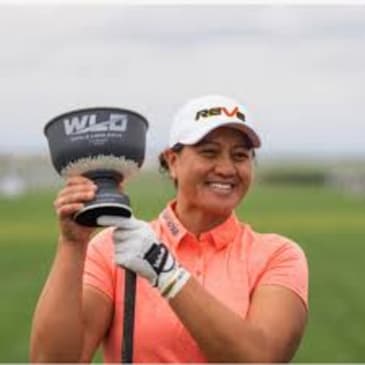
Phillis Meti is a 5 time world long drive champion from New Zealand. She won the Volvik World Long Drive championship title in 2006, 2016, 2018, 2022 and 2024. Phillis won her first title in 2006 at the age of 19. She is a world record holder at 414 yards. Phillis is also a member of the New Zealand Order of Merit which is a prestigious honor.
- 5:07 Beginnings With Netball
- 6:52 The Start To A Famous Golf Career
- 9:28 The Mental Toughness Of Training As An Underdog
- 11:17 Life After Winning A World Championship In 2006
- 12:52 Regrets After The Fact
- 14:32 Memorable Moments Along The Path To Success
- 19:18 Fathers Life Lessons Going A Long Way
- 24:02 The Journey Back To The World Championship
- 34:08 The Mindset Of A Champion
- 37:59 What’s Next After Winning
- 51:09 Training To Prove To Everyone She Still Got It
- 58:50 The New Zealand Order Of Merit
- 1:04:06 What Drives You
Don’t forget you can also follow Dr. Rob Bell on Twitter or Instagram.
Follow At:
- Twitter @drrobbell
- Instagram @drrobbell
Download Your Daily Focus Road Map!
If you enjoyed this episode on Mental Toughness, please subscribe and leave a review!
Dr. Rob Bell
[00:00:10] Welcome to Mental Toughness with Dr. Rob Bell. Each week, Dr. Rob sits down with athletes, executives, and expert coaches to talk about mental toughness and their hinge moment. Here's your host, Dr. Rob.
[00:00:35] And so your mindset going in after, let's say the round play you go through those rounds like you make it then to, I mean, 1v1, right? Like, what was, what do you remember about your mindset hidden into that and what you needed to do in order to perform your best?
[00:01:02] I think this, this comes from my dad. When you go in as the underdog, you have nothing to lose. And I really was the underdog. No one knew who I was.
[00:01:25] Electrolyte and hydration mixes and drinks are not created equal. I mean, check the ingredients. They have sugar or sugar alternatives. And there's tons of added stuff. Allow me to introduce you to the best electrolyte mix. Light Balance. L-Y-T-E-Balance.com. It's a naked electrolyte mix, which means no preservatives, no sweeteners, no flavoring, no caffeine or gluten, and no calories.
[00:01:56] I'm always on the search for the best hydration and I've found it. My entire family uses it and I use it on all my runs. It's solved all my hydration issues. Your body needs magnesium, potassium, and sodium, which Light Balance conveniently provides in liquid or powder form. Pure, powerful hydration. Light Balance. Go to L-Y-T-E-Balance.com.
[00:02:23] So our guest today on the Mental Toughness Podcast, she is a five-time world long drive champion. She won her first title in 2006 and is a world record holder at 414 yards. Still holds true today. It's awesome. She is from New Zealand originally, so I love our Kiwi guests that are here.
[00:02:48] She is also a member of the New Zealand Order of Merit, which is a fantastic honor. Definitely ask her about today. I'm excited about our guest, Phyllis Meddy. Phyllis, great to see you. Glad we got to connect. Thank you for coming on. Hi, Dr. Rob. Happy New Year and it's awesome to be here.
[00:03:07] Absolutely. So we met at the, obviously you were putting on a show at a golf outing. You do those currently. It's awesome. You come out there and share with us. And I was drawn to you immediately. One, you know, your affable nature. I mean, you worked a crowd excellently and then you have just a great job, I think, of showing your talent and displaying that.
[00:03:34] I guess that was just a roundabout way of just saying, hey, how we came together. How many outings do you do like that? You know, possibly like a year. Like what's an average for you? You know, I don't do many of them. So I was, I was referred to by Lisa Longwall, who is a legend in long drive, longtime legend, very well known in the golfing space for women's golf right now.
[00:04:03] But, you know, Lisa's been in the game for so long. And I met her in 2006 when she was pregnant with her boy, Luke, who was about to be drafted in the NHL some way, some shape or form.
[00:04:15] And when Lisa says, you know, jump, sometimes you have to say how high. And, you know, yes, I've won lots of world championships, but for Lisa to have her pulse on the, for Lisa to have her finger on the pulse, you know, in the industry and just say, hey, look, here's something for you. Go do it. And you kind of just say, okay, when? And so, yeah, that was the kind of, that was the kind of way that I got to mini mic.
[00:04:46] Okay. Well, I hope we're going to get some listeners out of here. We'll at least get another outing for you. Cause those that are listening, I mean, if you want Phyllis to come there, do a great job in terms of a clinic, hit long drives. I mean, she is, she is definitely the person for you. So yeah, love it. No, it's awesome. I mean, let's start with this. So I mean, you were a huge netball player growing up. Yes. Yeah. Talk to us about that.
[00:05:10] For those of us that don't know what netball is, it's kind of like a side version of basketball where you don't dribble the ball, but you pass and go. And our hoop only has a ring. There's no backboard. It's about the same height as a basketball hoop. And every point that you take or make is one point. Every, every hoop you make is one point. You only have two shooters. So it's a really fast game of stop and go, pass and go.
[00:05:38] And the idea is to get the most number of points, right. Or goals. So here in New Zealand, actually, it's a really popular Commonwealth sport. So we're really good at it. Australia is really good. England, Jamaica, Malawi, believe it or not. So we've got like a huge amount of talent worldwide when it comes to netball, but it just, I don't think it's kind of pushed through the ice in the United States.
[00:06:09] It's such a fast game. It's a mostly woman, mostly woman played sport in New Zealand. And it's kind of like, if you go to an all girls high school, like I did, if you don't play netball, you weren't cool. Oh, is that right? Okay. Yeah. Yeah. So as a growing girl, you, you know, you play, but when you go through high school, like the netball team, I guess at all girls schools, like high school football team.
[00:06:34] Love it. And so, I mean, you were playing golf as a little girl as well. I mean, with your dad introduced you to the game, but it became a part where it was like, you need to either choose this golf path or either kind of choose netball, right? Yeah. Yeah. So my dad used to take me out to the golf course when he was learning and it was, I was kind of more like his retriever.
[00:07:03] Then, then his actual, like, look, this is how you hit the ball. He figured out the game. And then he took me to coaching as an excuse to go to the golf course so he could go play nine holes.
[00:07:14] And I just, I remember like not many people play golf. So it wasn't that cool. And, you know, I just, I think back to one of my students just a few years ago when I was still here in New Zealand teaching, she used to ask her mom to tell, tell her school that she was sick, you know, throughout the duration of the tournament.
[00:07:37] Cause she didn't want the other kids knowing her, like she played golf. Like that's how small golf is in New Zealand. So, um, you know, um, like when you play lots of sport and there is a Kiwi mentality that you just try everything and see what sticks.
[00:07:56] And thankfully for me, I had a few things stick, you know, with a netball career, um, with athletics. I wasn't really in hindsight. If you look at the throwers that have come out of New Zealand, I wasn't as good as them, but I was good enough to still compete internationally. Um, and I was also paddling. I was outrigger canoeing, um, in Hawaii and Tahiti, um, kind of all around the Pacific.
[00:08:25] And I had options by the time I went to my first world long drive championship and, you know, what made the, what made me, what made the decision was more so about how vast the golfing industry was versus say netball paddling, shot and discus at that time. Like we have Valerie Adams, who was, you know, uh, like a five-time Olympic athlete, Olympic medal athlete, right?
[00:08:50] Like she was the pinnacle of, of, of shot and discus. So if you weren't kind of like around where she was, even near her, there was no, no point trying. So, um, you know, winning my first world championship in 2006 at the age of 19, to me, it became a no brainer to choose golf. The industry of golf, whatever it was going to be.
[00:09:13] I was always fascinated about the story you tell about the first roundabouts, like first national and then world competition that you entered because it was kind of suggested, Hey, once you enter, you know, you might get a top 10, but you did so much better than that. Yeah, I did. And. You know, we are, we are quite realistic and honest about, um, where we could be, but my mom did a little bit of homework and realized that some of the numbers that I was hitting,
[00:09:40] the yardage that I was hitting here in meters in New Zealand would match actually a lot of the women that were competing in yards in America. And so she was like, look, this is the, this is the benchmark. This is where we need to be. This is where we're going. You need to hit the grid this wide. Um, let's practice. And we also had, um, long drive legend in New Zealand, Devin Nola, who had recently come fifth in the world in 2003, direct me along the way.
[00:10:10] And, um, like it was awesome. I was already in the mentality of, you know, six golf balls. Cause it's what we get in shot and discus. You get three throws and then a further three. Um, and I was able to stay present as much as possible. And you know, this saying ignorance is bliss when you don't know what you don't know. It really doesn't faze you. Right.
[00:10:31] So my 2006 year, I knew nothing. I knew nobody. Um, I just went out and did my job and I kind of got sidetracked the next couple of years after that, because it became an expectation that I was going to win. Almost as if it was mine to lose. And I don't know, I was too young to put that pressure on myself, I guess. Um, but I also didn't know what that meant.
[00:10:56] Right. So you win in the first, um, world long drive championship. My question for you is this, is you, when you kind of reflect on that, cause that was 2006, how long did that feeling of, uh, success there? How long did that feeling last?
[00:11:20] Um, right up until I lost the final in 2007. Okay. Yeah. It was, um, it was a cool ride in 2006 and, um, in America, I mean, okay. So in New Zealand, nobody knew who I was. We thought we were just going to kind of like go and win world championships or go compete. And if I did well, I'd kind of come back and fly under the radar, but that wasn't the case. I had quite a bit of media.
[00:11:48] I ended up getting, uh, another cell phone so that I could kind of separate like my, my number and just stuff relative to golf.
[00:11:59] Um, but I really didn't know. We didn't know what to do. I mean, like ignorance is bliss, but then ignorance is also hindrance. But when you don't know what pathway or where to go and, um, you know, I love my parents because they did the best they could with what they, they did the best they could with what they had and what they knew.
[00:12:21] Um, unfortunately that just in, in the realm of golf in America, that just wasn't enough. And so I kind of floated a little bit, um, in 2007 and 2008, but the winning feeling didn't really come back until I won again in 2016. What would you have before we kind of get into even your tour career? So what would you have done different knowing what you know now in terms of after you had won for the first time, what would have changed?
[00:12:52] Um, I probably wouldn't have taken the prize money and I would have gone to college to play golf. Really? Yeah. And I wish, uh, I mean, I, I don't regret what I've done. Right. Um, you know, cause I've, I've represented my country in so many different ways. And, um, you know, I did the best I could with, uh, to a golf. Um, but it just wasn't good enough. And, you know, I, that was really hard to kind of accept.
[00:13:21] And I don't really accept it until my dad got sick and, you know, 2014. And I was like, crap, I think I need to be home. Why am I chasing this little white golf ball when I, I think I need to be home for my family. I need to be home for my mom. Um, so, you know, far bigger things, like bigger things become more important than trying to chase a career that, you know, I, I play better golf now than I did when I was actually practicing.
[00:13:50] So, um, if I could go back and do it differently, I would, I wouldn't take the money and I'll go to college. Okay. Fascinating. Love that. So, um, so you, you win national championship, I mean, world championship. Um, but then you want to play golf and then you go out there. I mean, you went through Q school, Q series five different times. Um, but you get your card.
[00:14:15] Talk to us about what, like, what are some memories that stand out to you in terms of, you know, playing the game, the travel, um, and, and even thinking of, you know, your status they had in 2013. But talk to us about, I know it's tough to encapsulate everything, but what stands out to you about when you were playing? Um, um, on the course, what stood out for me is that I needed some direction on how to play the game.
[00:14:41] And it had nothing to do with my physical ability because I could throw, I could move a canoe fast. I could shoot the ball. I could, um, I could hit the ball a long way. Um, but you know, when I won my first world championship, I was already on a scratch handicap. And so, um, you know, like I was a pretty good golfer at that time. Um, and I don't know how, but you know, my dad, my dad was on my bag for a lot of the games.
[00:15:10] So I guess he was more so like the man with the controller saying, you know, here's your club, go hit it. There it is. Go. Um, but when I was hit with adversity, it wasn't more so around getting out of trouble. It was more so around being able to finish it off. And, um, the adversity of finishing it off by saying, you know, if I move my ball from A to B to C and the idea of the game is to actually get the ball in the hole the quickest, you know, go play it that way.
[00:15:40] Um, and you know, I, I had, I'd come across Nancy Harvey on the Aussie ladies tour in 2011, 2012 summer. And, um, she just said, look, when you're ready to play better golf, give me a call and come and see me, right. Come spend some time with me. I'd love to help you. You know, you've got distance. You've got a good, you've got a great demeanor around the golf course.
[00:16:10] You know, we just need you finishing it off really quickly. And so, so, um, what did, what did, what did she see? Like, what did, what did she mean by that? So we played the ladies masters together. Um, and I think she saw that I hit the ball a long way. She saw that, like, even when I was in trouble, I never lost my shit. Um, it was always, it was always like, oh man, okay, this is what I have to do.
[00:16:39] Oh man, this is what I have to do. And then like, when I didn't have obstacles, like when I was chipping and putting around the greens, I really didn't have any kind of concept of distance control. And it's not as if my eyes couldn't see it. Cause when you describe feel in the game, it's more so about what you see and how you can connect what you see with what you feel. Right. It's got nothing to do with like, oh, it's all feel. It's got everything to do with how you see it and what you want to see and how you're going to execute that to an outcome.
[00:17:09] Um, I didn't have that. And so, um, in the 2012 year, no, in the 2013 year, I spent, um, throughout the 12 months, I spent maybe a month and a half staggered with Nancy flying back and forth to Brisbane. Um, to just find out how to get better. And a lot of it was mental.
[00:17:36] A lot of it, she had me, um, learning how to compartmentalize cause we're going through, you know, quite a lot of things, um, around the 2013 time. And, um, she says, you know, you just gotta, this is what we're going to do. This is how we're going to do it, but let's put things to the side so that you can actually focus on what's in front of you. Right. We know that there are things on the back of our mind. We just have to put them on shelf. And, um, when the time comes, you pull them off the shelf, you address them, and then you
[00:18:06] put them back on the shelf again so you can see where you're going. And, um, so those were like the best weeks of my career. I think, um, when I went to Q school, I was prepped mentally and physically for Q school in Morocco. Um, and I played some pretty good golf, you know? Um, yeah, I just, I just wish I played the game. I wish I learned how to play the game.
[00:18:34] And I wish, you know, someone had taught me this is, this is the idea of the game, but they taught me that at the age of like 10 so that by the time I hit, um, you know, the tour, I was ready to go. And hence why I say like, I wish I went to college because I believe college prepares you the most. And that will tell you whether or not you are ready for, um, the next step or the next level of golf.
[00:19:04] When we started the podcast, um, 2025 will obviously be a 10, 10 year reunion of your father's passing. Could you, could you talk to us about your all's relationship? Um, oh, he, uh, uh, my dad had a, I think he had a tough start in life growing up.
[00:19:29] I mean, a lot of parents have, a lot of people have, um, but for him, it never really like stopped him or set him back. You know, everything was about going forward, look forward, keep going. Don't stop. Um, you know, um, my mom lost her parents, both of her parents before my dad did. And I think the one that really stood out for us is like after my Nana passed away and at
[00:19:59] the end of 2013, when I was in Morocco at Q school, um, my mom was bedridden and I just looked at my dad, he was like, just keep going. You know, she'll jump on board when, when she can't, when she comes around, she'll be ready for it. You know, just keep going. And I'm like, well, why does this happen? He was like, well, people, people are sad in different ways. And so you like around her, you just got to have to keep going and figure it out. Anyway. So that was him.
[00:20:28] He was like, keep moving, keep growing, keep getting better, keep striving for something. Um, and even when he fell ill and, uh, the day that we, he was diagnosed, he said, we sat down and he was like, you know, talk, do you want to talk about this? And he told me what had happened in the doctor's office. And he was just like, you know, Phyllis, you have to figure out a way to move on with your life. Um, he goes, whatever happens to me, don't worry. I'll be okay. You just have to keep going. Just don't look back.
[00:20:57] And, um, I think it really, like after my dad passed away and I started going through all of the lessons that we learned, I always take him with me when it comes to making decisions. Um, it just, he was a type of person that, um, always looked forward to something and always said, okay, we've done this. What next? Um, and so now I look at, I look at myself, I think I look at myself now and I'm like,
[00:21:25] okay, well, your problems come, problems go. We keep going. Um, he was my best friend. It was hard. Um, strict a little bit, but you know, all for a good reason is to stay focused and ensure that, you know, I was not only safe, but I was also on the right track to being better. Um, yeah, I'm, I'm grateful for it. Not at the time, but I am now. Right. How, how was he hard on you?
[00:21:54] Um, I think he just expected a lot, a lot out of me. You know, um, when you look and I, I do this, um, Polynesian girls are nice and big and strong. Um, they have a strong mentality when brought up with the village. And, um, you look at like, we are also misjudged. Um, because, you know, physically we're a lot bigger, but sometimes, you know, we're
[00:22:23] a lot bigger than our age and our, uh, biological age can still be of that young 15 year old girl that's still, that is bigger and stronger than some of the 18 year old girls that are on the network court. Some of the women that are on the network court, you know, so they are expected because they look like this to match the same mentally and emotionally. And, um, so for him, I think he was like, well, you're nice, big and strong.
[00:22:51] Uh, we're going to make use of that as opposed to you being like tall, big and strong, but useless. So, um, you know, I, I look at like Polynesian girls now, even young ones. And I'm like, Ooh, what do you do for sport? Are you good at school? What do you want to do when you grow up? Kind of thing. Cause I just want to make sure that like, we all progress and we all raise the standard of the pool each time, wherever we are.
[00:23:19] Um, but yeah, I think that's what, that's what he had in mind was like, Oh, my girl's nice and strong. She's big. She's actually pretty capable when she's fit. She's got more options. And so we're going to encourage her to go down that way so that she can keep her options open. Oh, I love that. I appreciate you sharing that. Um, yeah, that, that means a lot.
[00:23:39] Um, so take us through then when it comes to, you go back to long drive, um, that transition. And then, I mean, you really then reach your full potential. Um, at least from my standpoint, right. But I mean, talk, talk us through those, those years. What stands out?
[00:24:03] Um, so after my dad passed, um, I stayed home and I took up, um, an operations job and at a golf course that I was working at, my boss was retiring and I kind of put my hand up for the wrong and they gave it to me on the interim. But I also said to my employer that I wanted to go back and finish my degree because I was the youngest at that time. I was the youngest staff member at 27.
[00:24:31] And, um, I said, look, I want to go back and get my degree. I, um, what I don't want to have is a membership that averaged 67 years old be told by 27 year old, you know, this is how the golf course is going to run. Um, at least I had something kind of under my belt to say, look, I'm not only qualified for the job, but I love my job and I'm going to do a very good job. Um, and so I went to school, I was working full time, studied full time.
[00:25:00] Also, thank goodness. I only had like two or three papers to go, uh, of my degree. And by, um, 2016, the middle of 2016, I'd graduated from university with a bachelor's degree in sport recreation with a management major. Um, cause I was running golf courses. Um, and, um, you know, it, it had also been like almost 15 or 16 months since my dad had passed away.
[00:25:27] And so I was saying to my mom, look, why don't we go somewhere? Like, let's get on, let's get on a plane and go. Let's have a trip. And my friends have been gotten married. So, you know, we traveled to Thailand to the Cook Islands. Um, we've been places, but we really hadn't been anywhere for us. And she says, well, what are we going to do? Cause we don't have holidays for us. We usually have trips that we, um, we add on to events or something that we're doing.
[00:25:54] And I said to her, I was like, wow, I've been watching the long drive scene for the last couple of months since I've had a lot of like downtime to sit and, you know, be on my computer. Why don't we go back to the world long drive championships? She's like, really? I'm like, yeah. She's like, well, are you ready? And I was like, I couldn't tell you, I couldn't tell you how fast I'm hitting it, but what I can tell you is I've been training hard in the gym and physically I'm ready.
[00:26:22] She was like, well, all right, let's go. I had six weeks and, um, you know, six weeks I started going back to the driving range and I started off with a wedge and then a wedge and a seven iron, a wedge seven iron and a four iron. And, um, then I knew I needed equipment. So I called, uh, Warren Smith who has specialized in drivers for years and years and years here in New Zealand.
[00:26:50] And, um, he had the crank license at the crank golf license at the time. And so I, I asked him, I was like, look, I'm wanting to go back to world championships. I need some equipment. I will pay for them. And in my mind, it was like, I'll pay for everything just because I don't want to think that people, I don't want people to think that I owed them anything. So I bought, I bought my drivers and the reason, you know, why I kind of had that mentality
[00:27:18] going is because I didn't know how far off I was or if I was even there, anything to do with one, the golf swing and two with speed hitting power hitting. Right. Um, so we get to America and no one knows who I am. It's, it was kind of cool. No one knew who I was. It felt like 2006 again. Um, but there were a few key people that like some of the grid staff, some of the guys on
[00:27:46] the tee box, um, uh, some of the organizers and then Lisa Vlusswick was there also, Lisa Longmore. And so, um, we kind of introduced ourselves, I guess, on the, on the practice tee and, you know, you've got Troy Mullins there. You've got Blair O'Neill there. You've got Alex Phillips, who was super confident that she was going to, you know, have a great world season.
[00:28:16] Um, there were Chloe Garner was there. Sandra Carleborg was there. And I bet Sandra at Q school in Morocco. So, um, you know, she was like fresh world champion at that time. And she was, she was six time champ, right? She is six time world champ. Yeah. Um, her last one she won was in 2017 before that she won 2015. So she was defending champion going into world championships in 16.
[00:28:42] And, um, you know, in my first set, I had two people that I didn't, I don't remember, but I know that I was hitting in the same, same set as Lisa in our first round. And, um, my mom, my mom's really good with like paperwork. She says, all right, this is what we're doing. We're doing, you know, five sets of, of eight golf balls, three minutes. Then they're going to do like match play so on and so forth. And I was like, let's just get through the first round. So I get into the first round.
[00:29:11] I didn't even realize you had to tee up your golf ball. They weren't going to start the time. So that's right. T's on the ground, ball on the tee box, uh, ball on the tee. Um, four of us on the tee box. We go. At the end of it, I think I came like third or fourth in the damn set. And I had like, I'm, I'd never hit it, hit it worse than Lisa before.
[00:29:34] Uh, I had never, I just, I wasn't, wasn't sure like what I was doing to be honest. And, um, I walk off the tee box and I'm looking at my mom. She's like, Hey, are we supposed to be here? If you're hitting it like this, are we supposed to be here? And I was like, not like this, but let's get to work. And so set up. So this was just a practice. Um, no, it was the first round of the first of the competition. That was the first round in competition. Gotcha.
[00:30:03] And so like, I think I posted like a 272 or something and there's nothing wrong with that number. It's just my expectation. I didn't have any, but like in my mind, I was like, okay, the first time you had your very, very first round in long jog period, you hit a 300 and something like a 304. And I kind of like had an idea or thought that I wanted to aim for like a 300 number in the first set coming back, uh, in 2016.
[00:30:32] Well, that wasn't the case. So I got to work for the next four rounds and I won the next four rounds, um, in each, each set. And then Phyllis, how is that format then? So for the listeners and everyone that have not fallen, how is that format set up? Okay. So in 2006, seven and eight, it was a double elimination type thing. So, you know, winners, winners of the sets go into, I think it's around four.
[00:31:01] And then you've got like a repercharge thing so that, um, so that the people that lose have another chance, right? Second double elimination. And then you work your way through that and then you get into match blade. It's a far longer, um, type of, um, format. But when I went back in 2016, we had like a round Robin type event where you have five rounds. There are 16 women, five rounds.
[00:31:29] And every set that you hit, you hit off against everybody in the group at different times, but your points are accumulated based on that particular time, like moment in time. So it makes it a little fair, right? So you're not going like downwind for the next, for the first two sets. And then the next four groups are coming in with a headwind number and we're competing against that type of, um, the woman that had hit with the tailwind. So it's fair, um, it's grueling.
[00:31:57] And, um, you know, if you, if you mess, you can have, you have a little bit of leeway to mess up in the one particular set, but it's a race to 500 and then you go on, um, after that. So you want to get at least five to 600 points in the round Robin, um, throughout the five rounds. And the faster you get there, the more, the easier you can breathe for the next couple rounds.
[00:32:26] So the idea is to win the first three sets. And then the next two you use as maybe like a tester for other clubs that you might have in your bag, but I only had three. So in the first couple of, in the first set, I was looking at, I was trying to look for the driver that worked rather than going on with something that I trusted him. I was trying to find something to work. And thankfully I did by the second round. So, um, yeah, I won the next four rounds and then I won the next three matches and became
[00:32:55] world champion again. Hey, good looking. If you like this podcast and are already a badass, but it's all way too complicated.
[00:33:24] Then visit our website, drrobbell.com and schedule a call with us to help capture your very own hinge moment. And so your mindset going in after, let's say the, uh, the round play, you, you go through
[00:33:54] those rounds. Like you make it then to, um, I mean, one V one, right? Like, yeah. Uh, what was, what do you remember about your mindset hidden into that and what you needed to do in order to perform your best? Um, I think this, this, this comes from my dad. Um, when you go in as the underdog, you have nothing to lose. And I really was the underdog.
[00:34:23] No one knew who I was and, but they must've thought that maybe. And I thought kind of too, that it was like a fluke that had kind of sailed through the next four rounds of round Robin and one each set. Like, you know, there was also, you know, there was also another hitter from the UK, Rebecca McGinley. She'd be about her and I would probably match physically same height, same size about, and she hit the ball pretty good too. Um, but I had nothing to lose.
[00:34:54] And so in the, in the semifinal, I hit against Blair O'Neill, uh, in the quarterfinal, I hit against Blair O'Neill and, um, like as strong of a strike as she was, she, she wasn't as fast. And so I knew that if I could hit something in like the high two eighties, I'll have a good chance. Um, bearing in mind to, you know, Chloe Garner, who I beat in that final, um, she had just
[00:35:22] come off an event in Utah and bombed the ball like 375. Um, but the men, so, you know, I'm sure Chloe had lots of expectation to win. I thought, I think she thought she was going to walk in and clean up. She did pretty good, but the mentality was just around, you know, you've got nothing to lose. Go for it. Go for everything. And that was also the mentality going into the final as well.
[00:35:48] Like I ate ball Chloe in the final and I had, um, I have this thing about like in my set, if I start the round well, I know that it's, it could be a great round in terms of like that set of balls. And in my final with Chloe, um, I had like blocked the ball out to the right side of the field, right side of the grid, but I hit it really well.
[00:36:17] And so I was like, okay, here we go. This is going to be good. But every time I went to hit the next ball, the next ball, the next ball, um, like I kind of just miss hit them a little bit. I might've, I think I might've had like, so I was chasing three or four and I might've had like a two 90 in the grid, but I knew that there was a good ball coming. Cause I felt it from the first, from the first ball that I hit. Right.
[00:36:47] By the end of after ball seven, I just, I had my dad running through my mind, like hit the ball, man, just hit it, just go and hit. And, um, the ball that I'd looking, had been looking for was my eighth ball. I had a pure, the right side of the grid and it drew back kind of like what I did in 2006 and the ball landed where Chloe's finished.
[00:37:15] And so as soon as I saw the ball land, like there was a whole, there was a huge amount of relief that came over, but, um, it was just like the never give up type mentality that I had. And, um, you know, to keep going, like, don't worry about the last shot, go again. Don't worry about that one, go again. Um, yeah, I'm grateful it came in the eighth ball, but, you know, I kind of knew that set was going to be awesome. No, that, that, that's great. I love, I love that setup.
[00:37:44] How did your mindset change? Um, because when you keep coming back, I mean, obviously the expectations are there. Um, how did your mindset change and how did you need to adapt in order to still perform your best? Moving forward a little to it? Yeah.
[00:38:03] Um, so in 2016, at the end of 2016, I flew home and, um, went back to work and, um, Maurice Allen was in Auckland here in Auckland, um, for an event that was run by Ona Ford.
[00:38:27] Um, and like, now that I know Ona, we have a great relationship, but like at that time, she called me out of the blue and was like, hi, you know, like I'm, I'm running a long drive event. Would love for you to be a part of it. And at that time I really like didn't care to come back into long drive at all. I didn't care about golf anymore. Cause I felt like I've got my degree. I'm a world champion again.
[00:38:54] Um, not what more is there to do, but like what more is there to do at that particular moment in time? I was ready and okay with being at home and retiring from golf altogether, finish on a high kind of thing. And I said to her, I was like, look, I'm not really in long drive anymore. I don't really care to do long drive anymore. Um, like I'll come support your event, but I don't really want to be a part of it. So I'll come and like watch anyway. So I get a phone call.
[00:39:20] I get a text message, a random text message, like through Facebook messenger for Maurice. And he was like, look, I know we don't know each other, but it'll be an honor to meet you, which was the coolest thing. I'd ever heard. And I don't know who Maurice was. I didn't even realize he was at world championships at that time. Um, when I was there, when I won, um, but the, that was the coolest thing that someone had said to me in my own sport. And I was like, Hey, look, you're in New Zealand.
[00:39:50] You're in Auckland. You're in my city. Like, I'd love to catch up with you. I'd love to meet some of the other guys. That'd be great. You're, you're here. So I met him and him and I had a long talk about like, you know, where, where I was. And I said to him, I was like, look, honestly, I really don't care about golf anymore. Um, I love it. And it's my place of peace, but I really don't care to compete. I'm okay with like retiring. And he says, well, what if I can help you? What do you mean?
[00:40:19] And he was like, what if I can help you? Like, if, if this is what you want to do. And I wasn't really sure. I didn't really, I really didn't want to do it. He was like, but if this is something that, you know, would interest you and I can, and if I could help you, would you come back to America? And I was like, okay. So, you know, I met him in November by April. I had resigned and I was in America.
[00:40:43] And, um, frankly, in the 2017 and 2018 year, it was more so about still being able to prove myself. Like, okay. So she went in 2006. That was like almost last century. Uh, she came second twice after she's hit some big numbers on those brands. Um, you know, 2017, um, is going to be a year where golf channel bring world long drive to a back for men and women.
[00:41:13] Let's see if she can do it. And like, I had to, yeah. So I had to prove myself for a couple of years and I still had to prove myself after the 2018 year when I won my third world championship. Um, not just, not just to the facilitators of long drive, but also like my sponsors. You know, I, I am super grateful that Dave Blod gave me a chance game.
[00:41:40] He took a punt on me, um, with his drivers, the tour age drivers. And, um, you know, it was, it was awesome to be able to not have to worry about golf clubs on the tee box. So that was one thing that I kind of didn't have to worry about. Um, thankfully we only had three events and I had a bit of money saved up in my bank. So it wasn't as if like, I had to worry too much about like where I was going to find my next dollar, like how I was on the golf tour.
[00:42:10] Um, you know, whether we eat or not the next week and where we stay so on and so forth. Um, I didn't have to worry too much about that because we only had three tournaments. Um, and then, you know, I got to dabble a little bit in like actual corporate events and, um, just different ways of being able to use long drive as a platform. But again, like I'm still learning. I'm in a big country. It's different.
[00:42:35] Um, it felt like sometimes I had to run up a mountain to kind of meet and match my competitors who had been in the game for a little bit longer. They had their finger on the pulse with, you know, sponsorships. And I think the coolest thing that Maurice had said when I met him in 2016, that November, he says, you know, when you look through a small window, all you can see is what's in the small little you. And we are walking in the city at this particular time.
[00:43:03] He says, see that huge window at that gym. He says, when you start looking outside your small little window through a bigger window, through a bigger glass pane, you actually see a lot more opportunity. And he says, so I kind of don't blame you for being like a little irritated at the moment that you saw a whole bunch of girls in America, you know, with sponsorship, with labels, with all of this equipment and gear kind of at their mercy.
[00:43:30] And you had like two or three drivers in your bag. Um, and you know, you've, you've come home back to work. And I think, I think that was kind of my turning point as to like, all right, so you're right. I've seen far bigger things in America. I see cooler things in America. And I see the girls that, you know, don't hit it as good as me get more.
[00:43:57] So from that particular moment in time, like, what am I going to do? How am I going to maneuver myself to get back to the States? And so, um, you know, I'm kind of going in circles here, but it, it just, it's a wall. Sometimes it's a wall that you have to kind of climb or a mountain that you have to run up to try and match everybody. But when you, when you get help from people, I don't think a lot of people understand how much help like really does make a difference.
[00:44:26] Even if it's a small piece of help, right? It's one thing less to worry about. It's less things to worry about. Right. And you know, this like worry is a waste of space in the mind. Um, but if you can turn it into something productive, you know, some really cool things could happen. So it, it went from like, all right, she's done it before. She's done it again.
[00:44:50] Um, she needs to prove herself still, um, you know, she's broke. She, she already had one record of the youngest, youngest world champion in 2006. Um, we beat a world record, you know, we have a 400 club of girls in 2017. Um, in 2019, I break a world record again. And then in 22, when I come back after COVID, I've won a world championship or long drive championship.
[00:45:21] And then, you know, here I am in 2024. I wasn't the fastest hitter and in the field by all means. Yeah. I was hoping you could walk us through that. Cause you had then different set of circumstances for 2024, right? Yeah. I had, I hurt my back, uh, at the beginning of 2024 and I thought, and our first event in March in California. And I went like looking for speed when I didn't need to.
[00:45:46] And I'm glad that I got my shit together, you know, for world championships in 2024 on the Monday off. What, what do you mean? You started looking for speed when you didn't need to. When I didn't need to. So, um, two strengths of mine, um, Dr. Rob on the tee box is that I'm a great ball striker
[00:46:10] and I've got a lot of speed, but because I hurt my back early in the year, like I hurt it and it hurt like crap, but I had some time to like rest and recover. I didn't completely recover, but I had some time to rest and recover and what it didn't feel sore. But, um, and so like I went through the season trying to chase something that I really didn't need to have to look for. And when I was chasing one, I lost the other.
[00:46:39] Um, and so, you know, chasing speed, I lost ball striking and hit the ball to my standard. I don't think I hit the ball very well last year at all. Um, and I also know too, that you've got players like my Desha Tepa and even Monica Living, but I rate my a little higher because of the amount of speed that she's able to produce at any given time.
[00:47:04] Now, when my mentality can catch up to her physical ability, she'll be untouchable for a while. Um, but, uh, so, um, yeah, you know, uh, having to continue to be a good job. And then now I'm in a position, I'm 37. So I'm not like looking for validation or not looking for, um, anyone's approval anymore. And I did that for such a long time.
[00:47:31] First, my dad's and then, um, you know, and then those that were facility, facilitating my wallet. So my sponsorship, those that were facilitating our sport, world long drive, you know, um, like interviews, TV time, um, all of those kinds of things had us, you know, set up for sponsorship. So like, I won a tournament. I don't get TV. Why not? And I get it.
[00:48:01] We want to share it. But if you said, if you win a tournament, you go into morning drive, why doesn't that happen? Why am I not on morning drive tomorrow? I won. Um, so, you know, the acceptance, I guess, and the approval of, uh, the facilitators of the sport, but then also, you know, like the approval from those that were in my circle, in my team, I chased everyone's.
[00:48:29] Um, yeah. So when it came to like, when it came to 2024 worlds, um, I realized on the Monday that I don't have to chase speed. I just needed to strike the ball well. And whatever you go on with, you get yourself ready and you prepare for war, right? Whatever it is. If that means that you have to drop your golf club and scrap your way through, then do it. And that's what I did.
[00:48:56] And fundamentally, um, it's the fundamental game one 2024 world championships, then speed. And it always was going to, and, um, you know, that type of grid required you to hit, hit the grid at any cost. And so if that meant that I was, you know, six, seven, eight miles slower than my, um, you know, ball speed, then so be it. Because I knew that I struck the ball. What was that?
[00:49:25] What was the circumstance there about, uh, the importance of hitting the grid there? Um, so we were off an elevated tee that wasn't quite square with the grid. Oh, okay. And, um, you know, and I said this in the press conference, uh, about a month before world championships. This was an inexperienced person's grid. You had trees on the right hand, lining the right hand side of the grids.
[00:49:51] And then you have water on the left hand side of the grid at Eagles landing in Atlanta. And, you know, for an experienced hitter, it's just a piece of grass, right? Every grid has a piece of grass. And I think, um, we talk about this in the game of golf too. Like every golf course has 18 tee boxes and 18 flags that you need to hit to, that hit from and hit to. Um, and so this was, this was that type of, this was that type of time where you go, right? It's just a piece of grass that you need to hit towards.
[00:50:21] A lot of the new hitters bomb themselves out because they saw trees on the right side, water, water on the left. So fundamentally we needed to hit the grid. It was more a grid hitting, uh, competition than it was a speed game. Um, if you had asked me that maybe four or five years ago, I would have been like, nah, this is a speed game. Like it's a mind game too, right? You choose your weapons to go into war with and mine was ball strong. Thank goodness.
[00:50:54] The, um, I want to ask with your inner circle and the people that rooted for you and want the best, like you still wanted their approval. Like talk, I'm like unpack that for us. Um, I think it came with expectations. Right. Um, and the, I think that came from also how I saw myself.
[00:51:22] So in the 2017 year, I had two seconds and a third, which I was pissed about. And that's because I, at that time I was swinging the golf club, like five, six, up to 10 miles faster than the other girls. And, um, so, you know, I have an expectation. If I swing it that fast, what the heck is my problem? Oh, well, fundamentals. Right.
[00:51:51] So, um, I had speed, but I didn't have striking in the 17 year because I wanted to chase everything. But that also meant to like after, after returning home and at the end of the 2017 season, I was like, right. Damn. Imagine if I hit the grid more often. Imagine if I could stay this strong. And so we went to work and, you know, I have, um, my coach here in New Zealand, Jack, uh, who works with a lot of 3d equipment.
[00:52:21] Um, we had a, he had me tightening up a few loose in a few loose parts of my golf swing, which allowed me to one strike the ball far better and to hit the grid more often. Right. And then working with my trainer here, Dallas, um, he kept me strong and like, not just physically, but also mentally. He says, we're going to put you on the ringer so that no matter what you come across, you're ready for the next set.
[00:52:52] Right. We're going to shorten up your ass. We're going to do this. We're going to make you run. Um, and you know, the smaller the rest, you're going to be tired, but at least you'll be ready for the next set. Cause that's how your, that's how your world works. That's how your game works. Um, 28 after 2017, I'd come across Lee Brandon also. So I stayed with Lee in 2018. I was like, look, I'd love to pick your mind. I'd love to, uh, just kind of understand what you do.
[00:53:20] Um, and she says, of course, like, come stay with us, train with me. Uh, we practice together and you know, um, I'm, I'm all at, she, and she said this, she says, I'm all about being able to pay it forward right now. Um, and like, that was another cool, that was another cool lesson that I learned along the way is being able to pay it forward. Uh, so, um, you know, I had expectations.
[00:53:49] So my expectations of myself actually probably kind of became everyone else's expectation to get me ready, uh, to have me hit the grid. To, um, win more tournaments. And I also learned too that, you know, sponsorship just doesn't come like that anymore. Like, oh, you're world champion. What are you going to do for me? As opposed to when I won in 2006, it was like, yeah, try this, use that, do this, do that.
[00:54:17] And there's no such thing as social media at that time either. So like, we don't, I didn't have to worry too much about exposure. The exposure and the storytelling was coming from there. It's a little different nowadays. We have to tell our own story. And, um, you know, I think the value in telling our story is more so about like what to do and what not to do in the same, in the same kind of space.
[00:54:40] Um, so yeah, I, I still had to kind of pull finger and make sure that I was able to still prove, prove to myself, myself first, which then radiated out to my team that I was still able to win more tournaments. And that 2016 wasn't a fluke. Um, yeah. And so training with Lee was freaking awesome. Training in California up in the mountains was awesome. I had a great time.
[00:55:08] Um, my first event after working with Lee for about a month, I think I hit like 381 in Arizona and following the tournament. Um, you know, I had a lot of the guys go, man, I'm glad I hit it 383 this week. Um, you know, I beat you cause I had 383 and I'm like, if I hit the ball like this, man, anything's possible. Right.
[00:55:34] If guys are coming up to me and they say, Oh man, great final, like great final round. And I have, you know, Sandra Carball come up to me and say, Phyllis, I couldn't have hit the ball any better than that. So congratulations. In my mind, I was looking at like, Oh, if I hit it 380 and a lot of the other guys are hitting it 380 in previous rounds, this is going to be a fun ride. And it's going to be, it's going to be my ride if I can do it.
[00:56:01] So, uh, the 2018 year, I think I had, uh, I won the first event. No, I won this. I won the second event. Bombed out, bombed out of Mesquite the first event. I think I had a couple of top fours and then I won world championships. So, I mean, that was a great year. It was far better than 2017. You know, um, my expectations in a lot of places were met because I was able to hit the grid more often and give myself more chances. Right.
[00:56:30] And then in 2019, I went to kill six events. I had three wins. I had three seconds. And, um, you know, in, I didn't know this till Bobby Peterson had brought it to my attention after 22, I think it was. It said in 2019, a female won the most amount of money besides world championships. Cause, um, 2019 Chloe won, Kyle Berkshire won his first world championship.
[00:56:59] And so, um, he says in 2019, a female won, um, the most amount of money prize money on the tour, which is freaking awesome. He says that should never have happened. And I looked at him and I was like, why would you say that? Like three events, three months, three seconds. That should be how it is. Um, he's like, yeah, but the person who won the most money was a world champion. And at that time, you know, Chloe was one of his hitters.
[00:57:30] I was like, well, you know, the game was there to be played. And I was grateful that I turned up to be a player in the beginning of the 2019 year. It was awesome. I set a world record for 14 at Archen, um, in Arizona. And I think that was our first event of the season. And then it just got progressively better each time. And also in coming second, I didn't lose by anything more than three, uh, three yards. Hmm. That's consistent. Yeah. Yeah.
[00:57:59] And I'll take that, you know, first you got to get there, right. And meet your expectations. And then, you know, how consistent can you be? And so, um, it was a very satisfying year, to say the least. Want to listen to your favorite music, but you're sick of all the commercial interruptions and negative news today? Tune in to KukoRadio.com. Music for your mindset. We're a commercial-free online radio station. Play nothing but hits.
[00:58:27] Our free iOS and Android apps are available for download at KukoRadio.com. Oh, I love it. So, share with us the, uh, the New Zealand Order of Merit. Seems very distinguished award. Uh, talk to us about that. Okay. So, um, we are a country of the Commonwealth and, uh, we have sovereignty with the Queen, um, and the British colony.
[00:58:58] And, um, I just, before I talk about that, Lydia Cole just got, um, just got, uh, knighted for us. I'm a dame in New Zealand. The youngest dame ever at the age of 27 years old. So, um, she's like three levels higher than I am on the Order of Merit when it comes to that kind of stuff.
[00:59:18] But, um, a lot of it's to do with, um, recognition for your contribution to a, to, to your, uh, not industry, but to your, I guess, chosen pathway. And so, um, I was nominated by, um, our Long Drive National Sporting Organization.
[00:59:41] And with that nomination has to come, um, letters from, um, I guess, from important people and from my important people in my industry. And that's not just nationally, but it's also internationally. And I didn't know about this until I got a random email saying, you know, congratulations. You've, you've, I think you've entered the Order of Merit.
[01:00:10] And, you know, those scamming emails that you get, like, congratulations on a million dollars or something like that. That's what I thought it was. But I looked at the email address as well, and it's like a government address. And so, like, the only time you get a government address, like, email address like that is if you're in debt and you owe money to, like, our equivalent of the IRS. It's not like, um. Yeah, you're in trouble, right. You're in big, you're in big crap.
[01:00:36] So, um, I went out to my mom and my mom, like, my mom's eyes give her away before her voice. And so I went into, I went into my mom and I was like, ah, I got this email. It's from these people. It says, congratulations, I've made the Order of Merit. And her eyes popped up. And I was like, what do you know? And she says, well, uh, you've been nominated and we've got these letters that supported your nomination.
[01:01:05] And, you know, this letter here says that you have been inducted into the Order of Merit for your service to golf. Well, when did this happen? And she was like, actually, it happened at the end of your 2019 year. And I'm like, okay. And this is 2020. In COVID. And I was like, okay, so what do we do? And she says, well, you've got to go meet the Governor General who was like the next step from the Queen.
[01:01:33] Like our Queen's representative in our country. You've got to go meet the Governor General for your investiture. And you get meddled. And, you know, it's a whole thing. Like a whole ceremony thing. And so the reason why I was nominated was because of my service to not just golf, but also to Long Drive, you know, over a vast amount of time.
[01:01:58] Since 2006, I have, I guess, more of a understanding of where I am and what my role is. And that was a cool thing. I think that was a cool thing that I learned at university was figuring out our space or where we are in the industry or in the world. And so when I went back into Long Drive, I realized, like, I'm not just a competitor. I'm also a leader.
[01:02:28] I have a lot of girls that look up to me. And, you know, for whom do I exist? I exist for the girls that look like me that are looking for a stronger pathway that they can stand on without having to fall through the cracks. And, you know, not only for girls that look like me, but other women that are interested in sport, that are interested in golf, that are interested in athletics, mental, all of these different things.
[01:02:57] That just want to be able to compete, but know where to go. And, you know, each year I try to embrace that more and more. And it's just like, hey, if you can hit the ball for why don't you come try Long Drive? Right. That's how I got into it. I tried it. I got better at it. It became my craft. You know, I got to try, I get to travel. I, I get, I get, I get.
[01:03:23] And all of these things are like positive affirmations around, you know, me being a professional. And all I'm trying to do is one, hit the ball better to help other people because that's a passion of mine. But three, also help create pathways for other kids that look like me to go and thrive. Whatever it is they want to do. So that we can come back also and pull up the other people that are coming behind us. Yeah. No, that's awesome, Phyllis. I appreciate that.
[01:03:50] You definitely put a bow on this podcast episode. That's fantastic. Best part there. What, I mean, here's how I always ask my guests is what, what questions should I be asking that I'm not asking? Like what, what part have I missed in our discussion here? Um, see, I've been, I'm prepared for this question is, uh, nice. I guess what drives you, um, you know, what is your motivation?
[01:04:19] Um, what are the things that, um, you know, make you get out of bed? Cause you can't keep getting out of bed for yourself. You have to keep, you have to get out of bed. You have to find other, in my opinion, you have to find far bigger things to get out of bed for, um, in order to keep thriving, not just for yourself, but for other people.
[01:04:42] And I think, um, as, um, as I go along, uh, my journey, the more people I help, um, you know, the more things flow. And if that means to that, like a part of sharing my story is about like, this is, these are the adversities that I went through and I'm fairly certain other people are going to go through similar adversities or even they, the people are going to go through adversity no matter what.
[01:05:08] Um, but if I'm able to kind of help you open your mind to, you know, different solutions, different ways, um, then, you know, and that helps you. That's, that's kind of my job, my job done. It's fulfilling for me. It's satisfying for me to know that, you know, sometimes me sharing my story has helped other people get through this dom too. Right.
[01:05:36] So I think, yeah, I, I think what drives you could be another question that we ask. Well, well said. And, uh, I just look forward to the, uh, what's next, uh, coming up for you. And, uh, I know you're going to make such an impact, not only in sport, but life. And, and, uh, I really appreciate you taking the time. Glad we got to connect. Me too. Um, what's next?
[01:05:59] Um, I would love to make better use of this world championship in a way where, and I don't talk about capitalizing money wise. I talk about capitalizing like more conversions to golf, uh, to staying in golf, to, uh, using golf as a vehicle. Um, you know, helping more people. I want to, I, I love helping people. It's, it's really fulfilling.
[01:06:27] Um, so, um, if I can use my world championship status to help more and more people, um, I think the prosperity, uh, aspect of things will, will come as a result of that. And, um, you know, I'm just grateful that I get a fifth chance to be able to utilize this championship to do so.
[01:06:50] And, um, right now my focus or space is in kids is in the kids space. Not usually, not necessarily junior coaching, but kids golf, kids, long drive kids events. So that our kids here in New Zealand have more of a chance to get over to America and have a place where, you know, somebody looks like them on the receiving end. Yeah. Love it. Awesome. Thanks so much, Phyllis. Thank you.
[01:07:56] Thanks for listening.