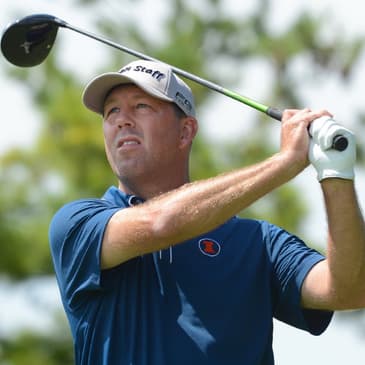
Mike Small has been the head men’s golf coach at the University of Illinois since 2000. He has been the Big Ten Coach of the Year multiple times. He was named Midwest Coach of the Year by the Golf Coaches Association five times. In 2013 Mike was inducted into the Illinois Golf Hall of Fame. He has won the PGA Professional Championship three times. Mike has also won the Illinois Championship four times and has played in 13 major championships.
- 2:41 Playing Better As A Coach Than As A Player
- 4:46 As A Coach Having Better Physical, Mental, And Emotional Control
- 9:02 Young Ties With College
- 10:28 Learning What Good Golf Is
- 16:00 The Importance Of Consistency
- 18:00 Happiness On The Course
- 22:58 The Effects Of College On The Game Of Golf
- 26:24 Coaching The Talent Of Thomas Pieters
- 30:44 Adapting To Bad Weather With Top Of The Line Facilities
- 34:57 Owning Your Success And Your Failure
- 42:42 The Importance Of Having Leadership In Golf
- 45:36 Advice To Golf Parents
- 48:54 Staying In The Present
Don’t forget you can also follow Dr. Rob Bell on Twitter or Instagram.
Follow At:
- Twitter @drrobbell
- Instagram @drrobbell
Download Your Daily Focus Road Map!
If you enjoyed this episode on Mental Toughness, please subscribe and leave a review!
Dr. Rob Bell
[00:00:10] Welcome to Mental Toughness with Dr. Rob Bell. Each week, Dr. Rob sits down with athletes, executives, and expert coaches to talk about mental toughness and their hinge moment. Here's your host, Dr. Rob.
[00:00:38] But I always could get in my way at times. You know, I was a grinder. I was the kind of guy that I worked hard and it was me, myself, and my game 24-7. That's what I tell people when I play professional golf.
[00:00:48] And I think you kind of hit a wall and you kind of don't, your view and your look on things isn't as tight as it needs to be. It's wide open.
[00:01:01] It's, I mean, it's very, very, very, very narrow. And I worked so hard that I got in my own way. And when I started coaching, I approached the game from a different perspective.
[00:01:11] I put myself, my game kind of on the back burner and put all my emphasis and energy into my guys. And by gosh, you learn more things about the game of golf if you just get out of your own way.
[00:01:34] So the guest today on the Mental Toughness Podcast is in his 25th season as head coach at the University of Illinois.
[00:01:42] His teams have won 13 of the last 15 Big Ten Championship titles. He's led his team to 17 NCAA championships, nine times in those teams' advanced match play.
[00:01:54] He's coached two individual NCAA champions and he's been national coach of the year as well as golf coach's hall of fame.
[00:02:01] He's won the PGA Professional National Championship three times. He's won the Illinois Championship four times. He's played in 13 major championships.
[00:02:09] Our guest today, I'm excited for this conversation. Big fan of his is Coach Mike Small. Coach, man, thanks for taking the time.
[00:02:15] Good morning, Rob. The respect is definitely mutual, buddy.
[00:02:19] I was always, like, always fascinated by the professional national championship. I mean, you won three of those.
[00:02:26] And I'm kind of getting ahead of myself. But I always paid attention to that because, man, you have to be an incredible player in order to win that.
[00:02:32] And you've won that three times, even back to back. Talk to us about, like, when you were back to back, like, what was going on in your game during that time?
[00:02:41] You know, I think I was a better player at that time than when I played the PGA Tour back when I played full time.
[00:02:48] I played professional golf for, shoot, 11 years, I think, after I graduated from Illinois and got all the way to the PGA Tour.
[00:02:55] Played the PGA Tour, lost my card, and then was back on the Corn Fairy Tour as a past champion.
[00:03:00] So when I took the job at Illinois after losing my card after a year after doing that, I got into the PGA of America and started playing, you know, PGA of America events.
[00:03:11] And the king daddy of all those PGA of America events is the national professional championship, the National Club Pro.
[00:03:17] At the time, it was $75,000 to the winner, minimum of six PGA Tour exemptions, trips overseas, a lot of great bonuses to this thing.
[00:03:28] And it was the pinnacle of tournament golf to a PGA professional.
[00:03:33] And so that was my goal.
[00:03:34] And, yeah, you talk about winning back to back.
[00:03:37] Those are my second and third ones.
[00:03:38] The first one I won in 2005 and then two more later, a few years later.
[00:03:42] And I think through coaching and through my just maturity and through all the ups and downs I had as a touring professional, I was a better player as a coach than I was a player as a player.
[00:03:55] Because everything rounded in.
[00:03:57] Everything came together.
[00:03:58] Everything kind of – I approached the game from a different perspective for a number of years coaching.
[00:04:02] And to win the PGA professional national championship, the Club Pro, and have all those nice things that come with it and do it three times, which is tied for the most ever, is a big part of my career.
[00:04:14] Bigger than winning my couple of corn fairy events that I won.
[00:04:17] And probably bigger than making the PGA Tour just because of the magnitude and the scope it has in the PGA of America and in professional golf.
[00:04:23] And that's something that's very near and dear to me.
[00:04:25] So thanks for bringing that up.
[00:04:26] Oh, absolutely, Coach.
[00:04:27] Coach.
[00:04:28] So I'm just fascinated because you kind of touched on it a little bit, but your game was better at that point than when you were grinding every single day just focused on getting better.
[00:04:38] It was actually better when you had a different perspective.
[00:04:40] Can you just talk about that just a little bit deeper?
[00:04:43] Because, I mean, I hear that all the time, right?
[00:04:44] Like, talk about that.
[00:04:46] That's right.
[00:04:47] And me, I think I've always had some talent.
[00:04:50] I've always been an athlete.
[00:04:51] But I always could get in my way at times.
[00:04:53] You know, I was a grinder.
[00:04:54] I was the kind of guy that I worked hard, and it was me, myself, and my game 24-7.
[00:04:59] That's what I tell people when I play professional golf.
[00:05:01] And I think you kind of hit a wall, and you kind of don't – your view and your look on things isn't as tight as it needs to be.
[00:05:12] It's wide open.
[00:05:14] It's – I mean, it's very, very, very, very narrowed.
[00:05:18] And I worked so hard that I got on my own way, and when I started coaching, I approached the game from a different perspective.
[00:05:24] I put myself, my game kind of on the back burner and put all my emphasis and energy into my guys.
[00:05:29] And by gosh, you learn more things about the game of golf if you just get out of your own way.
[00:05:35] And I did.
[00:05:36] And I just got – I got better without knowing I was getting better by learning the game, working with the guys.
[00:05:42] And then when I got into tournament play, it wasn't so life and death.
[00:05:47] It was competitive.
[00:05:47] I was trying just as hard as I did when I played as a professional.
[00:05:51] But the outcome probably wasn't as – I probably wasn't as focused on the outcome and what the consequences would be.
[00:05:58] And my game just came together.
[00:06:00] And physically, I got better.
[00:06:02] Mentally, I got better.
[00:06:03] And emotionally, I definitely got better.
[00:06:05] And I made over half my cuts.
[00:06:07] I think I made – I played in 35 or 36 PGA Tour events since I've been coaching over that period of 10 years.
[00:06:14] Not anymore if I'm in the senior division now.
[00:06:17] But of those years, I made over half my cuts.
[00:06:19] So I made a higher percentage of cuts as a college golf coach on the PGA Tour than I did as a PGA Tour player.
[00:06:25] And it's just because of the maturity and the focus and those three factors I said that are part of life, physical, mental, and emotional,
[00:06:34] they all tightened up.
[00:06:36] They got more – tightened up in a way of focus.
[00:06:39] But relaxed, and I learned more, and I was a better player.
[00:06:44] And for whatever reason, it just – man, this got going.
[00:06:46] And for about 10 years there, I just got on a roll.
[00:06:49] And I made some seriously good money playing professional golf while I was coaching.
[00:06:53] It's a theme that I hear often, Coach.
[00:06:55] I like the way that you put that.
[00:06:57] I mean, even with, say, solid collegiate players, they will often tell me they play their best golf when they're done playing collegiately.
[00:07:07] And I'm always like, what do you mean you play your best?
[00:07:09] And it was just because the perspective changes.
[00:07:12] They're no longer focused so much just on the outcome and sort of those external pressures that kind of go with that.
[00:07:20] But, you know, I think everybody's got different reasons in how they're in their lives, how they're wired, how they've been brought up.
[00:07:27] And some players play better after college because maybe the pressure's off a little bit because in college,
[00:07:34] sometimes it's hard for people to play for other people.
[00:07:37] You're playing for other teammates, and there's a little more added pressure, which I think makes you a better player in the long run playing college golf
[00:07:43] because of those other factors and, you know, things you're playing for.
[00:07:47] And when you become a professional, it's a little easier.
[00:07:49] But some people, it's vice versa.
[00:07:51] Some people play better, you know, just in different areas of their life.
[00:07:55] And there's no rhyme or reason to it.
[00:07:57] But I think you need to find your sweet spot and find out what makes you tick and then learn from that.
[00:08:02] But if you're trying to get better every day and you're working on your mind, you're working on your body,
[00:08:07] you're working on your health, your golf swing, your short game, and you're committed to it, you will get better.
[00:08:12] It's just at what rate it is.
[00:08:14] And we talk about it with my guys on my team all the time.
[00:08:17] The rate they get better is different for every person.
[00:08:19] So don't get frustrated because somebody else is just going through the roof and their trend is vertical
[00:08:26] and yours is a little more horizontal and choppy.
[00:08:28] It's okay.
[00:08:29] Just keep going.
[00:08:30] Keep going at your pace.
[00:08:31] Everybody's different.
[00:08:32] And learn from those experiences you're talking about where some people may play better at different times
[00:08:37] or different situations or scenarios in their life than other people.
[00:08:41] Yeah, no, I appreciate that, Coach.
[00:08:45] To take a step back, I mean, you're growing up outside Champaign and Daneville there, right?
[00:08:52] I mean, you played basketball, obviously played golf.
[00:08:55] But, I mean, your dad played basketball at Illinois.
[00:08:57] Your brother played baseball at Illinois.
[00:08:59] I mean, you had strong ties to the university just since you were little.
[00:09:02] I did.
[00:09:03] I did.
[00:09:04] And, you know, like a lot of younger players, you have options to go other places, but nothing really matched up like Illinois did.
[00:09:10] I'm just from a historical point with my dad.
[00:09:12] I grew up an Illinois fan my whole life.
[00:09:14] I was going to football and basketball games when I was eight, nine, ten years old.
[00:09:19] But the back of your mind, like every young person, you know, what else is out there?
[00:09:23] What else can I go see?
[00:09:24] What else?
[00:09:25] You know, I want to get away from here and go create my own path.
[00:09:27] And I looked into that.
[00:09:29] But then when you, it just made sense to come to Illinois with the business school and the, and the, and it just, it was innate, inherent in me to do that.
[00:09:38] And it was the best decision ever made.
[00:09:40] Obviously, I enjoyed my college career.
[00:09:42] I'm coaching college golf now because I enjoyed college golf.
[00:09:45] If, you know, if a person doesn't enjoy college golf, I don't think they'll ever be a college golf, college golf coach.
[00:09:51] So I think my experience here as a player, as a student, my teammates were awesome.
[00:09:57] I'm really good friends with them until to this day.
[00:09:59] Had a big influence on it.
[00:10:01] And, but my dad playing here and my brother playing baseball after me, we all had success.
[00:10:06] We were all big 10 champions on championship teams.
[00:10:10] We're all captains on the team.
[00:10:12] There was kind of a, some synergy there, some history that, that kind of rounded out and made it complete for me.
[00:10:17] Steve Stricker was your teammate and good friend playing at the university of Illinois.
[00:10:22] You said one time, like if it wasn't for him, you wouldn't have played professionally.
[00:10:27] Why, why was that?
[00:10:28] A hundred percent.
[00:10:29] I say that all the time.
[00:10:31] And I use it in my coaching today.
[00:10:33] I mean, I learned what good golf was just watching Steve play and play with him.
[00:10:39] You could tell he was destined to have success in the PGA tour.
[00:10:43] He wins 12 times.
[00:10:44] He's a multi-rider cupper.
[00:10:45] He's a rider cup captain.
[00:10:46] I mean, it's just done everything.
[00:10:48] And you knew it was going to happen because of his talent level.
[00:10:51] But then you watch his demeanor and the way he goes about his business and the fun, but the seriousness combined together with a perfect fit for a college player.
[00:11:00] And you could tell as a pro, he had what it took to fight the ups and downs.
[00:11:04] And he had some downs in his career.
[00:11:06] We all know that, but he fought back from it.
[00:11:08] And, um, but understanding at this age, what good golf is, is so important.
[00:11:13] And some places the coach may not, um, exhibit that or teach you that, but the players on the team can.
[00:11:21] And that helps.
[00:11:23] So, um, that's why we've been successful for a long time.
[00:11:26] I think in Illinois is, I think we have a coaching staff that knows what it takes to get there.
[00:11:30] Knows what good golf is, has played with the best players in the world for many, many years.
[00:11:34] And then I have young players on my team.
[00:11:37] I think upwards of nine or 10 that have graduated at top 10 players in the world or first team all Americans that are at the top of the food chain too.
[00:11:44] So other players can learn from them.
[00:11:46] And that's, um, back in my day in college, I didn't know what good golf was.
[00:11:50] I didn't even know what my aspirations were, but to go out and play Steve Stricker for a $5.
[00:11:55] $5, NASA, our little $5 bet back in the 1980s, um, you had to play every day and you had to go compete every day and play against him every day.
[00:12:07] Made me better.
[00:12:08] I grew as a player playing with Steve, competing with him every day.
[00:12:11] And then obviously being on his teammate at tournaments and watching him have success and watching him just beat people and kind of being in his, in his, uh, in his wake, you know, and just kind of have him bringing me along, um, gave me the chance to play.
[00:12:25] Professional golf someday.
[00:12:29] I'm just curious about that point in terms of knowing what good golf is.
[00:12:33] Can you just elaborate on that?
[00:12:34] Cause I really love that point.
[00:12:36] Well, I don't know if we have enough time in this thing, but to make it, to make it, um, simple, I guess, um, efficiency, um, understanding your game.
[00:12:49] Um, um, controlling, you know, it's simply the best players in the world.
[00:12:54] Good golf is they know themselves first.
[00:12:56] They know their emotions.
[00:12:57] They know what their expectations are going to be.
[00:12:58] They don't go outside that you, you venture outside your game to experiment and see where you're, see if your parameters have grown and gotten bigger, but you're back into your back into your game.
[00:13:08] You're not trying to do things you don't know how to do.
[00:13:11] Um, but then you can obviously drive the ball and play.
[00:13:15] Um, you can control the height of your golf ball, you know, distance control.
[00:13:20] Golf is a distance control game and you control distance by the height of your golf ball, kicking it out of the air, being able to work the levels.
[00:13:26] And then obviously wedge play where Steve was so superior in college, um, and hunting and chipping in the short game is a huge deal.
[00:13:34] And for you, not the best golfers, and we've mentioned it before when we've talked, um, the best players in the world have their hot streaks and they play good golf, but their bad golf is better than other people's bad golf.
[00:13:46] Their average days are better.
[00:13:48] Their down days are better.
[00:13:49] And, um, and, and if you understand that and understand that there's parts of your game, parts of the game of golf, like ball flight, distance control, wedge play, short game, lag putting, the ability to control speed on the green, which kind of equates the distance control in the full swing in the full game.
[00:14:06] If you can do all that kind of stuff, your margin for error is tighter.
[00:14:10] You're not going to have these big swings.
[00:14:12] And sometimes you may go out and shoot 20 under par and beat people and win the tournament and really, you really want them.
[00:14:17] But other times, the majority of your wins are going to be just by playing solid, steady golf, understanding your game, eliminating the mistakes and letting other people lose.
[00:14:26] And I think the greatest players in the world have done that over the years.
[00:14:29] They have their hot streaks would make the news and people remember those, but that's the steadiness on the solidness of understanding what your expectations, what your parameters are, what your limits are playing with those with supreme confidence, supreme, um, no regard for the future, no regard for the past.
[00:14:47] And getting in that zone we talk about, um, more times than somebody else and hitting your standard more times than anybody else.
[00:14:56] And if you can get your standard good enough, good golf is getting, hitting your standard more often than somebody else hits their standard.
[00:15:03] And if you continue to grow your standard, which we try to do here at Illinois is grow your standard to a level where that standard, you know, can, can compete and win championships.
[00:15:12] All we got to do is hit that standard more often than somebody else.
[00:15:15] It will be in the, it'll be in contention.
[00:15:16] But if we playing for a certain time or playing to peak at a certain time, I think that's incorrect in my mind.
[00:15:24] Um, I think you just hit your standard, but get your standard good enough to where you can compete at that highest level.
[00:15:30] And I think that kind of encompasses good golf and, um, fundamentally efficient understanding yourself golf.
[00:15:38] I love that coach.
[00:15:40] Um, consistency.
[00:15:41] I think you and I both agree on this.
[00:15:43] We've talked about, I mean, that's the scale.
[00:15:45] I think it's, I think it's the most underrated.
[00:15:48] I think it's the hardest piece because there are people that can get hot at certain times, but consistency.
[00:15:52] And you've had that obviously as a player, but also as a coach.
[00:15:56] I mean, do you agree with that?
[00:15:57] I mean, consistency and the importance of that.
[00:16:00] A hundred percent.
[00:16:01] I think that's where it all lies.
[00:16:02] Isn't that where, isn't that where life and happiness lies too?
[00:16:07] And consistency and, and understand people around you, trusting them.
[00:16:11] Trust is consistency.
[00:16:12] Trust is understanding that your life is going to be in a certain spot.
[00:16:16] Sure.
[00:16:16] You're trying to get better and trying to step out.
[00:16:18] Like I said, a minute ago to see and to venture new things and to push your limits higher,
[00:16:23] but knowing what you're going to get is the best thing.
[00:16:26] And, um, you know, we have a, we've worked on sports like college at our program for a number of years.
[00:16:30] Jim Fannin.
[00:16:31] And he always talked about the definition, the distance, the distance, the difference between,
[00:16:35] or the definition of greatness is the distance between your best and your worst.
[00:16:39] And if it's narrower, the narrower that is, the greater you are.
[00:16:42] And that made a lot of sense to me over the years when he told us about 15, 20 years ago, you know,
[00:16:47] it's Michael Jordan didn't score 50 and 12.
[00:16:50] He scored 30 to 35 every game.
[00:16:52] You know what you're getting every day.
[00:16:54] So greatness equals consistency.
[00:16:56] A coach, the coach in any sport loves nothing more than knowing what he's going to get.
[00:17:01] Exactly.
[00:17:02] You know, if you just know what you're going to get, you can plan, you can figure it out.
[00:17:05] You know, back to the good golf thing.
[00:17:08] If somebody comes out and can shoot, you know, can shoot a 64 one round and then a 78,
[00:17:13] their average is what was that?
[00:17:15] 71.
[00:17:15] 71.
[00:17:17] But you can't plan for that.
[00:17:19] That's kind of a hard way to live.
[00:17:20] And so in life, if you have a consistency in your habits, consistency in your pattern,
[00:17:24] consistency in your friends, consistency in your marriage and your kids,
[00:17:27] what a wonderful, stressful, rewarding life that can be if your standard is high.
[00:17:32] Now, if you're consistently low, you have to build that up and continue to get better.
[00:17:36] But understanding what's coming and understanding what's happening
[00:17:40] makes you kind of be able to enjoy your life and relax and smell the roses instead of always
[00:17:45] worry about what's going to happen next.
[00:17:47] Is this going to be good or bad?
[00:17:49] What if, when you mentioned like the happiness piece,
[00:17:53] what are a couple of those happiest moments for you on the golf course?
[00:18:01] They've changed over the years.
[00:18:02] You know, now happiness is, it's weird.
[00:18:05] Happiness is like just being by myself out there and just, you know, smelling the grass
[00:18:11] and, and, and, you know, have a cool breeze in your face and, and just trying to hit a
[00:18:17] shot that I want to see if I can hit it.
[00:18:20] You know, my game, I'm still competitive.
[00:18:21] I still play.
[00:18:22] I don't play at the level and the, in the capacity I did before, because a lot of my
[00:18:27] opportunities have changed because like we mentioned earlier, the club pro, so I kind
[00:18:30] of deviate here, but the club pro and the national PGA stuff now is in all in April and May.
[00:18:35] They've moved from the summer to April and May, and I can't play on those anymore because
[00:18:38] of the college schedule.
[00:18:39] So my, my, my, my, my tournaments are limited.
[00:18:42] So now I find happiness and just going out and trying to experiment and try new things and
[00:18:46] learn new swings and different versions of what people are teaching to be a better coach,
[00:18:51] but I still love to compete, but it's not as prevalent.
[00:18:53] So I just like being by myself.
[00:18:55] Now, back in the day when I was playing competitively, my first U S open, I mean,
[00:18:59] I remember my first PGA tour event I ever got into and how I felt.
[00:19:03] I remember my first major I ever played in.
[00:19:06] I remember the highs.
[00:19:08] I remember then, you know, my first corn fairy win, how that changed my life.
[00:19:11] You know, maybe I felt like I could do this.
[00:19:14] I could do this seriously for a long, for a, for a living.
[00:19:16] And, but then you, you know, I remember, I remember getting my PGA tour card and it
[00:19:23] wasn't on the golf course, but I just completed the tour championship for the, for the Nike
[00:19:27] tour at the time, which is a corn fairy tour now.
[00:19:30] And I got my tour, I earned my tour card and I was thinking back with my wife and all the
[00:19:34] little mini tour events that I went to the five person events.
[00:19:37] And my first professional event was a five person mini tour event in Northeast Indiana.
[00:19:43] I mean, I don't remember the name of the Western golf tour or something.
[00:19:46] And then I would go down to Alabama and play in, in the backwoods, Bruton, Alabama.
[00:19:51] And I'd go down to play in Florida and I'd go to Asia and South Africa.
[00:19:55] And all this time it was a grind.
[00:19:57] I loved it, but it was a grind.
[00:19:59] It was hard.
[00:20:00] And then when I got my tour card, I remember the feeling and sensation.
[00:20:03] Like, you know what?
[00:20:03] That was so much fun for, took me seven years to get my card as like, man alive.
[00:20:08] That was worth it.
[00:20:09] But when you're going through it, you think, man, this is a grind.
[00:20:11] Do I stop?
[00:20:12] Do I keep going?
[00:20:13] And then when you achieve it, it was like, wow, the feeling, the sensation you got.
[00:20:18] So those are some memories of golf and success, um, and the journey.
[00:20:21] Um, but right now, buddy, I just like, I like being on the course actually by myself and
[00:20:26] just maybe with a close couple of friends or something and just, just enjoying the game
[00:20:30] for what it is.
[00:20:31] And I haven't had that in my whole life until just recently.
[00:20:36] When you say you haven't had it in your life till recently, what do you, what do you mean
[00:20:39] by that?
[00:20:40] Well, it was always outcome driven.
[00:20:42] It was always, um, you know, going to compete, which I love, right.
[00:20:47] The outcome thing I've tempered and I've become like, I've become a better player.
[00:20:49] Like I mentioned earlier, but I love to compete.
[00:20:52] I'm a competitive person.
[00:20:54] I'm a grinder.
[00:20:55] I love just to, I hate to lose.
[00:20:57] I, I, I, I probably hate to lose more than I love to win, which is always a people always
[00:21:03] debate, which is more important.
[00:21:05] I think they're both important.
[00:21:05] I think you both, but you gotta be happy.
[00:21:07] You gotta be content with the consequence or the outcome.
[00:21:09] You can't, you can't dwell on it and grind on it and, and have it, you know, obsess
[00:21:15] we obsess you, but, um, I just, uh, you know, I just evolve.
[00:21:21] I've just evolved as a player and a coach and, and, um, it's just something that, uh,
[00:21:28] it's, it's, it's you in your life.
[00:21:30] I've, I've, I've learned a little more about you recently and, and you've had these same,
[00:21:34] these same experiences, these, these same parts in your life that, that you remember and change.
[00:21:38] Hey, good looking.
[00:22:01] If you like this podcast and are already a badass, but it's all way too complicated,
[00:22:07] then visit our website, drrobbell.com and schedule a call with us to help capture your
[00:22:13] very own hinge moment.
[00:22:31] Coach with, um, with that said, and you've had so many great players that have come through
[00:22:38] your program and this is a general question first, before I get into specifics, but I've
[00:22:44] felt that players that go to college in general and not just specific to even to yours, but
[00:22:49] I felt that they get better or they get worse.
[00:22:53] Like they rarely stay the same.
[00:22:55] Do you agree with that?
[00:22:58] I think outcomes that maybe get worse.
[00:23:01] Their scores may get worse.
[00:23:03] Um, I don't think they're always going to be worse though.
[00:23:09] I think golf is a, it's a love, hate relationship.
[00:23:12] It's a better get worse.
[00:23:13] It's a, it's a, it's a progression from where you're at low to where you want to get,
[00:23:17] become a better player and it's not an even linear line.
[00:23:20] There's ups and downs.
[00:23:21] Um, I think players in college get worse because of distractions, self-confidence,
[00:23:27] self-image falls down.
[00:23:29] They lose their way.
[00:23:32] Um, some players respond well to the expectations and the stress and the pressure.
[00:23:37] They love it, which is an indication of how you're going to play as a pro.
[00:23:41] Um, some players don't respond well to that.
[00:23:44] Some players are, I mean, you can run the gamut.
[00:23:47] Some players want to try to improve so much that they get worse because they try too hard
[00:23:52] and they'd forget to trust themselves.
[00:23:55] Other players don't want to try so hard to correct and to improve.
[00:23:58] And they're very controlled.
[00:24:00] They want, they don't want to venture out and they stay who they are and don't get any better.
[00:24:05] Um, it's all over the board, but I think you're right.
[00:24:09] But I don't think it's because of college golf.
[00:24:11] I think it's because of their age and their time in their life and things change.
[00:24:16] They find different interests.
[00:24:17] They may decide they don't love the game as much.
[00:24:21] Um, they might decide they have other interests.
[00:24:24] There's a whole gamut of things.
[00:24:27] But I think in college golf, when you're playing with your buddies and there's seven or eight
[00:24:31] or other round and you struggle, I think the ones who don't have a strong self image,
[00:24:35] they can't pull themselves out of it and be competitive.
[00:24:38] The ones that maybe are a little bit, um, less intense is tips for a better word, lack
[00:24:43] of a better word, their description.
[00:24:45] They just don't have the ability to fight through it.
[00:24:48] And they just kind of, they stress out more because they feel like they're under the micro
[00:24:52] soap or scope or, you know, they feel inferior.
[00:24:55] And the tough ones, the tough minded ones, the gritty ones who know what they want and
[00:25:00] just, um, refuse to lose are the ones that can persevere through those ups and downs.
[00:25:05] But I think people in college, again, the distractions, the interests, but also they just don't maybe have
[00:25:11] the love and desire to problem solve with all the stuff happening in their life for the
[00:25:15] first time, being on them, being by themselves, being away from home, taking ownership of their
[00:25:20] life, all that stuff compounds together.
[00:25:22] And you're still trying to produce a score, not only for yourself, but for seven or eight
[00:25:26] others, it's a stressful time.
[00:25:28] You learn a lot about yourself in college.
[00:25:30] And I think it's beneficial.
[00:25:31] Even if you fail in college and you said, get worse, I still think you're a better person
[00:25:36] and a better player, a better player may not be score better, but you're a better person.
[00:25:40] You'll be better in life.
[00:25:41] If you get out of the game and you go work in a different profession, you'll have the life
[00:25:45] lessons you learn will be better for you.
[00:25:46] I think you become a better holistic champion, maybe just not in golf, but I think it's a
[00:25:52] heck of an experience people need to go through.
[00:25:55] Yeah, agreed.
[00:25:56] Agreed with that.
[00:25:58] One of the players that always stood out to me that you coached was Thomas Peters.
[00:26:06] I mean, I always felt like his game was just kind of different.
[00:26:11] And that was just being an outsider, just kind of watch.
[00:26:14] I mean, I love the way he obviously just flighted that ball and how high he hit it.
[00:26:17] But could you talk about that experience when he came there and coaching him?
[00:26:25] Thomas was my first really true international player.
[00:26:29] I had a Canadian occur to and that I recruited, but you know, I just the cultures from Canada
[00:26:34] to America are very similar.
[00:26:35] It's very similar, but this was a whole different, a different recruit, but physically
[00:26:44] just gifted, just big and tall and long.
[00:26:47] I tell people he was a prototypical modern player.
[00:26:49] He changed my view of the way the golf was going because I saw it first up close.
[00:26:53] Now I had Luke Guthrie and Scott Langley who are first team All-Americans, future tour players
[00:26:58] played in the PGA Tour for a number of years, each of them.
[00:27:00] Luke is still playing.
[00:27:03] The great careers, they were very good players, but Thomas was a whole nother physical specimen,
[00:27:08] another level to it.
[00:27:10] But somebody who didn't, who needed to grow.
[00:27:13] I'm looking at his picture right now here of the Big Ten championship teams that he was on.
[00:27:17] I remember those days, how young he looked, but the potential was there.
[00:27:21] And mentally, he was so young and emotionally very young.
[00:27:25] And, but his, his curve and his growth was so steep.
[00:27:29] He got so good.
[00:27:31] So, cause he was so talented that you didn't have to build a golf swing or compress it.
[00:27:35] You need to teach him how to understand himself and understand his emotions.
[00:27:38] He had very, he had a temper, very good athlete, good sportsman back in Belgium,
[00:27:42] but he didn't understand how to bring it all together.
[00:27:46] So when the short game got better and his touch around the greens increased his repertoire of golf shots around the greens
[00:27:55] and his number of shots increased, and then he got his emotions under control.
[00:27:57] He won the national championship as a sophomore.
[00:28:00] So he, it was a whole different level.
[00:28:02] And then he helped our team go to the championship matches junior year and had another solid year.
[00:28:08] And I guess the best way you can describe Thomas's game is that he won three tournaments in college at French Lick,
[00:28:17] which we all know that golf course, he died course at Muir Field in Ohio.
[00:28:22] And at, um, um, in LA out at, um, I'm just blanking here cause I'm talking to you about it.
[00:28:31] He won the national championship out of Riviera.
[00:28:33] So three ball busters, um, that he had to play a ball striking.
[00:28:38] He, he just owned the golf courses, but then he learned the rest of his game.
[00:28:42] So when everything came together, kind of like I talked about myself,
[00:28:44] when players and all their facets of their game, mental, emotional,
[00:28:48] physical come together to a level that they can compete at, it's a whole nother world for him.
[00:28:53] So he brought them all together, just not the physical part.
[00:28:55] And then he wins what six or eight times in Europe.
[00:28:57] I was on the Ryder cup and, um, uh, he's been more of the most awesome people to coach,
[00:29:04] but also confusing is not the right word because he's such an emotionally deep person.
[00:29:09] He wants to be happy.
[00:29:10] And I don't know if he loves the game of golf as much as some people would love it.
[00:29:14] He loves the competition, but he loves his family and he loves his people around him.
[00:29:17] And so he's a travel part of professional golf was tough for Thomas being away from home was tough
[00:29:23] for him because he wants people around him happy more than himself, if that makes sense.
[00:29:28] And he felt a lot of, uh, responsibility to his loved ones.
[00:29:32] So his professional golf career may not have gone.
[00:29:34] Like some people think it may have gone or could have gone because of his talent at the Ryder cup.
[00:29:39] He had people telling him on his team, man, you're the next year top five player in the world
[00:29:42] because he is physically.
[00:29:44] But when he did all three come together to come together in the right formula, like we talked about.
[00:29:49] And so he's had a very successful career, made a lot of money, had a lot of success,
[00:29:55] but I think he's in a great place now because he can be with what's important with him and,
[00:29:59] and, um, and be, be happy.
[00:30:02] And I think that's what I learned about him here was that he's just a happy person that needs to,
[00:30:06] needs to be, needs to be true to himself.
[00:30:09] No, I appreciate that.
[00:30:11] I appreciate that insight coach.
[00:30:12] Totally makes sense.
[00:30:13] Um, the, um, the part I'd like for you to address is obviously with, with all the consistency
[00:30:25] that you've had, uh, Midwest team, um, subpar weather from November to March,
[00:30:34] but you have the best facilities I think in the United States.
[00:30:38] You've, you've turned that actually into your advantage.
[00:30:41] And I was wondering if you could just kind of speak on that.
[00:30:44] You're right.
[00:30:45] And that's the only choice we had though.
[00:30:47] We can't control the weather.
[00:30:48] We can't change the weather.
[00:30:49] We can't change where we're at, but we can change who we are, who we have with us.
[00:30:54] And we can have a mindset that enables that to enables us to be as good as we can be.
[00:31:02] And I was talking to somebody yesterday, we had a coaches meeting and everything in life
[00:31:06] is a mindset, isn't it?
[00:31:07] I mean, that's what you do for a living.
[00:31:09] I mean, that's you're, you're one of the best in the world at it and you understand it,
[00:31:12] but people don't understand everything is a mindset.
[00:31:15] It doesn't matter where you play golf.
[00:31:17] It doesn't really matter.
[00:31:19] Do you surround yourself with people that make you better?
[00:31:21] Do you surround yourself with an environment, a culture that can make you good, can reach
[00:31:25] your goals?
[00:31:28] That's all that really matters is, is that you can give the, you want to be around winners.
[00:31:33] You want to be around a culture that can help you grow.
[00:31:37] Whether you hit balls outside or inside.
[00:31:39] Now, if you're doing it all year round, that's one thing.
[00:31:41] But again, you're only in school in Illinois for four or five weeks in the fall where you're
[00:31:46] not outside before you go home for Christmas semester break.
[00:31:49] The guys are gone on semester break now for five weeks.
[00:31:52] They come back in January.
[00:31:54] You're back in January.
[00:31:54] We're here for four or five weeks is all where you can't play golf outside.
[00:31:58] Now, we have unbelievable facilities.
[00:32:00] They're very functional.
[00:32:01] They're designed to make it harder and more productive to practice in there and build your
[00:32:07] confidence in a competitive, in-your-face kind of way.
[00:32:11] It's not a facility that makes it easier for you.
[00:32:14] It makes it harder for you.
[00:32:14] So we actually get better in those four or five weeks on this fall and the spring because
[00:32:19] we're practicing and training golf in a way that, that, um, that enables us to play the
[00:32:24] game the way I think the game should be played and enables you to grow your game, to keep
[00:32:29] you accountable, to understand what good golf is.
[00:32:30] So there's a method to the madness, but what the facilities and what our practice habits
[00:32:36] and what our, and how we play the game is encompassed in is it can encompass being around
[00:32:41] people every day that are positive, optimistic, yet accountable.
[00:32:46] I think that's huge.
[00:32:48] We're very positive.
[00:32:49] We're very, we have fun.
[00:32:50] We had laugh, have a great time.
[00:32:52] Um, and we're chasing that goal, that dream.
[00:32:55] But when things aren't going well, when things are getting off the beaten path, when guys
[00:32:59] get a little sloppy with their practice or get a little negative with their attitude or
[00:33:02] their body language kinds of drops, there's the level of accountability here that makes
[00:33:06] that known.
[00:33:08] And you know, as well as I do when habits, everything you do in life's a habit and there's
[00:33:12] a lot of bad habits and good habits, but when bad habits start, they start little
[00:33:15] ones and then just kind of get a slippery slope and they get out of the, they just go and
[00:33:20] they become bigger and bigger problems.
[00:33:22] If you're in a culture and environment that loves each other unconditionally, but keeps
[00:33:27] them accountable to being great, then you have as a recipe for success.
[00:33:32] But if you don't keep people accountable and they don't take responsibility for their own
[00:33:37] actions, their own game and their own growth, that's where it all starts.
[00:33:40] They have to take response.
[00:33:41] We're here to help.
[00:33:41] We're not here to build something, but then without them contributing.
[00:33:45] We create the culture, but they have to bring that responsibility and immerse it in our
[00:33:49] culture.
[00:33:51] Then it's pretty special.
[00:33:52] So the strength of the coaching staff, the strength of the program, the resiliency and
[00:33:57] the culture has to be so strong and committed and solid that the kids want to buy into it
[00:34:05] and that they stay on that path through four years.
[00:34:07] And there's downtimes.
[00:34:08] We have guys on our team that struggle.
[00:34:10] There are guys, I mean, there's just no guarantees in life.
[00:34:12] Golf's hard, but that unconditional love doesn't leave, but the accountability stays.
[00:34:18] Does that make sense?
[00:34:19] Absolutely, Coach.
[00:34:20] No, I love it.
[00:34:21] I mean, on that part, we've spoken before and obviously about the ownership piece.
[00:34:27] And you mentioned this, but it was like, you do set the stage, you build the culture,
[00:34:33] but players have to own their success when they also have to own their failures, right?
[00:34:38] I mean, they're the ones that shoot the 65 and 67, but they're also the ones that shoot
[00:34:43] the 75 and 77, right?
[00:34:45] They can't have it both ways where we're just owning the successes.
[00:34:48] I was wondering if you could just kind of talk about that just a little bit more in terms
[00:34:52] of that ownership, owning their successes, but also owning their failures.
[00:34:57] We talk about that in the recruiting process, which, you know, some coaches would say, why
[00:35:03] are you doing that then and there?
[00:35:04] Well, you know, I lose probably recruits because of this conversation we have, but the ones that
[00:35:09] really want to be here, the ones that want to be good to fit our culture, I don't lose
[00:35:12] them during the process.
[00:35:13] They understand it.
[00:35:14] And I tell them it's your game.
[00:35:16] It's your game.
[00:35:17] It's not mine.
[00:35:18] It's your education.
[00:35:20] It's not mine.
[00:35:22] You take responsibility for everything you do.
[00:35:24] And if you accept that responsibility, you're going to become a very successful, happy person.
[00:35:28] Now, if you come to Illinois and you average 69 and you win three times a year and you're
[00:35:35] first team all American, your national championship, we had two national champions, individuals
[00:35:40] and a great, great teams.
[00:35:41] But if you do that, you, you did it.
[00:35:44] Okay.
[00:35:44] I didn't do it.
[00:35:46] We were here as your coaches.
[00:35:47] We help, we guide, but you did it.
[00:35:49] You own it.
[00:35:49] You should feel very proud about that.
[00:35:51] That's something you did.
[00:35:53] Not the same side of it.
[00:35:54] If you come to Illinois and you average 74, 75, and you never play a tournament, you never
[00:35:58] travel and you grind and work as hard as you can, but you never have the success.
[00:36:04] Or you struggle.
[00:36:05] Like you said, you come here, your game gets a little worse and you kind of snowball out
[00:36:07] of control.
[00:36:10] We didn't do that.
[00:36:11] You did that.
[00:36:13] You did that.
[00:36:14] You have to understand that.
[00:36:15] A lot of kids don't want to accept that responsibility at their young age, but I think that's huge
[00:36:19] in becoming a productive adult and a positive and successful professional golfer is accepting
[00:36:26] the responsibility around your game and problem solving and calling in the people, the staff,
[00:36:31] the support staff we have, and they have to get better.
[00:36:33] But people don't do it for you.
[00:36:35] There's not a magic pill here that why we've been so good for so long.
[00:36:38] There's not a magic pill.
[00:36:40] Hard work, dedication, discipline, commitment.
[00:36:43] And there's no magic pill on tour.
[00:36:45] It's just you have to figure out what works for you, understand your game, understand your
[00:36:49] life.
[00:36:50] Some guys have been here and they practice a lot.
[00:36:52] Some guys don't practice very much at all.
[00:36:55] And they both had success.
[00:36:57] Some people have come here and practice a lot and not practice at all.
[00:37:00] And they haven't had success.
[00:37:01] There's no rhyme or reason to it.
[00:37:02] There's no formula.
[00:37:03] It's just you got to find out what matches you and go at it unconditionally and compete.
[00:37:10] But you have to take responsibility for your own actions.
[00:37:13] And that's what human beings in general have to do in life.
[00:37:17] The biggest problem I have, and the guys on the team know it, that we don't accept or
[00:37:21] allow in this program is being a victim.
[00:37:25] Victimization, I think, has ruined, not ruined, I shouldn't say that's too strong a word, has
[00:37:30] caused this downward trend, I think, in America and success and maybe depression.
[00:37:36] And there are people always looking for somewhere else for the answer or the answer or what the
[00:37:40] problem was instead of looking at themselves and problem solving and asking and bringing in
[00:37:45] help, but doing it themselves and responsibility.
[00:37:48] So if you're a victim, there's always it's so easy to be a victim.
[00:37:52] It's human nature to be on that side of the spectrum.
[00:37:54] You know that it's easier to be complain and to gripe and to moan and make excuses.
[00:37:58] It's easy.
[00:37:59] It's harder to stand up and take accountability and take, you know, ownership and things you do.
[00:38:05] It's harder to do this.
[00:38:06] Harder to be positive.
[00:38:07] It's harder to say positive words in a time of negativity.
[00:38:09] It's hard.
[00:38:10] It takes practice.
[00:38:12] So the culture has to support that, but the players have to make an individual commitment
[00:38:16] on themselves to do that.
[00:38:18] And the ones that have made that commitment said, I'm in.
[00:38:21] I'm all in.
[00:38:21] I know it's going to be hard.
[00:38:22] I'm going to fail at times.
[00:38:24] People keep me accountable.
[00:38:25] I need to keep myself accountable, but I'm all in.
[00:38:28] Those are the ones that end up being successful, whether in golf or not.
[00:38:33] They'll be successful in whatever they do if they have that correct non-victimization attitude.
[00:38:40] Yeah.
[00:38:42] Coach, sometimes I'll call that the tendency towards interpersonal victimhood, the TIV.
[00:38:47] I love it.
[00:38:48] Yeah.
[00:38:49] And one of the things, and this is what one of my clients actually shared with me, is victims
[00:38:54] don't want their problem solved.
[00:38:58] Like they want to tell you about it.
[00:38:59] They want to tell you about it.
[00:39:00] If you solve the problem, then what are they going to be a victim about?
[00:39:03] And if it's like we say this, if it wasn't this, then it would be something else in terms
[00:39:07] of that victim mentality.
[00:39:08] Yeah.
[00:39:09] See, you're way above me when it comes to this stuff.
[00:39:11] You're one of the best guys in the business.
[00:39:13] So I see what you're saying.
[00:39:16] That makes a lot of sense what you're saying with that description.
[00:39:20] It's the misery loves company thing.
[00:39:22] Some people are just happy.
[00:39:23] They think they're happy being miserable.
[00:39:25] Yet people around them aren't.
[00:39:27] And it spreads and it grows.
[00:39:28] And the biggest thing a coach can do, especially in small teams.
[00:39:31] Small teams, it's very easy to get.
[00:39:33] Not very easy.
[00:39:34] Again, I get a little dramatic, but it's easier to get good quicker, but it's also easier
[00:39:39] to get bad quicker on small teams.
[00:39:42] And if you have a bad attitude or two, if you don't get it, if you don't get that person
[00:39:47] under control or they don't self-reflect and change their mindset, again, you put them over
[00:39:52] here to the side because you don't want them affecting the betterment of the program.
[00:39:56] Some of these kids in the past would try to bring somebody over to them because the only
[00:39:59] way they would feel better is to bring somebody over with them and be miserable with them.
[00:40:03] And that's the biggest thing a coach does.
[00:40:05] I tell people when I recruit them, the biggest thing a coach in college golf does, I believe.
[00:40:09] We can't design plays.
[00:40:11] We can't make things easier for them to help their athleticism by teamwork, like adding,
[00:40:16] stacking the line or putting another pick in there in basketball.
[00:40:19] The best thing a college golf coach can do is create an environment and a culture for success.
[00:40:24] That's the best thing we can do.
[00:40:26] So when somebody is getting a little crappy and a little moody and a little down and negative,
[00:40:31] we got to nip it in the bud and put them over here to the side and explain to them what's
[00:40:35] going on and then bring them back into the fold.
[00:40:37] Because if you don't control that culture, it festers, it grows.
[00:40:40] And then it's like I said, it's human nature to be negative.
[00:40:42] And then you got one over here on the bad side of the spectrum.
[00:40:45] Then all of a sudden you got two because it makes the other one feel better and they want another
[00:40:49] one.
[00:40:49] The only way people can feel better about themselves who
[00:40:54] aren't champions is to make others feel better, feel miserable with them.
[00:40:58] And as a coach, you need to nip that in the bud.
[00:41:00] And that's the best thing a college golf coach can do.
[00:41:03] Sure, we can work on ball flight and turn on how to how to hit a fade to a back right pin
[00:41:07] and a right to left wing.
[00:41:08] That's great.
[00:41:09] That's teaching and coach.
[00:41:10] But a college golf coach has to control the culture and environment of his program at all
[00:41:17] costs.
[00:41:18] And then people can flourish and use their talents and their skills within that culture.
[00:41:26] If a coach is not involved in the players, invested in their lives and unconditional love
[00:41:31] and stands up for what he believes in his program, then these little pockets of negatism,
[00:41:36] negativity and victimization just grow.
[00:41:41] Mm-hmm.
[00:41:42] Then it becomes sort of like United Airlines.
[00:41:45] Like, we're not happy until you're not happy.
[00:41:48] That's right.
[00:41:49] That's exactly right.
[00:41:50] I heard that line.
[00:41:52] I just kind of love that one.
[00:41:53] Hey, we're not happy until you're not happy.
[00:41:57] Want to listen to your favorite music, but you're sick of all the commercial interruptions
[00:42:01] and negative news today?
[00:42:03] Tune into KukoRadio.com.
[00:42:06] Music for your mindset.
[00:42:07] We're a commercial-free online radio station.
[00:42:10] Play nothing but hits.
[00:42:12] Our free iOS and Android apps are available for download at KukoRadio.com.
[00:42:19] Coach, on that piece, can you discuss when it comes to the actual leadership of the players
[00:42:28] and the leaders that you've had on that team, obviously on the successful teams,
[00:42:34] but how you foster that piece and the importance, I think,
[00:42:37] just of having those leaders on an individual yet team sport?
[00:42:42] That's the hardest thing that I've seen as a coach to do is because these kids
[00:42:46] now are more sports-centric.
[00:42:49] They just play golf.
[00:42:50] They don't play all the other sports, so they don't play a lot of team sports.
[00:42:53] Finding leadership is hard.
[00:42:56] Being a leader is hard.
[00:42:58] Kids in college, a lot of them don't want to do hard things,
[00:43:01] so it's kind of tied in there that leadership is hard to find.
[00:43:05] Now, I believe leadership can be grown and taught,
[00:43:07] but a lot of it is just who you are and you want to embrace it
[00:43:10] and you understand the good thing.
[00:43:12] Leadership is just being on the good side of the spectrum as often as you can
[00:43:15] and holding yourself accountable as often as you can and all the time.
[00:43:18] And it takes a lot of effort, and a lot of kids don't want that extra responsibility,
[00:43:25] even all teams.
[00:43:26] It's hard.
[00:43:27] It takes a special person to do that, but it's needed.
[00:43:30] I know as a golf coach, we become the leaders a lot of times
[00:43:36] because it's hard to find a leader in a 7-, 8-, 9-person team to stick up and do that
[00:43:41] because they have school and they have golf.
[00:43:42] They have their game to worry about.
[00:43:44] It takes a special person to want to take that leadership role,
[00:43:48] either vocal leadership or example leadership and lead by example.
[00:43:51] It's hard to do that, to find kids.
[00:43:56] But when you find them and the guys that embrace it
[00:43:59] and perpetuate the mindset and the direction of the program every day amongst the team
[00:44:07] when the coach isn't around is so valuable.
[00:44:10] We always talk.
[00:44:11] You find out how good your team is by the words you use, the actions you have,
[00:44:16] the things you do when the coach isn't around.
[00:44:18] And that comes out of leadership.
[00:44:23] I made a decision 25 years ago not to have captains on my teams.
[00:44:30] I don't think I wanted everybody to have a captain mentality.
[00:44:33] I didn't want everybody, you know, and maybe that was,
[00:44:34] it's worked out for the best if you look at our results
[00:44:36] and maybe other people have different ways of the philosophies thinking captain is important.
[00:44:41] But if people can just organically become a leader instead of being told they are
[00:44:47] and all kind of work towards those same principles.
[00:44:51] And if you have six or seven or eight of them, then you can, then you're,
[00:44:53] and I've had teams like that where I've had the whole team is on board
[00:44:55] and what they're thinking, each other's thinking, and they share a common goal to be great.
[00:45:01] It's awesome.
[00:45:02] So I like when leadership and captains, so to speak, come organically,
[00:45:06] not just by telling somebody they are.
[00:45:09] Right, right.
[00:45:10] No, I appreciate that, coach.
[00:45:11] I just have one more question and I'm always curious about how to phrase this,
[00:45:16] but just leave it kind of open-ended, but can you talk about golf parents?
[00:45:23] Golf parents.
[00:45:25] How about this one, coach?
[00:45:26] What about what golf parents need to know or need to do?
[00:45:34] If you were to give advice then to golf parents.
[00:45:36] I think golf parents are all genuinely, generally love and care about their kids.
[00:45:43] I think that's unconditional.
[00:45:44] I love that.
[00:45:44] I think that's, they all, even parents of, not golf parents,
[00:45:48] even parents of just all small, younger athletes,
[00:45:51] I think they all unconditionally love their kids, which it should be.
[00:45:54] That's never in question.
[00:45:55] I don't think anybody is the opposite.
[00:45:58] I think they all want what's best for the kid.
[00:45:59] I just think they don't know how to temper their love and defer that responsibility to their kids
[00:46:06] so the kids can actually grow and own their own lives.
[00:46:11] Parents are invested in their kids so much these days that sometimes the parents don't have their own lives either.
[00:46:18] And parents, I think it's important for parents to have their own lives.
[00:46:21] So I think it's important to raise your children correctly and teach them the rights and wrongs
[00:46:26] and then wean them off so they can own them and make decisions themselves.
[00:46:30] At the same time, it gives you a time to have your own life as well.
[00:46:34] Some parents love their kids so much that that's all their parents have in their lives
[00:46:38] and I don't think that's healthy for the parent.
[00:46:40] So I think love for their child kind of drives everything and I understand that,
[00:46:49] but it takes maybe a little bit of tough love to be able to step back
[00:46:53] and let the young person, the young man or woman fail.
[00:46:57] Let them decide for themselves whether they like this or not.
[00:47:01] Let them decide for themselves if they want to come back after a bad day
[00:47:04] and work twice as hard instead of being told or they want to sit on their go home and forget about it.
[00:47:10] I think you need to give them the opportunities to succeed, give them the avenues to,
[00:47:14] but then let them go succeed or fail themselves and not be so involved in it.
[00:47:18] I think it's unconditional love translates to unconditional support,
[00:47:22] but you have to give them the avenue to succeed or fail themselves.
[00:47:28] Still give them the avenues and the support and the facilities and the stuff they need,
[00:47:33] but if a young person doesn't have the will and the determination and the ego, if you will,
[00:47:40] to be great, you can't force that on them.
[00:47:42] Right.
[00:47:43] Does that make sense?
[00:47:45] I love it, Coach.
[00:47:47] I just set the stage for you, man.
[00:47:48] You roll.
[00:47:49] I've got like eight quotes I'm going to be drawn out of this, putting them into posters.
[00:47:53] I mean, it's awesome.
[00:47:53] I tend to babble and talk a little too much, Rob.
[00:47:56] I apologize.
[00:47:57] I'd love to listen, though, Coach.
[00:47:59] Well, I enjoyed it, buddy.
[00:48:00] One last question.
[00:48:01] What question should I be asking that I'm not asking?
[00:48:07] Asking me?
[00:48:08] I've never been asked that question before.
[00:48:12] I don't know, man.
[00:48:15] That's a good question.
[00:48:16] I don't know.
[00:48:17] I mean, maybe I should do a podcast someday and ask you these questions.
[00:48:20] That'd be great.
[00:48:20] I'd enjoy that.
[00:48:21] Maybe everybody's doing these podcasts now,
[00:48:23] and I think they're so informative and they're so insightful.
[00:48:25] Maybe I should start doing something because I think it helps me.
[00:48:28] It would help me to ask people these questions.
[00:48:31] I don't know, man.
[00:48:32] I don't know.
[00:48:33] Well, in our conversation, I mean, there's obviously been a couple of thoughts that you've had.
[00:48:39] Hey, maybe I should ask about this, but I know I'm missing something.
[00:48:42] What questions should I be asking that I'm missing?
[00:48:46] About me personally or about a program?
[00:48:49] You personally, mindset, competitiveness, whatever you think.
[00:48:57] Like, you know, I guess the people say, you know, what's next?
[00:49:01] What's next?
[00:49:03] And again, I've had some great tutelage from Jim.
[00:49:05] I mentioned before.
[00:49:06] I brought Bob Rotella back in the day when I played on PGA Tour.
[00:49:09] And it always comes back to the thing in life.
[00:49:12] Stay in the present.
[00:49:14] You know, what's happening next is an important thing.
[00:49:16] Next, next.
[00:49:17] Don't be in the past.
[00:49:19] And so I've had some, you know, some good tutelage and I said some good growth.
[00:49:22] And it really, really resonates with me is that what makes me tick, what makes what is next is what's next.
[00:49:30] It's not the past.
[00:49:31] It's not the future.
[00:49:32] It's what's happening right now.
[00:49:34] And so people ask me what's next.
[00:49:36] I mean, right here and right now.
[00:49:37] I don't know what we're talking about.
[00:49:38] What we're dealing with right here.
[00:49:39] What I said to you today or what I said to somebody yesterday is in my brain, but I'm not focusing on it.
[00:49:44] I'm not worried about it.
[00:49:45] I'm worried about what's going on right now.
[00:49:46] I'm not worried about what's going on two weeks from now.
[00:49:48] I'm worried about what's going on today.
[00:49:50] I think that's the biggest thing that's helped me as a coach and a person and a parent is to try to stay in the present tense and not be so far out in the future in the past, which I used to be as a player.
[00:50:00] Yeah.
[00:50:01] No, I love that, Coach.
[00:50:02] Coach, man, I really enjoyed this.
[00:50:03] And thank you so much for coming on, man.
[00:50:06] Anytime, Rob.
[00:50:07] You call me anytime you want and keep up the good work.
[00:50:09] Keep writing those great books, man.
[00:50:10] And we'll talk soon.
[00:50:11] Listening to Mental Toughness with Dr. Rob Bell.
[00:50:39] To find out more about Dr. Rob, visit his website at drrobbell.com or follow him on Twitter at DrRobBell.
[00:50:48] And subscribe to the show on your favorite podcast platform to get the next episode of Mental Toughness as soon as it's available.
[00:50:55] Thanks for listening and we'll see you next time.