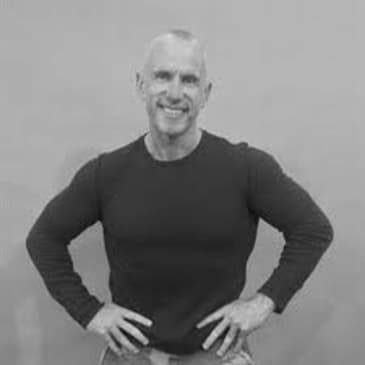
Craig Anthony Harper is an author, podcaster, and speaker. His podcast is “The You Project” TYP, they are over 1620 episodes, breathing life into life. Craig is an Aussie, based in Melbourne. Tune in as we discuss Craig's hinge moments, mental toughness, and journey to success.
Instagram @craiganthonyharper
- 5:57 Building Connections And Experiences With A Crowd
- 9:36 The Research Of What Its Like Being Around Me
- 13:46 The Awareness Of How You Think
- 21:33 Starting Where You Lack The Skills
- 31:00 Spiritual Journey Throughout Life
- 37:06 A Hinge Moment In School That Changed His Life
- 42:31 Not Letting The Ego Of A New Body Change You
- 46:50 Reconciling With Your Mountain Top Moment
- 53:53 Success Is Different For Everyone
Don’t forget you can also follow Dr. Rob Bell on Twitter or Instagram.
Follow At:
- Twitter @drrobbell
- Instagram @drrobbell
Download Your Daily Focus Road Map!
If you enjoyed this episode on Mental Toughness, please subscribe and leave a review!
Dr. Rob Bell
[00:00:09] Welcome to Mental Toughness with Dr. Rob Bell.
[00:00:13] Each week, Dr. Rob sits down with athletes, executives and expert coaches to talk about
[00:00:18] mental toughness and their hinge moment.
[00:00:21] Here's your host, Dr. Rob.
[00:00:38] And I think the interesting thing about is about personal growth for me in the real
[00:00:44] sense is personal development, self-help, whatever we want to call it that whole
[00:00:48] space that so many people play in or try to or you know for me it's not so much about
[00:00:54] what I do be and create and what I earn and own and all the achieve.
[00:00:58] It's a bit of that, but it's really more about who I become.
[00:01:02] You know because when I become the guy who can solve problems and perform in the middle
[00:01:08] of fucking chaos and become under pressure and be whatever a better version of me that
[00:01:15] very cheesy sounding cliche but whatever that means for me to be more loving, more
[00:01:20] compassionate, more aware, more evolved whatever that you know it's so much more for me about
[00:01:25] who I'm becoming then and who I'm helping and serving and I know that sounds cliche
[00:01:30] it's just true.
[00:01:31] I always say to people I gave selfishness a good go about 10 or 15 years.
[00:01:38] I really worked hard.
[00:01:40] That was my model was looking after me and I did it pretty well and I did it
[00:01:44] for quite a while.
[00:01:46] But ultimately I was mentally, emotionally and spiritually bankrupt.
[00:01:49] I had lots of stuff from the outside looking in my life was awesome.
[00:01:53] But the inside out experience was rubbish.
[00:02:27] Our guest today on the mental toughness podcast is it's another all see believe
[00:02:32] or not folks.
[00:02:33] He's based in Melbourne, but he's an author, podcaster and in a great
[00:02:39] speaker and coach.
[00:02:41] His podcast is the you project that'll be in the notes, but it's T.
[00:02:47] Y. P.
[00:02:48] And they have over 1620 episodes now my God, I mean, that's just awesome.
[00:02:54] Breathing life into life.
[00:02:56] Our guests today are going to enjoy this episode and get pretty deep.
[00:02:59] It's it's Dr. Craig Anthony Harper.
[00:03:03] Mate, my buddy.
[00:03:05] Glad you could join me.
[00:03:07] How are you?
[00:03:08] Sorry, man. Sorry.
[00:03:10] Hi, buddy. How are you?
[00:03:11] It's great to be here.
[00:03:13] So I always like starting out since humour is a big part of your life.
[00:03:16] And I think you do a really good job of integrating in it like like all sees, right?
[00:03:19] I mean, I always say you can you can hear him before you can see him.
[00:03:23] But what's a describe what a fuck would is?
[00:03:28] A fuck would is an idiot.
[00:03:30] OK, I figured.
[00:03:32] But you know, you know, the funny thing is in Australia, as you know,
[00:03:36] it can be a term of endearment.
[00:03:38] Like I would call my best mates, you know, fuck wits if they do something silly.
[00:03:42] And and I think that's the.
[00:03:45] That's one of the things that gets misinterpreted across culture is
[00:03:49] is sometimes if you if you are from the outside looking in,
[00:03:53] you might think oh, they hate each other or that's that's hard.
[00:03:56] That's harsh. That's horrible.
[00:03:57] That's but it's it's often really almost a term of affection, you know,
[00:04:01] like when, you know, it's like a lot.
[00:04:05] Like I'll tell my mates, I love them and I'll say I love you.
[00:04:09] But they a lot of them will say, yeah, love you.
[00:04:11] You know, it's almost like this punching on the shoulder affection
[00:04:16] because we don't want to be too direct or too vulnerable or too open.
[00:04:21] So we kind of find a way to say it without actually saying it.
[00:04:25] Yeah. So calling someone fuckwit, it can be an insult or it can almost
[00:04:29] be a term of endearment. OK.
[00:04:32] Yeah, I appreciate that, man.
[00:04:33] But hopefully that comes out like in our our episode today,
[00:04:36] because I know there's going to be a lot of problems get thrown out there.
[00:04:38] You do a good job of that, man.
[00:04:40] I can hold back. I can hold back.
[00:04:42] No, I'll do it, man. I want you to let it go.
[00:04:44] You know, I was thinking about this.
[00:04:46] I always like to start off the podcast kind of with like ease into it, right?
[00:04:51] Get something off the pitch.
[00:04:53] But.
[00:04:55] I wanted to start this one off a little special, man.
[00:04:58] I wanted to share with you a joke if that's OK.
[00:05:01] And ready.
[00:05:02] And the joke kind of goes like this.
[00:05:04] It was a in Aussie during World War Two and he arrives in London
[00:05:10] and right after the bombing of London,
[00:05:12] he's talking to one of the Brits as a soldier and the in the Brits says to him,
[00:05:16] it says, my God, mate, did you did you come here to die?
[00:05:21] And the Aussie is like, no, I got here yesterday.
[00:05:26] Oh, God.
[00:05:29] It's the best one I got, brother.
[00:05:31] Yeah, let's hope it gets better from now.
[00:05:33] Huh? Let's go. Come on.
[00:05:36] Hey, when when you're talking, right, how do you?
[00:05:39] I always start off my my talks.
[00:05:42] I just get right into it.
[00:05:43] Like, I don't think, hey, I want to thank the sponsors or thanks
[00:05:46] somebody for bringing me like I get right into the story.
[00:05:48] How do you start off like when you when you speak?
[00:05:52] When I podcast or when I'm on stage, when you're speaking,
[00:05:55] when you're in front of a crowd.
[00:05:56] Yeah. So, I mean,
[00:06:00] I think when you're talking to a crowd,
[00:06:03] you I mean, I did one yesterday, I did one the day before.
[00:06:06] I do a lot of that.
[00:06:08] But it's really for me, it's a blend of being real and raw
[00:06:12] and organic and intuitive and instinctive
[00:06:16] and trying to build an experience with people.
[00:06:19] So I will often in the first minute or two
[00:06:23] ask a question that people need to participate in
[00:06:27] so that I get some interaction.
[00:06:28] So I might walk on stage, someone's just introduced me.
[00:06:33] And I'll say something like, all right, before we get underway,
[00:06:36] I just I just want to get a sense of who you are,
[00:06:38] where you're at, put up your hand if you're an overthinker.
[00:06:41] And people go, oh my God, I'm an overthinker
[00:06:44] and all the hands go up.
[00:06:45] There's a hand up here.
[00:06:46] Right now I've got connection and interaction
[00:06:48] and now I'm developing rapport
[00:06:49] and now I've got them involved in 30 seconds.
[00:06:53] And then I say, and how's that working out for you?
[00:06:56] And they all roll their eyes and I go, shit, ours, right?
[00:06:59] And they go, yeah, no good.
[00:07:00] I go, all right, well, let's talk, let's lean into that.
[00:07:03] What is overthinking rumination about?
[00:07:05] Why do we do it?
[00:07:06] You know, and then we just start off.
[00:07:07] And rather than me stand up and firstly,
[00:07:10] nobody wants a presentation.
[00:07:12] Nobody wants a monologue.
[00:07:15] Nobody wants a lecture.
[00:07:17] People want to be amused and entertained.
[00:07:21] Yes, they want information.
[00:07:22] Yes, they want strategies,
[00:07:23] but they also want to like the person that's up the front.
[00:07:28] And so I mean, you and I have probably,
[00:07:31] I definitely have, I'm sure you have,
[00:07:32] you've been to presentations, workshops, conferences
[00:07:35] where the information coming from the stage is nine out of 10,
[00:07:40] but the connection is one.
[00:07:43] The experience is one.
[00:07:45] And so it's like, I know that.
[00:07:49] You know, people connect with stories and humor, Rob.
[00:07:53] Now, you don't have to be a brilliant storyteller
[00:07:56] or a stand up comic, but you do know that,
[00:07:59] you know, you when you share your science, your wisdom,
[00:08:02] in your research, you know, there's most people are not Rob Bell, right?
[00:08:08] And so you need to find a way to share your thoughts
[00:08:10] and ideas and strategies and science in a way
[00:08:12] that connects with people who are not Rob Bell,
[00:08:15] which is everyone except Rob Bell, right?
[00:08:17] And so for me, I'm very much interested in not do they like me?
[00:08:23] Is this information good?
[00:08:25] I'm initially the first five minutes.
[00:08:27] I'm interested in how do I build connection,
[00:08:29] report, trust and respect as quickly as possible?
[00:08:32] Because if I can do that or engagement or get a laugh
[00:08:36] because people connect emotionally with stories and humor,
[00:08:39] but not with data.
[00:08:40] So I want to build an emotional connection as quickly as I can.
[00:08:44] Love it, man.
[00:08:46] Are we building a connection?
[00:08:49] Dude, we are joined at the emotional hip.
[00:08:55] So you, like I introduced you, Dr. Craig Anthony.
[00:09:01] Tell us about your page.
[00:09:02] Can I just correct you?
[00:09:04] I'm sorry, I'm not I'm still a few months away, but thank you.
[00:09:07] Well, we don't know when this is going to be published, right?
[00:09:09] It could be by then.
[00:09:11] Yeah, that's right.
[00:09:12] I mean, knowing you and your research, you will be doctor.
[00:09:15] So that's how I'm introduced.
[00:09:17] You know, I wanted to be one of the inaugural ones to do that.
[00:09:20] Like share with us about your research, man, because it's
[00:09:23] I mean, the fascinating part, right?
[00:09:25] Like why don't why don't people change when they want to?
[00:09:29] Like, but talk to us.
[00:09:30] Talk to us about that path, that project for you
[00:09:33] and what you discovered from it.
[00:09:35] So the the Genesis, Rob, for my curiosity around metaperception,
[00:09:41] which is it's a specific kind of self-awareness,
[00:09:45] situational awareness, other awareness.
[00:09:48] The Genesis for that was having repeated experiences
[00:09:53] where I would go into organisations, be they corporations
[00:09:58] or sporting clubs or whatever, or even military or police.
[00:10:02] And there would be, you know, cultural problems,
[00:10:06] communication problems, interpersonal issues.
[00:10:11] And they would bring me in and say, listen,
[00:10:14] the culture's not great.
[00:10:16] You know, there's there's a few problems
[00:10:17] we just want to bring you in and talk around all of that
[00:10:20] communication connection problem solving integration
[00:10:22] teamwork, you know, blah, blah, blah, blah.
[00:10:26] And then I would eventually meet the boss, Himo He.
[00:10:31] And I would say to the boss, sometimes something like,
[00:10:35] what do you think it's like being around you for your team?
[00:10:39] And the responses would range from, oh, my God,
[00:10:43] I'd never truly deeply thought about that.
[00:10:45] That is such a great question to I don't give a fuck.
[00:10:49] I'm not here to make friends.
[00:10:51] I'm the boss.
[00:10:52] Their job is to do what they're told and everything in between.
[00:10:56] And I realise that, you know, that not all the time,
[00:11:00] but more often than you might think that the problem was
[00:11:02] actually the person at the top of the the organisation
[00:11:07] or meant to be at the top of the organisation anyway.
[00:11:09] And so I was really just that whole idea of what is it
[00:11:12] like being around me, that question?
[00:11:14] And why does it matter?
[00:11:16] And does my ability to understand how other people perceive
[00:11:19] and process and experience me?
[00:11:23] Does my willingness to learn into that and my capacity
[00:11:27] to try to understand that?
[00:11:29] Is that an interpersonal advantage?
[00:11:31] Is that a good skill or trait to have?
[00:11:35] So if I want to lead, if I want to teach, if I want to coach,
[00:11:38] if I want to go on Rob Bell's podcast and make sense,
[00:11:41] I want to have an awareness of what I'm like in the moment
[00:11:44] for Rob and for Rob's audience.
[00:11:45] Is that an advantage?
[00:11:47] And the answer is yes.
[00:11:48] And then the next question is, well, how the fuck does that
[00:11:51] work? Right.
[00:11:53] And then is it trainable?
[00:11:55] Is it measurable and all of those things?
[00:11:57] And so, yeah, my my last five years has been around that
[00:12:01] has been about around researching essentially the question,
[00:12:06] what is it like being around me for others?
[00:12:09] And and again, it's not really coming from a place
[00:12:13] of insecurity or self doubt or do they like me?
[00:12:18] Right. It's really about what am I like for them?
[00:12:21] Because if I can understand, like even right now in this moment,
[00:12:26] it's dawning on me.
[00:12:27] Am I talking too much?
[00:12:29] Right. That's what we would call maybe situational awareness.
[00:12:32] Am I talk? Should I shut up right now and let Rob ask a question?
[00:12:36] Right. And so it's like that in the moment, awareness,
[00:12:39] what am I like for them to be around?
[00:12:42] And again, it's coming from a place of curiosity, not fear.
[00:12:45] And it's coming from a place of I want to build connection,
[00:12:48] better connection, rapport, understanding and interpersonal
[00:12:52] experiences with the people with whom I insect at work and outside of work.
[00:13:01] I've always found the toughest part
[00:13:03] of like the meta perception is in a podcast like we're doing here
[00:13:09] where you say some insightful things and now I need to be able to pivot
[00:13:13] and adjust and then be able to come on top of that and ask the question.
[00:13:18] That's that's where I found like the podcast and skills
[00:13:20] because I could just like blab on, but like who wants that?
[00:13:23] So my question, I guess with that is like, so
[00:13:27] what's what's the one part from this research that really dawned on
[00:13:32] because we all have these preconceptions heading in, right?
[00:13:35] And the test and the hypothesis and the thesis.
[00:13:38] But what's that one piece that really dawned on you that was like,
[00:13:42] shit, I never really thought about that angle before.
[00:13:46] Yeah. I think if we want to.
[00:13:50] Kind of step one or two levels down from meta perception,
[00:13:53] which is quite a kind of a high level cognitive thing, right?
[00:13:56] But step back down to
[00:13:59] meta cognition, which obviously you know what it is.
[00:14:03] But for the listeners that don't just is starting to think about how you think
[00:14:07] just having curiosity around.
[00:14:11] Why do I see the world the way that I see the world?
[00:14:14] Where did that come from?
[00:14:15] Does that serve me?
[00:14:17] Does that sabotage me?
[00:14:20] Where do my beliefs come from?
[00:14:22] Did I choose them or did they choose me by virtue of my situation,
[00:14:26] my family, my conditioning, my programming?
[00:14:28] In fact, where does my conditioning finished the programming of me?
[00:14:34] You know, I'm just a big biological computer and I've had
[00:14:36] my hard drive has been kind of programmed by my experiences
[00:14:41] and my people and my education and my church and my culture
[00:14:44] and my sociology in my country.
[00:14:48] And then trying to think about, wow, what if I had a clean slate?
[00:14:53] How would I think?
[00:14:54] What would I believe?
[00:14:57] How would I talk to people?
[00:14:58] How would I interpret data?
[00:15:00] What would I want to do be create?
[00:15:03] And so, you know, this is a kind of I think a real
[00:15:07] I think real self-awareness starts when we recognize our lack of self-awareness.
[00:15:14] It's like consciousness begins when we recognize how unconsciously we're living
[00:15:20] in this cognitive, emotional, psychological
[00:15:23] kind of behavioral version of Groundhog Day,
[00:15:27] where we just keep doing shit that doesn't work.
[00:15:31] And like how many people Rob say, well, one of my values is health.
[00:15:35] You know, when you say to anyone is one of your values
[00:15:36] physical, mental and emotional health, no one's going to say no.
[00:15:40] Right. Everyone goes, yeah, of course,
[00:15:42] I want to be physically, mentally and emotionally healthy.
[00:15:45] And then you say, OK, so does the way you live align with that value?
[00:15:48] And the answer of people being brutally honest is quite often, no, it doesn't.
[00:15:52] And then you say, cool, so let's not beat ourselves up.
[00:15:55] Let's just get curious about that.
[00:15:57] Why do you think that might be?
[00:15:59] You know, so for me, that's that kind of awareness
[00:16:03] is starting to think about how you think.
[00:16:06] And then the theory of mind starting to think about how other people think.
[00:16:10] I want to get curious about Rob's version of right now.
[00:16:14] I want to I want to walk away from my window and I want to come over to your
[00:16:18] window and I want to have a look through it.
[00:16:20] I want to see what it's like looking through the Rob lens at the world.
[00:16:24] And the Rob lens is your experiences, your beliefs, your values,
[00:16:28] your ideas, your pain, pleasure, you know, a bias, all of it.
[00:16:33] We've all got a window that we look through the metaphoric window, you know?
[00:16:37] And it ain't about understanding other people is not about agreeing with them
[00:16:41] or aligning with them, or even in some instances liking them.
[00:16:45] It's just about understanding their version of reality.
[00:16:49] Right. And if I can understand someone's version of right now,
[00:16:53] then even if it's somebody with whom I disagree
[00:16:56] or I'm having a problem or there's some kind of conflict,
[00:16:59] at least if I understand them,
[00:17:03] I can begin the kind of, you know, process of repair or healing
[00:17:08] or working side by side.
[00:17:10] I've always felt like when I'm disagreeing with someone,
[00:17:13] I think in this is probably from like Wayne Dyer,
[00:17:15] but one of his favorite pieces was he'd always say in the conversation,
[00:17:20] geez, I never really thought about it that way.
[00:17:23] And they're both right, like they're disarmed.
[00:17:26] It's kind of like, you know, you've said your piece like,
[00:17:29] man, I never really thought about it that way.
[00:17:32] I've used that one when getting heated and it's like, huh,
[00:17:35] you know, it's a really interesting take.
[00:17:36] I never thought about it that way.
[00:17:38] Yeah. You can borrow that one.
[00:17:40] I'm sure you use that one.
[00:17:41] Yeah, no, I'm going to. I'm jotting that down.
[00:17:43] I will take credit for that.
[00:17:45] You know, Anayas Ninh, who is a very well-known
[00:17:51] writer in the early 19th century, she said,
[00:17:54] and I'm sure she ripped it off.
[00:17:56] I think she actually ripped it off from
[00:17:59] the Talmud or something.
[00:18:00] But she said, we don't see things as they are.
[00:18:02] We see things as we are, which is a very well-born
[00:18:05] and well-known expression, but it's true.
[00:18:08] You know, and the courage and the awareness is in realizing that
[00:18:13] this is not the reality.
[00:18:15] This is my reality.
[00:18:16] This is my story, you know, because things happen
[00:18:20] in our external physical three dimensional world.
[00:18:22] Stuff happens.
[00:18:24] Life happens.
[00:18:25] And then we look at that objective event,
[00:18:27] that meaningless, otherwise meaningless event,
[00:18:30] and then we give it meaning.
[00:18:31] And we think that our meaning is the meaning, you know,
[00:18:35] and we live in our echo chamber of thought and belief
[00:18:37] and ideology and philosophy.
[00:18:39] And if you don't live in my echo chamber,
[00:18:41] well, clearly you're wrong, you know?
[00:18:44] But in truth, it's like, it's being able to say,
[00:18:47] look, this is what I think.
[00:18:48] This is, I mean, this is where I'm at all these years later.
[00:18:51] Where I'm at is, this is what I think,
[00:18:53] but I could be wrong.
[00:18:54] This is what I believe, but I could be wrong.
[00:18:57] And I know I could be wrong because I've been wrong
[00:18:59] about a million times before.
[00:19:02] So it would be overwhelmingly arrogant to think that
[00:19:05] this thing that I believe is unequivocally right
[00:19:08] and everyone who doesn't think like me in the world
[00:19:11] is unequivocally wrong.
[00:19:34] Hey, good looking.
[00:19:36] If you like this podcast and are already a badass,
[00:19:39] but it's all way too complicated,
[00:19:41] then visit our website, DrRobbell.com
[00:19:45] and schedule call with us to help capture
[00:19:47] your very own hinge moment.
[00:20:06] So when I come across people that don't exercise,
[00:20:11] it's really foreign to me.
[00:20:13] Like it's really tough for me to like get my head around it.
[00:20:16] And the reason why is because my whole life
[00:20:18] it's been a staple of what I've done,
[00:20:20] you know, play active movement.
[00:20:22] Like I've never always thought about exercises
[00:20:25] going to the gym, even though I think
[00:20:27] that's a big piece, right?
[00:20:28] They think working out like half the go to the gym.
[00:20:30] I've always looked at it as like play, movement,
[00:20:33] getting outside, like just moving.
[00:20:37] And so here's sort of my segue into that.
[00:20:43] So it's always been really difficult for me
[00:20:46] to identify with people that don't have habits,
[00:20:50] that don't have motivation, that don't have discipline.
[00:20:53] And all the self-help stuff is all about the discipline,
[00:20:58] right?
[00:20:58] Get the discipline, get the habits.
[00:20:59] And I'm totally with it.
[00:21:00] There's nothing bad with that, right?
[00:21:02] First you create your habits,
[00:21:03] then your habits create you.
[00:21:05] I'm not arguing that part at all.
[00:21:07] I just think it gets overcooked.
[00:21:10] That's my point.
[00:21:11] I just think that gets oversaturated
[00:21:13] in terms of the discipline piece.
[00:21:17] I wanted to ask you, what I think most people
[00:21:20] struggle with is the lack of belief in themselves.
[00:21:23] Like the lack of confidence.
[00:21:24] Cause if I really believe I can make that difference,
[00:21:27] I really believe I can make that change,
[00:21:29] it's gonna affect all the other mental skills.
[00:21:31] And why don't you take on that one?
[00:21:33] Yeah, I agree with you.
[00:21:35] And I think also there's another,
[00:21:38] I think imposter syndrome, overthinking, self-doubt,
[00:21:43] lack of self-belief,
[00:21:45] all of those things that are kind of in the same wheelhouse.
[00:21:51] I think there's another part to that.
[00:21:53] And that is that all of those things somewhat can coexist.
[00:21:58] Like I've done a lot of good stuff.
[00:22:00] I've spoken all over the world of blah, blah, blah.
[00:22:02] I've written seven books.
[00:22:03] I've done some great stuff.
[00:22:05] I've built businesses.
[00:22:06] I've employed 500 people.
[00:22:07] And I've also fucked up 1 million times.
[00:22:10] And I've got certain skills and certain knowledge.
[00:22:12] I'm good at some things and I'm bad at some things
[00:22:14] and I still get things wrong
[00:22:16] and I still get trapped in ego
[00:22:18] and I still want attention
[00:22:19] and all of that human bullshit, right?
[00:22:22] And I don't think there will come a time
[00:22:24] where I am ever completely devoid of self-doubt
[00:22:28] or a modicum of self-loathing
[00:22:30] or a modicum of imposter syndrome.
[00:22:32] And so it's just fine in a way sometimes to coexist with that.
[00:22:36] And also to realise that how I feel
[00:22:38] is not necessarily what is.
[00:22:41] Like do I feel like a fraud sometimes?
[00:22:43] Yep.
[00:22:44] Am I a fraud?
[00:22:45] No, I'm not a fraud.
[00:22:48] Do I feel like an imposter sometimes?
[00:22:51] Am I?
[00:22:51] No.
[00:22:52] Am I the best?
[00:22:54] Am I the worst?
[00:22:55] No.
[00:22:56] Do I have days where I'm a, you know,
[00:23:01] a nine and a half hour to 10 in front of an audience?
[00:23:03] Yep.
[00:23:03] Do I have days where I'm a rock solid four
[00:23:05] and I walk away and I'm absolutely embarrassed
[00:23:09] and where I think I could have, yeah, of course.
[00:23:12] So I think that, you know,
[00:23:14] I think sometimes Rob, we wait for all of that.
[00:23:17] We go, I've got to wait until I'm confident
[00:23:20] or you can't get fucking confident
[00:23:23] without being, it's like you can't become a black belt
[00:23:26] without being a white belt
[00:23:27] and getting strangled and choked and punched in the face, right?
[00:23:30] How you become a black belt,
[00:23:31] how you develop skill and strength and resilience
[00:23:33] and competence, how you learn to perform under pressure
[00:23:37] is by starting in the place where you lack skill,
[00:23:40] lack confidence, lack strength,
[00:23:41] lacks know-how, lack knowledge.
[00:23:44] That's where you start.
[00:23:45] And the doorway to that is just courage.
[00:23:49] You know, and yes, will you be good?
[00:23:51] No, you won't.
[00:23:51] Will you suffer?
[00:23:55] Yep, you will.
[00:23:56] Will you be embarrassed?
[00:23:57] Probably.
[00:23:57] Will you be the best in the room?
[00:23:59] Definitely not.
[00:24:00] Will you improve?
[00:24:01] Yes, if you keep doing it.
[00:24:02] Will you grow, learn, evolve, adapt?
[00:24:04] Yes, you will.
[00:24:04] Will you build resilience and skill
[00:24:07] if you keep fucking doing it?
[00:24:09] And you don't need to feel confident.
[00:24:12] You just want to.
[00:24:13] You don't need to feel calm.
[00:24:17] Like lacking, you know, feeling anxiety, feeling sad,
[00:24:20] feeling scared, welcome to the Human Club.
[00:24:24] It's OK.
[00:24:25] You know, if your default setting is 24-7 depression or anxiety,
[00:24:29] that's a different conversation.
[00:24:31] But for the stuff we're talking about now,
[00:24:35] you know, it's like I...
[00:24:37] Depending on what I'm doing too,
[00:24:39] and I can tell you, like, I'm not a brilliant academic
[00:24:42] and every time I've had to go and stand in front of
[00:24:45] what we call the Academic Board here,
[00:24:47] so there's four times through a PhD
[00:24:49] where you've kind of got to go...
[00:24:51] It's like going to court and you've got to plead your case
[00:24:53] and, you know, talk about your research
[00:24:56] and essentially why they should let you
[00:24:58] continue your PhD journey.
[00:25:00] So there's four times that that has to happen.
[00:25:03] I've done all four and I've got through, so I'm very grateful.
[00:25:05] But Rob, I was more terrified talking to those four people
[00:25:11] than I used to work on national TV
[00:25:13] and talk to a quarter of a million people once a week.
[00:25:16] I was more terrified talking to four people
[00:25:20] to try to defend my PhD because I just...
[00:25:25] It's not my natural habitat, academia.
[00:25:28] You know, it's like, for me, it's a slog.
[00:25:31] I'm a pracademic more than an academic.
[00:25:33] Can I do it? Yes, I can.
[00:25:35] But is it my natural habitat? No.
[00:25:38] But when I started, the first three months
[00:25:41] after I started my PhD, all I wanted to...
[00:25:44] All I could think about was,
[00:25:46] how do I get out of this without public humiliation?
[00:25:50] You know? Really?
[00:25:51] But yeah, 100%.
[00:25:53] But over time, you just go, oh, OK, well, I'm learning to...
[00:25:56] I can understand the academic at this level,
[00:25:59] the PhD process and writing and researching at this level.
[00:26:03] And now it's something that I'm comfortable with.
[00:26:06] But it took me five years to get comfortable,
[00:26:10] to build skill, competence, understanding awareness
[00:26:12] and some level of proficiency.
[00:26:15] But my starting point was, I'm shit-ass.
[00:26:18] I'm terrible at this. That was my starting point.
[00:26:23] But you still had... And I appreciate that, man.
[00:26:26] And you knew that you were going to...
[00:26:29] You knew, starting out, that no matter what,
[00:26:32] you were going to finish.
[00:26:35] Uh... I don't know. I'd really done...
[00:26:37] You went into that journey like, hey, how is this gonna...
[00:26:40] You didn't know no matter what it's going to take,
[00:26:43] I'm gonna finish this.
[00:26:45] I thought I did until I started,
[00:26:47] and then I realized how underwhelmingly ready I was.
[00:26:51] How ill-equipped I was.
[00:26:54] You know? And I went, oh...
[00:26:55] I'm not... Firstly, I didn't think I was that smart,
[00:26:58] but I went, well, I'm actually dumber than I thought.
[00:27:01] But it's all for me.
[00:27:04] It was all about ego and fear and laziness.
[00:27:06] Like a PhD, you cannot be lazy.
[00:27:09] You can be fearful.
[00:27:12] You can be anxious. You can be a lot of things,
[00:27:14] but you can't be lazy.
[00:27:15] Like you have to just...
[00:27:17] You have to do mountains and mountains and mountains of reading
[00:27:22] that you will not enjoy.
[00:27:24] So the end.
[00:27:26] Oh, yeah.
[00:27:27] That's just welcome to... That is what it is.
[00:27:30] You will write 100,000 words and chuck out 95,000 of them.
[00:27:35] You know, I always felt...
[00:27:36] I always felt when I was doing like my master's thesis,
[00:27:38] so it was probably the biggest one I ever wrote
[00:27:40] and it was giving me the biggest source of confidence
[00:27:42] because I was a shit writer.
[00:27:44] This is how bad I was.
[00:27:45] Going into college, you could test out of English 101, right?
[00:27:50] You just take this little test.
[00:27:51] You write a paragraph.
[00:27:52] You test out of it.
[00:27:53] You go to English 102.
[00:27:56] I was so bad, Craig, that I was in 010.
[00:28:01] Like I couldn't even go to English 101.
[00:28:04] That's how bad I was.
[00:28:05] So when I got to grad school, shit, man.
[00:28:08] Writing was bad.
[00:28:10] And it came so full circle.
[00:28:13] My professor handed me back every revision, just all tore up.
[00:28:18] I think he tore it up so much
[00:28:20] that the very first draft I handed in,
[00:28:23] like it probably came all the way back around
[00:28:26] where it was like the same thing, you know?
[00:28:29] But I mean, that's how bad that was every single day.
[00:28:33] And just being able to take it.
[00:28:34] But that's where it was like...
[00:28:36] How much shit can you take?
[00:28:39] Yeah, and also...
[00:28:40] Keep moving forward.
[00:28:41] Yeah, do you really want to get good at this thing?
[00:28:43] And it's like if we use the analogy of the gym,
[00:28:47] like how do you become strong in the gym?
[00:28:50] Well, you literally work against resistance,
[00:28:52] which is quite...it's called resistance training.
[00:28:54] So you go in the gym, you do something hard,
[00:28:57] you do something uncomfortable,
[00:28:58] you work against resistance.
[00:29:00] And if you do it the right way,
[00:29:02] right intensity for the right amount of time,
[00:29:04] you get physiological adaptation
[00:29:05] and you literally build strength and function.
[00:29:08] And, you know, you build muscle
[00:29:10] and your body becomes more capable of doing the hard thing.
[00:29:14] And eventually the hard thing is the easy thing.
[00:29:16] Yeah.
[00:29:16] You know, eventually the 120-pound bench is...
[00:29:20] That was...you couldn't even do a rep.
[00:29:22] Now you do 10 reps to warm up before you actually bench.
[00:29:25] But the weight is the same.
[00:29:27] The stimulus is the same.
[00:29:29] And now you are different because you are different.
[00:29:31] Your experience of those hard things is now different.
[00:29:34] And I think the interesting thing about is...
[00:29:37] about personal growth for me in the real sense is
[00:29:41] personal development, self-help,
[00:29:43] whatever we want to call it, that whole space
[00:29:44] that so many people play in or try to or...
[00:29:49] You know, for me it's not so much about what I do be
[00:29:51] and create and what I earn and own and all the...
[00:29:54] It's a bit of that.
[00:29:55] But it's really more about who I become.
[00:29:58] You know, because when I become the guy who can solve problems
[00:30:02] and perform in the middle of fucking chaos
[00:30:07] and become under pressure and be whatever a better version
[00:30:11] of me, that very cheesy sounding cliche.
[00:30:13] But whatever that means for me to be more loving,
[00:30:16] more compassionate, more aware, more evolved,
[00:30:18] whatever that...
[00:30:19] You know, it's so much more for me about who I'm becoming
[00:30:22] than...
[00:30:23] And who I'm helping and serving.
[00:30:25] And I know that sounds cliche. It's just true.
[00:30:27] I always say to people,
[00:30:29] I gave selfishness a good go about 10 or 15 years.
[00:30:34] I really worked hard.
[00:30:36] That was my model, was looking after me
[00:30:38] and I did it pretty well and I did it for quite a while.
[00:30:42] But ultimately I was mentally, emotionally
[00:30:44] and spiritually bankrupt.
[00:30:45] I had lots of stuff from the outside looking
[00:30:48] in my life was awesome.
[00:30:50] But the inside out experience was rubbish.
[00:30:54] Share with us about your spiritual journey.
[00:31:00] So I don't know if you and I have spoken about this,
[00:31:05] but I grew up in a very religious house,
[00:31:10] which was Catholic and more religious than spiritual.
[00:31:14] And then I ended up after I left school,
[00:31:17] I ended up in what is not common in Australia,
[00:31:22] but way more common in the States,
[00:31:23] which is a Pentecostal, evangelical,
[00:31:26] Rafter swinging, tambourine banging.
[00:31:29] If love and the Lord's wrong, I don't want to be right.
[00:31:31] What?
[00:31:32] Yeah, no snakes dude.
[00:31:33] No snakes.
[00:31:34] No bro, we did a hard pass on the snakes.
[00:31:40] But very, you know, and I was really curious
[00:31:43] and I loved this.
[00:31:45] I loved the idea of there being,
[00:31:50] I don't know something bigger or something.
[00:31:51] You know, I loved the idea of a God.
[00:31:57] And when I started to read the Bible
[00:32:02] because I was involved in this church
[00:32:04] and I read the Bible for like literally daily for five years.
[00:32:10] And so I became quite, you know, relatively theologically,
[00:32:14] I guess, aware.
[00:32:18] So between 19 and 24.
[00:32:20] And then I kept going to, I kept, you know,
[00:32:25] but for me there was,
[00:32:27] and this is probably not very uplifting for anyone.
[00:32:29] So I apologize, but I saw inconsistency between what was,
[00:32:34] what I was reading and what I was seeing in church,
[00:32:37] which is not to say I was the high water mark
[00:32:39] for, you know, the model Christian either.
[00:32:43] But I was pretty full on.
[00:32:45] I was pretty committed.
[00:32:46] Like I, from 19 to 24,
[00:32:49] I did not have sex.
[00:32:50] I was completely celibate.
[00:32:52] I didn't drink, I didn't smoke.
[00:32:53] I've never drunk in my life.
[00:32:54] I've never been drunk.
[00:32:55] I've never had drugs.
[00:32:56] I've never been high.
[00:32:58] I've never had a glass of alcohol.
[00:33:00] Right?
[00:33:00] So I'm quite disciplined.
[00:33:02] And once I figure out what's good for me,
[00:33:05] I will tend to do that.
[00:33:08] And it turns out that the church that I was in
[00:33:11] and I didn't really know,
[00:33:12] and I hope you listeners don't find this boring,
[00:33:15] but this is just my journey.
[00:33:16] It ended up being more of a cult than anything.
[00:33:19] It was very, very controlling and manipulative.
[00:33:22] And you know, so for that reason and a few others,
[00:33:26] I kind of exited,
[00:33:27] but I was in there boots and all for a rock solid five years.
[00:33:31] Then I went to another church after that,
[00:33:33] which was a little bit less controlling.
[00:33:35] And you know, but I still think a lot of,
[00:33:39] for me, a lot of the principles in the New Testament anyway,
[00:33:45] really, if the Bible is not the inspired Word of God,
[00:33:49] if the Bible is just a bunch of thoughts and ideas
[00:33:52] and messages and lessons written by disparate people
[00:33:56] over centuries, it's still not the worst thing to read.
[00:34:01] The Old Testament, as you probably know,
[00:34:04] I don't know where you are with all this,
[00:34:05] but it's pretty heavy going there, some good stuff.
[00:34:07] But the New Testament, you know,
[00:34:09] and so for me, I, there's lots of questions
[00:34:12] and unanswered questions around all of that.
[00:34:14] But what I do know is that if I can,
[00:34:18] if I can do my best, most of my life,
[00:34:22] most encounters with people, most interactions
[00:34:25] to come from a place of love.
[00:34:28] And yes, that sounds cliche,
[00:34:30] but to come from a place of love,
[00:34:31] whether that's kindness or generosity or quality time
[00:34:34] or you know, helping or supporting someone
[00:34:37] through a tricky process.
[00:34:39] Or I know that when I have a purpose bigger than me,
[00:34:42] yes, another cliche, but it's true for me.
[00:34:46] I'm a better human.
[00:34:47] And I know when I do my very best to operate
[00:34:50] from a place of kindness and love,
[00:34:52] I'm a better human because I'm an only child.
[00:34:56] I can be very self-centered and selfish,
[00:34:59] but I also have lots of data
[00:35:00] that suggests that that does not work.
[00:35:04] So, you know, it's like I, I love people.
[00:35:08] I genuinely love people.
[00:35:10] I love helping people explore their potential power possibilities.
[00:35:13] I love that.
[00:35:15] I love helping people open the door on their own kind of thing,
[00:35:21] you know, and if I can just support them or cheer them on.
[00:35:25] And I tell people constantly,
[00:35:27] I'm not the answer like I'm just a conduit to the answer.
[00:35:30] Right? The answer is you.
[00:35:32] I'm just a guy sharing thoughts and ideas and stories.
[00:35:34] I have changed zero lives except my own.
[00:35:38] The only life I've changed is me.
[00:35:40] I've influenced a few people, but I can't get out of bed for you.
[00:35:45] I can't make hard decisions for you.
[00:35:47] I can't have self-controlled discipline or awareness for you.
[00:35:50] I can't make the tricky decisions.
[00:35:52] I can't be resilient for you.
[00:35:53] I can't lean into the pain for you.
[00:35:55] I can't grow, learn for you.
[00:35:58] All I can do is go,
[00:35:59] you're fucking amazing, but you need to do the work.
[00:36:01] And I'm, you know, like I'm that,
[00:36:06] but I'm also not the guy who was interested in making people feel good
[00:36:12] for three minutes at the cost of not being real.
[00:36:16] So I'm okay with telling people something that I believe to be true
[00:36:21] that might be a little uncomfortable for them
[00:36:23] because I'm more interested in their long-term physical,
[00:36:26] mental, emotional and spiritual wealth than I am,
[00:36:30] stroking their ego and making them feel good for two minutes
[00:36:33] while not really saying what I think.
[00:36:36] Right.
[00:36:38] One of the pieces of this podcast coach is that we talk about hinge moments
[00:36:43] and I believe we have multiple hinge moments about our life
[00:36:46] that every door has a hinge
[00:36:48] and it's that one person, one moment,
[00:36:51] one decision that connects who we are with, who we become.
[00:36:56] What's a hinge moment that you can share with us
[00:36:58] that connected who you are with, with who you became?
[00:37:04] I have a few.
[00:37:06] So I had a huge moment when I was a morbidly obese kid.
[00:37:13] I was, I think we spoke about this when you were on my show,
[00:37:16] but so I don't want to bore you again,
[00:37:17] but your listeners don't know, I guess is,
[00:37:20] I was 200 pounds, about 90 kids,
[00:37:22] but actually more probably like 210, like 95 kilos
[00:37:26] when I was 14 years old, morbidly obese.
[00:37:30] My name was Jumbo at school, parents, teachers, kids called me that.
[00:37:35] And I remember just having this and I obviously didn't like how I looked
[00:37:39] or felt or I was embarrassed and it was nobody's fault.
[00:37:44] Like it wasn't my genetics, it was a bit of genetics,
[00:37:47] but it was really my behaviour, my choices.
[00:37:51] And anyway, I had the...
[00:37:56] I went to a private school and swimming at the swimming carnival
[00:38:01] every year was compulsory.
[00:38:03] In Australia, swimming sports are a big thing, right?
[00:38:06] And every year when it was my turn to swim in my event
[00:38:09] because everyone had to swim,
[00:38:11] I would always go and basically hide
[00:38:14] and the program needed to keep going.
[00:38:16] So my event would come and go
[00:38:18] and they would just do the race without me
[00:38:21] because I would go to the toilet or the change room somewhere.
[00:38:24] And anyway, in year eight, my sports teacher knew what I was up to
[00:38:28] and he basically manhandled me over to the starting blocks.
[00:38:34] And I just remember standing on that starting block
[00:38:37] before that race, I used the term race loosely.
[00:38:42] And feeling like I had one million people looking at me
[00:38:48] and I'm up there in my...
[00:38:50] What I think Americans call swimsuit, we call bathers in Australia.
[00:38:56] And I felt so vulnerable, so seen, so uncomfortable,
[00:39:03] so humiliated because I was up there
[00:39:05] for literally hundreds and hundreds of people to see
[00:39:08] this morbidly obese body that I was living in.
[00:39:12] And that was the moment where I swam the race,
[00:39:16] I got out of the water at the other end, it's just 50 metres
[00:39:19] and I went, I'm never ever...
[00:39:21] I don't know if I said this but I essentially said fuck that.
[00:39:25] I'm never gonna do that again.
[00:39:27] That's it. I'm never gonna feel that again.
[00:39:29] I'm never gonna allow myself to be in that situation again.
[00:39:33] That's it.
[00:39:35] And so for me, it wasn't a light bulb
[00:39:38] but was fucking all the light bulbs.
[00:39:40] It wasn't a hinge, it was a million hinges.
[00:39:42] It was like an epiphany.
[00:39:46] And in the subsequent four months, I lost 35 kilos
[00:39:50] which is the best part of what's exactly 77 pounds.
[00:39:55] Three or four months, maybe five.
[00:39:58] But I lost a lot of weight.
[00:40:00] I essentially halved what I was eating
[00:40:02] and I just started training.
[00:40:03] I didn't know what I was doing.
[00:40:04] I was 14-year-old, fuck it, I had no idea.
[00:40:07] But I just started moving.
[00:40:08] I started running.
[00:40:09] Clearly I couldn't run at the start.
[00:40:11] So I would walk, jog a bit, walk, jog a bit.
[00:40:13] That ended up being jogging, walk, jog, walk and then more jog.
[00:40:17] And then I just changed the ratios until the fitness went up
[00:40:20] and the weight came off.
[00:40:21] Then I became quite fit
[00:40:25] and then if I'm being on a somewhat obsessed with training
[00:40:28] and appearance and all of that shit.
[00:40:30] So that's another story.
[00:40:31] But what was fascinating for me was that, yes,
[00:40:37] I lost a lot of weight and gained a lot of fitness
[00:40:39] in a relatively short time.
[00:40:42] And that physiological shift was good.
[00:40:43] But what it really did for me, Rob,
[00:40:45] was it opened like a door in my brain
[00:40:47] where I realised that despite the fact
[00:40:49] that I didn't have great genetics,
[00:40:51] I wasn't a great athlete.
[00:40:52] I wasn't the smartest kid in school.
[00:40:54] I wasn't inherently or innately gifted.
[00:40:59] If I would make decisions and do work,
[00:41:01] I could create amazing outcomes.
[00:41:03] Well, for me personally, amazing outcomes.
[00:41:06] And so that was almost the genesis for me
[00:41:09] starting to think about human potential.
[00:41:12] What is possible?
[00:41:13] What is possible if, you know,
[00:41:15] I can't wake up tomorrow with more talent.
[00:41:17] I can't wake up tomorrow with better genetics.
[00:41:19] I can't wake up tomorrow with 26 hours in a day.
[00:41:23] But what if tomorrow I use what I've got more efficiently
[00:41:27] and more optimally?
[00:41:28] What could I do?
[00:41:29] And that's kind of underlined, you know,
[00:41:31] the next 40 years really.
[00:41:33] Want to listen to your favourite music,
[00:41:36] but you're sick of all the commercial interruptions
[00:41:38] and negative news today?
[00:41:40] Tune in to Cucoradio.com.
[00:41:42] Music for your mindset.
[00:41:44] We're a commercial free online radio station.
[00:41:47] Play nothing but hits.
[00:41:49] Our free iOS and Android apps
[00:41:51] are available for download at Cucoradio.com.
[00:41:56] Yeah, I love that one, man.
[00:42:00] You know, on that journey,
[00:42:01] I mean, you make the body transformation.
[00:42:06] When did, because usually,
[00:42:09] I mean, you would go from being an insecure,
[00:42:12] self-conscious fat kid to now being insecure,
[00:42:16] self-conscious, more in shape, right?
[00:42:21] When did that transformation take place?
[00:42:25] I mean, because I know that was gradual as well,
[00:42:26] but when did that one take place?
[00:42:29] Yeah, so I was like many people, maybe,
[00:42:33] I was trying to resolve,
[00:42:35] I mean, first of all, I did need to change my body.
[00:42:37] So there were real physiological issues
[00:42:39] that needed to be addressed.
[00:42:42] But then eventually,
[00:42:44] I was trying to find myself in...
[00:42:46] I thought my body was me.
[00:42:49] I couldn't really differentiate
[00:42:51] between how I looked and who I was.
[00:42:54] Mm-hmm.
[00:42:55] And when you get your sense of self-worth
[00:42:59] and identity from your appearance,
[00:43:01] that's a dangerous place to be.
[00:43:04] Because then you become narcissistic,
[00:43:06] then you become obsessed,
[00:43:08] then you make irrational decisions,
[00:43:10] and then also you're delusional.
[00:43:12] And for me, I was trying to resolve
[00:43:14] emotional and psychological issues
[00:43:16] with fucking bigger arms.
[00:43:18] You know?
[00:43:19] I thought, wow, if I can weigh 100Ks
[00:43:22] and be under 10% body fat,
[00:43:24] that's 220% body fat,
[00:43:28] you know, I'm gonna be great.
[00:43:29] I'm gonna be happy.
[00:43:30] I'm gonna be like a ridiculous...
[00:43:32] Yeah, of course.
[00:43:33] It's like, and girls will think I'm awesome
[00:43:35] and guys will think I'm terrifying
[00:43:36] and bibbidi-bobbidi-boo.
[00:43:38] You know, I know it's ridiculous,
[00:43:40] but when there's an inverse correlation
[00:43:45] between your arm size and your IQ
[00:43:47] and your emotional intelligence,
[00:43:50] you think dumb things.
[00:43:52] And I was always...
[00:43:53] because I was wildly insecure,
[00:43:56] I was always looking for people's approval
[00:43:59] and I was always trying to get
[00:44:00] And I'm only slightly better now,
[00:44:02] so please love me.
[00:44:04] But you know, I was always...
[00:44:07] Thank you.
[00:44:08] I was always trying to get
[00:44:14] validation and approval and acceptance
[00:44:16] and belonging through...
[00:44:18] for a period of my life anyway
[00:44:19] through how I looked,
[00:44:21] through how I looked
[00:44:22] and what people thought of how I looked.
[00:44:26] And obviously that's...
[00:44:29] You know, I think...
[00:44:29] I actually think it's worse today than ever.
[00:44:32] I think that I am my body phenomena
[00:44:35] is phenomenon
[00:44:37] is more rampant than ever.
[00:44:41] You know, love me because of my body.
[00:44:43] It's just...
[00:44:45] And I understand,
[00:44:46] I'm not being critical of those people
[00:44:48] because that was exactly me for a long time.
[00:44:51] And even now at the ripe old age of 60,
[00:44:53] I need to be careful.
[00:44:55] I need to be careful that I don't let
[00:44:57] my own bullshit get in the way
[00:44:59] because it's...
[00:45:00] I've still got an ego,
[00:45:02] I'm still battling some of the same things.
[00:45:06] You know, I think I've grown and evolved,
[00:45:08] but am I there?
[00:45:09] No, I'm not there.
[00:45:11] I'm never going to be there.
[00:45:16] Coach, one of the questions I'm always fascinated about
[00:45:18] I like asking experts this one
[00:45:20] because they've been there,
[00:45:21] but the mountaintop moments,
[00:45:24] so whichever mountain that somebody's climbing,
[00:45:27] whether it's for the Olympics
[00:45:29] and they win the gold medal.
[00:45:32] And really just on the heels of the Olympics as well.
[00:45:35] Like people have flown back with that
[00:45:36] mountaintop moment of having a medal
[00:45:39] and they've flown back to where they are
[00:45:41] and I'm never saying that losing is better than winning.
[00:45:45] I'm not saying that.
[00:45:45] However, there were people that flown back
[00:45:49] and think now, okay, now what?
[00:45:55] Or what's next?
[00:45:57] Because everything was devoted to that
[00:45:59] and that was going to solve everything, right?
[00:46:02] I mean, that was going to make me complete
[00:46:03] and that was the fallacy heading into it
[00:46:05] is that there is no finish line to it.
[00:46:07] Your mountaintop moments that you've had,
[00:46:11] how did you reconcile and make peace with that
[00:46:15] and just have that be part of the journey
[00:46:18] and not have that be the end all?
[00:46:22] And the reason why I prefaced it like that
[00:46:25] is because nothing lives on top of those mountains.
[00:46:28] Like the most majestic mountains,
[00:46:30] the higher the mountain,
[00:46:31] you've got to come back down off that sucker, right?
[00:46:33] At some point, you've got to come back down.
[00:46:36] I mean, the people are on top of Mount Everest
[00:46:38] for a matter of minutes before they come back down,
[00:46:40] but they've taken so much time climbing it.
[00:46:42] Talk to us about that, some of your hinge moments
[00:46:45] and how you've navigated those type of experiences.
[00:46:49] So I think this is all about expectation.
[00:46:52] There's a relationship between expectation,
[00:46:55] what we expect and then our subsequent frustration,
[00:46:59] disappointment and anger.
[00:47:01] Like for example, you know, how...
[00:47:06] This is a practical real world interpersonal example.
[00:47:09] If there's a person in your life who always treats you
[00:47:12] like a relative or a boss or a colleague
[00:47:14] or someone who often treats you
[00:47:16] the way that you don't want to be treated
[00:47:18] or they're just whatever.
[00:47:21] And they've done that 100 times to you.
[00:47:24] And then next time you encounter them,
[00:47:26] you somehow expect them to be different.
[00:47:29] You're going to be disappointed.
[00:47:31] You're going to be frustrated.
[00:47:32] You're going to be angry.
[00:47:32] You're going to be a mix of those things.
[00:47:36] Now I'm not saying how they're treating you is okay,
[00:47:38] but I'm saying the best predictor of future behavior
[00:47:40] is past behavior.
[00:47:41] So for example, I love my dad.
[00:47:43] My dad's a great man,
[00:47:44] but my dad has got the emotional development
[00:47:47] of this drink bottle here that I'm holding up to show you,
[00:47:51] which you can't see.
[00:47:53] My dad's a great man,
[00:47:54] but my dad's never said to me once in my life,
[00:47:57] I love you.
[00:47:57] I'm proud of you.
[00:47:58] You're amazing.
[00:47:59] Right?
[00:48:00] Does he love me?
[00:48:01] Yes, he does.
[00:48:01] Does he use those words?
[00:48:02] No, he doesn't.
[00:48:03] Right?
[00:48:04] And so if I expect my dad every time I see him,
[00:48:07] which is once a week,
[00:48:08] he lives in the country,
[00:48:08] I drive up the seam.
[00:48:10] If I expect him to welcome me with open arms,
[00:48:12] give me a hug and tell me I'm awesome
[00:48:14] and how much he loves me.
[00:48:16] I'm going to be fucking shattered every Saturday.
[00:48:19] Right?
[00:48:20] And so I think there's a,
[00:48:21] there's this correlation between what we expect
[00:48:24] and then our subsequent emotional state
[00:48:26] and psychological state around that.
[00:48:29] So if I think that I'm going to go to the Olympics
[00:48:31] and win a gold medal
[00:48:32] and that is going to fix me and fix my life,
[00:48:35] whatever that means,
[00:48:36] I'm going to be disappointed.
[00:48:37] But as you said,
[00:48:39] winning a gold medal is an amazing achievement.
[00:48:42] But you and I all know,
[00:48:44] you and I know people who are what we would call
[00:48:47] from the outside looking in very successful
[00:48:50] in that they've won something or done something
[00:48:53] or they own something
[00:48:54] or they built a brand or business
[00:48:56] or in a, in terms of what the world would call success,
[00:49:02] they are successful.
[00:49:05] But at the same time,
[00:49:07] some of those people with all the accolades
[00:49:09] all the prestige, all the dough, all the trappings
[00:49:13] are also, you know,
[00:49:15] medicated for anxiety and depression
[00:49:16] and sleeplessness and so on.
[00:49:19] And so I think it's keeping an in perspective
[00:49:21] at saying what you've done is amazing.
[00:49:24] And you are a great athlete,
[00:49:25] but being a great athlete doesn't make you a great human.
[00:49:28] Let's try and be both.
[00:49:30] You're not one or the other.
[00:49:32] You know, well, if you are one thing,
[00:49:33] you're a human who does this stuff.
[00:49:35] And I think when we get our sense of identity
[00:49:38] and self-worth through anything,
[00:49:40] like I spoke about, I got it through my body.
[00:49:43] But if you get your sense of identity
[00:49:45] and self-worth through say your,
[00:49:47] your academic credibility or, you know,
[00:49:50] it's like a thing that I discovered doing my PhD is
[00:49:54] the, the regard in which, you know,
[00:49:57] publications held,
[00:49:58] oh, I've published 342 times
[00:50:01] and I'm like, oh, okay.
[00:50:03] I couldn't give a shit, but okay.
[00:50:05] You know, all that kind of stuff that we,
[00:50:08] that we value and that we kind of think makes us better.
[00:50:13] And I think that like I said to you earlier,
[00:50:17] or I alluded to anyway,
[00:50:19] I got to a point in my life when I was 33 or four Rob,
[00:50:22] I had four gyms.
[00:50:24] I had two other businesses on that stage three gyms,
[00:50:27] two other businesses.
[00:50:28] I had five bricks and mortar businesses.
[00:50:30] I had over a hundred staff,
[00:50:32] had a really nice home.
[00:50:34] I had a really nice beach home or holiday home.
[00:50:36] I had lots of toys, lots of stuff on every practical indicator.
[00:50:42] I was ticking the box.
[00:50:43] I was successful and I was fucking miserable.
[00:50:47] And I'm not saying one caused the other,
[00:50:49] but I was so externally focused.
[00:50:52] I was so all about what everyone could see.
[00:50:56] You know, initially it was my body
[00:50:59] and then it was my business.
[00:51:00] Then it was my money and then it was my cars.
[00:51:03] And then it was my, and I wasn't trying to be,
[00:51:07] that's just what I thought success was.
[00:51:09] And I got to the point.
[00:51:11] I went, how come I've got all this shit, but I'm miserable?
[00:51:13] How come I have the,
[00:51:16] what seems to be the appearance of success,
[00:51:19] but not the experience of success?
[00:51:20] What's that gap about?
[00:51:22] Yeah.
[00:51:27] The appearance of success, not the experience of success.
[00:51:32] Yeah.
[00:51:33] I think, you know, one is,
[00:51:35] and I've also know a lot of one of my best friends is,
[00:51:39] she's a nurse and she's one of the nicest people in the world.
[00:51:43] And she's what's called an end of life doula.
[00:51:46] She sits with people while they're dying
[00:51:49] and she helps them transition.
[00:51:53] And she drives a 15 year old car worth three grand
[00:51:57] and she lives in a one bedroom apartment
[00:51:59] and she is infinitely happier than nearly everyone I know.
[00:52:05] And I'm not just saying that because that fits with the moment,
[00:52:09] but right, it's fucking, it's fucking, she's, she's rich.
[00:52:14] She's rich, you know, and,
[00:52:16] and that's not to say, A always equals B.
[00:52:21] And it's not to say that if you're driving a Porsche
[00:52:24] or Ferrari and living in a mansion looking at the ocean,
[00:52:26] that you automatically going to be miserable, of course, of course not.
[00:52:30] But I think it's just, you know, I think I always talk about these
[00:52:35] when I'm doing a like more than a keynote,
[00:52:37] when I'm doing a workshop,
[00:52:38] I eventually end up talking about the duality of the human experiences
[00:52:42] that were in the world, not of the world,
[00:52:44] which is a little bit of a biblical construct,
[00:52:46] but that we operate, you know,
[00:52:48] in a physical three dimensional space, you know, seen,
[00:52:51] and then also a non physical unseen space.
[00:52:55] And it's almost like where life happens is out here in the world,
[00:53:00] situation, circumstance, environment, government,
[00:53:03] whether traffic lights, bank job, other humans, you know, fuckwits.
[00:53:09] And, but where living happens is in that internal space.
[00:53:14] It's like this is where my living happens in my mind,
[00:53:17] in my emotions, in my heart.
[00:53:18] This is where living happens and kind of to an extent
[00:53:22] life happens around me.
[00:53:24] And then it's the relationship between that, you know,
[00:53:27] how I process what is going on around me,
[00:53:30] the meaning that I give things, the stories that I tell myself,
[00:53:33] the way that I respond to all those external stimuli.
[00:53:40] We're cooking now, man. We're going.
[00:53:43] Come on, bro. Come on. Let's see where we go.
[00:53:47] What question should I be asking that that I just haven't asked?
[00:53:55] Look, I think.
[00:53:57] I think the like an interesting discussion point is around success.
[00:54:05] And like everyone wants to be successful and so many people get
[00:54:09] in inverted commas what we were just talking about successful.
[00:54:13] But they don't feel it. There's no experience of it.
[00:54:15] And I think not just with that, but I think the idea that there
[00:54:21] is a generic anything that's going to be universally relevant
[00:54:29] or appropriate for everyone.
[00:54:30] It's like you and I might go to the gym.
[00:54:33] Let's say you and I did the same workout.
[00:54:35] Let's say we ate the same diet diet.
[00:54:37] Let's say we went to bed at the same time.
[00:54:39] We had the same amount of sleep. We drink the same amount.
[00:54:42] You and I do everything identically for 100 days.
[00:54:45] You and I don't look the same at the end.
[00:54:46] We don't feel the same.
[00:54:47] We don't recover the same.
[00:54:48] You know, you might it might work for you.
[00:54:51] It doesn't work for me or vice versa.
[00:54:53] And so I think in the middle of this, you know, never ending
[00:54:58] human journey where at least when I talk to people and I say,
[00:55:02] would you like to do better?
[00:55:03] Think better, produce better?
[00:55:05] Most people say, yeah, I would.
[00:55:08] And then you say, well, what does that mean?
[00:55:10] When you say better, what does that mean for you?
[00:55:13] When you say you want to be successful,
[00:55:15] what does that mean for you?
[00:55:16] You know, and then how much do you want that thing?
[00:55:20] Like, do you...
[00:55:21] There's a difference between wanting to be jacked,
[00:55:24] fit, lean, strong, healthy, functional,
[00:55:26] and being willing to do the work to create that.
[00:55:29] Because one's just a theory.
[00:55:31] One's just an idea.
[00:55:32] One's a process.
[00:55:33] Everyone loves the idea and the theory.
[00:55:35] Everyone wants to be at the top of the mountain.
[00:55:37] No one wants to climb the fucking mountain.
[00:55:40] So it's in the middle of this too,
[00:55:42] it's like trying to figure out what will work for Rob.
[00:55:47] What is success for Rob?
[00:55:49] What gives Rob joy, peace, excitement, curiosity?
[00:55:54] Where does Rob learn and grow?
[00:55:55] Where does Craig learn and grow?
[00:55:57] Like I'm a single dude who eats two meals a day
[00:56:02] who some people would call me the most boring fucker in Australia
[00:56:05] and I wouldn't blame them.
[00:56:07] But I love my life.
[00:56:09] I enjoy where I'm at.
[00:56:10] I have amazing friends.
[00:56:11] I do amazing things.
[00:56:13] I have lots of awesome experiences.
[00:56:16] I don't think that being me or a version of me
[00:56:19] is the high watermark.
[00:56:20] I don't think that, I think like for some people,
[00:56:23] being in a relationship is awesome and the best.
[00:56:27] I also think that some people who are alone
[00:56:30] are not necessarily lonely.
[00:56:32] I think some people who are in the middle of a crowd are lonely.
[00:56:35] Some people that I've worked with
[00:56:40] and some people that a lot of people listening in Australia
[00:56:43] would know high profile people.
[00:56:45] They are some of the most disconnected, isolated, lonely people
[00:56:49] that I've ever met.
[00:56:50] Yet nobody would think that because they're famous,
[00:56:53] because they're rich, because they're popular.
[00:56:56] And then the middle of their fame, their popularity
[00:56:58] and their money, they're so fucking lonely and disconnected.
[00:57:03] So yeah, I think trying to figure out
[00:57:05] what it is that's going to work for you,
[00:57:07] not what's going to work for Rob.
[00:57:09] Don't use Rob's model because you're not Rob.
[00:57:11] Don't use Craig's model.
[00:57:13] It won't work because you're not me or him.
[00:57:17] So just that, I think listening to podcasts like this
[00:57:20] where you get ideas and you get triggers
[00:57:22] and you get stimulus and you get a bit of amusement
[00:57:25] and entertainment, then you take that away
[00:57:28] and then you go, okay, what's relevant for me
[00:57:31] and what might I try?
[00:57:32] What might I take for a test drive
[00:57:34] to see what the result is for me?
[00:57:38] You know, like my body tells me that two meals a day
[00:57:41] work for me.
[00:57:43] Part of me would like to eat five meals a day
[00:57:45] because I fucking love food.
[00:57:47] But it doesn't work for my body and my body's smarter than me.
[00:57:51] My body's a biofeedback system
[00:57:53] that's always telling me what I need.
[00:57:56] And so for, you know, probably until I was,
[00:58:00] definitely until I was the four-year-old fat kid
[00:58:02] and then for a while beyond, I was disconnected from my body.
[00:58:06] I didn't really pay attention.
[00:58:09] But probably only the last 40 years
[00:58:11] where me and my body really like each other.
[00:58:15] Did you come here to die?
[00:58:19] What do you mean?
[00:58:21] No, I came here yesterday.
[00:58:24] Oh, okay.
[00:58:25] What is you?
[00:58:27] That was the humor.
[00:58:30] I love you, right?
[00:58:30] But Americans cannot do Australian accents.
[00:58:33] That's why I was hoping you'd do it.
[00:58:35] Yeah, Australians don't say to die.
[00:58:38] They say today.
[00:58:40] But when a lot of...
[00:58:43] This is what Americans do.
[00:58:45] The Brit said, did you come here to die?
[00:58:50] Fucking...
[00:58:50] And Aussie says, oh, I came here yesterday.
[00:58:55] Go ahead.
[00:58:56] Go ahead.
[00:58:57] No, pile on the Americans.
[00:58:59] When Americans take off Aussies,
[00:59:02] they usually do like a cockney British.
[00:59:04] They say, hello, Governor, what's your game?
[00:59:07] You know, it's like...
[00:59:09] Hello, Giza, what's your game?
[00:59:11] You know, we don't...
[00:59:12] No, we're not cockney British people.
[00:59:15] It is a very hard accent.
[00:59:19] But the Brit's in the joke.
[00:59:22] That's what makes it funny.
[00:59:23] Yes, that is funny.
[00:59:26] Coach, man, I appreciate you taking the time.
[00:59:28] I know you do a lot of these podcasts.
[00:59:31] And thank you for sharing your wisdom,
[00:59:32] experience, strength and hope here, man.
[00:59:34] And we're going to put the links on there.
[00:59:36] They'll come out soon, brother.
[00:59:38] But thank you so much, man.
[00:59:39] We definitely got better.
[00:59:41] I appreciate you.
[00:59:42] You're great at that.
[00:59:43] And thank you for the opportunity.
[00:59:45] Cheers.
[00:59:48] Boom.
[01:00:03] Thanks for listening to Mental Toughness with Dr. Rob Bell.
[01:00:07] To find out more about Dr. Rob,
[01:00:10] visit his website at drrobbell.com
[01:00:12] or follow him on Twitter at Dr. Rob Bell.
[01:00:16] And subscribe to the show on your favorite podcast platform
[01:00:19] to get the next episode of Mental Toughness
[01:00:21] as soon as it's available.
[01:00:23] Thanks for listening and we'll see you next time.