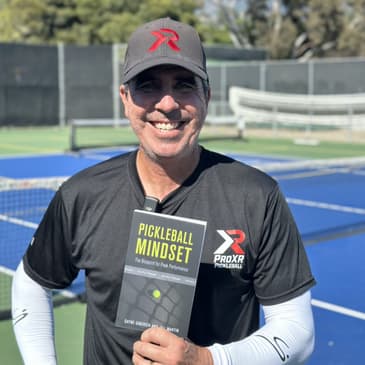
Dayne Gingrich is a top senior professional pickleball player and renowned mental performance coach with over 16 years of experience. On today’s episode, we dive into Dayne's incredible athletic, professional, and mental toughness journey while exploring his new book Pickleball Mindset: The Blueprint for Peak Performance. More than a lecture between coach and athlete, Pickleball Mindset is a conversation about how to grow and nourish a confident mindset through the turbulent journey we all encounter as athletes and humans.
- 02:40 “I never watched sports, I studied them.”
- 04:42 My Mentality That Held Me Back From D1 Athletics
- 13:27 Pickleball Mindset - Coming Off The Mountaintop
- 17:46 The Mindset Switch That Changes EVERYTHING
- 20:58 How To Release All Stress During Competition
- 23:54 “Show me how to win.” // Power Of Visualization
- 35:28 Your Words Are Your Potential
- 42:05 The Myth Of Pressure
- 48:58 Macro Patience vs. Micro Patience
Don’t forget you can also follow Dr. Rob Bell on Twitter or Instagram.
Follow At:
- Twitter @drrobbell
- Instagram @drrobbell
Download Your Daily Focus Road Map!
If you enjoyed this episode on Mental Toughness, please subscribe and leave a review!
Dr. Rob Bell
[00:00:09] Welcome to Mental Toughness with Dr. Rob Bell.
[00:00:13] Each week, Dr. Rob sits down with athletes, executives and expert coaches to talk about
[00:00:18] mental toughness and their hinge moment.
[00:00:21] Here's your host, Dr. Rob.
[00:00:38] When you wake up and you're tired, right, and you're going for the gold, but you're
[00:00:42] tired, it's really easy to say, ah, I'll sleep in, I'll go for that gold tomorrow.
[00:00:47] But when you wake up and you're like, well, I'm trying to be this person, I'm trying
[00:00:50] to become, like I'm trying to grow internally and become this person that I've talked about
[00:00:55] and written about.
[00:00:56] It's really hard to go back to sleep, right?
[00:00:58] You somehow we find that extra gear when we don't feel like it, when we're trying to
[00:01:04] become somebody rather than do something, right?
[00:01:08] Instead of trying to do the win, let's become the player.
[00:01:11] Let's become the person.
[00:01:12] Rob Bell
[00:01:15] Our guest today on the Mental Toughness Podcast, I've known him for years.
[00:01:18] He's a fellow mental coach and he's transformed his talents past several years into the elite
[00:01:24] world of pickleball, which I feel is just an awesome fit for him.
[00:01:28] And he's one of the top senior pro pickleball players in the country.
[00:01:33] He's written a new book with his co-author, Jill Martin.
[00:01:36] The book is called Pickleball Mindset, the Blueprint for Peak Performance.
[00:01:42] Excited about this conversation today because we'll put some context into the mental
[00:01:45] skills that you can apply.
[00:01:47] But our guest today is Dane Gingrich.
[00:01:49] Dane, my man, good to see you and catch up.
[00:01:52] Dane Gingrich
[00:01:53] Brother, it's been too long, man.
[00:01:54] I really appreciate you having me here.
[00:01:55] I remember years ago you showed up on one of my early podcasts, man.
[00:01:59] I'll never forget that episode.
[00:02:00] I'm glad I could finally jump on with you, man.
[00:02:03] It's a pleasure.
[00:02:04] You're killing it too, by the way.
[00:02:05] Can we just say that?
[00:02:06] You are crushing it.
[00:02:07] I follow everything you do, man.
[00:02:09] Very inspiring.
[00:02:10] Dane Gingrich
[00:02:11] It's just one point at a time, man.
[00:02:13] We don't focus on the win.
[00:02:14] We focus on one point at a time, bud.
[00:02:16] Yes, sir.
[00:02:17] Dane Gingrich
[00:02:18] Let's put some context for the listeners here.
[00:02:20] You and I grew up very similar.
[00:02:22] We didn't watch sports growing up.
[00:02:23] We studied sports.
[00:02:26] I want you to reflect, man.
[00:02:29] Tell us something really unique about you growing up in your relationship with sports,
[00:02:33] either playing or watching with your dad.
[00:02:36] You talk about it in the book a little bit, but what's something unique really stands
[00:02:39] out to you, man?
[00:02:40] Dane Gingrich
[00:02:41] Yeah, man.
[00:02:42] You said it exactly.
[00:02:43] I never sat there and watched it.
[00:02:45] I studied it, right?
[00:02:47] I always remember watching whether it was tennis or it was Magic Johnson versus Larry Bird,
[00:02:54] like or Celtics, right?
[00:02:56] I remember while watching those sports, focusing on what they were doing and what the superstars
[00:03:03] were doing better than the ones that weren't the stars, right?
[00:03:06] My dad and I would sit down and watch them together.
[00:03:10] I remember every time I would watch and I would study and I would break down.
[00:03:14] I don't even know what I was doing it, right?
[00:03:15] It's just something that just instinctively came to me.
[00:03:20] I remember every time I would watch and study and go out and play right away, I would
[00:03:25] always play my best, right?
[00:03:27] I remember winning tournaments not because of the practice necessarily, of course it
[00:03:32] was a practice, but because I remember studying the sport that I was playing,
[00:03:39] right?
[00:03:40] I think not enough people do that today.
[00:03:43] I think we just kind of watch with our eyes and we move on.
[00:03:46] And I remember my dad inspired me beyond, right?
[00:03:52] With talking about how the next level player isn't just playing, but he's dominating
[00:04:00] mentally, right?
[00:04:01] And I've always remembered that from seven years, eight years, nine years old,
[00:04:05] 10 years old growing up, man.
[00:04:07] And the mental game piece every time I was on the court, whether it be tennis
[00:04:10] or basketball, that was the inspiration trying to figure out that puzzle of what
[00:04:16] he meant.
[00:04:16] Like what does he mean?
[00:04:17] What do you mean the mental game?
[00:04:18] Like what is that about?
[00:04:19] Right?
[00:04:20] And that's carried on to today now that I'm years old.
[00:04:25] So again, you were a natural athlete growing up, tennis and basketball.
[00:04:30] When you got to that level then of where you know going to be
[00:04:34] playing in college and stuff like that.
[00:04:36] Where did your journey kind of take you at that time in your life?
[00:04:42] So I mean, so I mean, it's interesting you say it.
[00:04:45] And so it's a long story.
[00:04:46] I'll try to keep it super brief, but like physically in this place perfectly.
[00:04:50] And this is why when I started working with mental performance piece
[00:04:54] that I felt like I had something else to offer, especially because when I
[00:04:59] started, I worked with younger athletes, right?
[00:05:01] And those younger athletes and their parents, you know, junior high high
[00:05:04] school trying to get to that college level, right?
[00:05:06] And I had a story of like failure, right?
[00:05:11] And I had the gifts to play the one basketball.
[00:05:15] I had the gifts.
[00:05:16] I mean, I was doing things.
[00:05:17] I was doing things that six years old that Andre Agassi was getting
[00:05:20] powdered for and on the late, you know, on the late show and Johnny Carson,
[00:05:23] whatever when he was doing at 12, I was doing at six, seven, eight.
[00:05:26] Right.
[00:05:26] So the physical piece was always there, but I blew college scholarships,
[00:05:31] right? I ended up having to go the Juco route not because of my physical
[00:05:35] talents, but because of my lack of mental and emotional regulation.
[00:05:40] And I think like so when, you know, I had to go to the Juco route
[00:05:44] and then the tennis and I wanted to go play basketball and that didn't
[00:05:47] work out for all kinds of reasons.
[00:05:48] And then the tennis route.
[00:05:50] But when I started becoming, you know, working with these
[00:05:53] mental performance athletes, I brought the juice like I brought the
[00:05:58] I brought the cred like I know what it feels like to be mentally unregulated,
[00:06:02] right? Not understanding the power of the emotional and mental strength
[00:06:07] that we need to bring on the court.
[00:06:09] And so when you say college athletics, man, it like it burns a hole in me
[00:06:12] because I should have been a D one athlete.
[00:06:15] And I only wasn't because I didn't understand the part
[00:06:19] that resonates with me so much today that I'm trying to give back
[00:06:23] to to the young and to the older athletes.
[00:06:27] Yeah. So what was like your biggest struggle when you talk about mental
[00:06:30] regulation, like one mistake?
[00:06:31] It would just kind of collapse on you.
[00:06:33] Were you not consistent?
[00:06:34] Like what was the biggest challenge?
[00:06:36] It was full hothead.
[00:06:38] It was full.
[00:06:38] Like I remember running into the UC Santa Barbara basketball coach,
[00:06:42] you know, 10 years after I graduated high school, I was eating
[00:06:45] like a bagel in a coffee shop and he rolled in and I'm like, hey, coach,
[00:06:48] remember me?
[00:06:49] I put up 35 on the dude you were recruiting that night in my gym
[00:06:53] and he only got 12.
[00:06:55] And he said, yeah, man, we were we've been watching you since you
[00:06:57] were sophomore junior, but you were a hothead and we thought you
[00:07:00] would be a terrible teammate.
[00:07:02] We thought you would just be dames for Dane, right?
[00:07:05] And so I could focus Rob like the level of focus I could bring.
[00:07:09] I was disciplined.
[00:07:10] I was disciplined in as far as the workouts that I would put
[00:07:14] dude emotionally.
[00:07:15] I got in a fight with every teammate on every basketball team
[00:07:18] I ever played on tennis.
[00:07:21] I'm jumping nets, literally jumping nuts to fight opponents.
[00:07:25] So it was the emotional regulation that control emotionally
[00:07:29] that kept coaches away.
[00:07:31] Yeah, what since you've had time and space obviously from that,
[00:07:36] what was underneath all that all that rage?
[00:07:39] Fear of fear of letting everybody down.
[00:07:43] I just remember that's a freaking great question, man.
[00:07:48] It was definitely fear of not realizing my potential.
[00:07:53] I hate that freaking word too.
[00:07:56] Like everybody, you know, and they're all doing it out of love
[00:07:59] and I don't blame them. It's on me.
[00:08:00] It's always on us, right?
[00:08:01] The athletes never it's always self accountability.
[00:08:03] But I remember, man, if I don't and they'll be disappointed.
[00:08:06] It was more about them being disappointed than then even me
[00:08:10] being disappointed, right?
[00:08:11] I remember Rob, I remember like in a high school
[00:08:14] all-star basketball game, I starting point guard.
[00:08:16] And I remember somewhere like in the in the beginning of the third quarter,
[00:08:20] I shot a baseline.
[00:08:22] It got clipped, barely got tipped and it airballed.
[00:08:25] But I was so embarrassed that it airballed even though it got tipped.
[00:08:28] I benched myself for the rest of the game.
[00:08:31] Coach, you're in. I said, no, I'm not going in.
[00:08:33] I was so deathly embarrassed and afraid to make myself look worse.
[00:08:40] Right in front of there's a ton of coaches there.
[00:08:44] To that day, to this day, I was 17 to this day.
[00:08:48] Burns a hole in me, right?
[00:08:50] That I was so afraid of being embarrassed
[00:08:54] and letting other people around me down that I couldn't find the
[00:08:57] couldn't find the fight in the grit to just check back in the game.
[00:09:01] I was playing fine and one one tipped airball
[00:09:04] set me over the edge.
[00:09:05] And that says that's my athletic career.
[00:09:07] That's my young athletic career in a hole right there.
[00:09:10] Never had along that journey, never had a coach kind of pull you aside
[00:09:13] and just try and show you.
[00:09:15] No, he's a better way to channel that aggression channel.
[00:09:19] No, no, they screamed and yelled every basketball coach I had.
[00:09:22] And they screamed and yelled right?
[00:09:24] The tennis coaches, I got older.
[00:09:26] I found someone who was who was calm.
[00:09:28] But by that time, I had lost all my scholarships
[00:09:31] and was trying to go a different way.
[00:09:33] But as far as basketball, it was old school was in the 80s, right?
[00:09:36] And people were the guys would grab your jersey.
[00:09:38] He would bench you after one mistake.
[00:09:40] Right. And that was a big thing too.
[00:09:41] Right. I didn't respond to that type of coaching either,
[00:09:45] which is something I tried never to do with athletes today.
[00:09:48] I just don't think it works long term.
[00:09:50] It might shake your short term, but I never responded to that.
[00:09:53] And it made me even more fearful if I knew I was going to get benched.
[00:09:56] I knew I was going to get screamed at in my face like a freaking drill sergeant.
[00:10:00] Yeah. Well, I think it's cool because you become the coach
[00:10:03] that you've always needed, I guess.
[00:10:06] And you can coach that you wish you had at that time.
[00:10:11] Yeah, I think it resonates, right?
[00:10:13] I mean, I think this is why, like, and I know this is, this is, you know,
[00:10:18] I'm not interviewing you, but what I do know about you,
[00:10:20] you went through some stuff too that makes you relatable
[00:10:23] and gives you such street cred, too.
[00:10:25] And I believe when I always said it, too, because I always said,
[00:10:28] like, if I can get in front of the parent or if I can get in front of the athlete,
[00:10:32] right, like it's over. It's done because you're going to know that I know.
[00:10:35] You're going to know that I feel you.
[00:10:37] I feel your pain. I feel your frustration.
[00:10:39] And that's, you know, I don't think we can be great coaches if we don't
[00:10:45] if we can't feel internally what we're trying to coach, you know.
[00:10:52] Hey, good looking.
[00:10:53] If you like this podcast and are already a badass,
[00:10:57] but it's all way too complicated, then visit our website, DrRobBell.com
[00:11:02] and schedule a call with us to help capture your very own hinge moment.
[00:11:11] When you bring that up, it just kind of makes me reflect a little bit on
[00:11:14] my coach and stuff like that.
[00:11:15] Like I've been out there in performance situations, having no idea
[00:11:21] how I'm possibly going to make par on this whole.
[00:11:25] Right. And golf is, I mean,
[00:11:27] golf is probably the worst of my sports I competed, you know what I mean?
[00:11:30] But it's like,
[00:11:34] yeah, when you are especially like individual sports, too,
[00:11:37] it's interesting, right?
[00:11:38] Because I mean, individual sports,
[00:11:41] there's there's there's nowhere to go, man.
[00:11:43] There's nowhere to hide.
[00:11:43] And as you know, as Ken Revisas said, and I use this often,
[00:11:46] like you're naked in front of the gods, right?
[00:11:48] Like you are naked in front of the gods.
[00:11:50] And that's where, you know,
[00:11:52] just so much is aligned on that preparation and the mental skills
[00:11:56] that you've put into it at that time.
[00:11:57] And that's that's what's going to that's what's going to show up, you know?
[00:12:00] Yeah, yeah, yeah.
[00:12:03] Let's delve into the book, man.
[00:12:05] OK.
[00:12:06] I thought it was a fantastic book.
[00:12:08] Pick a ball mindset, the blueprint for peak performance.
[00:12:11] And you kind of talk about it's like this just isn't for like how to improve
[00:12:14] your racket angle, but this is obviously the mental game book.
[00:12:17] I think you need, you know, surprisingly, man,
[00:12:19] it's like the pickleball craze like seen it come.
[00:12:22] I've still never got into it.
[00:12:24] And it's not because I didn't want to.
[00:12:27] It's because I've just stayed in my lane of ultra running and golf, man.
[00:12:31] And I'm like, because I played I played tennis and I played ping pong
[00:12:36] and pretty good at both those.
[00:12:38] I think I'd be pretty good and I can move, you know, I can lateral move.
[00:12:41] And I'm an athlete.
[00:12:43] And you'd be good and you're mentally pretty, pretty strong.
[00:12:45] I imagine. Yeah, man.
[00:12:46] But just watching you out there and watching the impact you make,
[00:12:50] I mean, it's it's so cool.
[00:12:53] But I just need to put that that set aside there that reading the book
[00:12:57] made so much sense in terms of how you take this mental skill
[00:13:00] and how do you apply it?
[00:13:02] One of the first things you talk about in the book, though,
[00:13:05] was your own personal journey when you were on a quest for double gold
[00:13:10] in nationals and Indian Wells.
[00:13:15] You end up winning, you win.
[00:13:18] And then you talked about the experience like immediately after that.
[00:13:22] I was wondering if you could just kind of pick up that story
[00:13:24] and take us down that and we could talk about that.
[00:13:27] Yeah, I mean, I think it's I think it's something number one.
[00:13:29] I don't think athletes talk about it enough because I think
[00:13:33] I think it probably they're afraid that it makes them look weak, right?
[00:13:36] Tough athletes would be tough.
[00:13:38] Yeah, I've been studying. I've been grinding.
[00:13:39] I've been grinding like no sleep all that right now.
[00:13:42] This is I deserve this.
[00:13:44] Yeah, my very first my very first nationals
[00:13:47] that was all I was thinking about was the medal, right?
[00:13:50] And just training for the medal and I got the medal.
[00:13:54] I remember winning the first men's event and I like I had it
[00:13:57] like I literally had tears coming down my eyes after a match
[00:14:01] for the very first time it's ever happened to me in any sport.
[00:14:03] Grabbed my partner because my partner at the time had like 100 of them.
[00:14:06] Right. And you know, and he was like, man, we got you your first
[00:14:09] and I've been being so happy and then went to the hotel.
[00:14:12] Everything was good, but it was like mixed.
[00:14:14] The mixed event was the next day, so there was no letdown.
[00:14:17] So I got let's go win the double gold for mixed too.
[00:14:21] And we grinded and we ended up pulling it pulling it out.
[00:14:24] And again, that same thing tear came down, right?
[00:14:27] Like my partner won triple crown.
[00:14:29] She won singles, mixed and women's doubles.
[00:14:31] So there was an extra added bonus there.
[00:14:34] But but that high quickly disappeared like what I say quickly
[00:14:38] by the time I got in the car, it was starting to fade.
[00:14:43] And I couldn't understand why and then I remember getting to the hotel
[00:14:46] and I talk about this in the book too, that that I remember doing my
[00:14:50] post tournament cool down session.
[00:14:53] Right. It takes me like two hours to do.
[00:14:55] And I just started feeling empty.
[00:14:58] Like wait a minute, Rob, like I just won double gold, bro.
[00:15:01] Like this is literally since January one.
[00:15:04] This is all I've been focusing on and I did it.
[00:15:07] It should feel better than this.
[00:15:08] And I felt completely empty and I'm in a hotel by myself,
[00:15:13] totally alone, both literally physically and emotionally.
[00:15:18] And I was floored like this is supposed to feel better.
[00:15:22] This is what all the athletes talk about, right?
[00:15:24] All the professional athletes talk about all the championship rings
[00:15:26] and their legacy and being the goat and all the other stuff
[00:15:30] that we talk about externally.
[00:15:32] Dude, I hit it. I hit the goals.
[00:15:34] We did it and like I just started balling like a little baby in the hotel.
[00:15:39] We're not understanding why after all of this work and after the win
[00:15:42] because the wins weren't easy like mentally, they were really difficult.
[00:15:46] So on one hand, I was super proud that mentally and emotionally
[00:15:49] and figured it out like we figured the puzzle out.
[00:15:52] We could have lost both of them, but you know, my partner and I
[00:15:54] figured out the puzzle and we were just that much better mentally in the end.
[00:15:58] Right. And so I should be like cracking open, cracking open champagne
[00:16:02] and celebrating the year long win.
[00:16:05] And it was the total opposite, Rob, like, and you know, right?
[00:16:09] And the reason why is because I was prioritizing the wrong thing, right?
[00:16:15] Was prioritizing the frickin stupid win, the metal, the outcome,
[00:16:20] the accolades, the social media write ups, the newspaper write ups,
[00:16:24] all of that versus like the grind, right?
[00:16:29] And the process and the journey along the way.
[00:16:31] Like that should always because as they say, right?
[00:16:35] I know we've all heard it, right?
[00:16:36] But when you get to the top of mountain, the top of mountain
[00:16:38] isn't the top of the mountain.
[00:16:39] There's always another tip top and I never understood and understood it consciously.
[00:16:43] I've never like emotionally felt what I had felt that night.
[00:16:47] And I was floored, man, blown away.
[00:16:50] I could feel that bad after I could feel that bad
[00:16:52] after having such an amazing couple of days.
[00:16:55] Yeah. And I'm so glad you put that in the book because in a light year, right?
[00:16:59] Man, the.
[00:17:01] The mountaintop moments, right?
[00:17:02] They don't last.
[00:17:03] We have to come back down off that mountain and they're really just
[00:17:05] false summits anyway, right?
[00:17:07] It's not really the top.
[00:17:08] It's a different mountain we have to get.
[00:17:09] But I mean, you know, Olympic medalists, man, if I've talked to them,
[00:17:12] right, and they said, you know, I feels great.
[00:17:16] I thought it'd feel different or one of the worst is OK, Dane.
[00:17:21] All right, man, what's next?
[00:17:23] Right. Like what now, right?
[00:17:25] Right. Like.
[00:17:27] So I think that part is so important because it is about the journey.
[00:17:31] It in you talk about really well in the book, man, it's not focused on
[00:17:36] the winds, but focused on who you want to become.
[00:17:40] How did you lay that out in the book then to help other athletes
[00:17:43] that are going to be going down that same journey?
[00:17:45] Yeah. So so now right now that I learned that hard lesson
[00:17:50] now and, you know, I work with an athlete or even with myself,
[00:17:53] I have to do this too.
[00:17:54] Like I reverse engineer it, right?
[00:17:56] We want to reverse engineer instead of from the gold medal
[00:17:59] or the first place, whatever.
[00:18:02] Like I reverse engineer now who you want.
[00:18:05] What what is who you want to become look like?
[00:18:09] What does he or she feel like and not like muscly, not like physically,
[00:18:14] but internally, what do you want?
[00:18:16] He, you know, what do you want yourself to become?
[00:18:21] While you're because the reason I love to reverse engineer
[00:18:25] from who you want to become is then when we come back to our day to day
[00:18:29] training, that training feels different.
[00:18:31] Right. I'm not just after the win.
[00:18:33] I'm after becoming somebody better, like better than, you know,
[00:18:37] better than I could have imagined just externally.
[00:18:40] Right. And and we lay it out from that from that spot.
[00:18:43] Reverse engineer.
[00:18:44] Like what does she feel like?
[00:18:46] What does she look like? What is it?
[00:18:47] What is it? Like how does the walk change and just kind of opening up
[00:18:51] your mind from that, from that vision backwards to okay, now after
[00:18:56] you've kind of laid that out, like what are your training?
[00:18:59] What are your training days now feel like that you're instead
[00:19:03] of trying to grab the gold, you're trying to become this
[00:19:06] different person from the inside out.
[00:19:09] Right. And man, when you do that every day.
[00:19:12] So when you do that, when you wake up and you're tired, right?
[00:19:15] And you're going for the gold, but you're tired.
[00:19:17] It's really easy to say, I'll sleep in, I'll go for that goal tomorrow.
[00:19:22] But when you wake up and you're like, well, I'm trying to be this person.
[00:19:25] I'm trying to become like I'm trying to I'm trying to grow internally
[00:19:28] and become this person that I've talked about and written about.
[00:19:31] It's really hard to go back to sleep.
[00:19:33] Right. You somehow we find that extra gear when we don't feel like it
[00:19:38] when we're trying to become somebody rather than do something.
[00:19:43] And that's kind of how I, you know, Jill and I kind of separated that piece.
[00:19:46] Right. Instead of trying to do the win, let's become the player.
[00:19:50] Let's become the person and not just the play.
[00:19:52] Let's let's become the dad.
[00:19:54] Let's become the mom.
[00:19:55] Let's become the brother sister.
[00:19:56] Right. Like what does that player look like?
[00:19:58] Because this book isn't just for professional.
[00:20:00] I mean, I mean amateurs, amateurs, professionals,
[00:20:04] pickleball players, tennis players, golfers.
[00:20:06] It's all the same.
[00:20:07] And last time I checked, right, we're either a man or like we're a husband,
[00:20:11] wife, brother, sister, like, like what does that person look like?
[00:20:16] And when I started training like that and kind of teaching that everything
[00:20:21] changed, everything changed in the book.
[00:20:28] You talk about pre acceptance of what you can control.
[00:20:33] So.
[00:20:36] Focus on what you can control, what you can't control.
[00:20:40] And then obviously what you can influence.
[00:20:41] But you talk about pre acceptance, which I thought was a wonderful
[00:20:45] illustration to the point.
[00:20:47] Yeah. Talk to us about that, how that mindset heading into training
[00:20:53] and heading into competition.
[00:20:55] You know, what does that mean?
[00:20:56] And how does it play out?
[00:20:58] So I like I like that.
[00:20:59] I like to really kind of prioritize pre acceptance before we before
[00:21:04] we do anything training wise or competition wise, because.
[00:21:08] Pre accept means anything's possible during that competition.
[00:21:12] Anything's possible during our training.
[00:21:14] Like it literally could be our best day or worst day.
[00:21:16] The wind is too, it's too windy.
[00:21:18] It's too hot.
[00:21:18] It's too cold when we pre accept all of the things that are out
[00:21:22] of our control, it's so much easier to kind of rain in what we do
[00:21:27] have control over, right?
[00:21:28] Cause cause you know, I'm preaching to the choir here and and
[00:21:32] like it's fun talking to you because you ask the question.
[00:21:36] You already know the answer before I asked you the question.
[00:21:38] Like when you can rain in the things that you can control, it
[00:21:42] takes away so much of the unnecessary stress that we place
[00:21:46] upon ourselves during the competition, right?
[00:21:48] So the pre acceptance is about releasing those things that
[00:21:54] you literally have zero control over the sun, the wind, your
[00:21:58] opponent's performance, your partner's performance.
[00:22:01] If you're playing doubles in a sport, right?
[00:22:03] Like, like you hit a perfect putt on the golf course, man, you
[00:22:06] hit the perfect putt and after that, after the ball leaves
[00:22:09] your putt or that gets them a it's in the golfing gods hands
[00:22:12] now could it a spike market, get it a pitch mark, you get
[00:22:14] it the perfect putt and it still might not find the whole
[00:22:18] right?
[00:22:18] So if we pre accept that all of those things can happen, it
[00:22:23] releases the stress of having to win or having to play our best
[00:22:27] or we have to do X that the things that we can't control.
[00:22:31] And so I think pre acceptance is another kind of game changer.
[00:22:35] I don't think another enough athletes kind of set the tone
[00:22:38] with that, not only in their training, but their
[00:22:40] competition, right?
[00:22:41] Like, I think setting the tone with I'm going to
[00:22:43] re pre accept X, Y and Z and just let my training take
[00:22:48] over.
[00:22:48] I mean, it'll it'll it'll change you.
[00:22:50] And then when you do that, then you you also tap into this
[00:22:53] next level of, you know, becoming that player, right?
[00:22:56] It just takes away all of those uncontrollables.
[00:23:00] Yeah.
[00:23:01] I talk about with a lot with my athletes.
[00:23:03] I always talk about that there's three things that are
[00:23:05] going to happen.
[00:23:06] Three things.
[00:23:08] Number one, you're going to play really well.
[00:23:10] Number one, you're going to play bad.
[00:23:13] And number two, you're going to play okay.
[00:23:15] Right.
[00:23:16] I said, you're going to probably put in one of those
[00:23:18] three kind of categories.
[00:23:19] But then we then we do what you talk about what you
[00:23:22] coach, right?
[00:23:23] We got to unpack that a little bit in terms of, hey,
[00:23:25] what is it that you really want to commit to?
[00:23:29] Because it's again, it's not about the outcome, but
[00:23:31] it's like, man, I just want to commit to my shots.
[00:23:33] You know, I just want to move on from mistakes.
[00:23:35] Because I think with the mental game, like you
[00:23:37] can have one of these goals that you can really
[00:23:39] focus on, but it's got to be a mental game goal.
[00:23:41] If it's not, I don't I'd love your opinion.
[00:23:44] I just don't think it happens because now
[00:23:46] we're succumbed to how well we're performing.
[00:23:48] You know, you have to have that front and center.
[00:23:51] Right.
[00:23:51] I totally agree.
[00:23:52] Yeah.
[00:23:52] I'm sorry.
[00:23:53] I interrupt you.
[00:23:54] I totally agree with you.
[00:23:56] Right.
[00:23:56] And I've always said from day one, right, that we
[00:23:59] can master our mental game, like we can perform
[00:24:01] today mentally, we can perform perfectly.
[00:24:05] Why?
[00:24:05] And people like people, you can't know perfection
[00:24:08] is not attainable.
[00:24:09] Well, maybe physical perfection is not attainable,
[00:24:11] but mental perfection is why?
[00:24:13] Because it's in with it's within our control.
[00:24:15] Like our mental game is 100% within our control
[00:24:19] when we learn to focus on those things we have
[00:24:22] control over.
[00:24:23] Right.
[00:24:23] And so, yes, I 100% agree with you that let's
[00:24:27] make let's make our mental game goals.
[00:24:30] Right.
[00:24:31] The focus because all the all the external
[00:24:34] stuff, I'm going to shoot this number in a golf
[00:24:35] tournament.
[00:24:36] I'm going to I'm going to win, you know, I'm
[00:24:37] going to win this gold and a pickleball
[00:24:39] tournament.
[00:24:39] I'm going to win double gold or triple gold,
[00:24:41] whatever, like it's totally out of our like show
[00:24:43] me how to win.
[00:24:44] I always I love saying it, show me how to win.
[00:24:46] And they show me a shot.
[00:24:47] You didn't show me how to win.
[00:24:48] You just show me how to hit a good shot.
[00:24:49] It might have won you to match or not.
[00:24:51] I don't know, but you just show me how to
[00:24:52] get a shot.
[00:24:53] You can't show me how to win.
[00:24:54] You can show me other things.
[00:24:56] You can control the other things.
[00:24:57] And so since you can't control that win,
[00:25:00] let's focus on, let's focus on those things
[00:25:02] that you can and let's put all of your
[00:25:05] energy onto those, those mental goals.
[00:25:09] You know, there's always a point in the
[00:25:10] podcast where we kind of title the podcast.
[00:25:13] And I think you just did it right there.
[00:25:14] Man, show me show me how to win, baby.
[00:25:17] There it is, baby.
[00:25:18] There it is done.
[00:25:19] The end, which is dropping it.
[00:25:21] I get to drop the mic already.
[00:25:22] It's here, man.
[00:25:27] You know, the visualization piece you talk
[00:25:28] about in the book and that's obviously huge for
[00:25:30] you.
[00:25:30] I mean, you do the same type of
[00:25:32] visualization that I do before competitions.
[00:25:35] I, you know, you go back by yourself,
[00:25:37] put the tower of your head, man, and just
[00:25:39] play it out.
[00:25:39] And as a coach, right, you emphasize, hey,
[00:25:42] man, what does it look like?
[00:25:43] What's it feel like?
[00:25:44] Talk to us about that as a coach.
[00:25:46] How are you coaching that visualization piece?
[00:25:49] Yeah, I mean, I wish more athletes would
[00:25:52] would prioritize this as much as their
[00:25:55] physical warmups and their physical
[00:25:57] focuses because I just don't think
[00:25:59] it's been talked about for so many years,
[00:26:01] right? And it's proven now.
[00:26:03] It's not, it's not just a day in or a
[00:26:05] rob opinion.
[00:26:06] It is proven that visualization, the
[00:26:09] brain doesn't know the difference,
[00:26:10] right? Like when you emotionally connect
[00:26:13] to a visual.
[00:26:13] And so I make this as much of a priority
[00:26:16] before, I mean, even before I train,
[00:26:18] I will focus on the things that I want
[00:26:20] to accomplish and how I want to look
[00:26:23] in my drilling sessions.
[00:26:24] But I think the visualization taking,
[00:26:27] I mean, for me, it's a it's a 15 20
[00:26:29] minute thing, but but I'm a freak that
[00:26:31] I like I just feel like I could do it
[00:26:33] for an hour.
[00:26:33] But for most athletes, I think five
[00:26:36] to 10 to 15 minutes of just sitting
[00:26:38] and really diving deep
[00:26:42] into the performance that you want to
[00:26:43] see. And I always say like the
[00:26:46] greatest thing about visualization is
[00:26:48] we can be perfect.
[00:26:49] But we never have to make a mistake in
[00:26:51] our visualizations ever.
[00:26:52] There's no reason to, right?
[00:26:54] And with that
[00:26:56] opportunity to be perfect in our
[00:26:58] mindset, not only with how we're
[00:27:00] physically executing,
[00:27:02] but how we're emotionally regulating
[00:27:04] and how we're showing up for
[00:27:06] ourselves and our partner, right?
[00:27:07] And how we're also right.
[00:27:09] I like to I like to focus on visual
[00:27:11] is a visual visualizing how my
[00:27:14] opponents view me, like how
[00:27:16] I'm showing up. What's that making
[00:27:17] them feel like and getting into
[00:27:19] their emotional, you know, make up
[00:27:21] as well. We can go as deep as we
[00:27:23] want with that.
[00:27:24] But it but it plays a huge role
[00:27:26] in what I feel like I'm closing
[00:27:27] my eyes now instinctively.
[00:27:28] Sorry, like it's probably not good
[00:27:29] for the pot.
[00:27:30] But like when I visualize
[00:27:33] it it sets a tone.
[00:27:35] It makes me feel so
[00:27:37] so I do it. I do all my physical
[00:27:39] dynamic first and then I time it
[00:27:41] to where I have anywhere between
[00:27:42] 10 and 20 minutes before I know
[00:27:44] I'm going to go out and play.
[00:27:46] And when I'm done with that, I
[00:27:48] just feel I feel like I've played
[00:27:50] and that's the power of it, right?
[00:27:51] I feel like I have already played
[00:27:53] that match to perfection.
[00:27:55] And I always end the visualizations
[00:27:57] with with winning the match.
[00:27:59] The last point is on my paddle,
[00:28:01] but not for the win, but for the
[00:28:03] celebration and the emotional
[00:28:04] connection to
[00:28:06] to to the to all the
[00:28:08] the process that it took to get
[00:28:10] there, right?
[00:28:11] And and so I make it a priority.
[00:28:14] I just wish more athletes would
[00:28:15] dive in and make this their
[00:28:17] priority because it would it will
[00:28:19] absolutely as you know,
[00:28:21] change your physical performance.
[00:28:24] But it takes work, man.
[00:28:26] I just think what I
[00:28:28] I just think it's easier to
[00:28:30] to go bench press to go
[00:28:31] lunge to go squirm, excuse
[00:28:33] me, to go squat to go run
[00:28:34] sprint to do the physical thing
[00:28:36] because you can see right there
[00:28:37] within a week, two weeks, three
[00:28:39] weeks, you can see the physical
[00:28:40] strength. You can see the results
[00:28:42] with the mental piece.
[00:28:43] It's so difficult, as you know,
[00:28:45] because we can't guarantee
[00:28:47] how long it's going to take
[00:28:49] before you feel
[00:28:51] the difference in your physical
[00:28:52] makeup, right? And you and even
[00:28:54] worse, you might play.
[00:28:56] You might step back, right?
[00:28:58] You might play worse first.
[00:28:59] And most likely you will
[00:29:01] because you're kind of
[00:29:02] reframing how you think
[00:29:03] about your sport, how you think
[00:29:05] about yourself and who you're
[00:29:06] becoming. So with that process,
[00:29:08] also, you're going to probably take
[00:29:09] a couple steps back before you
[00:29:11] start executing better.
[00:29:13] People don't like that, right?
[00:29:14] People want to throw their popcorn
[00:29:16] in the microwave and have it done
[00:29:17] in 45 seconds.
[00:29:18] And so getting to the gym,
[00:29:19] getting faster, getting quicker,
[00:29:20] getting stronger, that's easy.
[00:29:21] I can see that.
[00:29:23] But the visualization, does it
[00:29:25] really work, Rob?
[00:29:26] Does it really work?
[00:29:27] Because I did it twice
[00:29:29] and I didn't play any better.
[00:29:30] I mean, that's that's the kind
[00:29:32] of the reframing that
[00:29:34] we have to have to do.
[00:29:36] So it takes a lot of work, it
[00:29:37] takes a lot of discipline, but the
[00:29:38] athletes, right?
[00:29:39] Kobe's my favorite athlete.
[00:29:40] Like that dude is like he's giving
[00:29:42] you the blueprint.
[00:29:43] It always blows.
[00:29:44] I know I'm like taking over your
[00:29:45] job.
[00:29:45] Do it, man.
[00:29:47] It always blows my mind when
[00:29:49] an athlete gives you the
[00:29:51] blueprint, he has shown you the
[00:29:52] answers and you still resist
[00:29:55] to follow it.
[00:29:56] It blows my mind.
[00:29:58] Kobe's done it in that world.
[00:30:00] Ben Johns has done it in our
[00:30:02] world and the pickleball world.
[00:30:04] And I just to the best of my 50
[00:30:06] plus year old ability, just try
[00:30:08] to follow that blueprint.
[00:30:09] He has given you the answers.
[00:30:11] Just follow it like but it takes
[00:30:14] work, man.
[00:30:14] It just takes work and that's
[00:30:16] why people don't know they
[00:30:18] refuse Jesus too, man.
[00:30:20] That's that's also an answer.
[00:30:22] That's that's also an answer.
[00:30:25] Yeah.
[00:30:26] Yeah.
[00:30:27] How did it help you specifically
[00:30:28] the visualization piece when
[00:30:29] you were injured?
[00:30:30] Because I thought that was a
[00:30:31] great part of the book.
[00:30:32] Yeah, that was so that
[00:30:34] that's awesome too.
[00:30:34] Like so when I was injured and
[00:30:37] took all the time visualizing
[00:30:38] three, four, four months, like
[00:30:39] it felt like I was practicing.
[00:30:41] I can so like literally every
[00:30:43] day, number one, it helped my
[00:30:44] discipline and helped me stay
[00:30:46] disciplined.
[00:30:46] Like I got to show up for
[00:30:47] training like this was
[00:30:48] training.
[00:30:49] There was a lot of rolling,
[00:30:50] stretching rehab physical
[00:30:52] stuff.
[00:30:52] But like I had to leave time
[00:30:54] twice a day at least twice
[00:30:55] today, tricking as much as I
[00:30:57] could to show up for the
[00:30:58] visualization training.
[00:31:00] And so number one, it helped
[00:31:01] with that the discipline piece
[00:31:02] and the commitment piece and
[00:31:04] the how like how bad you say
[00:31:05] you're talking all this stuff
[00:31:06] but how like how are you
[00:31:08] what will you really do for
[00:31:11] it?
[00:31:11] Right.
[00:31:11] Because a lot of you know, we
[00:31:12] heard great coaches in the
[00:31:13] past that I don't care what
[00:31:14] you want.
[00:31:15] But what you want is irrelevant
[00:31:16] or what are you willing to
[00:31:17] do for what you want?
[00:31:18] So it set that tone.
[00:31:20] But then when I was healthy
[00:31:22] again, I came back on the
[00:31:23] court and do my thing.
[00:31:24] Of course I was a little
[00:31:25] rusty, but I'm telling you
[00:31:27] like I didn't feel like I
[00:31:28] had months off.
[00:31:29] It's like every day in my mind
[00:31:31] I was seeing it perfectly.
[00:31:32] I was just seeing every last
[00:31:34] detail of the shot and the
[00:31:36] point and I would play games
[00:31:37] out in entire matches out.
[00:31:39] And I would get so addicted to
[00:31:41] it because it felt so good.
[00:31:42] I would start playing tournaments
[00:31:43] out in my mind.
[00:31:44] I play one entire match as I
[00:31:46] had all day.
[00:31:47] I haven't do it was pandemic
[00:31:49] there was nothing to do right?
[00:31:50] And until by the time I
[00:31:52] step back on a court, I felt
[00:31:54] like I'd been training for
[00:31:55] months.
[00:31:56] Yeah, that's the wiring right?
[00:31:58] That's the wiring.
[00:31:59] You're your co-author,
[00:32:01] Jill Martin.
[00:32:01] I mean, she was an attorney,
[00:32:03] highly successful COVID hit.
[00:32:05] She has to leave that world
[00:32:07] of mother as well.
[00:32:09] And then she becomes
[00:32:09] successful in pickleball as
[00:32:11] well.
[00:32:11] And one of those grinders
[00:32:13] that doesn't even dabble
[00:32:15] into the mental game piece
[00:32:16] right just focuses so much on
[00:32:18] her strengths, which is great.
[00:32:21] Right? It takes you so far.
[00:32:22] Yeah.
[00:32:23] And then you all exchange
[00:32:24] services in terms of you
[00:32:25] help her with their mind
[00:32:26] says she helps you with
[00:32:28] you know, your body because it
[00:32:29] is aging and her being a
[00:32:31] transformed yoga instructor.
[00:32:34] Walk us through just that.
[00:32:35] How did you help her with the
[00:32:37] visualization piece?
[00:32:38] Like what did you notice
[00:32:39] that she really took from that?
[00:32:42] That's that's a heck of a
[00:32:43] question.
[00:32:43] Yeah, Jill physically, mentally,
[00:32:46] you know, in her in her past
[00:32:48] life of being an attorney,
[00:32:49] as you mentioned, like she
[00:32:49] was just to kill it right?
[00:32:50] Like she do with a smile,
[00:32:52] but she was a worker.
[00:32:53] She was a grinder.
[00:32:54] So physically when she decided
[00:32:56] to become, you know, committed
[00:32:59] to this game, right?
[00:33:00] Like she's on the wall every day.
[00:33:01] She's just she's doing everything.
[00:33:02] She's doing she's working harder
[00:33:03] than most professionals.
[00:33:04] I'm telling you, I'm not even joking.
[00:33:05] She was one Saturday morning
[00:33:08] and like, where are you?
[00:33:09] She's like, I'm on a wall
[00:33:10] in like the school.
[00:33:11] I'm in a wall and the freaking
[00:33:13] elementary school hitting
[00:33:14] ballies for two hours.
[00:33:17] So the physical work,
[00:33:19] like she was unafraid of doing that.
[00:33:21] Right. But but as you said,
[00:33:22] right, like that can take you so far.
[00:33:24] So the mental piece,
[00:33:26] the visualization and I hate
[00:33:28] speaking for her, but it's in the
[00:33:29] book and I'm here.
[00:33:30] So let's go.
[00:33:32] Like the visualization piece for
[00:33:33] her wasn't as much about
[00:33:36] the execution of shot as
[00:33:38] it was about the self belief
[00:33:40] in who I saw that
[00:33:42] she could become right?
[00:33:44] Because it's crazy for
[00:33:46] for as talented as she was
[00:33:47] physically and like she's I
[00:33:49] used to think I was smart.
[00:33:50] She's the smartest human being
[00:33:51] on the planet and blows my mind
[00:33:52] as smart as she was and as
[00:33:54] smart as she is and how hard
[00:33:55] working as she is.
[00:33:56] She didn't have the belief,
[00:33:58] which is just I couldn't
[00:33:59] understand that part, right?
[00:34:01] But this was a whole whole new
[00:34:02] world, right? So we talked
[00:34:04] about and visualize.
[00:34:05] So she did her own
[00:34:06] visualization work and her
[00:34:07] meditation work and her yoga
[00:34:08] work and her training
[00:34:11] on her own as well.
[00:34:12] But then we would talk
[00:34:13] through herself, believe,
[00:34:14] which is also a form of
[00:34:15] visualization, right?
[00:34:17] It's not you don't just have
[00:34:17] to be cross legged close
[00:34:19] your eyes in a quiet space
[00:34:20] with a towel over your head.
[00:34:21] You can talk through
[00:34:22] visualizations, right?
[00:34:23] And so for her and I
[00:34:26] was more about growing
[00:34:28] herself, believe and level
[00:34:29] of confidence in the
[00:34:32] way that I saw her and other
[00:34:34] people saw her because we all
[00:34:35] saw her as this extremely
[00:34:38] gifted physically
[00:34:40] and confident human.
[00:34:41] But she didn't have that
[00:34:43] instinctively within this
[00:34:44] sport itself.
[00:34:45] So for her, that's
[00:34:48] that's kind of what took
[00:34:49] over, right?
[00:34:50] And she thought she literally
[00:34:51] tried to delete her part
[00:34:53] from the book, Rob.
[00:34:54] Like I'm and I've all I told her
[00:34:56] from the get go like this is
[00:34:57] this is all just your lack
[00:34:58] of self belief.
[00:34:59] I promise you that your part,
[00:35:02] your part in the book
[00:35:03] is going to be the book.
[00:35:05] Like, like my part's fine.
[00:35:07] My part's good.
[00:35:08] You can't have one without the
[00:35:09] other obviously, but your part
[00:35:10] is really going to be the
[00:35:11] glue. So it was, I mean,
[00:35:13] literally to this day, we
[00:35:14] still were we're still
[00:35:15] working on it.
[00:35:16] Right here.
[00:35:17] Yeah.
[00:35:17] And I always I say, you
[00:35:19] gotta come on, get more arrogant.
[00:35:20] Like you've got to arrogant,
[00:35:21] like arrogant internally, not
[00:35:22] outwardly.
[00:35:23] Because you've got to believe
[00:35:24] the way that we see it.
[00:35:25] So that's what we focused on
[00:35:27] primarily.
[00:35:29] Let's delve into that because
[00:35:30] you had a really good line in
[00:35:31] the book and talked about like
[00:35:32] confidence is a choice.
[00:35:33] And in that
[00:35:36] you said the words we use
[00:35:37] alter not only our beliefs
[00:35:40] about ourselves, but
[00:35:42] our potential.
[00:35:44] Yeah.
[00:35:44] Great.
[00:35:44] Great line.
[00:35:46] Thank you.
[00:35:47] I think
[00:35:48] I think people, athletes, and
[00:35:50] I think it's instinctive.
[00:35:51] And I think maybe we're taught
[00:35:53] to we only have belief and
[00:35:55] confidence after a good result.
[00:35:56] Right.
[00:35:57] We're confident.
[00:35:57] We live on this ebb and flow,
[00:35:59] this constant out of control
[00:36:00] state.
[00:36:01] Right.
[00:36:01] And I've, you know, I had it
[00:36:03] myself.
[00:36:04] I see it in athletes growing up
[00:36:05] like they're only confident when
[00:36:06] they win and they lose
[00:36:07] confidence when they lose.
[00:36:09] And I just and I just from
[00:36:10] the get go when I was a kid.
[00:36:11] I mean, this is the
[00:36:12] instance.
[00:36:12] This is the instinct that I
[00:36:14] just felt when I was super
[00:36:15] young and I always said it
[00:36:16] without any data to back me
[00:36:18] up. Right.
[00:36:18] When I was 19 and 20, 21
[00:36:20] starting to teach tennis, I
[00:36:21] just had this instinct of like
[00:36:24] confidence is in you.
[00:36:26] Like sure, can you become
[00:36:28] more confident with good
[00:36:29] results and getting stronger
[00:36:31] and getting fitter?
[00:36:32] Of course.
[00:36:32] Eating better?
[00:36:33] Of course.
[00:36:33] Becoming more disciplined
[00:36:35] and showing up for your
[00:36:35] training sessions regularly.
[00:36:37] Will that help you like grow
[00:36:39] exponentially grow your
[00:36:41] confidence?
[00:36:41] Of course.
[00:36:43] But
[00:36:45] your confidence levels at a
[00:36:46] base are your choice.
[00:36:48] Like it is and it's based
[00:36:50] upon like starting as you said
[00:36:52] like how do we speak to
[00:36:54] ourselves?
[00:36:55] How do we talk to ourselves?
[00:36:56] That whole the self-talk
[00:36:57] piece is so important.
[00:36:59] But but I like to be like
[00:37:00] I'd like to be less like
[00:37:03] you're good and you're a
[00:37:04] winner and you're a champion
[00:37:05] because I don't I don't I
[00:37:06] personally never res resinated
[00:37:08] with those words, but it was
[00:37:09] it is more like belief in
[00:37:12] like having that confidence
[00:37:13] that you showed up just
[00:37:15] little it's your choice to
[00:37:16] just hey man it's like
[00:37:18] it's six thirty in the morning
[00:37:19] I'm really tired and I showed
[00:37:20] up to this training session.
[00:37:22] Boom.
[00:37:22] There's a level of confidence.
[00:37:24] There's a brick, right?
[00:37:25] There's another brick and
[00:37:26] and within and within that
[00:37:27] training session I'm really
[00:37:28] tired.
[00:37:28] I don't want to give that
[00:37:29] extra set.
[00:37:29] She made me give that extra
[00:37:31] set.
[00:37:31] I did another set.
[00:37:32] Boom.
[00:37:32] There's another brick.
[00:37:34] That's that's what I mean
[00:37:35] by confidence is a choice
[00:37:36] is you get to you get to
[00:37:38] consciously make decisions
[00:37:39] on what you focus on what
[00:37:41] you and what you tell
[00:37:42] yourself is confident building
[00:37:45] and what is not like
[00:37:46] you can say six thirty
[00:37:48] whatever like whatever I got
[00:37:49] here I had it and you can
[00:37:50] choose not to be confident.
[00:37:51] You can choose to look at
[00:37:52] how tired you are and how
[00:37:53] it's cold outside or you
[00:37:55] can choose to be like
[00:37:56] yeah I'm here.
[00:37:57] Yes right that yes
[00:37:59] and you can choose
[00:38:00] well it's another set
[00:38:01] she made me do another set
[00:38:02] and I want to do one
[00:38:03] but she made me do it
[00:38:03] whatever it's it's hurt you
[00:38:05] no or you could say
[00:38:06] yep I did that set.
[00:38:07] That's right.
[00:38:07] It's another brick
[00:38:08] and so I believe when
[00:38:11] when we make when we create
[00:38:12] that understanding internally
[00:38:15] that we get to choose
[00:38:16] our level of confidence
[00:38:18] then compound upon all the
[00:38:21] all the results that we're
[00:38:22] going to have and all the
[00:38:23] the process growth
[00:38:24] that we're going to feel
[00:38:26] and and levels that
[00:38:27] we're going to become
[00:38:28] then it can exponentially
[00:38:29] grow but grow but
[00:38:31] why can't we choose it
[00:38:32] from the from the foundation.
[00:38:35] How important is the debrief
[00:38:37] after competitions for
[00:38:39] athletes.
[00:38:41] I think it's I think
[00:38:42] it's crucial I think
[00:38:44] I think this is this is the
[00:38:45] place though where I've
[00:38:46] stepped away a little bit
[00:38:47] from telling them exactly
[00:38:48] how and when because
[00:38:51] and again I use my
[00:38:52] experience first it's not
[00:38:54] right or wrong it's not
[00:38:55] good or bad it's just mine
[00:38:56] and I kind of try to
[00:38:58] try to like
[00:38:59] align with their experience
[00:39:00] of of when I lost
[00:39:04] everyone wanted to debrief
[00:39:05] right away and I needed
[00:39:07] like a day two three
[00:39:08] depending on how
[00:39:09] if it was a bad loss
[00:39:10] it was a win we could
[00:39:11] debrief right away right
[00:39:12] but when we win
[00:39:13] we feel good right I don't
[00:39:14] need it I can do it right now
[00:39:16] but it's when we play poorly
[00:39:18] when we come out with that
[00:39:19] L like I personally
[00:39:20] needed anywhere between
[00:39:21] a day and five right
[00:39:23] but when we are emotionally
[00:39:25] ready it's super important
[00:39:28] to debrief and here's where
[00:39:29] I I tend to go I tend
[00:39:31] to turn a corner
[00:39:32] a little differently than
[00:39:33] then some maybe some players
[00:39:35] maybe some coaches is
[00:39:36] I don't like to look
[00:39:37] at what you need to
[00:39:37] improve first I
[00:39:40] taking kind of aligning
[00:39:41] that whole confidence
[00:39:42] is a choice thing
[00:39:43] I don't like to talk about
[00:39:44] what you did poorly
[00:39:45] I don't I don't want to
[00:39:46] address that right now
[00:39:47] we will address it
[00:39:48] but I want you to
[00:39:49] and immerse yourself
[00:39:50] in what you did well
[00:39:51] I want you to immerse
[00:39:52] yourself in what you enjoyed
[00:39:54] part of the process
[00:39:55] not not not the winning parts
[00:39:56] but just the enjoyment piece
[00:39:59] right like Kobe
[00:40:00] I posted something yesterday
[00:40:01] Kobe said don't play to win
[00:40:02] play to play
[00:40:04] play to play
[00:40:05] and so when
[00:40:06] when I debrief myself
[00:40:08] right to be a brother
[00:40:09] athletes that's where
[00:40:09] we start can we first
[00:40:11] focus on the things
[00:40:12] you did well
[00:40:13] the things that we've
[00:40:14] improved on
[00:40:15] before we get to the things
[00:40:16] that we need to
[00:40:18] you know they didn't
[00:40:18] maybe do as well
[00:40:19] as you wanted to
[00:40:20] and I always start
[00:40:21] mentally first
[00:40:21] because those are our
[00:40:22] control over right
[00:40:23] like mentally
[00:40:24] where were you
[00:40:25] mentally how
[00:40:25] how well did you do
[00:40:26] mentally let's talk about
[00:40:27] that
[00:40:28] and then we get into
[00:40:28] the negative
[00:40:29] you know nothing negative
[00:40:30] but the opportunity
[00:40:31] to grow peace
[00:40:32] right I don't even
[00:40:32] like to say
[00:40:33] in the negative
[00:40:33] I don't like to see
[00:40:34] the disappointments
[00:40:35] or the mistakes
[00:40:36] it's just opportunity
[00:40:37] is to get better
[00:40:38] right and when
[00:40:39] we reframe it that way
[00:40:40] as you know
[00:40:41] then then we can also
[00:40:43] that releases
[00:40:43] a lot of stress
[00:40:44] to and helps us
[00:40:46] kind of
[00:40:46] when I play
[00:40:48] that it's being
[00:40:48] a lot of it's
[00:40:49] being videoed right
[00:40:50] so you always want
[00:40:51] to look back at yourself
[00:40:52] but I'm telling you
[00:40:53] the hardest video
[00:40:54] to watch as you know
[00:40:55] right is
[00:40:56] when you when you lose
[00:40:58] I don't want to look
[00:40:59] at that stupid video
[00:40:59] I sucked right
[00:41:00] but again
[00:41:02] really important
[00:41:03] whether it's
[00:41:03] the next day
[00:41:04] or three days after
[00:41:05] to look at it
[00:41:06] a for the discipline
[00:41:07] of doing it
[00:41:08] you have to do it
[00:41:09] it's something
[00:41:09] you don't want to do
[00:41:10] it's something that
[00:41:11] ultimately and in the macro
[00:41:13] is going to help grow you
[00:41:14] and then I have to force
[00:41:15] myself for hope to like
[00:41:17] only look at the good things
[00:41:18] while watching a couple of times
[00:41:19] only look at the good things
[00:41:20] even though I know
[00:41:21] that I've lost the match
[00:41:23] before I get back
[00:41:24] to the things
[00:41:24] that I want to improve
[00:41:25] so yeah
[00:41:26] the briefings
[00:41:27] mentally and emotionally
[00:41:28] first before we even
[00:41:29] tackle the physical stuff
[00:41:30] super important
[00:41:32] yeah
[00:41:34] in the book
[00:41:35] and you are both
[00:41:36] word honks
[00:41:37] and quote honks
[00:41:38] but in the book
[00:41:39] you
[00:41:40] it was referred to
[00:41:41] the one man boycott
[00:41:42] of the word pressure
[00:41:44] yeah
[00:41:45] and
[00:41:46] you know this whole concept
[00:41:47] of everything is
[00:41:48] neutral until we give it meaning
[00:41:50] but let's talk about that concept
[00:41:51] because I'm in total agreement
[00:41:52] with you on that
[00:41:53] right I mean
[00:41:54] I think it's one of those things
[00:41:55] like momentum
[00:41:57] they just get thrown out there
[00:41:59] haphazardly
[00:42:00] which really
[00:42:01] you have no idea
[00:42:01] what you're talking about
[00:42:02] but
[00:42:03] yeah
[00:42:04] talk to us about that
[00:42:06] I can't believe you agree
[00:42:08] like you might be the only human
[00:42:09] on the planet
[00:42:10] that agrees with
[00:42:11] the no pressure thing
[00:42:13] I just from day one
[00:42:15] again
[00:42:15] I think this comes from
[00:42:16] from my dad's teachings
[00:42:18] like
[00:42:19] I've always hated
[00:42:21] the word pressure
[00:42:22] and
[00:42:24] I think primarily
[00:42:25] and as I got older
[00:42:25] and kind of studied
[00:42:26] why I don't like it
[00:42:28] it's because anytime
[00:42:29] it's used
[00:42:29] it's used negatively
[00:42:31] he has to deal with the pressure
[00:42:32] he has to face the pressure
[00:42:33] like
[00:42:34] the only pressure
[00:42:35] this real is in your
[00:42:36] freaking
[00:42:37] your tires
[00:42:37] and making diamonds
[00:42:38] that literal pressure
[00:42:40] the other type of
[00:42:41] pressure
[00:42:42] that we hear from
[00:42:43] everybody as you say
[00:42:44] they're just throwing the word out
[00:42:45] now
[00:42:46] they don't even know what they're
[00:42:46] talking about
[00:42:47] right is
[00:42:48] is
[00:42:49] non-existent
[00:42:50] it's something
[00:42:50] you literally create
[00:42:52] do we feel physical stress
[00:42:54] sure
[00:42:54] but that's totally different than
[00:42:56] I don't even know what pressure means
[00:42:57] man
[00:42:57] like it's just stressful moments
[00:42:59] right like
[00:43:00] I missed the shot
[00:43:00] I'm missing under pressure
[00:43:01] I'm
[00:43:01] I just missed a shot
[00:43:03] I'd literally just missed the shot
[00:43:04] and that's another way of like
[00:43:06] of being mentally tougher
[00:43:07] right like
[00:43:08] shoot or shoot
[00:43:09] right
[00:43:09] you just keep shooting
[00:43:11] um
[00:43:12] so yeah man like
[00:43:15] pressure to me
[00:43:19] pressure to me needs to be totally reframed
[00:43:21] and taken out
[00:43:22] taken out of the picture
[00:43:24] completely from an athlete's mind
[00:43:26] because it
[00:43:26] it can suck you into a self
[00:43:28] filling negative
[00:43:29] prophecy
[00:43:30] right I'm terrible under
[00:43:31] tell me what pressure is
[00:43:33] right like
[00:43:33] but I remember
[00:43:34] I remember watching
[00:43:35] the Stanford football coach after
[00:43:37] after I think he beat UCLA
[00:43:39] and they were interviewing him
[00:43:40] it was maybe five years ago
[00:43:41] and he said the exact same thing
[00:43:42] pressure is made up in our minds
[00:43:44] and Kobe said it
[00:43:45] right
[00:43:46] pressure literally doesn't exist
[00:43:48] we make it up in our minds
[00:43:50] and we need to
[00:43:51] learn how to reframe that
[00:43:53] and like if pressure
[00:43:54] if the word pressure
[00:43:55] wasn't such a negative term
[00:43:58] from athletes
[00:43:59] from coaches
[00:43:59] from announcers
[00:44:00] it's all they say
[00:44:01] every third word is
[00:44:02] pressure
[00:44:02] here's a pressure putt
[00:44:03] right here's a pressure shot
[00:44:05] right here's just a putt
[00:44:07] it's just a 10 foot putt on 18
[00:44:09] if he makes it
[00:44:10] he might win the tournament
[00:44:11] he might not
[00:44:12] if he misses it
[00:44:13] he taps in
[00:44:14] it's just a putt
[00:44:16] right and like you said
[00:44:17] like
[00:44:18] to kind of piggyback on what you said
[00:44:20] the shot in pickleball
[00:44:21] is just a shot
[00:44:22] until we label it
[00:44:23] something different
[00:44:24] we get to
[00:44:25] again
[00:44:26] we get to choose
[00:44:27] how we label it
[00:44:28] I can label it as
[00:44:29] this is a pressure serve
[00:44:31] or I can label it
[00:44:32] as this is a serve
[00:44:33] do I feel my heart racing
[00:44:34] a little bit
[00:44:35] do I feel a little sweaty
[00:44:36] yeah
[00:44:36] but because I've trained my mental game
[00:44:38] I know how to slow my heart rate down
[00:44:40] I know how to get into my breathing
[00:44:42] I know how to like calm the nerves down
[00:44:44] I know how to calm the nerves
[00:44:45] so this is just the serve
[00:44:47] while I'm
[00:44:48] like experiencing
[00:44:49] some stress in my body
[00:44:51] right
[00:44:52] and that's
[00:44:53] that's
[00:44:54] that's not easy
[00:44:55] but again
[00:44:55] it's a learned skill
[00:44:58] just like
[00:44:59] hitting a freaking
[00:45:00] wedge to two feet
[00:45:01] they learn skill
[00:45:02] hitting a pickleball
[00:45:03] to a spot
[00:45:04] in that moment
[00:45:05] at 10-9
[00:45:06] going to 11
[00:45:06] is a learned
[00:45:08] skill
[00:45:09] but we tend to ignore that skill
[00:45:11] and just get to the physical all time
[00:45:13] and we just
[00:45:14] don't you think that that word pressure
[00:45:16] and
[00:45:16] you know
[00:45:17] it is
[00:45:17] it is just
[00:45:19] um
[00:45:20] what's the word
[00:45:21] I'm like
[00:45:21] it's just like
[00:45:22] it's just automatic
[00:45:24] it's not even thought about anymore
[00:45:25] it's just
[00:45:26] is
[00:45:26] like the sky is blue
[00:45:28] and it is pressure
[00:45:28] and
[00:45:29] that to me is just
[00:45:30] garbage
[00:45:30] it's nonsense
[00:45:31] and it's
[00:45:32] killing our athletes potential
[00:45:34] yeah
[00:45:34] I mean
[00:45:35] the way I've approached it
[00:45:36] because I love the
[00:45:37] the concept and
[00:45:38] again
[00:45:38] how you described it
[00:45:39] I think it's great
[00:45:40] and I think the way you lay it out in the book is perfect
[00:45:41] it really is
[00:45:43] I've always
[00:45:44] subscribed to Billie Jean's
[00:45:46] pressure is a privilege
[00:45:47] Billie Jean King
[00:45:48] you know
[00:45:48] pressure is a privilege
[00:45:49] and then what does that mean
[00:45:50] and I
[00:45:51] I just think like
[00:45:52] look when
[00:45:53] Kobe saying play to play
[00:45:55] when you prepare
[00:45:57] and you get to
[00:46:00] play
[00:46:01] and yeah
[00:46:02] there's
[00:46:03] there's stuff on the line
[00:46:04] right I mean
[00:46:04] that's why the Olympics
[00:46:05] are playing in your backyard
[00:46:07] like there's stuff on the line for there
[00:46:08] there's good
[00:46:10] that can be cheap
[00:46:10] right
[00:46:10] that's why we get excited
[00:46:11] not nervous
[00:46:12] but
[00:46:13] what I try to really share with them
[00:46:15] I just said
[00:46:16] I just think
[00:46:17] playing and competing
[00:46:18] is the closest you get
[00:46:19] to
[00:46:21] what life is all about
[00:46:22] I mean
[00:46:22] yeah
[00:46:23] you're gonna have kids
[00:46:23] you're gonna get married
[00:46:25] and these are
[00:46:25] these are miracles
[00:46:26] I think
[00:46:27] I think like having a kid is a miracle
[00:46:28] I don't think it's
[00:46:29] it's way different than
[00:46:31] when you compete
[00:46:33] it's where you're bringing out
[00:46:36] the best part of yourself
[00:46:38] and
[00:46:40] there's an outcome to it
[00:46:41] you know
[00:46:42] and I just said
[00:46:42] I just want you
[00:46:43] approach it like that
[00:46:44] just knowing that
[00:46:45] you being in the moment
[00:46:47] that's what the sport
[00:46:48] is really asking you to do
[00:46:49] it's like
[00:46:49] hey
[00:46:50] just be here with me
[00:46:51] in this moment
[00:46:51] and let's do your best
[00:46:53] and
[00:46:54] just play
[00:46:55] right
[00:46:56] that's what part
[00:46:57] where I think of
[00:46:58] like
[00:46:58] yeah
[00:47:00] everything else
[00:47:01] it means
[00:47:01] you're just on the sidelines
[00:47:03] and you don't get to experience
[00:47:04] that feeling of being in the moment
[00:47:07] right
[00:47:07] truly
[00:47:08] right
[00:47:09] can't we as coaches
[00:47:11] and athletes
[00:47:12] like take what you just said
[00:47:13] experiencing the moment
[00:47:16] whether it is that putt
[00:47:17] whether it is on the pickleball court
[00:47:18] experiencing the moment
[00:47:19] and never
[00:47:21] and like
[00:47:21] the privilege of the moment
[00:47:23] right
[00:47:23] like you are privileged
[00:47:24] to be in this
[00:47:26] stressful moment
[00:47:27] and you don't even have to say
[00:47:28] stressful
[00:47:28] in this
[00:47:29] exciting moment
[00:47:30] you are privileged to be here
[00:47:31] can't we reframe
[00:47:33] and teach our coaches
[00:47:34] teach our athletes
[00:47:35] to not even
[00:47:36] like the word
[00:47:36] the pressure
[00:47:37] does it ever have to be included
[00:47:39] in that sentence
[00:47:40] as you said
[00:47:41] like
[00:47:41] it is just an experience
[00:47:43] I think
[00:47:44] I think a lot of coaches
[00:47:45] and athletes
[00:47:45] kind of get it twisted
[00:47:46] a little bit
[00:47:47] thinking
[00:47:47] that we have to ignore
[00:47:48] that there's an outcome
[00:47:49] like just be here
[00:47:49] in a moment
[00:47:50] like our brain can't do that
[00:47:52] there is an outcome
[00:47:53] we can't fool our brain
[00:47:54] into thinking
[00:47:55] that it's just like practice
[00:47:56] like no
[00:47:57] it's never
[00:47:57] just like practice
[00:47:58] and even in practice
[00:47:59] and in training
[00:48:00] the higher elite
[00:48:01] you know the higher levels we get
[00:48:02] we feel that outcome
[00:48:04] right and so
[00:48:04] it's not ignoring
[00:48:06] or pretending there is no outcome
[00:48:07] it's allowing us to
[00:48:09] it's allowing the athlete
[00:48:10] to experience
[00:48:12] that moment
[00:48:13] knowing there's an outcome
[00:48:15] but still enjoying
[00:48:17] the experience
[00:48:19] right like
[00:48:20] that's the privilege
[00:48:21] when I hear Billy Jean
[00:48:22] King Pressure's a privilege
[00:48:23] like I just ignore
[00:48:24] the pressure piece
[00:48:24] and I just go this moment
[00:48:26] it's a privilege
[00:48:26] like this is incredible
[00:48:27] that I'm allowed
[00:48:28] to be in this moment
[00:48:29] where 99% of the people
[00:48:31] are on the couch
[00:48:32] either unable to physically
[00:48:33] or they're just too afraid
[00:48:35] to dive into these moments
[00:48:37] like what an incredible opportunity
[00:48:40] and when we as athletes
[00:48:42] put us especially as coaches
[00:48:43] when we can reframe
[00:48:44] our athlete's mentality
[00:48:45] into that structure
[00:48:48] oh my gosh
[00:48:49] the whole thing changes
[00:48:51] for them
[00:48:51] right
[00:48:53] yeah indeed man
[00:48:56] talk to us about patience
[00:48:59] I don't have any
[00:49:01] I don't either man
[00:49:03] so brutal
[00:49:04] I'm like
[00:49:04] Jill I don't want to talk
[00:49:05] about patience
[00:49:06] is I don't have any
[00:49:07] I mean so
[00:49:08] that's funny because
[00:49:09] so I always say this
[00:49:11] in other ways
[00:49:12] like I have
[00:49:14] I have an immeasurable
[00:49:17] an immeasurable amount of patience
[00:49:19] and simultaneously
[00:49:21] I literally don't have any
[00:49:23] like I have
[00:49:24] for the macro
[00:49:25] I have patience
[00:49:28] for life
[00:49:30] like I know
[00:49:30] so when you say that
[00:49:31] like just knowing that
[00:49:34] the journey that you're going to be on
[00:49:35] that's going to work out
[00:49:36] like give me an example
[00:49:37] of that macro patience
[00:49:38] so the macro patience
[00:49:40] for me is I know
[00:49:42] that if I show up
[00:49:43] for this training session
[00:49:44] or if I show up
[00:49:45] for my visualization sessions
[00:49:47] or if I show up
[00:49:47] for my rolling every night
[00:49:49] stretching two hours
[00:49:50] every single night
[00:49:51] if I show up for this
[00:49:53] I'm going to have
[00:49:54] I'm going to probably
[00:49:55] turn into the person
[00:49:56] that I'm trying to become
[00:49:57] right and even if I don't
[00:49:58] I get to enjoy
[00:49:59] and I get to be closer
[00:50:00] to that person
[00:50:01] that's a level of patience
[00:50:02] I mean in the macro
[00:50:04] like I know
[00:50:04] if I put in the work
[00:50:06] I'm probably going to get
[00:50:07] closer to that player
[00:50:08] than I'm trying to become
[00:50:09] right so I have patience
[00:50:11] freaking
[00:50:12] like immeasurable amount
[00:50:14] like it's infinite
[00:50:15] but in the micro
[00:50:17] in the day to day
[00:50:18] and then in the shot making
[00:50:19] in the drilling
[00:50:20] I want to get better
[00:50:21] I have no patience
[00:50:22] I need to get better now
[00:50:23] like I need to make this shot now
[00:50:25] like and I played golf too
[00:50:26] I was down to a two handicap
[00:50:27] so I know what that feels like
[00:50:28] right and I need to make that
[00:50:30] but I can't even believe
[00:50:31] I miss that seven footer
[00:50:32] three times in a row
[00:50:33] on the practice screen
[00:50:33] like I suck
[00:50:35] I need to make that now
[00:50:36] because I got a tournament tomorrow
[00:50:37] like I need to
[00:50:38] and so on the pickleball court
[00:50:40] in the drilling sessions
[00:50:41] you know we're drilling certain things
[00:50:42] like I get so beyond
[00:50:44] frustrated
[00:50:45] in the micro
[00:50:46] when I'm not executing
[00:50:48] like I need to today
[00:50:51] but then when I step back
[00:50:53] or Jill or my drilling partner
[00:50:55] you know makes me kind of like
[00:50:57] open my eyes to be like
[00:50:58] dude we're good
[00:50:58] like macro you're good
[00:50:59] you're here you showed up
[00:51:00] good day bad day
[00:51:02] okay day like you said right
[00:51:03] playing great playing good
[00:51:04] playing okay like
[00:51:05] you're here
[00:51:06] so the macro is going to take care of itself
[00:51:08] now that's that's kind of what I mean
[00:51:10] with the patients
[00:51:10] I think people
[00:51:12] more or less think of patients
[00:51:13] just in a micro
[00:51:14] right and I think we
[00:51:16] and again I just
[00:51:17] I always try to reverse engineer
[00:51:18] from the macro
[00:51:19] because that
[00:51:20] tends to take like the most stress away
[00:51:22] because the macro is just
[00:51:24] it's so
[00:51:25] controllable if you
[00:51:27] if you
[00:51:28] it's controllable and it's not right
[00:51:30] like how you show up is controllable
[00:51:31] and if you look at
[00:51:32] I always say there's two graphs
[00:51:34] I look at two graphs
[00:51:35] I look at that day to day graph
[00:51:36] like you play good
[00:51:37] you play bad
[00:51:37] you play good
[00:51:38] you play bad
[00:51:38] it was a terrible day
[00:51:39] it was a great day
[00:51:39] and it's just every day is like this
[00:51:41] right
[00:51:41] up and down up and down
[00:51:42] but the macro graph
[00:51:43] for me is the most important
[00:51:44] because this thing is not changing
[00:51:46] right you might go higher
[00:51:47] you might go lower
[00:51:47] but it's freaking going to be all
[00:51:49] over the place
[00:51:50] that macro graph right like
[00:51:51] over a long period of time
[00:51:53] what does that thing look like
[00:51:54] this is the sucker
[00:51:55] I freaking want to step into
[00:51:56] this is the thing
[00:51:57] I want to laser into right
[00:51:59] talking about debriefing
[00:52:00] I want to look at this first
[00:52:02] right are we are we better than we were yesterday
[00:52:04] or last week
[00:52:04] or last month
[00:52:05] if the answer is yes
[00:52:06] we're good
[00:52:07] we're good
[00:52:09] then we can tackle
[00:52:10] the micro things
[00:52:11] that you're so impatient about
[00:52:14] calling it to stock market man
[00:52:15] right
[00:52:15] yeah
[00:52:16] exactly the same
[00:52:17] you're going to be highs and lows
[00:52:19] man throughout the year
[00:52:19] but I tell you what man
[00:52:21] I would be really happy
[00:52:24] if I had 10,000 and Apple stock in 1980
[00:52:26] that's exactly
[00:52:28] or any stock in 1980
[00:52:30] right
[00:52:31] the stock market
[00:52:31] and when I tell people
[00:52:32] the stock market has never lost money
[00:52:34] they kind of be like
[00:52:34] what do you mean
[00:52:35] it's never lost money
[00:52:36] so well I mean
[00:52:37] is it higher than what it was in 1980
[00:52:39] it's a higher than what it was in 2000
[00:52:41] higher than what it was in 1960
[00:52:43] 1930s
[00:52:44] and then the answer is yes
[00:52:45] then that proves the point
[00:52:47] so it's like on a
[00:52:47] on a long enough time scale
[00:52:50] you know that's where that macro piece
[00:52:51] really comes into play
[00:52:53] yeah
[00:52:53] um
[00:52:54] we'll break it down for us
[00:52:56] in a match
[00:52:58] how does patience
[00:52:59] like how would it unfold
[00:53:01] like how would you really see that unfold
[00:53:03] so I mean so then you have to now
[00:53:05] now in a match
[00:53:06] now you have to bring the macro
[00:53:07] into the micro and like have them at the same time
[00:53:10] which is really hard right
[00:53:11] like
[00:53:12] it's really difficult because if you're not
[00:53:13] like
[00:53:14] so first off we start with
[00:53:16] the reverse engineer
[00:53:17] always started the reverse engineer
[00:53:18] of what this matches about right
[00:53:19] and
[00:53:21] everyone's a little different
[00:53:22] every opponent is a little different
[00:53:23] but for me it's about
[00:53:24] okay
[00:53:25] we're trying to
[00:53:25] we're literally we have puzzle pieces
[00:53:28] all over the ground right
[00:53:29] it's all
[00:53:29] all over the table
[00:53:30] we're just trying to
[00:53:31] piece one of these suckers together
[00:53:33] right so
[00:53:34] the puzzle
[00:53:35] the puzzle is a great analogy of the
[00:53:36] micro and the macro
[00:53:38] patients that have to come together at the same time
[00:53:40] right because you've got these pieces all over the place
[00:53:42] i.e. the beginning of your match
[00:53:44] and now our job is
[00:53:45] to fill in the corners first
[00:53:47] because they're the easy right
[00:53:47] that the
[00:53:49] the frame is the easiest piece before we go right
[00:53:51] that's the beginning of the match
[00:53:52] and so
[00:53:53] we got this macro patients
[00:53:54] that it's going to take us a while to figure out this puzzle of our opponents
[00:53:58] what they're up to what they think
[00:53:59] how they think about us
[00:54:00] what we think about them etc
[00:54:02] and then as we get
[00:54:03] more into
[00:54:04] into the match
[00:54:06] the level of the micro patients
[00:54:07] now we're starting to figure out the puzzle now
[00:54:09] let's put our micro level patients onto this
[00:54:12] if we just
[00:54:13] continue with this game plan
[00:54:15] right
[00:54:15] it may or may not work
[00:54:17] but let's continue with it
[00:54:18] until we have to adjust
[00:54:19] right and so that's the micro patients piece for me is
[00:54:22] first let's figure out like where this puzzle is headed
[00:54:25] let's put out the frame
[00:54:26] and then let's get into the game plan of who they are
[00:54:29] right what they like
[00:54:30] they're their micro ups and downs
[00:54:32] and then we're going to keep pivoting and adjusting
[00:54:34] until someone grabs the W or the L
[00:54:37] and within that if you lose your
[00:54:39] if you lose either one
[00:54:40] right if you lose your macro patients
[00:54:42] you're gone because then you're going to start trying to hit home runs
[00:54:44] if you lose your micro patients
[00:54:46] you're going to lose discipline
[00:54:47] and you're going to lose the game plan
[00:54:49] you're going to forget about
[00:54:50] his weakness or her weakness
[00:54:51] and what they think about us so
[00:54:53] it's really tough
[00:54:54] which is again I say it's so difficult
[00:54:56] and at the same time
[00:54:57] again piggybacking on what you said
[00:54:59] these experiences
[00:55:01] to be able to do this
[00:55:02] is so exciting
[00:55:05] this for me right here talking about this
[00:55:07] and immersing ourselves in this process
[00:55:10] is so much more fun than the actual
[00:55:13] like the actual win
[00:55:15] of the match
[00:55:15] it's not even close to me anymore
[00:55:17] not even close
[00:55:18] like just talking about it and
[00:55:20] thinking about it
[00:55:20] I have the US open at this time
[00:55:22] that we're that we're recording here
[00:55:23] I have the US open next week and
[00:55:25] and like thinking about what has to get done
[00:55:29] the anticipation on the flight
[00:55:30] and thinking about who we're going to play
[00:55:32] and I know the better teams
[00:55:33] that we're going to have to get through
[00:55:34] that that gives me butterflies to no end
[00:55:37] it's just the process of trying to figure out the puzzle
[00:55:39] the macro and the micro patients piece man
[00:55:42] yeah
[00:55:44] want to listen to your favorite music
[00:55:46] but you're sick of all the commercial interruptions
[00:55:48] and negative news today
[00:55:49] tune into cucko radio dot com
[00:55:53] music for your mindset
[00:55:54] we're a commercial free online radio station
[00:55:57] play nothing but hits
[00:55:59] our free ios and android apps are available
[00:56:02] for download at cucko radio dot com
[00:56:06] don't you
[00:56:06] and always ask every guest this but
[00:56:09] you can take it any way you want
[00:56:10] what question should I be asking here
[00:56:12] that I just haven't asked
[00:56:14] well that's a hell of a wow
[00:56:16] that's the first time I've ever been asked that question
[00:56:18] you are a freaking monster
[00:56:19] that's a hell of a question
[00:56:21] um what question should you ask
[00:56:24] I know if I get if I say I don't know
[00:56:27] and we end this conversation
[00:56:28] I'm gonna freaking call you right back
[00:56:29] God damn should have been that one
[00:56:31] um I think
[00:56:34] how about this one
[00:56:34] I think why did you why did you write
[00:56:37] why did you and Joe write the book
[00:56:38] and that's a great question
[00:56:40] that you haven't asked yet
[00:56:41] okay so go ahead and ask it
[00:56:43] so coach
[00:56:45] why did you and in your co-author Joe Martin
[00:56:50] why did you write this book
[00:56:52] that's a great question Rob
[00:56:54] thank you so much for coming up with that question
[00:56:56] um so I believe that a lot of people are a lot of athletes
[00:57:01] and a lot of people that aren't athletes
[00:57:04] I think we go through a special
[00:57:05] in the social media phase that we're in
[00:57:07] only showing the good parts of our life
[00:57:09] right only showing that Lamborghini
[00:57:11] that Ferrari taking a selfie with that
[00:57:13] Ferrari that's not ours
[00:57:14] right or or the nice portion that we're
[00:57:16] renting for a day
[00:57:17] it's really not ours right
[00:57:19] and I wanted to show number number one
[00:57:22] just straightforward
[00:57:23] there's some mental there's some mental
[00:57:25] concepts that I think in my world
[00:57:27] the pickleball that haven't been
[00:57:28] discussed right I'm super blessed
[00:57:30] and fortunate to be one of the first
[00:57:33] athletes and coaches to be discussing
[00:57:34] the mental pieces of this
[00:57:36] and I wanted to number one
[00:57:37] just share that so that's the obvious
[00:57:39] one like we have
[00:57:40] but like the real the deeper meaning is
[00:57:42] Jill's part of showing and being so
[00:57:44] relatable in her struggle
[00:57:46] in her ups and downs her ebbs and flows
[00:57:48] of what it's really like to train
[00:57:51] right what it's what what most people
[00:57:53] are feeling and thinking
[00:57:56] but are too afraid to talk about it
[00:57:58] most people believe that it's the
[00:58:00] other
[00:58:00] other we're the only ones that struggle
[00:58:02] I'm the only one that has fear and
[00:58:04] doubt I'm the only one that feels
[00:58:05] that stress in the moment
[00:58:06] I'm the only one that has blown a
[00:58:07] big shot in the biggest moments I'm
[00:58:08] the only one I'm the only one that gets
[00:58:10] too tired I don't want to train look at
[00:58:11] everybody else is posting their videos
[00:58:13] on how they're like no sleep no grind
[00:58:15] no days off and I'm the only one
[00:58:17] and so I knew that by Jill sharing
[00:58:19] the reality when she got really
[00:58:21] vulnerable in this book and showing
[00:58:22] the reality of her tears
[00:58:24] and her wanting to quit and her
[00:58:25] arguing with me and and thinking I'm
[00:58:27] full of crap and this won't work for
[00:58:29] her and it's only for professional
[00:58:30] athletes
[00:58:31] like showing how we can ebb and flow
[00:58:33] and come out of it
[00:58:35] everybody is feeling that you felt it
[00:58:38] I felt it I feel it
[00:58:39] the Kobe is felt it Michael Jordan is
[00:58:41] felt it Tom Brady we they have all
[00:58:43] felt it
[00:58:44] and I just don't think enough athletes
[00:58:46] show it
[00:58:47] they don't talk about it enough so
[00:58:49] so it's changed over time why we wrote
[00:58:51] this book first it was I want to get
[00:58:53] these mental pieces out
[00:58:54] but but it's really kind of turned
[00:58:56] into I there's so much value for
[00:58:59] people to read and relate to
[00:59:01] that that is so much more important
[00:59:03] to me than the micro mental pieces
[00:59:05] it's important but but Jill's
[00:59:07] vulnerability in this book is freaking
[00:59:10] mind-boggling
[00:59:11] yeah and the part that I like about
[00:59:13] the part that I like about Jill's
[00:59:14] voice in there too is I mean it's
[00:59:15] coming from an alpha I mean she's
[00:59:17] an alpha
[00:59:18] you know and then showing those
[00:59:19] vulnerabilities is one thing if it's
[00:59:20] like
[00:59:22] but you can see where she's an alpha
[00:59:24] I mean very successful
[00:59:26] and then takes that mindset in there
[00:59:27] and then I didn't know if you could
[00:59:28] catch this head fake that we did
[00:59:30] but what we've done is now we've
[00:59:31] created anticipation
[00:59:33] that yes you've you've heard what
[00:59:36] coach Danes take is but now
[00:59:39] you got to pick up the book because
[00:59:40] you got to read what Jill's take is on
[00:59:43] and how this all intertwines because
[00:59:44] it really well written book and
[00:59:46] and both their stories come together
[00:59:48] and it's a pickleball mindset
[00:59:49] the blueprint for peak performance
[00:59:51] and coach man thanks so much for
[00:59:53] glad we're able to get together
[00:59:54] man and do this but
[00:59:55] dude I really appreciate you and
[00:59:57] again thanks for having me on but
[00:59:58] but more importantly man huge six
[01:00:00] huge huge congrats to your success
[01:00:02] to I've been following all along and
[01:00:04] I will keep following you you're a
[01:00:05] monster you're somebody as a coach
[01:00:07] and as a human as an athlete that I
[01:00:08] highly highly respect and I will
[01:00:11] be following you forever
[01:00:13] well you know I think it's just
[01:00:18] there's a lot of different layers
[01:00:19] to it you know I mean but it was
[01:00:20] always on this journey of
[01:00:23] when we talk about getting better
[01:00:25] and you know the 1% better and
[01:00:27] you know however
[01:00:28] however you want to like take the
[01:00:29] flavor of the month whatever that is
[01:00:31] and go do it you know
[01:00:34] a couple of things have always
[01:00:35] resonated with me and that's where I
[01:00:36] think we connect is the real growth
[01:00:40] isn't really in that physical piece
[01:00:42] I mean it's it's in who is it that
[01:00:44] you want to become
[01:00:46] and I think when or a lot of times
[01:00:48] when I look at it it's like man I
[01:00:50] just I didn't show up the way I
[01:00:51] wanted to show up
[01:00:53] those are the those are the real
[01:00:54] painful ones man because it's
[01:00:56] like winning and losing like man
[01:00:57] I I'm not one of the guys that
[01:00:59] like losing isn't an option it's
[01:01:01] no I'm actually okay with it
[01:01:04] not in a moment
[01:01:05] but I'm okay with it if I played
[01:01:07] the way I wanted to play
[01:01:09] I can accept the outcome what I can
[01:01:10] accept is when I just didn't give it
[01:01:14] my all and how did I give my all
[01:01:17] I was I was blaming and complaining
[01:01:19] you know what I mean like that's
[01:01:20] the part to really hate about
[01:01:22] myself man so I think that's
[01:01:23] probably why we resonate so much
[01:01:25] is looking at that growth piece do
[01:01:27] you agree
[01:01:28] absolutely and don't you think it
[01:01:30] bothers you it bothers you so much
[01:01:32] because you know that it's totally
[01:01:35] within your control to show up
[01:01:37] every time the way that you want to
[01:01:40] and that's why it bothers you yeah
[01:01:41] and that's the part right it's like
[01:01:43] man can you take 100 percent
[01:01:44] responsibility
[01:01:46] when people say just do your best
[01:01:49] okay well what's that mean
[01:01:51] what's that mean yeah because if
[01:01:53] you really want to do your best
[01:01:55] then in there's two parts to it
[01:01:57] one you have to show up
[01:01:58] but two you've got to bring it
[01:02:00] a lot of people can do one of the other
[01:02:02] man and your 85 percent can get by
[01:02:06] but man you rarely take 100
[01:02:08] responsibility for your performance
[01:02:11] and your attitude and how you're
[01:02:12] going to do
[01:02:14] but that's a lot man
[01:02:16] you know and then you take it in
[01:02:17] all realms
[01:02:19] well then you take that p-word
[01:02:21] that we're not going to talk about
[01:02:22] and man it's really just about
[01:02:25] because there is so much that's out
[01:02:26] of your control you have to maximize
[01:02:28] the things that are in your control
[01:02:29] you know that's the part where I think
[01:02:32] our journey you know coincides man
[01:02:35] absolutely 100 percent agree man
[01:02:37] it's it's uh it's why i'm freaking so
[01:02:39] happy to be here i just knew we'd
[01:02:40] have such an amazing conversation
[01:02:42] and yeah and everything that you
[01:02:43] disagree with me on privately you're
[01:02:45] wrong just for the record you're
[01:02:47] wrong i'm right
[01:02:49] you got it man
[01:02:52] you're not gonna fight back it's no
[01:02:53] fun i look like an a-hole now you
[01:02:55] didn't fight back you just took it
[01:02:56] now i look like a jerk
[01:02:57] well jay calamata said you got to move
[01:02:59] with the punch man so i'm just kind of
[01:03:01] moving with that one
[01:03:03] thanks so much brother
[01:03:04] hey thank you
[01:03:07] thanks for listening to mental toughness
[01:03:11] with dr rob bell
[01:03:13] to find out more about dr rob
[01:03:15] visit his website at drrobbbell.com
[01:03:18] or follow him on twitter at dr rob bell
[01:03:21] and subscribe to the show on your
[01:03:23] favorite podcast platform to get the
[01:03:25] next episode of mental toughness
[01:03:27] as soon as it's available thanks for
[01:03:29] listening and we'll see you next time