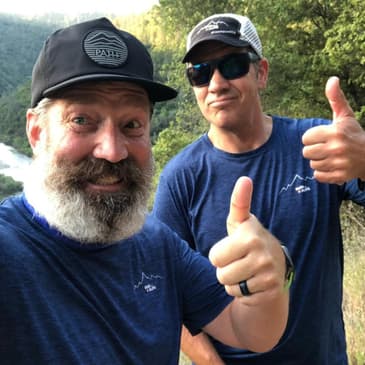
Don Freeman and Scott Warr are the hosts of Trail Runner Nation, one of trail running’s oldest and most downloaded podcasts. Trail Runner Nation is devoted to sharing knowledge and advice with the trail running community, catering to everyone from beginners to the pros! Tune in as we dive into discussions about the mental toughness strategies behind ultra-running, the psychology of competing at the highest level, and the most effective way to learn.
- 07:49 The Most Powerful Way To Learn
- 13:25 Start With Why
- 17:20 Finding Your North Star // Hinge Moments
- 29:19 How Elite Athletes Think Differently
- 38:07 “A 100 mile race, is life experienced in one day”
- 43:53 The Spiritual Symphony Of Trail Running
- 52:12 Flying Your Kite // Staying Grounded
- 55:35 The Art Of Podcasting
Don’t forget you can also follow Dr. Rob Bell on Twitter or Instagram.
Follow At:
- Twitter @drrobbell
- Instagram @drrobbell
Download Your Daily Focus Road Map!
If you enjoyed this episode on Mental Toughness, please subscribe and leave a review!
Dr. Rob Bell
[00:00:09] Welcome to Mental Toughness with Dr. Rob Bell. Each week, Dr. Rob sits down with athletes,
[00:00:15] executives and expert coaches to talk about mental toughness and their hinge moment. Here's your host,
[00:00:22] Dr. Rob. And so I think that just that paradigm shift in psychology of how do I make it through it
[00:00:45] versus how can I become friends with it? How can I make it enjoyable? I think that is one way
[00:00:51] how an elite athlete thinks differently. But I think that the key connection in there is
[00:00:58] we don't have to be elite to think the same way.
[00:01:01] Dr. Rob Bell So welcome to episode 141 of the Mental Toughness Podcast. If you're looking for
[00:01:11] other running endurance episodes, three come to mind. Episode 101 with Lewis Rogling,
[00:01:17] episode 100 with Danita Waters, her riding across the United States and episode 97 with
[00:01:22] Andrew Glaze, who I'm sure everyone around Strava knows. But today's guest I'm excited about.
[00:01:29] See, I think they are what the Sklar Brothers are a comedy. I mean, they are the goals
[00:01:36] of Trailrunner Nation. One of Trailrunners oldest and most downloaded podcasts. It's devoted to
[00:01:43] sharing knowledge and advice with the trail running community from beginners to pros.
[00:01:47] You're going to love these guys or hate them. Some of them, you all are just going to think
[00:01:52] they're okay. Don Freeman, Scott Lohr. Don and Scott, man, glad to have you guys on here.
[00:01:58] Look forward to it. How are you?
[00:02:00] Dr. Lohr Good. Is the hate mail going to us or is it going to you?
[00:02:03] Dr. Rob Bell Coney you, buddy.
[00:02:04] Dr. Rob Bell And this is a payback. We owe you. You've been on our podcast several times
[00:02:10] and shared your knowledge and wisdom in the books that you've written and your running
[00:02:14] experiences because you're an ultra running yourself. And we appreciate for that. So here
[00:02:18] we are. We're all yours. You can beat us up, throw us under our buses. You can even delete
[00:02:23] this episode after you record it where everything you want right here.
[00:02:26] Dr. Lohr Well, we all have mics though. So no one's really in charge, you know?
[00:02:34] But being on the other side of the mic, let's just, we'll set the stage real quick. Just
[00:02:38] tell us where are you guys currently with, again, we don't want to time stamp this, right?
[00:02:44] I'm just going to be coming out. But where are you guys right now with running personally?
[00:02:50] Dr. Rob Bell
[00:02:52] Our personal running? You know, over for years, for years, I did not identify myself as a runner
[00:03:03] even though I was running. And I finally, and probably the last three or four years have
[00:03:09] overcome that. I identify myself as a runner. And because of that, I go out and run. And because
[00:03:16] I run, that reinforces my identity. So for the longest time, I thought, you know, I'm not
[00:03:21] built like a runner. You look at people that are finishing in the top 100 at Boston and stuff
[00:03:26] like that. You don't see my body type doing that. And so that's the reason why I was a
[00:03:31] little reluctant to identify myself as a runner. But I think that's where I am with my running
[00:03:36] is I finally identified myself as a runner and I feel good about that.
[00:03:39] Dr. Rob Bell
[00:03:40] Look, I mean, you have the beard though.
[00:03:42] Dr. Rob Bell
[00:03:42] I have the ultra beard, yeah.
[00:03:44] Dr. Rob Bell
[00:03:47] Yeah, and for me, as a runner, heck, you know, how long have I been running? 25 years or so
[00:03:53] that I've been running trail and started off on a road marathon. And a friend mentioned
[00:03:58] you could get a jacket if you ran on and finished a 50 mile run. And Lord knows I didn't need a
[00:04:04] jacket. I had a closet full of them, but the fact that you could get one from getting out on a
[00:04:08] trail and completing it. And at the end of 26.2 miles of a marathon, I could barely make it
[00:04:14] over the curb to step over to get to the car and to think that I would go twice that far
[00:04:19] intrigued me. So off I went, ended up running that 100 and then the 200 mile series with
[00:04:25] Candice and looking back from a few years doing that, I'm with Scott. I'm running because I enjoy it.
[00:04:32] I'm out there to stay healthy and don't have any races planned, but couldn't imagine not having it
[00:04:38] as part of my weekly or monthly type of process.
[00:04:43] Dr. Rob Bell
[00:04:44] Don, do you still have the jacket?
[00:04:45] Dr. Rob Bell
[00:04:46] That jacket? You bet I do. And I'm not sure where it's going to go after I pass away,
[00:04:50] but it's got to go somewhere. I worked hard for that thing.
[00:04:53] Dr. Rob Bell
[00:04:54] Maybe your most valuable piece of personal item that you're going to hand down to your children.
[00:05:02] Dr. Rob Bell
[00:05:03] Absolutely.
[00:05:04] Dr. Rob Bell
[00:05:04] So which jacket is this?
[00:05:05] Dr. Rob Bell
[00:05:06] Oh, it's an AR50 Finisher jacket. American River 50. You get a jacket for completing it. And
[00:05:12] it's a well kept secret. What is the jacket going to look like? And we all talked about it
[00:05:16] for 50 miles because it was kept under wraps and you knew you were going to get one, but
[00:05:21] you didn't know what that years looked like. And so it became a trophy in a sense for all finishers.
[00:05:27] You could wear it to different events and you could put it on or you could just hang it in your
[00:05:31] closet and never wear it. It didn't matter, but it held a special spot in the closet and in
[00:05:35] your heart. So that was the 50-miler jacket that was tradition at the American River 50.
[00:05:42] Dr. Rob Bell
[00:05:43] What year was this, Don?
[00:05:44] Dr. Rob Bell
[00:05:44] For me, it was 2003. It was my first finish.
[00:05:49] Let's do a little stream of consciousness thinking on this, right?
[00:05:52] So when you think back to that race, what is one thing that stands out about that experience for you?
[00:05:58] Dr. Rob Bell
[00:05:59] I'll answer that.
[00:06:00] Dr. Rob Bell
[00:06:00] Boy, how am I going to answer that?
[00:06:04] I wasn't there.
[00:06:05] Dr. Rob Bell
[00:06:05] If anybody's listening to our podcast, Scott speaks a lot for me. And he gets out in front
[00:06:10] and answers a lot of the questions. And here's what Don was thinking. And I don't, so that's
[00:06:15] why I had to interject with all of that. And that was perceived effort. And he knows the story
[00:06:21] behind that. That's all I have to say, perceived effort. So I'm running along and running with Jeff
[00:06:26] Abel, one of our dear friends that helped introduce us. And I said, Jeff, things are going well.
[00:06:31] We've trained together. This really feels good. I'm at mile five. And I said, this feels
[00:06:36] fantastic. You know, we could cruise this thing right to the end, right to the finish.
[00:06:40] I can see it happening. And he said, Don, I think my heart rate's a little bit high.
[00:06:45] I'm sure yours is. I've been training with you. This is faster than we normally run,
[00:06:50] even on our training runs. And I said, don't worry about it, Jeff. It's perceived effort.
[00:06:56] Mile 19, my quads were locked up shuffling along the trail. I learned about perceived
[00:07:03] effort, not starting too fast. All the lessons that trail runners learn, well,
[00:07:07] it was handed to me in a single race, learning about electrolytes, learning about pace,
[00:07:12] learning about effort, learning about expectations and negative chatter and lying on the ground
[00:07:17] face up thinking, how am I going to finish this thing with a white shirt full of salt?
[00:07:24] That's what that jacket represents to me. A lot of those early lessons all into one garment.
[00:07:30] Right. So Scott, like obviously as Don alluded, right, we get the test first and then we get
[00:07:36] the lesson afterwards. Can you speak to what's one experience and not necessarily
[00:07:43] what's one experience that comes to your mind from one of your races that really like stands out to
[00:07:48] you? Well, first of all, I think that you don't learn a heck of a lot when you're successful.
[00:07:56] There may be little bits and pieces, but I think that where you really make great strides in performance,
[00:08:02] great, great strides in knowledge and in wisdom is when you fail. And I can remember a race
[00:08:12] it was called at the time and they actually just brought it back, I think. It's called the
[00:08:16] Rucka Chuck, the Rucka Chuck 50K. And it was this race that starts, it kind of follows the western
[00:08:26] states 100 trail if people are familiar with that 100 mile race through the Sierra Nevada Mountains.
[00:08:33] And this is a 50K or 50K part of that where you go down kind of a rolling hills down to a
[00:08:41] river and then you turn around and you go back up. So halfway down, halfway back up.
[00:08:45] And I had already, huh? I'm straight. I've ran that. Yeah. So I had run multiple 50Ks prior to this
[00:08:55] and I was feeling a little cocky. I was thinking I got this in the bag. I know what I'm doing.
[00:09:01] I am a professional, not professional, I am an ultra runner. I got this one in the bag.
[00:09:07] I trained well for it. Well, I was doing great. I got down to the river faster than I thought
[00:09:14] I would. And I started on the way back up and that's when everything started falling apart.
[00:09:19] And there was one aid station along that path that was inaccessible to aid station workers.
[00:09:27] And so what they did was they packed in a whole bunch of gallon water bottles.
[00:09:34] And so they're just at this one aid station, just a whole bunch of gallon folds of water
[00:09:38] bottles. And so you're supposed to fill your water bottle there. Well, I had a really rough
[00:09:43] time getting to that. It was like the, I don't know, probably seven or eight miles left to the finish.
[00:09:50] And I had slowed down considerably. Lots of cramps. Don't know the reason why. And I got
[00:09:56] to that aid station and there was no water. And it was a hot day. And I just thought
[00:10:02] I'm done. This is it. I sat down, had a little pity party for myself
[00:10:07] and thought, well, they're going to have to come get me because I can't make it out without
[00:10:10] water. There's no way I can make it out without water. I'm already cramping. I need water to finish
[00:10:18] this. And a few people came by and, you know, asked how I was doing. Then I told them I was pretty much
[00:10:24] done. And then I started thinking, how are they going to get somebody in here to pick me up?
[00:10:30] It's going to be like midnight before they bring somebody in here. And I'm going to be
[00:10:35] freezing cold because the sun's going to go down. Anyway, long story short as I got up
[00:10:39] and I finished. But I was, I finished second to last, second to last. And that was a big
[00:10:48] learning lesson for me was never take a race for granted. Never think that you've got it.
[00:10:57] Be humble as you start. Be humble throughout the race. Perceived effort like Don says. If you
[00:11:04] think that you're feeling good, maybe slow down a little bit. He's always taught me that
[00:11:08] that if you at the first half of the race, if you think I would like to be going at this speed
[00:11:13] at the end of the race, then you're going about the same. The right pace. If you're going too fast,
[00:11:19] you're going, there's no way I can finish at this pace. You're probably going too fast. So
[00:11:24] that was my big lesson. It was a failure. But I learned something about myself and about how
[00:11:30] I strategically planned a race. Hey, good looking. If you like this podcast and are already a bad ass,
[00:11:42] but it's all way too complicated, then visit our website, DrRobBell.com and schedule a call
[00:11:49] with us to help capture your very own hinge moment. Yeah, no, I love that story because
[00:12:02] again, I pay somebody from Forest Hills down Ruckchuck in the back. Well, I didn't get that.
[00:12:06] But I remember thinking, I was like, I always want to know what would it be like to feel like
[00:12:12] you're starting a race at mile 60 and people are like, you know, they were, I ran 60 miles.
[00:12:19] And so I felt that and that was a good feeling. You know what I mean? It was like, dude, come on,
[00:12:23] let's go. You know what I mean? I was pacing him and he was on track. He wanted to
[00:12:28] break 24 hours and he was on track, but he was getting close and I kind of knew where
[00:12:33] it was, but I wasn't going to let him fail on my watch. You know what I mean? We're going to keep
[00:12:39] up this pace when he gets down there and crosses the river, then he throws up on the other side
[00:12:44] of it like, Hey man, I did my job. But the coolest part about that for me, that section was,
[00:12:53] again, it was a dark, but you could hear the river the whole time and that raging
[00:12:57] river that was down below you. That was such a cool feeling. Yeah. It's a great section
[00:13:03] of the Western States trail. Into your actual podcast. So I mean, you guys have had over
[00:13:12] what 670 episodes now when this comes out. Talk to us about the why behind your podcast.
[00:13:28] Scott, I can't see. I'll start it off. Heck, I was, I discovered podcasts back then. I'm not
[00:13:34] saying that I discovered it and Scott didn't know about it. That's not my point. I was listening to
[00:13:39] a running podcast and heard the guy driving down the road with his lifted four wheel drive truck,
[00:13:46] windowed down wheels rolling with some mud tires talking about his run that day as he was headed
[00:13:51] to his son soccer game. And I thought to myself, you know, that's a great idea. We could do a
[00:13:58] podcast and we could, you know, bring on the experts that we run with the guys and gals that are around
[00:14:06] the Western States trail that has so many great runners out there legendary. We get a chance to
[00:14:12] talk to them, ask them questions, get feedback from them. What about the guy that's in the middle
[00:14:17] of Kansas that doesn't have that culture and that environment? What if we could plug into
[00:14:22] their ears, these experts that we talked to, what if we could ask the same questions that
[00:14:28] we're asking and get the answers from those folks and put it out there for everybody to learn and gain?
[00:14:34] That was our why. That's what started this up. And I mentioned to Scott, you know,
[00:14:40] we could do that. And he says, yeah, I've got an MP3 recorder, handheld one. I said, Scott,
[00:14:45] I think we got to raise a bar a little bit because we want this to be quality. And so that's how
[00:14:50] I saw it started in part of our rationale. But I know that Scott, after listening to me,
[00:14:56] has more to add and something good. And I'm interested to hear the story.
[00:15:01] No, I think that was 80 percent correct and probably 70 percent historically factual.
[00:15:10] I will say that shortly after we started, we were very fortunate to read a book by Simon Sinek
[00:15:17] that probably many of your listeners have listened to. If they haven't, you've got to get it
[00:15:22] as a reference book. Even if you listen to the audio version, you need to get
[00:15:26] a hard copy so that you can use it as a reference. It's that good of a book.
[00:15:30] It's called Starts with Why. And he talks about the why, the what and the how.
[00:15:36] And it really resonated with Don and myself when we thought that is our why. We want to bring on
[00:15:43] people, whether they're elites, whether they're OGs of the trail, people that have
[00:15:51] experiences that can help us become better runners. And we consciously said to ourselves,
[00:15:57] we're not Sports Center. We're not ESPN. We're not going to be the podcast where you can
[00:16:03] hear an interview from the person that just won UTMB or Hard Rock. We do have some of those people
[00:16:11] on, but it's very different. The questions we ask are questions that can resonate with
[00:16:18] the listener and how they can implement strategies of these high performers in their own personal
[00:16:25] running. But I think that's one of the big differences that I still think is a differentiator
[00:16:30] between Trailrunner Nation and the, I don't know, three or four or five dozen other trailrunning
[00:16:36] podcasts out there that all are very, very good. But ours is we've been tried to keep that
[00:16:43] true North Y in our conversations and in our decisions.
[00:16:49] So I appreciate you both sharing that. With that, we always talk about on this podcast,
[00:16:55] these hinge moments. So one moment, one person, one event that makes all the difference in our
[00:17:00] lives. And adversity is sneaky, right? Adversity is going to show up in many different ways.
[00:17:04] But talk to us about sort of that hinge moment that happened with your podcast
[00:17:11] that really made both of you again reinforce what that Y was and what that North Star looked like.
[00:17:20] But Scott, I can't see up there, Scott. So when you're pointing at me to go,
[00:17:25] it gives me the luxury of saying, well, I'll let you answer that. But I do want to say
[00:17:32] that we had on our podcast, you were on our podcast and we spoke about hinge moments.
[00:17:36] And that's really something that has stuck with me. It's such a great concept. There's hinge
[00:17:41] moments in relationships that work it and in your running career and your business career.
[00:17:47] There's there's hinge moments and sometimes they look like like obstacles. But after you get
[00:17:51] past them, you'll look back at the hinge moment and said, it was placed perfectly
[00:17:55] for me to move on. I thought I was sabotage. I thought I was I was stopped. But in fact,
[00:18:01] because of that moment, that hinge point put me in a direction that allowed excuse me,
[00:18:08] that allowed me to move in a spot I never would have achieved had it not been for
[00:18:14] that moment. So coming up against those obstacles really can be opportunity and not
[00:18:20] something that you should get bummed out about or say that it was going great until then.
[00:18:26] It was placed there for a good reason. And so hinge point is very, very important whether it's
[00:18:31] on a rain, a run, a hinge point, a moment that a lesson's handed to you for the next time to
[00:18:37] do so much better. Hinge points are beautiful and need to be appreciated. So I love the hinge
[00:18:42] point. Did I talk around the question enough to pass it off to Scott without looking like I did?
[00:18:48] Scott? Well, I will say I'll start my answer the same way I started my previous answer.
[00:18:57] You learn more from your failures in most cases than you do in your successes. We've been very
[00:19:04] blessed to trail around our nation to have some successes. We started early when podcasts were
[00:19:08] just coming out and we've seen some really good success. But in recent years, I can talk to
[00:19:16] you about a hinge moment where we lost our way. And we had gotten to a point where we thought,
[00:19:25] we want to take our podcast to the next level and we were very fortunate to be in touch with and
[00:19:32] bring on a person that had a lot of radio experience like a ton. Like this guy was the
[00:19:42] cat's meow of radio broadcasting from a producing standpoint. And I'm sorry?
[00:19:49] So he was around with the Bee Gees? Yeah, at least. At least. I was around with the Bee Gees, Rob.
[00:19:56] Give me a break. Sorry to interrupt the story. No, anyway, so we had talked to this person and
[00:20:07] we brought them on as a partner and slowly, I guess almost imperceptibly, we were moving away from
[00:20:17] our why. Why we were doing the podcast. And we had gotten to a place where we were having
[00:20:23] interviews that we probably wouldn't have had if we had asked our why. And finally, Don and I,
[00:20:30] it took us a long time, but we finally decided that that was the causation. One of the things
[00:20:38] was a causation of us losing our way and losing our why. And we made the hard decision to let
[00:20:47] that person go. Great guy and very successful. We learned a lot from that experience. And I
[00:20:56] don't know whether if you're to give Don and myself the choice would we want to go through it
[00:21:02] again? I think we would because we really learned a lot and reinforced why we're doing this. And
[00:21:10] frankly added some energy after years of doing it to getting back to our why. And so I think
[00:21:18] that was a hinge moment that I can think of, Don. I want to jump in there and say,
[00:21:23] so we'll put a figure to what 600 and plus episodes, 13 years of weekly episodes every Friday
[00:21:30] release. So that people wouldn't miss an episode and miss a run. We wanted to be that running
[00:21:36] partner forum. But you mentioned a word in there. You said imperceptible, but I don't think it was.
[00:21:42] And this is like off the record talk just between Scott and I here too, just talking about it,
[00:21:47] which makes it interesting lessons for me anyway, is I think we did perceive it. We saw it. We looked
[00:21:53] at each other and go, I don't know. But we said, okay, we'll forego our instinct. We'll forego our
[00:22:00] why. Good point. We want to move forward. And in it confirmed that our intuition was right.
[00:22:07] When we were done with it, we're like, you know, that kind of that wasn't us. That wasn't,
[00:22:11] we weren't, we didn't feel comfortable with that. Like when we interview Rob, it's,
[00:22:15] you know, when we're done, it's just fantastic. We always say that was a great one. We really
[00:22:19] learned a lot and we hope the listeners like it feels right. But we were doing some interviews
[00:22:23] that just weren't us. We were, we felt like we were something else. They weren't in topics that
[00:22:28] were consistent with that why they were outside of it. And I think Simon Sending calls that
[00:22:34] when your, when your Y gets fuzzy. And I think we were living in a fuzzy Y in that spot.
[00:22:40] I appreciate you guys sharing that. But, you know, on that note, since you've had so many
[00:22:46] different interviews, it's different interviewing pros and podium finishers and contact, you know,
[00:22:53] content experts and understand the differences. But what about like your approach changes when
[00:23:00] you're interviewing individuals that differ in those scales? Well, that's a good question.
[00:23:08] I will tell you that a couple of things. One, sometimes we're in awe of people that come on.
[00:23:17] Our very first podcast episode was with Jeff Rose, who many of you may not know who he is,
[00:23:27] but he was top of his game and he had just come off of winning Western States 100 and
[00:23:33] had a lot of just amazing, amazing wins. And somehow I was able to get in touch with him
[00:23:43] and ask him if he wanted to come on the podcast. And he said yes.
[00:23:47] And I just went, I can't believe that Jeff Rose said yes. I actually ran Western States 100
[00:23:55] the year he ran after we had interviewed him. And I went into the restroom. He was in the
[00:24:02] restroom right before the race started and I was in there. And I was still in shock that he
[00:24:10] would actually talk to me or talk to Trailrunner Nation. So I think that in some cases,
[00:24:17] there's a little bit of fanboy that I see. But it quickly diminishes when you find out
[00:24:27] and start asking them questions. Every person that we've interviewed that has come on our show,
[00:24:34] if you ask them a question on how they could share their wisdom with the audience so they could be
[00:24:42] better, every single one of them open book, every single one of them. And I don't know if that's
[00:24:48] consistent across all communities or all populations, but in the Trailrunning community,
[00:24:55] that is one of the characteristics of our community. Everybody wants each other to succeed.
[00:25:02] And I think that that's been one of the reasons why we've been able to get some people on that
[00:25:08] normally wouldn't. Of all of the people that we've asked, I can think of two people that have
[00:25:16] turned us down. And neither of them were embedded in our Trail community. They were
[00:25:23] people that could have brought some good content, I think. But they didn't quite get our community
[00:25:30] personality. Did that answer your question, Rob? I don't know if it did. Maybe Don can try to
[00:25:36] answer it better than that. I'll throw something in there. And this will speak to the Trail
[00:25:43] community, but then I'll hopefully be able to extend it outside of it. When we talk to the
[00:25:50] elite athletes, the ones that are up front, the ones that finish the race hours ahead of anybody else,
[00:25:56] the rest of us that are looking at those elite athletes are in amazement of what they're able
[00:26:01] to do and the speed they can run it. And the elite athletes are looking back at us,
[00:26:06] still out there on the trail grinding hours afterwards. And they're in awe of the fact that
[00:26:12] the rest of them can be out there that long. And it's that mutual respect that creates
[00:26:18] a wonderful community. And so the people in the back are so...
[00:26:25] They have no idea what goes through the head of somebody that fast. And as it turns out,
[00:26:30] we all go through the same stuff. My legs hurt. I'm tired. How can I keep pushing? How much
[00:26:35] further till the next aid station? How much the next place to get aid or refill the water
[00:26:40] is hot out here? I just don't feel like being here. Guess what? That goes through
[00:26:44] everybody's head, regardless of where they are in the race. And I think that's what makes the
[00:26:51] difference of running, of interviewing up front or in the back. It doesn't matter because we're all
[00:26:56] the same. And I think in life, you know, we all go through stuff, whether you're super successful
[00:27:03] on top or you're climbing that ladder, there's that same respect on both sides. The ones that
[00:27:09] are already on top are thinking, man, you've got some ladders to climb and some steps to get.
[00:27:14] And I know how it is, but I respect you for taking that journey. And the ones that are
[00:27:19] taking the journey and looking at the guy on top or a gal on top are thinking, wow,
[00:27:23] you've done so much. There's a mutual respect that meets in the middle of that ladder
[00:27:28] that we can all agree that's a wonderful place to communicate.
[00:27:33] What's the old saying? A four-minute mile is the same distance as a 14-minute mile?
[00:27:38] Yeah, that's true. No, no, no, that's some good math. You've got to pull that out, Rob. That is some science.
[00:27:49] You know, each episode titles itself, maybe that'll be it.
[00:27:55] Some content to go. But yeah, it's an ancient Chinese saying, right? Even slow walkers arrive.
[00:28:01] Yeah. I remember here locally like Mika, is it Thues, right?
[00:28:12] So I ran into Mika. She won a 50-mile down here and this was before she won like Bigfoot 200,
[00:28:19] but she had done that for like a couple years. And I remember looking at her,
[00:28:25] I finished my 50k and she had finished her 50-mile ahead of me. And she had like these sunburns
[00:28:34] all over her legs. They were peeling, you know, and I said, oh man, what happened?
[00:28:40] So I was just stuck out there on the mountain. It was no big deal. And I was like, gee,
[00:28:47] life threatening to me if you're going to be out there get burned on that mountain like that.
[00:28:51] But I've always found that these types of athletes at that level, like there's just something different.
[00:29:00] In your experience interviewing some of the best, have you felt that as well? Like,
[00:29:06] I mean, you can just kind of see like, look, there's just something a little bit different
[00:29:09] about these individuals that because you have to be extremely, got to be obsessive
[00:29:15] to take it to that level. Have you encountered that?
[00:29:19] I think we've encountered least with any finisher is successful. And whether you're,
[00:29:27] you know, it's the 14-minute mile or the four-minute mile, your desire to finish and to push to the
[00:29:34] extreme because there can be an extreme for a four-minute or 14-mile, a 14-minute mile,
[00:29:40] they're both extreme that you have to define your why. Why is it important to me? You have to carry
[00:29:45] that. Why it's important to me to push through this harshness, this hardness, this sunburn on my legs
[00:29:53] was the reason that I received that was my reason bigger than the problem that I'm facing or that
[00:30:01] I survived. So I think regardless of where the person is in the continuum of finishers,
[00:30:08] they have to carry a reason that they finish in front and it has to be present all the way
[00:30:15] through. So every time there's an obstacle, you compare the obstacle and hold it next to your
[00:30:21] why or your reason. And if your reason outweighs and is larger than the problem, then you win.
[00:30:28] As soon as the problem becomes bigger than your reason or your push or your desire,
[00:30:32] when that isn't as big, then you lose. So it's that simple. It's apples and orange,
[00:30:37] one on each hand, which one's bigger and that's what pushes you through. And that happens on the
[00:30:42] trail. It happens with relationships, family, but on and on you go. One of the things that as I
[00:30:47] continue just talking on before, so I have to do that for me to be able to say anything because
[00:30:52] Scott likes to get in there is Scott says in the beginning of the podcast and maybe,
[00:30:59] just maybe it'll make us better humans or better people. And I used to tease him a little
[00:31:04] bit about that at first, but he was wise to say that because a lot of the conversations that we have
[00:31:11] circle around that. How does it make you a better person? More of what you envision or what you
[00:31:17] desire to become. And so I think that's whether you're in the front or the back,
[00:31:22] you just have to have established a strong why. I can think of two examples, Dr. Rob.
[00:31:31] One is Courtney DeWalter, who arguably could be considered one of the greatest
[00:31:38] ultra runners of all time. She's definitely building a legacy right now. And I think that she
[00:31:45] thinks differently than the majority of us. And specifically we had her on an episode where we
[00:31:53] had multiple people come on and talk about the pain cave, which an ultra running is this
[00:32:00] place where it can be very dehumanizing, very, very bad, dark place that you enter when you're out
[00:32:10] there running for very long distances. And most people interrupt Scott, not necessarily pain.
[00:32:18] It's not how much pain you're in, but correct. It is an emotional space that's just very negative.
[00:32:25] Yeah. Yeah, it could be not physical pain. But most people, I think when they think of the pain cave
[00:32:34] and become acquainted with it is how can I make it through the pain cave? How do I experience
[00:32:44] the pain cave so that it doesn't make me stop so I can continue to run through that time?
[00:32:53] Courtney has a different take on that, which I think is amazing. But here's the key thing.
[00:33:02] It's something that all of us can change that paradigm in our head. And this is what the
[00:33:08] way that she thinks of the pain cave. She looks forward to the pain cave. When she starts a race,
[00:33:15] she is excited about entering in the pain cave because she said she's building a habitat in
[00:33:21] that pain cave. She's making the pain cave bigger. She's hollowing it out. She's putting in a sofa.
[00:33:27] She's putting in a big screen TV. She's making friends with this pain cave.
[00:33:34] And so I think that just that paradigm shift in psychology of how do I make it through it
[00:33:40] versus how can I become friends with it? How can I make it enjoyable? I think that is one way
[00:33:47] how an elite athlete thinks differently. But I think that the key connection in there is
[00:33:54] we don't have to be elite to think the same way or to learn from Courtney. And the other one is
[00:33:59] a very quick one and Don, you're going to have to help me with the guy's name. Old time Western
[00:34:04] States runner back way back in the day. And when when Western States first got started, it was a race,
[00:34:11] right? A foot race, but people would run and they'd also walk. Well, this guy
[00:34:18] entered and he won it many times. He was the first guy that ever ran the entire thing.
[00:34:25] And people are going, that's stupid. Who is it, Don? Jim King. Jim King. Jim King.
[00:34:30] He said, why can't I run it? And they go, well, you got to walk the hills. And he goes,
[00:34:35] why do I need to walk the hills? He just put in his mind, I'm not going to agree upon
[00:34:41] the status quo or the barriers or the what's expected. I'm going to push beyond that. And
[00:34:50] he ran the flow. He was the first person to run the entire Western States.
[00:34:55] And he was successful multiple times, multiple wins. So I think now can you take that and
[00:35:03] equivocate? Is that a word? I just made that up. Yeah, it's okay. Rob, spray.
[00:35:08] To us middle and back packers, we're not, you know, I'm never going to run Western States the
[00:35:13] entire way. I just physically can't do that. But what I can do is take the philosophy that,
[00:35:20] you know, I'm not going to do this just because everybody else is doing this.
[00:35:23] I'm not going to put limits on myself. And I think that those are two examples,
[00:35:28] Jim King and Courtney DeWalter, how their elite minds work and how we can learn from them.
[00:35:35] Or put expectations on yourself just because everybody else is doing it. Maybe
[00:35:39] you're going to walk, you know, half the speed and no one's doing that. But you're
[00:35:43] going to set your own limits based on your own, own abilities and not march to whatever beat that's
[00:35:50] accepted, you know, becoming your own. I think Dr. Rob, use that earlier, your own North Star,
[00:35:56] you know, a podcast killer, whatever that comment that made a lot of talk.
[00:36:07] I love the pauses. Pauses don't make me uncomfortable at all. I don't have time to think.
[00:36:12] Robert Downey, a little different, different Robert. Robert Downey Jr., when he obviously made
[00:36:23] immense talent in what he did and struggled with addiction really hard his life, obviously.
[00:36:29] And he talked about when he came out of addiction, it was Mel Gibson that helped him
[00:36:33] out with that. Mel Gibson kind of phrased it said, you know, it's about hugging the cactus.
[00:36:38] So I think when I hear you just mentioned the Courtney de Walter take in terms of the pain cave,
[00:36:43] it I think about like hugging the cactus. Like we have character defects. I think we all have
[00:36:50] these character defects. So that which is even a strength of never giving up can also be a weakness.
[00:36:55] But whatever that character defect is, we're never going to get rid of it. That's the thing.
[00:37:00] Like we want to like, it's not like a garden where we can just pull the weeds. Like the
[00:37:05] weeds are going to be there, but we still just we want the flower. So I mean, I think of it's like
[00:37:09] we have to be able to hug the cactus. And I've always seen that that strategy of
[00:37:17] let's say it's impatience or anxiety or irritability, like just recognizing it.
[00:37:24] It's a little bit different than walking that but if you just recognize it doesn't have to
[00:37:28] say, Hey, I'm really anxious. But hey, I noticed some kind of feeling anxious towards this.
[00:37:33] It seems to like take the power away from it. But it also seems that I kind of build that relationship
[00:37:39] with that character defect. And I know I'm taking a little bit of a tangent here. But my question
[00:37:46] is when it comes to that part of life and what we learn like on the trails and then what can
[00:37:53] be combined like with life and these life lessons, what are the biggest ones that you've
[00:37:59] learned from trail running that equates to life and life lessons? Well, there is the saying that
[00:38:11] a 100 mile race is life experienced in one day. And I think that the biggest thing that I learn
[00:38:20] from from these longer races is you may enter the pain cave or you may end up having
[00:38:27] a time frame that you are emotionally low or physically exhausted. And the other saying
[00:38:39] in ultra running is don't worry, it's going to get better. There are rhythms in an ultra race.
[00:38:48] And I think there are also rhythms in life so that if you've gotten to a point where you
[00:38:54] are hopeless in life, realize that it's not going to last. Eventually there will be something
[00:39:05] happen. Someone will come into your life or circumstances may change where you can lose the
[00:39:13] hopelessness and gain hope. And I think that knowing that there is a change helps. Now,
[00:39:22] that is also, the reverse also happens. And I think that's important to realize too.
[00:39:30] When you enter a 100 mile race, it's not going to be roses and unicorns and rainbows the entire
[00:39:37] time. You know that. If you don't, you're going to figure that out. So you can anticipate in
[00:39:44] life that there are going to be some rough spots. And I think if you go into it with
[00:39:51] the expectation that there's going to be rough spots, then you're more equipped to be prepared to
[00:39:57] handle those rough spots. And knowing that it's not going to stay that way. I think that's really,
[00:40:04] really important. That's one of the biggest life lessons I've learned from ultra running.
[00:40:11] I think one of the biggest life lessons I've learned and it translates so well to reality
[00:40:17] in real life is that you don't do anything by yourself. You know, as tough as you are, as determined,
[00:40:24] as perfect race strategy you have in your mind, some the wheels going to fall off and
[00:40:30] and with good fortune, there's going to be somebody that picks that wheel up and puts it back on
[00:40:35] for you and kicks you down the road. Now, whether it's someone in an aid station putting
[00:40:40] you back together physically or emotionally or mentally, that person drops in at the right
[00:40:44] time, says the right thing and pushes you on to the next. Whether it's a fellow trail runner that
[00:40:50] comes up behind you and says, hey, how's it going today? Or what a race, not kind of cold, whatever
[00:40:55] it is. It's all of a sudden a shared experience teaming up. It's crazy as you look towards the
[00:41:04] tougher parts of I'm going to call life. I'm going to call part of the trail run. You can
[00:41:09] substitute any word. I don't want this to be to your audience or they're not all trail
[00:41:13] runners. So I try to make some comparisons, but when we're out there running, things get hard.
[00:41:22] It gets dark and you go through the night. You find a fellow runner and you say, hey,
[00:41:26] let's do this next section together. And it's that moment that shared community experience,
[00:41:32] the bonding of accomplishing hard things with someone makes it possible.
[00:41:39] And Scott and I have had the good opportunity to announce some ends of rate in an end of the
[00:41:45] races as announcers. And you watch, especially in the latter part of the race, when things get
[00:41:52] really hard, the people up front, they're on their own mission and they're experiencing
[00:41:56] things a little bit differently. But when you start to get into the latter part of the race,
[00:42:02] you see them come in in groups, groups of three groups of six, just they all do the
[00:42:07] hard thing together. They pull together the unite strengths and sometimes you get in there and you
[00:42:13] get pulled along with the group. And sometimes you're pulling the group, but there's a shared
[00:42:18] experience and life waxes and wanes. It gets hard. It gets easy. It gets hard. You're hoping
[00:42:22] someone in your group is experiencing the easy to help you just plug in and move along.
[00:42:29] So I think what we see as Scott said races are just life, you know, life in a day, life in
[00:42:36] a life in a run. And the same thing happens with life experiences. There's someone around you that's
[00:42:42] probably been through it wants to help you through it, wants needs to know about it. You need to
[00:42:46] express how you're feeling so they can say, I can help with that or let's do that together.
[00:42:52] I think there's a space on the trail that we feel is very safe when we're out there.
[00:42:57] We talk about it a lot with said on the trail stays on the trail. That's a saying and a
[00:43:02] secret. We stick to it, but we accomplish hard things together as a community because we trust
[00:43:08] one another because we don't we take down the facade or the shield that we're super tough.
[00:43:14] We open up. We don't complain. We're realistic and we make statements to find solution not to
[00:43:21] make complaints. And so that's the biggest lesson I've learned. Nothing hard gets done
[00:43:28] alone or many times hard things can be done with group effort. That's probably my biggest lesson.
[00:43:37] Doug's pale on all that. Can you guys talk about like the wholeheartedness of
[00:43:41] the trail running? I mean, you know, the nature centeredness of it obviously the
[00:43:48] belonging in the community, but even kind of the spirituality that ties into it and your
[00:43:52] experience with it. Scott, I'll lead with this. I remember watching a documentary and it was
[00:43:57] about maybe it was in Arizona. It was about a Native American tribe that had a run that was done and
[00:44:04] this current day runner was taught by his father, grandfather about running the trail.
[00:44:11] And he said it's much it's a prayer and it's a prayer with mother earth and the rhythm,
[00:44:19] the feet hitting the ground is part of the connection and the prayer to nature.
[00:44:25] And you can hear the wind come by, maybe a bird chirp, maybe it's the river that you spoke about
[00:44:30] earlier along the trail. It's a symphony of amazingness that you can lose yourself in and plug into
[00:44:39] that our DNA that's been around longer than we have has really grew up and evolved around this
[00:44:45] stuff. And it is very natural and intuitive and rare. You don't get it at a stoplight.
[00:44:51] You don't get it at the side of a road. You have different sounds there, but there's something about
[00:44:56] nature sound that are true and resonate and have a place. Hey, wouldn't it be nice
[00:45:05] if we could be out on the trail running for more hours than we spent on social media
[00:45:13] in a given day? You think how many hours your phone probably tracks how many hours you spend
[00:45:21] on social media? What if we all decided we're going to be out on the trail more time in a
[00:45:29] given day than we spend on social media? I think that that would make us much better people
[00:45:37] because when we're out on the trail, we are connected with nature. I work in agriculture
[00:45:45] and there are things called cations and anions in the soil. There are positive and negatively charged
[00:45:53] electrons in soil. And this may be getting a little bit too fuzzy, but being in contact with soil,
[00:46:01] there's an energy to it. Being out on the trail with your ears unplugged and I'll be the first
[00:46:07] to admit I like to listen to audiobooks, podcasts, music while I run. But I think that
[00:46:13] by unplugging from that and more importantly, not having your phone, not having social media,
[00:46:23] not taking phone calls and just being out in nature with your thoughts, I think that there's a
[00:46:28] connectivity, a spirituality, a zen. We've talked to what was the book that we reviewed,
[00:46:37] the zen and the art of running. Anyway, I think that there's a lot that comes into play there.
[00:46:47] It just didn't hit me until I asked the question. I think that I'm going to in my own personal life
[00:46:53] look at how many hours I spend on social media during a given day and that includes YouTube.
[00:46:57] I do like some YouTube. And I'm going to try to see if I can run more hours in a given
[00:47:03] day than I spend on social media. Rob, can I add to that? In the book you're thinking about
[00:47:09] the author anyway is Katie Arnold and she's written a couple of books. So Running Home
[00:47:13] and then she has another one coming out that has the zen of running. That's not it?
[00:47:17] Nope. Scott's going to pull it out. You're thinking of a puke and rally.
[00:47:22] That's another good one. Yes, absolutely. Great book and Learn to Be Patient is another
[00:47:27] great book that we have on this shelf. And I'm going to prove Scott wrong. He's going to
[00:47:31] find it and he's going to bear a ceiling. Here's what he's going to say. Oh, I don't seem to have it.
[00:47:35] So he doesn't get proved wrong here. But I think it doesn't.
[00:47:42] It's you can't see it. It's not the Zen of Running. It was called The Tau of Running by
[00:47:47] Kerry Dudney, Gary Dudney. And then you can see I have bookmarks in this one. This is such a
[00:47:53] good book. So wasn't Zen your right? It was it was The Tau of Running. Yeah, your right,
[00:47:59] Scott. That was good. You proved me wrong. That was that was that was a good find.
[00:48:03] But Katie Arnold's a great, great author and another good book to pull out after you by
[00:48:08] puke and rally and Learn to Be Patient. I wanted to add it doesn't matter if you run or not,
[00:48:18] find something, find something that you connect with, whether it's quilting,
[00:48:24] whether it's bingo, it doesn't matter. Find something that your heart sings to that you
[00:48:30] resonate, that you enjoy the community. Just find your passion and then press play and just
[00:48:37] enjoying and back away from the all the stress, the build it's due or the hardship that that's
[00:48:45] happening somewhere that you have to solve. Find your passion and immerse yourself in that with
[00:48:51] at least some time that's dedicated to that. Like Scott says, you dedicate some time to social media.
[00:48:58] Well, dedicate some time to things that you enjoy. And Scott's done that very well. He is
[00:49:04] early in the week or the month he puts his running times and dates in there and schedules
[00:49:10] around those. So that's the way he's he stays consistent as he prioritizes. He puts it in
[00:49:16] the calendar, he reserves it and he goes, no, I'm not available then but I can at 10. So he's
[00:49:23] has a hard spot in his day to run. And that's a good idea, Scott. I'm glad you do that. That's a
[00:49:28] good example. We have two potential now for the titles of the podcast. When you were
[00:49:36] mentioning that in terms of the time, I'll check that out as well about which one I spend more
[00:49:40] time on. That'd be really, really close. You know, I always think this as well side note,
[00:49:46] like if we all spoke to each other like we spoke to our dogs, how wonderful the world would be,
[00:49:54] right? Because you are such a good boy, Scott. You are. Good boy, Scott. Good boy.
[00:50:03] I mean, she's just sick. I don't think that would be nice. But I'm with you.
[00:50:08] I'm with you, Rob. We should be as kind to our fellow humans as we are to our dog or cat or
[00:50:17] goldfish, whatever your pet is. Do people talk to the goldfish?
[00:50:25] I never talk to them. Maybe that's why you're... Maybe you need a goldfish, Rob.
[00:50:30] I was just going to say, this thought had come to me and I want your take on it is the wind.
[00:50:41] And I think the wind is the most powerful element because it really exemplifies it,
[00:50:49] but accentuates all the other elements that are there. So if it's raining and windy, I mean,
[00:50:56] it's pretty brutal. It's cold and windy or hot and windy. But when it comes to the wind,
[00:51:05] I'm always amazed how when we were running downwind, I never notice it. I never hear it.
[00:51:14] I think it's my own strength. I think, man, it just feels really good. And then the times...
[00:51:21] The only times when I turn and then I'm facing the wind, so when I have that headwind,
[00:51:26] do I actually hear it? And I'm like, wow, it's really tough now. But it's only then do I recognize
[00:51:35] how powerful that tailwind was and how it's helped me along the way. And that's how I kind of think
[00:51:40] a lot of times how God operates is we don't recognize the gifts and the gratitude when we
[00:51:45] have them. It's only when we face the adversity do we realize, hey, the hand that God had
[00:51:52] helping us along the way. And I mentioned this as well, like we ought to praise the tailwind,
[00:51:56] but you got to cheer on the headwind as well, because that is what makes us better for always
[00:52:01] running downwind with a tailwind. We don't get that much better. It's only when we face that
[00:52:06] headwind. But I wanted to throw that out as sort of a topic and see if you could make it even
[00:52:11] better. Scott, do you have something on wind? And I'm ready to speak to it when you're done.
[00:52:18] Go. Well, you know, maybe I was exaggerating. Maybe I haven't don't have all of my thoughts.
[00:52:23] I'll start with this. I think that that when we're in where we have wind at our back,
[00:52:32] we're learning, we're learning some skills and we're we're processing and and figuring
[00:52:37] some things out so when inevitably we do need to turn and wind is in front of us.
[00:52:43] Those lessons we've learned during the easy times are ready to be used in the hard times
[00:52:48] that the wind is is there timely and we're and we we're gathering up the tools that we need to
[00:52:56] face it head on. And when we come out of the wind and we've practiced these tools, now we're even
[00:53:02] better and we can we have more tools and more skills and developed along the way.
[00:53:07] When you're teaching a child to walk, you're kind of holding it against gravity. That's
[00:53:11] down. That's the downwind and at our back. But then we let go and the child needs to be able to
[00:53:17] power itself, walk on its own. And that's an important part. So I think the wind at our back
[00:53:24] is there for a good reason. It's preparing us for the inevitable that when it's going to be at
[00:53:29] our face. And we should acknowledge that. Well, I guess I didn't have a whole lot, Scott. I
[00:53:35] went into teaching a child to walk. So clean this mess up.
[00:53:39] Well, I was just thinking, you know, you had had alluded to the wind and and in your faith
[00:53:49] in God. And I was thinking about something that I learned as a young man in my faith. And that is
[00:53:55] a kite and wind. If you were to take a kite and just throw it up in the wind without
[00:54:02] the string that anchors it to anchors it to the ground, it's going to fall.
[00:54:09] A kite cannot fly alone unless it is grounded. And so I think that that yes, wind is important
[00:54:16] and it's a lot of fun to play around with. And it can really take a kite up into the atmosphere
[00:54:23] and really be successful. But it also needs to be grounded. And it needs to be in you need
[00:54:29] to have control of that kite. Otherwise, you know, you can be up there. You've probably done this as a
[00:54:36] kid, you know, you're flying your kite and it's just a ball. And all of a sudden you run out of
[00:54:40] string or you lose hand, you lose the grip of the string and that kite flies around for a little
[00:54:47] bit and inevitably just plummets to the ground. How'd you like that metaphor, Freeman? I realize
[00:54:55] I shouldn't have gone first. I'll tell you that. I don't know if it answered his question.
[00:55:00] If it answered your question, Rob, but it's profound. It was brilliant. No, I love it. I love it.
[00:55:25] I think I'll go ahead and download at Kukoradio.com.
[00:55:28] Um, Toronto Nation, what question should I be asking that that I haven't asked?
[00:55:38] Boy, that's a good one. Don, you got something philosophical, don't you?
[00:55:44] Sure. I mean, I said the wind thing. I can only go uphill from that.
[00:55:48] Why do you guys do it? Why? How? Where's the biggest struggle? Where?
[00:55:53] What obstacles have you faced? I think we talked about bringing somebody in, making a fuzzy why,
[00:55:58] but what keeps us going? I'm going to ask Scott that. Let me take your question
[00:56:04] that was directed at me and what keeps you going, Scott? What makes you show up and move forward?
[00:56:11] You know, that is a good question, Don. And Don and I, we run together. We're running
[00:56:17] partners, not just podcasting partners. And I will say that early on we made the decision that
[00:56:24] if it came down to podcast versus running or podcast versus friendship,
[00:56:32] the podcast is the first one to go. But why do we do it? Sometimes it's not fun,
[00:56:40] but I will tell you every single time, even when Don and I have been,
[00:56:46] you know, really not having fun, every time we finish a podcast and we let the guest go off,
[00:56:54] he and I stop and we just kind of evaluate how it went. And Don has a famous saying,
[00:56:59] oh, that was the best one yet. And I think that's what keeps us going is we are continually
[00:57:06] learning. We try not to talk as much as we did on this podcast because we don't really have that
[00:57:11] much to say. We want to ask questions of our guests and let them talk and let us learn. And I think
[00:57:18] that's probably the secret that has energized Don and I for all this time is learning and being
[00:57:26] curious about what the guest has to say. If you're finding good guests, you know, part of the
[00:57:36] yeah, that was the best ever wasn't wasn't our comments. You know, it's never our comments.
[00:57:41] And we've even said we would have had not 600 plus episodes, we'd have one and a half episode
[00:57:47] because that's about all we have to be able to share. And why was difficult on this podcast to
[00:57:55] come on as the ones behind the mic instead of in front of the mic? It's
[00:58:01] we didn't expect really to have much to share. Why would Dr. Bell want to talk to you?
[00:58:06] He's taken a big mistake. I thought he was wise and brilliant, but obviously there's a miss there.
[00:58:14] But I think our friendship has is one of the things that and it wasn't even a question,
[00:58:19] but I would just say I enjoy doing it with Scott. I lean forward when he's going to give
[00:58:24] an answer. I'm like, what's he going to say or a question? I wonder what it's going to be.
[00:58:28] And it's never I'm disappointed. It's always like God, that was a good one.
[00:58:32] You know, I'm glad to have a partner. We said this in the beginning before we started,
[00:58:36] you're leaning forward to intro your podcast. And I said, hey, before you start, how difficult is
[00:58:43] this to do with just you? Well, Scott, it's easy for me. I was with Scott's here, he'll pick up
[00:58:49] the slack. I'll pick up his slack. Together we will move through this like a difficult time
[00:58:55] in life. You do it with a partner becomes better with a partner. And so with Scott,
[00:58:59] I think, well, no matter what happens, we'll figure it out between his creativity and comments or
[00:59:06] a ridiculous moment. We'll get through this thing. But man, question to you, Dr. Bell,
[00:59:12] how difficult it must be to be solo on this? So was that a real question? I mean,
[00:59:23] I think the difficult part when it comes is having a stream of consciousness to be able
[00:59:26] to take somebody's answer and dig a little bit deeper while at the same time listening to the answer
[00:59:34] then trying to think of what's going to be the next question that I can ask, you know,
[00:59:38] because I have a general outline history. And I'm going in with the template of, hey,
[00:59:44] what is it that I kind of want to get out of for them to share? At the same time, I like
[00:59:50] that stream of consciousness and having them go a little bit deeper. So the real tough part,
[00:59:54] though, is to structure it and then go off script and bring it back while being able to
[01:00:03] have my wits about me and ask the right question in sort of the right sequence piece. That becomes a
[01:00:07] really tough part. And I can appreciate that. Scott and I have with two people we have,
[01:00:12] we have some hand signals between us. So I've got the next question, which gives the other
[01:00:16] person the ability just to pull back and listen and be present and curious and what
[01:00:23] is the listener hearing and what question might they have? And Scott's got the next question. So
[01:00:29] I don't have to worry about it. I'm just, I just remove myself and just get creative and listen
[01:00:34] and wonder and curious and write down the thought that comes to my mind. And then I'll follow up
[01:00:40] if there isn't an immediate follow up. So with two people, the luxury of leaving for a moment
[01:00:47] and then reentering, not always on always on being a solo. You have to listen and be present so you
[01:00:55] don't miss anything and then ask your question. And the guy says or gal says, dude, I just told you
[01:01:02] that. That was what I said to the last three minutes. What are you? What are you asking that
[01:01:07] question for? And so having someone else with you is really, really, really important, at least
[01:01:14] we joke. We do a little bit of preparation for each episode and sometimes we come with
[01:01:19] half a dozen questions and we know it's a great episode if we only asked one of those six questions
[01:01:27] because then we know that we were really listening to the guest and understanding what
[01:01:34] they were saying and digging deeper on the conversation versus, hey, I have this question,
[01:01:40] this question, this question. And that's one of the things when we first started this.
[01:01:46] Sometimes we wouldn't even listen to the guest. We had 10 questions we were going to ask and as
[01:01:51] soon as they were done answering question number one, we went directly to question number two,
[01:01:55] whether it was related or not. And I think that that's been one of the things that we've learned
[01:02:00] over the years is let's just have a discussion. We joke around with our guests and say, hey,
[01:02:06] it's really conversational. It's like we're lacing up our shoes and we're going for a trail run
[01:02:10] and we're just going to have a conversation. No, I love it. Guys, I mean, I love what you
[01:02:16] guys do. I listen to your podcast just to even get ideas for myself and really appreciate you
[01:02:23] one taking the time with the links there to follow you of course, but just want to thank
[01:02:28] you guys for coming on the show. Well, Dr. Rob Bell, we appreciate you. You've been
[01:02:35] on our podcast a number of times and always leave us with something to think about. You
[01:02:43] help the people, the listeners that are listening think about things and you make us
[01:02:48] a better podcast and most definitely better people. So we do thank you.
[01:02:53] Hey, I'm going to put you on the spot, Rob. We've read and we've done podcasts about
[01:02:59] your two books that you have in your background there. I can't wait to be patient and puke
[01:03:04] and rally. Is there a new book coming? Can we get you on our podcast with a new book?
[01:03:09] Are we close to publishing again? Well, I mean, I can't get you one of the old books.
[01:03:16] I mean, I got to get you a copy of No One Gets There Alone.
[01:03:20] Oh, yeah. Let's do that. Let's do that. Yeah, Don alluded to that, didn't you?
[01:03:26] Yeah, yeah. That's what made you think about that. I'll send that one to you.
[01:03:29] I think it's an important thing in life, right? You know, we get we look around for help when
[01:03:34] things get hard. We naturally look left or right. We just do and metaphorically, you know,
[01:03:39] we look left to right. How many times do we do that when we're faced a problem? And even
[01:03:44] when we're solo, we probably look around, look inside, look somewhere, look above. We're
[01:03:50] looking for answers. No one gets there alone. Let's do that. That'd be great, great episode.
[01:03:55] What I mean, a great episode for Scott and I to learn a lot. And maybe people will enjoy it too.
[01:04:00] But when I mean great episode means, yes, I want to talk about that.
[01:04:05] Hey, Rob, I just realized something. I've known Don for how long, Don? 20 years?
[01:04:10] And you know, a lot of through hiking trail hikers give each other trail names. I just
[01:04:19] realized I have a trail name for Don. I'm going to call him Socrates. He's like a philosopher, man.
[01:04:26] I've never heard him speak this much. He's like dropping philosophical bombs left and right.
[01:04:32] Scott, if you just listen to me, it's there all the time.
[01:04:38] That's the next question though. Hey, thank you guys. Thank you, Rob. Oh, thank you so much.
[01:04:55] To find out more about Dr. Rob, visit his website at DrRobBell.com or follow him on Twitter
[01:05:01] at DrRobBell and subscribe to the show on your favorite podcast platform to get the next episode
[01:05:08] of mental toughness as soon as it's available. Thanks for listening and we'll see you next time.